On This Page
Description
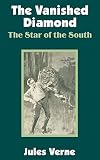
Brilliant Victor Cyprien loves a South African mining heiress, but needs money. A failure at diamond mining, he instead creates a spectacular artificial gem of his own. The sudden disappearance of this "Star of the South" leads Victor and his romantic rivals on a wild chase across the veldt--but are they on the right track?Tags
Recommendations




























Member Reviews
(25) L'Étoile du sud (The Vanished Diamond, aka The Southern Star, 1884) 71K words
The 25th Extraordinary Voyage takes us back to Africa, a continent that was also the setting of previous novels like "Five Weeks in a Balloon", "The Adventures of Three Englishmen and Three Russians in South Africa" and "Dick Sand, A Captain at Fifteen".
First read or reread?: First read for me.
What is it about?: Victor Cyprien, a French engineer currently living in the "Diamond Fields" of Griqualand (South Africa) desires to marry the beautiful daughter of Mr. Watkins, a man who owns the land where the "Diamond Fields" are. Watkins has other plans for his daughter, which includes her staying in South Africa and marrying one of the wealthier diamond show more miners. To put himself in a better position to win the hand of Alice, Victor buys a share and begins working his own claim. However, Alice convinces him to return to chemistry and pursue his theory that he can synthesize a diamond. As a result of one of his experiments, an extraordinary 243 carat diamond is created. Victor names it "The Star of the South" and gives it to Alice. When the diamond is stolen, Cyprien and three other potential suitors for the hand of Alice, travel northwards beyond the limits of South Africa in an epic persecution of the suspected culprit.
Although set in South Africa, the plot of "The Star of the South" might serve as inspiration for a Hollywood western, with a frontier setting, a gold rush (diamond rush, in this case), boomtowns, exploration of human character, frontier justice, greed... Of course, this novel predates that genre and is, in fact, contemporary with the Old West. Like the classic P. C. Wren adventure novel "Beau Geste", which would be published 40 years later, it features the theft of a large jewel that derails the life of many of the characters. The tone of this Verne novel, however, is less tragic than Beau Geste's.
I also found it interesting as a contemporary historical depiction of 19th-century South African colonization that would later result in the Apartheid regime. The historical conflict and resentment between the Boers and the English and the exploitation and racism towards black natives play a part in the story.
In addition to all those themes, we have Vernian elements that we wouldn't find in a western or in a normal adventure novel. The extraordinary jewel that drives the plot has been obtained in a scientific experiment designed as an attempt to produce synthetic diamonds. Verne, of course, takes the opportunity to teach his readers about the chemistry of diamonds, at least the 19th century understanding of it. We also have twists involving cartographic mistakes.
Some of the recurrent weaknesses of Verne's adventures are also present, like some unlikely animal behaviors and extraordinary coincidences that drive the plot forward. The treatment of native characters is, at the same time, enlightened and, well, of its time, as in other Verne novels. Verne's heart is in the right place when he denounces their mistreatment at the hands of European colonists and shows how they are not lacking in intelligence, even if they are in education. However, even the heroes who treat the natives decently have a paternalistic relationship with them, and Verne never met an African tribe completely free of cannibalistic tendencies.
Enjoyment factor: I enjoyed it. The Southern Star is not without flaws, but it has a more intense focus on the character's personalities and motivations than other Verne novels, which helps give the story more depth. It has an interesting setting and a good pace, despite the chemistry lesson in one chapter.
Next up: The Archipelago on Fire
See all my Verne reviews here: https://www.sffworld.com/forum/threads/reading-vernes-voyages-extraordinaires.58... show less
The 25th Extraordinary Voyage takes us back to Africa, a continent that was also the setting of previous novels like "Five Weeks in a Balloon", "The Adventures of Three Englishmen and Three Russians in South Africa" and "Dick Sand, A Captain at Fifteen".
First read or reread?: First read for me.
What is it about?: Victor Cyprien, a French engineer currently living in the "Diamond Fields" of Griqualand (South Africa) desires to marry the beautiful daughter of Mr. Watkins, a man who owns the land where the "Diamond Fields" are. Watkins has other plans for his daughter, which includes her staying in South Africa and marrying one of the wealthier diamond show more miners. To put himself in a better position to win the hand of Alice, Victor buys a share and begins working his own claim. However, Alice convinces him to return to chemistry and pursue his theory that he can synthesize a diamond. As a result of one of his experiments, an extraordinary 243 carat diamond is created. Victor names it "The Star of the South" and gives it to Alice. When the diamond is stolen, Cyprien and three other potential suitors for the hand of Alice, travel northwards beyond the limits of South Africa in an epic persecution of the suspected culprit.
Although set in South Africa, the plot of "The Star of the South" might serve as inspiration for a Hollywood western, with a frontier setting, a gold rush (diamond rush, in this case), boomtowns, exploration of human character, frontier justice, greed... Of course, this novel predates that genre and is, in fact, contemporary with the Old West. Like the classic P. C. Wren adventure novel "Beau Geste", which would be published 40 years later, it features the theft of a large jewel that derails the life of many of the characters. The tone of this Verne novel, however, is less tragic than Beau Geste's.
I also found it interesting as a contemporary historical depiction of 19th-century South African colonization that would later result in the Apartheid regime. The historical conflict and resentment between the Boers and the English and the exploitation and racism towards black natives play a part in the story.
In addition to all those themes, we have Vernian elements that we wouldn't find in a western or in a normal adventure novel. The extraordinary jewel that drives the plot has been obtained in a scientific experiment designed as an attempt to produce synthetic diamonds. Verne, of course, takes the opportunity to teach his readers about the chemistry of diamonds, at least the 19th century understanding of it. We also have twists involving cartographic mistakes.
Some of the recurrent weaknesses of Verne's adventures are also present, like some unlikely animal behaviors and extraordinary coincidences that drive the plot forward. The treatment of native characters is, at the same time, enlightened and, well, of its time, as in other Verne novels. Verne's heart is in the right place when he denounces their mistreatment at the hands of European colonists and shows how they are not lacking in intelligence, even if they are in education. However, even the heroes who treat the natives decently have a paternalistic relationship with them, and Verne never met an African tribe completely free of cannibalistic tendencies.
Enjoyment factor: I enjoyed it. The Southern Star is not without flaws, but it has a more intense focus on the character's personalities and motivations than other Verne novels, which helps give the story more depth. It has an interesting setting and a good pace, despite the chemistry lesson in one chapter.
Next up: The Archipelago on Fire
See all my Verne reviews here: https://www.sffworld.com/forum/threads/reading-vernes-voyages-extraordinaires.58... show less
This was a great Verne novel, truly exhibiting all the wondrous and enchanting adventures that he is capable of coming up with. The characters suited their purposes, the plot was eventful and appealing, and the action was great. The twists and turns along the way were also surprising and interesting and I felt attached for the entire duration of the ride. This is one of Verne's best novels and it shows, by leaps and bounds.
5 stars.
5 stars.
Kincskeresős-kalandos, kicsit tudós-bolondos. Remek keveredése ezen elemeknek - nemre való tekintet nélkül...
9788495060174
Read in Livre de Poche edition
Cyprien Méré es un joven ingeniero de minas francés enviado a cierta zona diamantífera de Sudáfrica, recientemente anexionada por los británicos a su colonia de El Cabo. Su cometido era elaborar un estudio geológico sobre esa cuenca. Méré se enamora de Miss Alice, hija del rico propietario de los terrenos mineros. Como no dispone de fortuna y el sueldo de profesor adjunto de la Escuela de Minas de París es muy poco para el rico hacendado, Méré se decide a probar como buscador de diamantes. No parece tener suerte, así que explora otra vía: la fabricación de diamantes artificiales. Parece que en este empeño sí tiene éxito, pero el diamante artificial, llamado Estrella del Sur, de color negro, es robado, lo que lleva al show more protagonista, en compañía de otros tres mineros pretendientes de Miss Alice, un chino y un cafre, a emprender un viaje al norte para recuperarlo. show less
Sep 13, 2024Spanish
Members
- Recently Added By
Author Information

Jules Verne was born on February 8, 1828 in Nantes, France. He wrote for the theater and worked briefly as a stockbroker. He is considered by many to be the father of science fiction. His most popular novels included Journey to the Center of the Earth, Twenty Thousand Leagues Under the Sea, and Around the World in Eighty Days. Several of his works show more have been adapted into movies and TV mini-series. In 1892, he was made a Chevalier of the Legion of Honor in France. He died on March 24, 1905 at the age of 77. (Bowker Author Biography) Jules Verne (1828-1905) is the author of numerous adventure stories grounded in popularizations of science. (Publisher Provided) show less
Some Editions
Series

Belongs to Publisher Series
Work Relationships
Common Knowledge
- Canonical title
- The Vanished Diamond
- Original title
- L'Étoile du Sud; L'étoile du sud
- Alternate titles*
- Der Südstern
- Original publication date
- 1884
- People/Characters
- Cyprien Méré (English version: Victor Cyprien); John Watkins; Alice Watkins; Mataki; Bartik; Li
- Important places
- South African Veldt
- First words*
- – Puhukaa, herra, minä kuuntelen!
- Last words*
- (Click to show. Warning: May contain spoilers.)Mutta yhdelläkään kaivosmiehellä ei ole enää ollut niin hyvää eikä niin huonoa onnea, että hän olisi löytänyt sieltä toisen Etelän tähden!
- Original language
- French
*Some information comes from Common Knowledge in other languages. Click "Edit" for more information.
Classifications
Statistics
- Members
- 242
- Popularity
- 133,871
- Reviews
- 9
- Rating
- (3.60)
- Languages
- 14 — Catalan, Czech, Danish, Dutch, English, Finnish, French, German, Hungarian, Italian, Lithuanian, Polish, Portuguese, Spanish
- Media
- Paper, Ebook
- ISBNs
- 44
- ASINs
- 18