On This Page
Description
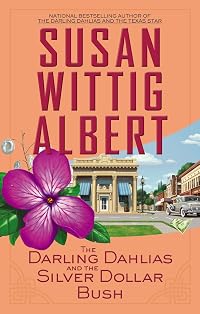
"It's the spring of 1933 and times are tough all over. The only businessman not struggling is moonshiner Mickey LeDoux, though he still has to steer clear of federal agents. But banks are closing all over the country, and the small town of Darling is no exception. Folks are suddenly caught short on cash and everyone is in a panic. Desperate to avoid disaster, several town leaders--including Alvin Duffy, the bank's new vice president--hatch a plan to print Darling Dollars on newspaperman show more Charlie Dickens' printing press. The "funny money" can serve as temporary currency so the town can function. But when the first printing of the scrip disappears, the Darling Dahlias set out to discover who made an unauthorized withdrawal. Meanwhile County Treasurer Verna Tidwell questions whether she can trust Alvin Duffy--and the feelings he stirs up inside her. And Liz Lacy learns her longtime beau may be forced into a shotgun wedding. Seems other troubles don't just go away when there's a crisis. There'll be no pennies from heaven, but if anyone can balance things out, folks can bank on the Darling Dahlias.."-- show lessTags
Recommendations



Member Reviews
I love the Dahlias, and this series keeps getting better and better. Susan Wittig Albert has a natural talent when it comes to creating fictional worlds inhabited by fictional characters. Her books and the people in them are just so darn real! She's got a great sense of time and place, so whether I'm in modern-day Texas with China and her friends, or in 1930's Darling, Alabama with the Dahlias, I feel right at home. Her wonderful characters are truly dear friends to me and I just can't wait until the next new book comes out. In this book the Dahlias, led by Verna and Liz, find their little town in dire straits. The town's only bank has shut down for a "bank holiday" and no one know for how long, or if it will even reopen. Times are show more tough in Darling in April of 1933 as it is all over with the Great Depression, but the Dahlias pull together and work with other leading town residents to try to bring their little town back from the abyss. This is a beautiful, idyllic little book with so much human interest within its covers. My suggestion, begin with Book One and get introduced to the Darling Dahlias. You'll be glad you did. show less
First of all, let me say that this was a thoroughly enjoyable read. I read it over the course of two days during my Thanksgiving vacation, and wanted to write up this review before I started the last book in the series. It was an easy, entertaining read, much like the rest of the series has been - it's still a familiar, comfortable universe the author has created, even as she brings new faces into it.
That being said, I don't think you can read this book out of order with the others. I mean, you can, but so much of the gut-punching relies on you knowing the past plots the Dahlias have had to deal with, both the actual mystery stories as well as the secondary threads that draw the characters together in their tiny little town.
The mystery show more mentioned in the summary is actually like the third or fourth plotline in the book, and it takes all of a chapter to solve. Everybody is far more interested in - and spends way more time talking about - Mickey LeDoux's ongoing battle with the Revenue agents, and Liz Lacy's terrible luck with love.
Let's start with LeDoux. This has been a running plotline in all of the books, because his moonshine is the town's favorite, and it's sold right off the shelf in Mann's Mercantile (you just have to know who to ask). The revenue agents have been after his operation for awhile, and this particular agent, Kinnard, is hellbent on finding it and smashing it. Which seems rather on the pointless side, considering Prohibition is well on its way to being repealed, even in perpetually-dry Alabama. Most of the Darling residents are on LeDoux's side, not only because they enjoy his brew, but also because he's related to quite a few folks, and employs even more than that. Considering the shortage of money and available jobs, people are even willing to risk their lives and limbs to work in the backwoods and swamps making illegal whiskey.
The battle between LeDoux and the Agent Kinnard takes a front seat here, and it ends with (wholly unnecessary) tragedy. It will be interesting to see if the antagonist of this one gets his comeuppance in the final novel, because the whole town was talking about it (and most of them attended the funeral).
The other major bit of gossip going 'round is about Grady Alexander, Liz Lacy's longtime beau. Spoiler: there's no "maybes" about it, he's having a shotgun wedding because he got another girl pregnant, and the whole town is buzzing with the news. Grady at least had the decency to tell Liz himself before she heard the rumors, and it devastates her, but not quite in the way you'd imagine. In the end, her boss Mr. Moseley offers to let her leave for a temporary part-time job in Montgomery, wanting to help her escape the malicious talk going around (and the fact that Grady is moving to a house on her block with his new young bride).
Finally, there is the mystery with the Darling Savings & Trust. It's been mysteriously shut down, and nobody really knows why. The whole town is on edge about it, especially when the rumors start that the long-time bank president (and husband of a Dahlia member) George E. Pickett Johnson is no longer in charge. Instead, a slick city man from New Orleans named Alvin Duffy has rolled into town as the new VP, and he's determined to get cash money circulating around Darling again, even if its in the form of monopoly money. A lot of town elders are opposed to this measure, but are eventually browbeaten into conforming by a combination of the force of Mr. Duffy's personality and long-time commissioner Amos Tombull, who played a role in a previously featured mystery plot.
Verna is brought into the mess as acting county treasurer, and she's skeptical of Mr. Duffy from the start. The only problem is that he's pulled his Romeo act on her as well, and she's found herself taken in by it. So she's torn by her natural skepticism and her attraction to him, but is determined to get down to the truth of the matter.
Verna and Liz are the featured Dahlias in this book, with a small sideline to Myra May and Violet (Myra May is incredibly jealous when Mr. Duffy starts hitting on Violet, and makes her feelings known to one and all, pretty much). There is a lot of non-Dahlia character focus, especially on newspaperman Charlie Dickens. He's not only running off (and subsequently losing) the Darling Dollars scrip, but he's also trying to rescue his relationship with the newly-returned Fannie Champaign.
Just like the first book, however, all of the plotlines eventually weave together in an interesting way, and the puzzles are solved in a similar fashion. I was able to guess pretty much right off the bat who had stolen the scrip money, so that's not a tough one to figure out. More interesting (to me) was Verna delving into Mr. Duffy's past to suss out his motives and future plans for their bank, and Liz dealing with the fallout from Grady's betrayal and subsequent marriage.
Just like the first book, too, it is the women of the town who come to the rescue (at least as far as the bank is concerned). I am really enjoying all this female power in such a traditional small Depression-era Southern town. It doesn't really feel out of place, which is nice =)
The focus has expanded off the (main) Dahlias, which is a bit of a letdown, but the characters at the center of this story are just as interesting, IMO. It's nice to visit with the rest of the town, so to speak, which is why I gave this one a B.
And as an aside - the parallels of reading this series right now, in this political climate, are starting to become a little creepy. We pretty much will need another New Deal to get out of our own way, considering the mess our economy is in. The last book features Roosevelt's Tree Army and the CCC camps, so it'll be interesting to read about those and decide if such a thing would be relevant again, nearly 100 years later. show less
That being said, I don't think you can read this book out of order with the others. I mean, you can, but so much of the gut-punching relies on you knowing the past plots the Dahlias have had to deal with, both the actual mystery stories as well as the secondary threads that draw the characters together in their tiny little town.
The mystery show more mentioned in the summary is actually like the third or fourth plotline in the book, and it takes all of a chapter to solve. Everybody is far more interested in - and spends way more time talking about - Mickey LeDoux's ongoing battle with the Revenue agents, and Liz Lacy's terrible luck with love.
Let's start with LeDoux. This has been a running plotline in all of the books, because his moonshine is the town's favorite, and it's sold right off the shelf in Mann's Mercantile (you just have to know who to ask). The revenue agents have been after his operation for awhile, and this particular agent, Kinnard, is hellbent on finding it and smashing it. Which seems rather on the pointless side, considering Prohibition is well on its way to being repealed, even in perpetually-dry Alabama. Most of the Darling residents are on LeDoux's side, not only because they enjoy his brew, but also because he's related to quite a few folks, and employs even more than that. Considering the shortage of money and available jobs, people are even willing to risk their lives and limbs to work in the backwoods and swamps making illegal whiskey.
The battle between LeDoux and the Agent Kinnard takes a front seat here, and it ends with (wholly unnecessary) tragedy. It will be interesting to see if the antagonist of this one gets his comeuppance in the final novel, because the whole town was talking about it (and most of them attended the funeral).
The other major bit of gossip going 'round is about Grady Alexander, Liz Lacy's longtime beau. Spoiler: there's no "maybes" about it, he's having a shotgun wedding because he got another girl pregnant, and the whole town is buzzing with the news. Grady at least had the decency to tell Liz himself before she heard the rumors, and it devastates her, but not quite in the way you'd imagine. In the end, her boss Mr. Moseley offers to let her leave for a temporary part-time job in Montgomery, wanting to help her escape the malicious talk going around (and the fact that Grady is moving to a house on her block with his new young bride).
Finally, there is the mystery with the Darling Savings & Trust. It's been mysteriously shut down, and nobody really knows why. The whole town is on edge about it, especially when the rumors start that the long-time bank president (and husband of a Dahlia member) George E. Pickett Johnson is no longer in charge. Instead, a slick city man from New Orleans named Alvin Duffy has rolled into town as the new VP, and he's determined to get cash money circulating around Darling again, even if its in the form of monopoly money. A lot of town elders are opposed to this measure, but are eventually browbeaten into conforming by a combination of the force of Mr. Duffy's personality and long-time commissioner Amos Tombull, who played a role in a previously featured mystery plot.
Verna is brought into the mess as acting county treasurer, and she's skeptical of Mr. Duffy from the start. The only problem is that he's pulled his Romeo act on her as well, and she's found herself taken in by it. So she's torn by her natural skepticism and her attraction to him, but is determined to get down to the truth of the matter.
Verna and Liz are the featured Dahlias in this book, with a small sideline to Myra May and Violet (Myra May is incredibly jealous when Mr. Duffy starts hitting on Violet, and makes her feelings known to one and all, pretty much). There is a lot of non-Dahlia character focus, especially on newspaperman Charlie Dickens. He's not only running off (and subsequently losing) the Darling Dollars scrip, but he's also trying to rescue his relationship with the newly-returned Fannie Champaign.
Just like the first book, however, all of the plotlines eventually weave together in an interesting way, and the puzzles are solved in a similar fashion. I was able to guess pretty much right off the bat who had stolen the scrip money, so that's not a tough one to figure out. More interesting (to me) was Verna delving into Mr. Duffy's past to suss out his motives and future plans for their bank, and Liz dealing with the fallout from Grady's betrayal and subsequent marriage.
Just like the first book, too, it is the women of the town who come to the rescue (at least as far as the bank is concerned). I am really enjoying all this female power in such a traditional small Depression-era Southern town. It doesn't really feel out of place, which is nice =)
The focus has expanded off the (main) Dahlias, which is a bit of a letdown, but the characters at the center of this story are just as interesting, IMO. It's nice to visit with the rest of the town, so to speak, which is why I gave this one a B.
And as an aside - the parallels of reading this series right now, in this political climate, are starting to become a little creepy. We pretty much will need another New Deal to get out of our own way, considering the mess our economy is in. The last book features Roosevelt's Tree Army and the CCC camps, so it'll be interesting to read about those and decide if such a thing would be relevant again, nearly 100 years later. show less
I really enjoyed this book. It really captures the world of 1933, and what it was like for folks in a small town dealing with the uncertainties and challenges of surviving the Great Depression. At the same time as this story shows how precarious life was then, it also shows how life goes on and people find ways to be happy and support each other through this extremely hard crisis. I also love the recipes, as always, and all the little details about how making calls using switchboards worked, how counties manage finances, and how moonshiners fit in with their communities. There are lots of strong, diverse female characters, and despite the racism of 1933 in the Deep South, there are several well-balanced black characters in the story as show more well. I am not sure how common these sorts of characters would have been in small towns in the Deep South, but since during the Depression women did take on more 'manly' responsibilities as needed, and not all Southerners were assholes to black people, I guess it works, and the resulting fictional world is satisfying for modern readers. show less
I really enjoyed this book. It really captures the world of 1933, and what it was like for folks in a small town dealing with the uncertainties and challenges of surviving the Great Depression. At the same time as this story shows how precarious life was then, it also shows how life goes on and people find ways to be happy and support each other through this extremely hard crisis. I also love the recipes, as always, and all the little details about how making calls using switchboards worked, how counties manage finances, and how moonshiners fit in with their communities. There are lots of strong, diverse female characters, and despite the racism of 1933 in the Deep South, there are several well-balanced black characters in the story as show more well. I am not sure how common these sorts of characters would have been in small towns in the Deep South, but since during the Depression women did take on more 'manly' responsibilities as needed, and not all Southerners were assholes to black people, I guess it works, and the resulting fictional world is satisfying for modern readers. show less
I just took my first trip to Darling, Alabama in the 1930’s. I had a delightful time, so I’m going again! But I’m getting ahead of myself.
THE DARLING DAHLIAS AND THE SILVER DOLLAR BUSH, was my first book in this historical mystery series, but not my first book by author Susan Wittig Albert. I started reading her China Bayles books a few months. Wittig Albert is an exceptional writer. Her words seem to flow effortlessly from her pen/keyboard. At least, that’s how they read to me.
I enjoyed getting to know Liz Lacy and the other ladies of the Darling Dahlias’ gardening club. These ladies prove that the women of the 1930’s were no shrinking violets. These ladies made this story feel a bit more character driven than some books. show more Indeed’ this book read a bit more like a “women’s fiction” than a mystery. Don’t get me wrong…I don’t mean that as a negative. I just wanted to point out that it transcended genre barriers and I think many readers will like that.
The mystery was done very well and it was interesting to see how everything was resolved.
And just for something I personally enjoy…the author included a character list at the beginning and she named each chapter. I just love that. ;-)
There are also several southern-style depression-era recipes included at the back of the book. show less
THE DARLING DAHLIAS AND THE SILVER DOLLAR BUSH, was my first book in this historical mystery series, but not my first book by author Susan Wittig Albert. I started reading her China Bayles books a few months. Wittig Albert is an exceptional writer. Her words seem to flow effortlessly from her pen/keyboard. At least, that’s how they read to me.
I enjoyed getting to know Liz Lacy and the other ladies of the Darling Dahlias’ gardening club. These ladies prove that the women of the 1930’s were no shrinking violets. These ladies made this story feel a bit more character driven than some books. show more Indeed’ this book read a bit more like a “women’s fiction” than a mystery. Don’t get me wrong…I don’t mean that as a negative. I just wanted to point out that it transcended genre barriers and I think many readers will like that.
The mystery was done very well and it was interesting to see how everything was resolved.
And just for something I personally enjoy…the author included a character list at the beginning and she named each chapter. I just love that. ;-)
There are also several southern-style depression-era recipes included at the back of the book. show less
"The Darling Dahlias and the Silver Dollar Bush (The Darling Dahlias, #5), by Susan Wittig Albert, is the first book I've read in the series. This novel came out in 2014. I look forward to reading the additional books in the series. I do not feel that I missed out by not reading the previous novels in the series. The plot, characters, and setting were well written and well defined. If you're looking for a historical fiction that is an enjoyable read, I would recommend this series.
Excellent book! All the banks are going under in 1933 and everyone is in a panic. At the end of course not one but two local women save the day for Darling! Another wonderful SWA book!!!
Members
- Recently Added By
Author Information

81+ Works 18,723 Members
Susan Wittig Albert was born in Illinois in 1940. In 1985, she changed careers from working as the vice president and an English professor at Texas State University to becoming a full-time writer. During the mid- to late-1980s, Albert was a ghostwriter for the Nancy Drew mystery series. She wrote the acclaimed "Work of Her Own: How Women Create show more Success and Fulfillment off the Traditional Career Track" in 1992. Under the pseudonym of Robin Paige, Albert and her husband, Bill Albert, co-authored a twelve-volume mystery series set in late Victorian/Edwardian England. Albert writes the bestselling China Bayles mystery series, which features as its main character a Texas herbalist who had been a criminal attorney in Houston. Albert also writes the Cottage Tales of Beatrix Potter historical fantasy series, which is set in England during the early twentieth century. (Bowker Author Biography) show less

Susan Wittig Albert is a LibraryThing Author, an author who lists their personal library on LibraryThing.
Some Editions
Series

Common Knowledge
- Original publication date
- 2014-09
- People/Characters
- Elizabeth Lacy; Ophelia Snow; Verna Tidwell; Myra May Mosswell; Fannie Champaign; Dorothy Rogers
- Important places
- Darling, Alabama, USA
- Important events
- Great Depression
- Dedication
- In memory of my mother,
Lucille Franklin Webber,
who lived through the 1930s with courage and grace
and shared her stories with me. - First words
- Dear Reader,
We have to say that we were very surprised when Mrs. Albert approached us about writing another book about our Darling garden club.
Earlynne Biddle sighed heavily. - Last words
- (Click to show. Warning: May contain spoilers.)And with that, the Dahlias had to be satisfied.
Classifications
Statistics
- Members
- 127
- Popularity
- 255,624
- Reviews
- 9
- Rating
- (3.76)
- Languages
- English
- Media
- Paper, Audiobook, Ebook
- ISBNs
- 8
- ASINs
- 3