On This Page
Description
Class brain Bindy Mackenzie has alienated her entire high school but when she realizes someone is trying to kill her, she has to make friends in order to get help.Tags
Recommendations


Member Recommendations
Member Reviews
Bindy Mackenzie is the smartest girl at Ashbury High. While she may not have many friends, she goes out of her way to help the other students at the school through advisory sessions, she has had many plans in order to make money from her students, and she is highly devoted to school work, piano lessons, the debating team, and her part time job. Year Eleven introduces a new class to the school curriculum – Friendship and Development – and Bindy is stuck with a group of classmates that she doesn’t get along with too well after the first session. From there, her year continues to fall apart with her forgetting assignments, failing exams, getting fired from a part time job… And then when she finally opens up to her Friendship and show more Development group, they have the theory that Bindy is being poisoned, and are determined to find out who is behind all of this.
Oh, I enjoyed this so much more than The Year of Secret Assignments. While it isn’t a sequel, it does take place at the same high school with some of the same characters in it (though the main characters in The Year of Secret Assignments have much smaller parts this time around). It was positively brilliant! So funny, and so moving. I will admit that I had tears in my eyes at more than one part in the book.
Bindy, oh what can I say about Bindy… she was an intellectually brilliant person, and yet such a socially dumb person. She tries so hard to get along with people, and to make friends with her schoolmates, but oh! She has a habit of saying the worst possible things that she can. And she is so awkward around them. Plus, she is different, and you know how teens can act towards someone who is so very different from themselves. But she is a gem of a character, there was so much depth to her and her character grew so much throughout the book.
I love the way Moriarty told this story – it is all throughout a series of transcripts, journal entries, philosophical musings, corespondences and quotes from old books that Bindy has read. (Are all of her books told in manners somewhat like this? I remember The Year of Secret Assignments was mostly done through letters and the such…) It worked quite well for a character like Bindy. I also thoroughly it for the fact that it didn’t completely explain everything all at one time, but rather alludes to it until it comes up in a conversation – for example, Bindy is living with her aunt and uncle currently, and her brother is living with a friend going to an acting school. All we know is that there is something going on with Bindy’s brother that their father doesn’t know about until the fact that he’s going to acting school is brought up in a conversation. It gave you much to wonder about as you were reading the book.
I’m definitely going to have to keep my eyes peeled for Feeling Sorry for Celia, another one of Moriarty’s book that also takes place at Ashbury High. show less
Oh, I enjoyed this so much more than The Year of Secret Assignments. While it isn’t a sequel, it does take place at the same high school with some of the same characters in it (though the main characters in The Year of Secret Assignments have much smaller parts this time around). It was positively brilliant! So funny, and so moving. I will admit that I had tears in my eyes at more than one part in the book.
Bindy, oh what can I say about Bindy… she was an intellectually brilliant person, and yet such a socially dumb person. She tries so hard to get along with people, and to make friends with her schoolmates, but oh! She has a habit of saying the worst possible things that she can. And she is so awkward around them. Plus, she is different, and you know how teens can act towards someone who is so very different from themselves. But she is a gem of a character, there was so much depth to her and her character grew so much throughout the book.
I love the way Moriarty told this story – it is all throughout a series of transcripts, journal entries, philosophical musings, corespondences and quotes from old books that Bindy has read. (Are all of her books told in manners somewhat like this? I remember The Year of Secret Assignments was mostly done through letters and the such…) It worked quite well for a character like Bindy. I also thoroughly it for the fact that it didn’t completely explain everything all at one time, but rather alludes to it until it comes up in a conversation – for example, Bindy is living with her aunt and uncle currently, and her brother is living with a friend going to an acting school. All we know is that there is something going on with Bindy’s brother that their father doesn’t know about until the fact that he’s going to acting school is brought up in a conversation. It gave you much to wonder about as you were reading the book.
I’m definitely going to have to keep my eyes peeled for Feeling Sorry for Celia, another one of Moriarty’s book that also takes place at Ashbury High. show less
I adored this book. Adored it.
The children's librarian at my library has been recommending this for months, and it finally floated to the top of my to-read pile.
Bindy Mackenzie, the narrator, is a teenage genius with a decided lack of skill in social interaction. She constantly types on her laptop: transcripts of conversations of the people around her, philosophical musings, and a general record of what's going on in her life. She sends a lot of memos. She has personalized stationery, and for a small fee, she'd be happy to design some for you. Bindy watches people but is often puzzled or frustrated by their actions. Bindy judges and holds grudges. Bindy wishes for friends. She is in turn obnoxious, hilarious, shocking, infuriating and show more lovable. As a reader, I just wanted everything to turn out OK for her.
The format of this book took some getting used to—it's Bindy's transcripts, philosophical musings and memos for a large chunk of the book, until later she is on the receiving end of the memos. It feels disjointed at first, but as I continued reading, the story pieced itself together into both a compelling mystery and a touching, often laugh-out-loud funny story of friendship and growing up.
Highly recommended. I know it's listed as the 3rd in a series, but it worked fine as a stand-alone novel. I will definitely be picking up the others. show less
The children's librarian at my library has been recommending this for months, and it finally floated to the top of my to-read pile.
Bindy Mackenzie, the narrator, is a teenage genius with a decided lack of skill in social interaction. She constantly types on her laptop: transcripts of conversations of the people around her, philosophical musings, and a general record of what's going on in her life. She sends a lot of memos. She has personalized stationery, and for a small fee, she'd be happy to design some for you. Bindy watches people but is often puzzled or frustrated by their actions. Bindy judges and holds grudges. Bindy wishes for friends. She is in turn obnoxious, hilarious, shocking, infuriating and show more lovable. As a reader, I just wanted everything to turn out OK for her.
The format of this book took some getting used to—it's Bindy's transcripts, philosophical musings and memos for a large chunk of the book, until later she is on the receiving end of the memos. It feels disjointed at first, but as I continued reading, the story pieced itself together into both a compelling mystery and a touching, often laugh-out-loud funny story of friendship and growing up.
Highly recommended. I know it's listed as the 3rd in a series, but it worked fine as a stand-alone novel. I will definitely be picking up the others. show less
Absolutely brilliant. For characterization, for plotting, for making me stay up way past my bedtime reading, and even later unable to sleep for thinking... I had a hard time getting into the story at first, and it had some slow moments, but once I got into it I could not put it down. Now I'm tempted to read the whole thing again to see how it worked. And to track down every single other Jaclyn Moriarty book to read.
Bindy is a difficult character to like, especially compared to the other characters in the Ashbury/Brookfield series (who I pretty much instantly fell in love with) but I still found myself empathising with her and getting invested in her story. It's easy to see how her isolation exacerbates her existing character flaws and the part where she finally bonds with the rest of the group was incredibly cheering. I did find the whole "murder mystery" aspect of the plot a little silly and melodramatic, but it was done effectively enough that I raced through the final 100 pages because I couldn't wait to figure out what was really going on.
I really adore this book. Bindy is a great character, she starts off pretty unlikable and yet you feel sympathy for her, especially as the book goes on and she starts to learn and grow. It also has a fun supporting cast. And it's hilarious, and emotional in all the right places. I've read this book multiple times, and I still have a hard time putting it down. I would recommend it to anyone wanting a fun, clever YA read.
The story of the life and murder of Bindy MacKenzie is told in a series of reports to school officials, journal entries, and emails and memos to her parents, teachers, friends and enemies alike all written by…Bindy MacKenzie. Bindy is a driven, straight-A student who begins to slide academically as her 11th year at Ashbury High, an Australian private school, progresses. She feels tired and sick most of the time, begins falling behind in her classes, fails a test and is stuck in a new class called Friendship and Development (FAD), which she hates and where she can't help herself but try to help her teacher and classmates. Of course she does not make friends in FAD because of her know-it-all attitude and her willingness to share what show more she thinks of her classmates. On top of all that she has this maddening habit of typing up transcripts of what is going on around her. No wonder someone is trying to murder her (and the answer will lie in her notes). This wild ride of a book is quirky, funny, touching, and heartwarming. show less
(Re-posted from http://theturnedbrain.blogspot.com)
I read Jaclyn Moriarty's first book, at the time her only book, back when I still fell into the YA demographic. Of all the many (many, many) YA books I read when I actually was a young adult, this is one that really stuck with me. It was called 'Feeling Sorry For Celia' and was about a long distance runner named Elizabeth and her troubled best friend, a new best friend, and, of course, boys.
I loved this book. It was insanely funny, (like, don’t read it somewhere were laughing aloud is frowned upon) but not at all lacking in feeling. Elizabeth starts the book with terribly low self esteem. She composes letters in her head from various departments (ie, the department of being a show more teenager, the department of being a daughter and so on) telling her how badly she's failing at everything, and perhaps she should just crawl into a refrigerator and stay there? Watching Elizabeth slowly learn to like herself is pretty awesome, and never falls into cliched, after school special kind of territory. And although I know that this does fall into after school special territory, it made YA me feel like I could maybe stop hating on myself so much too.
So you would think that, having loved 'Feeling Sorry For Celia' so much, that I would have kept on top of the author's later works? Well, uh, no. By the time she published more, I was starting university, and the thing is, around this time, I got the (stupid) idea into my head that I was now too old to read YA. Not because people would think I was lame if they saw me reading it, but for some bizarre reason I thought that I would no longer enjoy it. That I was too mature for it. I actually would get a little sad sometimes, thinking of all the awesome books I had read while in high school that I could never enjoy again.
It's only been in the last few months, since I've started keeping up with book review blogs, that I've realised that you're never too old to enjoy YA, and that my previously held opinions were pretty dumb. Hell, if anything, now that the subject matter of the books is not so painfully relevant I enjoy the books more. This resulted in mad re-readings of all the books I had loved, and the gleefull acquiring of the books my then favourite authors had published since.
Which brings us, finally, to the later books of Jocelyn Moriarty. (Or, as I like to think of them, the books of many names. Seriously, what kind of a book needs an entirely different name for it’s Australian, UK, and American releases? It’s madness!) There were three books following Feeling Sorry for Celia, featuring the same public and private school and overlapping many of the same characters, but which don’t really need to be read in order.
Let us first talk about the Murder of Bindy Mackenzie. If there was a museum somewhere were unsympathetic protagonists were put on display I am sure Bindy Mackenzie would feel right at home there among all the Logan Nine Fingers and Jamie Lannisters of the world. The girl is just not likable. She doesn’t murder innocent woman or kick puppies, she’s annoying in a much more uncool way. She’s smart, she knows it, and she doesn’t understand why people don’t seem to want her help. Think Hermione Granger, but turned up to eleven. Everyone has known someone in their life like Bindy Mackenzie. The high strung girl whose school uniform was always immaculate and who, if your teacher was late to class, would go and find her.
Man, didn’t you hate that girl? The other characters in the book certainty hates Bindie, and that’s how the story kicks off. Bindy, who had always believed herself universally liked and admired, learns that her classmates really can’t stand her. So, naturally, she seeks revenge. Hilarious, ineffective, revenge. The plot, and this is true of all the Moriarty books I’ve read, seems to be doing not much of anything until, BAM, everything comes together at once. It’s never boring, Moriarty has that skill of making the most mundane of activities interesting to read about, but you do start to wonder if it’s all going somewhere. Trust me, it is.
I’ve complained before about how Stephen King will sometimes take an awesome premise and then shoehorn some classic horror into it. Moriarty is a bit like this too. She writes awesome YA books that deal with stuff every single young adult deals with, but she just can’t stop herself from throwing something really out there into it. Like suicide pacts or ghosts or running away to in the circus or, in this case, dun dun dun, murder! Which annoys the ever living hell out of me when Stephen King does it, but this added larger than lifeness is something I really enjoy in Moriarty’s books.
Another author I think of when reading her books is J.K.Rowling. Like Rowling, Moriarty is a master at scattering offhand events throughout her books that later turn out to be of upmost importance, which is something I always enjoy. It make the whole book feel like a self contained puzzle, where everything has a purpose.
But Moriarty’s greatest skill has to be her characters. You see, you start the book agreeing with the mean things Bindy’s classmates say, and laughing at her failed attempts to get back at them, but as the book progresses we slowly start to learn more about Bindie Mackenzie, and while she doesn’t get less annoying, you certainty start to feel for her. Moriarty is a master at slowly revealing information. There are no shocking revelations that make you stop and go, ‘wow! Poor Bindy!’ but something is hinted at here, something peeks out from between the lines over there, and before you know Bindy is a three dimensional character and you’re hoping everything turns out alright for her. show less
I read Jaclyn Moriarty's first book, at the time her only book, back when I still fell into the YA demographic. Of all the many (many, many) YA books I read when I actually was a young adult, this is one that really stuck with me. It was called 'Feeling Sorry For Celia' and was about a long distance runner named Elizabeth and her troubled best friend, a new best friend, and, of course, boys.
I loved this book. It was insanely funny, (like, don’t read it somewhere were laughing aloud is frowned upon) but not at all lacking in feeling. Elizabeth starts the book with terribly low self esteem. She composes letters in her head from various departments (ie, the department of being a show more teenager, the department of being a daughter and so on) telling her how badly she's failing at everything, and perhaps she should just crawl into a refrigerator and stay there? Watching Elizabeth slowly learn to like herself is pretty awesome, and never falls into cliched, after school special kind of territory. And although I know that this does fall into after school special territory, it made YA me feel like I could maybe stop hating on myself so much too.
So you would think that, having loved 'Feeling Sorry For Celia' so much, that I would have kept on top of the author's later works? Well, uh, no. By the time she published more, I was starting university, and the thing is, around this time, I got the (stupid) idea into my head that I was now too old to read YA. Not because people would think I was lame if they saw me reading it, but for some bizarre reason I thought that I would no longer enjoy it. That I was too mature for it. I actually would get a little sad sometimes, thinking of all the awesome books I had read while in high school that I could never enjoy again.
It's only been in the last few months, since I've started keeping up with book review blogs, that I've realised that you're never too old to enjoy YA, and that my previously held opinions were pretty dumb. Hell, if anything, now that the subject matter of the books is not so painfully relevant I enjoy the books more. This resulted in mad re-readings of all the books I had loved, and the gleefull acquiring of the books my then favourite authors had published since.
Which brings us, finally, to the later books of Jocelyn Moriarty. (Or, as I like to think of them, the books of many names. Seriously, what kind of a book needs an entirely different name for it’s Australian, UK, and American releases? It’s madness!) There were three books following Feeling Sorry for Celia, featuring the same public and private school and overlapping many of the same characters, but which don’t really need to be read in order.
Let us first talk about the Murder of Bindy Mackenzie. If there was a museum somewhere were unsympathetic protagonists were put on display I am sure Bindy Mackenzie would feel right at home there among all the Logan Nine Fingers and Jamie Lannisters of the world. The girl is just not likable. She doesn’t murder innocent woman or kick puppies, she’s annoying in a much more uncool way. She’s smart, she knows it, and she doesn’t understand why people don’t seem to want her help. Think Hermione Granger, but turned up to eleven. Everyone has known someone in their life like Bindy Mackenzie. The high strung girl whose school uniform was always immaculate and who, if your teacher was late to class, would go and find her.
Man, didn’t you hate that girl? The other characters in the book certainty hates Bindie, and that’s how the story kicks off. Bindy, who had always believed herself universally liked and admired, learns that her classmates really can’t stand her. So, naturally, she seeks revenge. Hilarious, ineffective, revenge. The plot, and this is true of all the Moriarty books I’ve read, seems to be doing not much of anything until, BAM, everything comes together at once. It’s never boring, Moriarty has that skill of making the most mundane of activities interesting to read about, but you do start to wonder if it’s all going somewhere. Trust me, it is.
I’ve complained before about how Stephen King will sometimes take an awesome premise and then shoehorn some classic horror into it. Moriarty is a bit like this too. She writes awesome YA books that deal with stuff every single young adult deals with, but she just can’t stop herself from throwing something really out there into it. Like suicide pacts or ghosts or running away to in the circus or, in this case, dun dun dun, murder! Which annoys the ever living hell out of me when Stephen King does it, but this added larger than lifeness is something I really enjoy in Moriarty’s books.
Another author I think of when reading her books is J.K.Rowling. Like Rowling, Moriarty is a master at scattering offhand events throughout her books that later turn out to be of upmost importance, which is something I always enjoy. It make the whole book feel like a self contained puzzle, where everything has a purpose.
But Moriarty’s greatest skill has to be her characters. You see, you start the book agreeing with the mean things Bindy’s classmates say, and laughing at her failed attempts to get back at them, but as the book progresses we slowly start to learn more about Bindie Mackenzie, and while she doesn’t get less annoying, you certainty start to feel for her. Moriarty is a master at slowly revealing information. There are no shocking revelations that make you stop and go, ‘wow! Poor Bindy!’ but something is hinted at here, something peeks out from between the lines over there, and before you know Bindy is a three dimensional character and you’re hoping everything turns out alright for her. show less
Members
- Recently Added By
Lists

children's/y.a. reclist
43 works; 2 members
Author Information

19+ Works 5,803 Members
Jaclyn Moriarty is the prize-winning, best-selling author of novels for young adults and adults including Feeling Sorry for Celia and The Year of Secret Assignments. Jaclyn grew up in Sydney, lived in England, the US, and Canada, and now lives in Sydney again. She was born in 1968 in Perth and studied English and Law at the University of Sydney. show more She then completed a Masters in Law at Yale University and a PhD at Gonville Caius College, Cambridge. She worked asan entertainment an dmedia lawyer before becoming a full-time writer. The Asbury Brookfield Series is four novels that revolve around various student that attend the exclusive private school, Asbury High. Many of the students cross over into more than one novel. The series includes: Feeling Sorry for Celia, Finding Cassie Crazy, The Betrayal of Bindy Mackenzie, and Dreaming of Amelia. Her title The Cracks in the Kingdom won the Aurealis Award in 2014 for Young Adult Novel. It also won the Ethel Turner Prize for Young People¿s Literature. (Bowker Author Biography) show less
Awards and Honors
Awards
Notable Lists
Series

Common Knowledge
- Canonical title
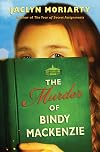
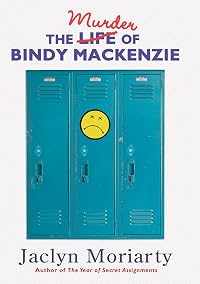
- The Murder of Bindy Mackenzie
- Original title
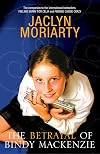
- The Betrayal of Bindy Mackenzie
- Alternate titles
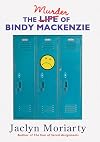
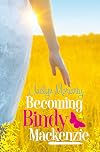
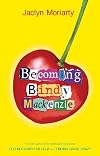
- Becoming Bindy Mackenzie; The Murder of Bindy Mackenzie
- Original publication date
- 2006
- People/Characters
- Bindy Mackenzie; Elizabeth Clarry; Emily Thompson; Finnegan Blonde; Tobias Mazzerati
- Important places
- Australia
- Dedication
- To my Mum and Dad, to Liane, and to Colin with love.
- First words
- I have never spoken to Bindy, but I am sure that behind her extremely annoying personality she is a beautiful human being.
- Last words
- (Click to show. Warning: May contain spoilers.)Bindy Mackenzie talks like a horse and I hope she never stops.
Classifications
Statistics
- Members
- 694
- Popularity
- 41,273
- Reviews
- 23
- Rating
- (3.83)
- Languages
- Dutch, English, German
- Media
- Paper, Audiobook, Ebook
- ISBNs
- 20
- ASINs
- 8