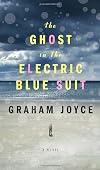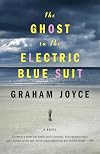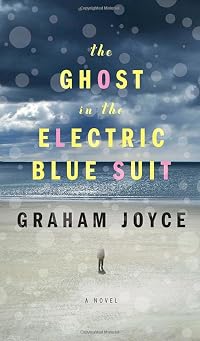
The Ghost in the Electric Blue Suit
by Graham Joyce
On This Page
Description
"Critically acclaimed author Graham Joyce returns with a sexy, suspenseful,and slightly supernatural novel set 1976 England during the hottest summer in living memory, in a seaside resort where the past still haunts the present. David, a college student, takes a summer job at a run-down family resort in a dying English resort town. This is against the wishes of his family because it was at this resort where David's biological father disappeared fifteen years earlier. But something undeniable show more has called David there. A deeper otherworldliness lies beneath the surface of what we see. The characters have a suspicious edge to them. David is haunted by eerie visions of a mysterious man carrying a rope, walking hand-in-hand with a small child, and the resort is under siege by a plague of ladybugs. Something different is happening in this town. When David gets embroiled in a fiercely torrid love triangle, the stakes turn more and more menacing. And through it all, David feels as though he is getting closer to the secrets of his own past. This is a darkly magic and sexy book that has a strong suspense line running through it. It's destined to continue to pull in a wider circle of readers for the exceptionally talented Graham Joyce"-- show lessTags
Recommendations























Member Reviews
Another slice of Midlands life from Graham Joyce, this book draws heavily on Graham's own experience working as a holiday camp Redcoat in the year in question, 1976. For those unfamiliar with, or too young to remember, Britain in those days, 1976 was the year of the hottest summer in living memory, drought, a major infestation of ladybirds (ladybugs to US readers), the rise of far-right politics and the early stirrings of punk rock. All these things - well, perhaps not so much the music, but certainly some of dissatisfaction with the music scene that helped bring punk about - are thrown into the mix in this novel. The setting is a Skegness holiday camp; in the middle 1970s, the holiday camps, which were once major elements in the UK show more travel industry, were beginning their slow decline as mass overseas tourism began to take hold of the imagination. The market leader in this business was an entrepreneur called Billy Butlin; he is namechecked in the book, and the camp where Graham Joyce worked was one of Butlin's, with their infamous 'Redcoats' (many major British entertainers started their careers as Redcoats) , although the camp in the novel is a bit more downmarket than Butlin's. Skegness was (and still is) the preferred destination for a lot of holidaymakers from the East Midlands and south Yorkshire, and this is reflected in the voices of many of the minor characters in the novel. And being Graham Joyce, there is an element of the fantastic, in the form of a very personal ghost for the protagonist who keeps intruding on the real world.
We are pitched into the story very quickly, almost unduly quickly, without so much scene-setting as perhaps you'd find in some other of Graham's novels; but once the protagonist, David Barwise, arrives at the camp, we are soon introduced to the other characters and the setting. Many British readers will be there already, in any case, as this is familiar territory for a lot of readers; but you don't need to know Skegness to quickly pick up on the sense of place and the surroundings.
The plot proceeds apace, and David is quickly pitched into relationships with colleagues, a rapid finding of a facility for dealing with guests, especially children, and the continual interruption of the ghost from the past. David's accidental involvement with far-right politics puts him in a degree of peril, which combine with the confusion of his relationships and the personal ghost to bring him to a crisis, which is precipitated by a supernatural intervention from an unlikely source.
Two things stood out for me in this book: the authentic voice of the ordinary English Midlanders and, oddly enough, the factional nature of extremist politics in the UK. (My personal experience is of extreme parties of the left rather than the right, but all political parties share the curse of factionalism, and extremist parties of all colours experience this more.) As with so many of Graham's later novels, the sense of place is also very strong, not only with Skegness and its surroundings but also its geographical hinterland; it is not described in any detail, but there are sufficient clues given to allow any reader who knows the area, as I do, to vividly imagine the settings mentioned in the book.
There is a personal revelation which explains the ghost; it relates to a family secret. Having myself experienced a family secret and its eventual revelation, I understood that aspect of the plot and the characters' motivations.
There are a few failures of sub-editing (one character's car changes model in the course of a journey), and even the UK edition has a number of American usages that were not removed for the UK text when 'ladybirds' was retained instead of 'ladybugs' - "sticks of rock candy", for example, whereas the correct colloquial English use would just be "sticks of rock". But this is not too significant or intrusive.
I doubt that this will displace any of Graham Joyce's other novels in my personal list of favourites, but this book has much to recommend it as a picture of a particular place and time, and an individual's personal journey of discovery. show less
We are pitched into the story very quickly, almost unduly quickly, without so much scene-setting as perhaps you'd find in some other of Graham's novels; but once the protagonist, David Barwise, arrives at the camp, we are soon introduced to the other characters and the setting. Many British readers will be there already, in any case, as this is familiar territory for a lot of readers; but you don't need to know Skegness to quickly pick up on the sense of place and the surroundings.
The plot proceeds apace, and David is quickly pitched into relationships with colleagues, a rapid finding of a facility for dealing with guests, especially children, and the continual interruption of the ghost from the past. David's accidental involvement with far-right politics puts him in a degree of peril, which combine with the confusion of his relationships and the personal ghost to bring him to a crisis, which is precipitated by a supernatural intervention from an unlikely source.
Two things stood out for me in this book: the authentic voice of the ordinary English Midlanders and, oddly enough, the factional nature of extremist politics in the UK. (My personal experience is of extreme parties of the left rather than the right, but all political parties share the curse of factionalism, and extremist parties of all colours experience this more.) As with so many of Graham's later novels, the sense of place is also very strong, not only with Skegness and its surroundings but also its geographical hinterland; it is not described in any detail, but there are sufficient clues given to allow any reader who knows the area, as I do, to vividly imagine the settings mentioned in the book.
There is a personal revelation which explains the ghost; it relates to a family secret. Having myself experienced a family secret and its eventual revelation, I understood that aspect of the plot and the characters' motivations.
There are a few failures of sub-editing (one character's car changes model in the course of a journey), and even the UK edition has a number of American usages that were not removed for the UK text when 'ladybirds' was retained instead of 'ladybugs' - "sticks of rock candy", for example, whereas the correct colloquial English use would just be "sticks of rock". But this is not too significant or intrusive.
I doubt that this will displace any of Graham Joyce's other novels in my personal list of favourites, but this book has much to recommend it as a picture of a particular place and time, and an individual's personal journey of discovery. show less
It’s the end of August, a time when each day seems noticeably shorter than the one before, when kids are getting haircuts and school supplies and heading back to school, when Thanksgiving and Christmas seem to be just around the corner. It’s a time for taking stock; for many of us, for those who loved the return to the classroom each fall with new resolutions to get good grades and excel at our extracurricular activities, it is more a time for such reevaluation of one’s life, hopes, goals and habits than is New Year’s Day. Perhaps that is why the coming-of-age novel is almost always set in the summer. Graham Joyce’s tale of a young man working at a summer resort, The Ghost in the Electric Blue Suit,belongs on the same shelf as show more other great stories of haunted summers, like Stephen King’s Joyland, Robert McCammon’s Boy’s Life and Dan Simmons’s Summer of Night.
In the summer of 1976, David Barwise, a 19-year-old university student, decides to spend his summer working in Skegness, a small town in Lincolnshire, on the east coast of England. He arrives in town for an interview with a resort, and is quickly hired as a Greencoat, that is, one of the employees who makes sure the holidaymakers have a good time, arranging games and entertainment. The ill-fitting uniform he wears prominently features a red, green and white striped jacket. It’s past the heyday of the institution that was the British holiday resort — a vacation that included everything, food, lodging, entertainment — sort of the way we think of a cruise today, only on dry land. But enough still partake of the tradition that David knows precisely what he’s getting into — or so he thinks.
David chose Skegness because it’s the last place he remembers being with his father before his father died. He was so young at the time — only three years old — that he remembers his father more as a mystery than as an actual father. His stepfather lovingly and happily fulfilled that role for most of David’s life, and David calls him “Dad” not because his mother demands it, but because it accurately represents their relationship. David’s stepfather was dismayed that David didn’t want to spend the summer working with him, but more than that, both parents are inexplicably upset at his choice of venue. There’s a mystery here that David doesn’t so much ignore as fail to notice, so caught is he in his daily activities, which soon include a lot more than merely entertaining the guests.
Beyond that, though, David is also haunted during this summer, and not just by the wife of one of his coworkers who seems at least a touch oversexed. There’s a man wearing a bright blue suit who keeps showing up, often in the company of a child. David has a bad reaction almost every time he sees him, growing dizzy, breathless and panicky. He notices that the two look odd, their faces indistinct yet suspicious. But when the moment passes, he finds he’s been looking at an old blue coat wrapped around a railway tie or something equally innocuous. Yet they appear again and again, until David must squarely face who they are and what they mean.
There is an elegiacal tone to The Ghost in the Electric Blue Suit, the sort of happy sadness that goes along with the end of childhood and the beginning of adulthood. David is a well-drawn character, but so are the others who people his story, from the downright scary nationalists who seem just a swastika away from Nazis to Nikki, a beautiful young coworker of David’s. There isn’t much in the way of a plot, though; this is a tale of David’s last summer as a boy, and it is the description of his thoughts and feelings that matters here. Plenty happens, but the novel reads more like a memoir than a piece of fiction. It comes as no surprise when Joyce mentions in his Acknowledgements that he worked at holiday centers himself as a young man. What Joyce does do here is capture the fullness of the heart that goes with the heartache in this lovingly written ghost story.
Originally published at http://www.fantasyliterature.com/reviews/the-ghost-in-the-electric-blue-suit/. show less
In the summer of 1976, David Barwise, a 19-year-old university student, decides to spend his summer working in Skegness, a small town in Lincolnshire, on the east coast of England. He arrives in town for an interview with a resort, and is quickly hired as a Greencoat, that is, one of the employees who makes sure the holidaymakers have a good time, arranging games and entertainment. The ill-fitting uniform he wears prominently features a red, green and white striped jacket. It’s past the heyday of the institution that was the British holiday resort — a vacation that included everything, food, lodging, entertainment — sort of the way we think of a cruise today, only on dry land. But enough still partake of the tradition that David knows precisely what he’s getting into — or so he thinks.
David chose Skegness because it’s the last place he remembers being with his father before his father died. He was so young at the time — only three years old — that he remembers his father more as a mystery than as an actual father. His stepfather lovingly and happily fulfilled that role for most of David’s life, and David calls him “Dad” not because his mother demands it, but because it accurately represents their relationship. David’s stepfather was dismayed that David didn’t want to spend the summer working with him, but more than that, both parents are inexplicably upset at his choice of venue. There’s a mystery here that David doesn’t so much ignore as fail to notice, so caught is he in his daily activities, which soon include a lot more than merely entertaining the guests.
Beyond that, though, David is also haunted during this summer, and not just by the wife of one of his coworkers who seems at least a touch oversexed. There’s a man wearing a bright blue suit who keeps showing up, often in the company of a child. David has a bad reaction almost every time he sees him, growing dizzy, breathless and panicky. He notices that the two look odd, their faces indistinct yet suspicious. But when the moment passes, he finds he’s been looking at an old blue coat wrapped around a railway tie or something equally innocuous. Yet they appear again and again, until David must squarely face who they are and what they mean.
There is an elegiacal tone to The Ghost in the Electric Blue Suit, the sort of happy sadness that goes along with the end of childhood and the beginning of adulthood. David is a well-drawn character, but so are the others who people his story, from the downright scary nationalists who seem just a swastika away from Nazis to Nikki, a beautiful young coworker of David’s. There isn’t much in the way of a plot, though; this is a tale of David’s last summer as a boy, and it is the description of his thoughts and feelings that matters here. Plenty happens, but the novel reads more like a memoir than a piece of fiction. It comes as no surprise when Joyce mentions in his Acknowledgements that he worked at holiday centers himself as a young man. What Joyce does do here is capture the fullness of the heart that goes with the heartache in this lovingly written ghost story.
Originally published at http://www.fantasyliterature.com/reviews/the-ghost-in-the-electric-blue-suit/. show less
This book is like the British version of Stephen King's 'Joyland.'
Joyce's writing is more elegant, spare and lyrical than King's, and he doesn't succumb to King's urge to add in a grand finale - which makes me personally, judge that this is a slightly better-crafted book - but the two are very, very similar. If you liked one, you will love the other.
A young man, a college student in the 1970's, takes a job at a past-its-prime summer resort, and discovers that he's great with kids. He learns the ropes, negotiates relationships with some sketchy co-workers, develops an attraction for an older woman, but through it all, is haunted by the ghosts of the past.
(All of the above applies to both books.)
Here, though, the 'ghost' is personal. The show more narrator, David, knows that his biological dad died in this resort town when he was three. His mom and stepdad refuse to talk about the circumstances, and he has a sort of vague hope of coming to some kind of closure by taking this job, even against his family's wishes.
In addition to his own issues, this summer David must figure out who he is and where his place is in life. A love triangle develops: he develops a thing for the married Terri, whom he suspects is abused. Simultaneously, the young and lovely Nikki sets her sights on him. Meanwhile, Terri's husband persistently tries to recruit him to the National Front. Not getting his ass kicked by Nazi skinheads is also a goal. The innocent holiday fun has a dark current - and some of these people may not draw the line at murder. As this is a certain type of resort, there's also a fortune-teller, a stage magician, an Italian Tenor, and any number of colorful but believable characters. Through it all, the feel of the book is nostalgic without being sentimental; the message one about the complexities of negotiating life's pitfalls.
Copy of this book provided by NetGalley. Much appreciation for the opportunity to be an early reader - as always, my opinion is my own. show less
Joyce's writing is more elegant, spare and lyrical than King's, and he doesn't succumb to King's urge to add in a grand finale - which makes me personally, judge that this is a slightly better-crafted book - but the two are very, very similar. If you liked one, you will love the other.
A young man, a college student in the 1970's, takes a job at a past-its-prime summer resort, and discovers that he's great with kids. He learns the ropes, negotiates relationships with some sketchy co-workers, develops an attraction for an older woman, but through it all, is haunted by the ghosts of the past.
(All of the above applies to both books.)
Here, though, the 'ghost' is personal. The show more narrator, David, knows that his biological dad died in this resort town when he was three. His mom and stepdad refuse to talk about the circumstances, and he has a sort of vague hope of coming to some kind of closure by taking this job, even against his family's wishes.
In addition to his own issues, this summer David must figure out who he is and where his place is in life. A love triangle develops: he develops a thing for the married Terri, whom he suspects is abused. Simultaneously, the young and lovely Nikki sets her sights on him. Meanwhile, Terri's husband persistently tries to recruit him to the National Front. Not getting his ass kicked by Nazi skinheads is also a goal. The innocent holiday fun has a dark current - and some of these people may not draw the line at murder. As this is a certain type of resort, there's also a fortune-teller, a stage magician, an Italian Tenor, and any number of colorful but believable characters. Through it all, the feel of the book is nostalgic without being sentimental; the message one about the complexities of negotiating life's pitfalls.
Copy of this book provided by NetGalley. Much appreciation for the opportunity to be an early reader - as always, my opinion is my own. show less
The protagonist takes a summer job in an English seaside amusement park in a tired, worn-down resort town. Creepy characters, young love, a seductress, and a mysterious lost father create the ingredients for a fabulous read. Another reviewer made the link to Stephen King's "Joyland" which I had read earlier in the year. I did not see the link before, but I do now, although Mr. King is the master of creep. They are both worthy of your read time. My thanks to the author and Goodreads for a complimentary copy of this book.
Summer of 1976, the hottest since records began and a young man leaves behind his student days and learns how to grow up. A first job in a holiday camp beckons. But with political and racial tensions simmering under the cloudless summer skies there is a price to be paid for his new-found freedom and independence. A price that will come back to haunt him, even in the bright sunlight of summer.
“As with SOME KIND OF FAIRY TALE, Graham Joyce has crafted a deceptively simple tale of great power. With beautiful prose, wonderful characters and a perfect evocation of time and place, this is a novel that transcends the boundaries between the everyday and the supernatural while celebrating the power of both.”
Ahhh yes…1976, the year of the show more endless summer... "Don't Go Breaking My Heart" had been number one forever, punk rock was waiting in the wings, jumbo flares and Concord collars were de rigueur oh and yes the Ladybird plague...It really was the most bizarre experience , almost like an alien invasion, I remember people shovelling buckets full of them off pavements.
It is during that this rather surreal time that Graham Joyce sets his latest novel. Joyce's novels have a dreamlike quality, very often with the characters (and reader) unsure as to whether the experiences are real or part of a daydream or, more often than not, a nightmare.
"Ladybirds" is no exception, it is like one of those summer days in 1976 hazy and shimmering but with an undercurrent of oppression that something dark is swarming on the horizon and it is not going to be pleasant.
A beautiful poignant book that explores guilt, forgiveness and redemption. show less
“As with SOME KIND OF FAIRY TALE, Graham Joyce has crafted a deceptively simple tale of great power. With beautiful prose, wonderful characters and a perfect evocation of time and place, this is a novel that transcends the boundaries between the everyday and the supernatural while celebrating the power of both.”
Ahhh yes…1976, the year of the show more endless summer... "Don't Go Breaking My Heart" had been number one forever, punk rock was waiting in the wings, jumbo flares and Concord collars were de rigueur oh and yes the Ladybird plague...It really was the most bizarre experience , almost like an alien invasion, I remember people shovelling buckets full of them off pavements.
It is during that this rather surreal time that Graham Joyce sets his latest novel. Joyce's novels have a dreamlike quality, very often with the characters (and reader) unsure as to whether the experiences are real or part of a daydream or, more often than not, a nightmare.
"Ladybirds" is no exception, it is like one of those summer days in 1976 hazy and shimmering but with an undercurrent of oppression that something dark is swarming on the horizon and it is not going to be pleasant.
A beautiful poignant book that explores guilt, forgiveness and redemption. show less
Refusing to work the summer of 1976 in his stepfather's construction company, perhaps looking for a bit of adventure, David manages to get a job as a "greencoat" at a holiday camp on the East coast. The camp is in Skegness, a place he's drawn to because he's been told that his father—his real father, that is—brought him there when he was three. As a college student he's a bit of a novelty at the camp, but then, everyone seems a bit of a novelty there. There's a heat wave going on and there's also a plague of ladybird/ladybugs. David's the new guy with an ill-fitting uniform, trying to navigate this strange (and sometimes scary) wonderland, while applying his talents to the tasks given to him. As the days go by, David sometimes sees show more at odd times a ghostly man and his young child, either together or separately, and his sleep begins to deteriorate.
More coming-of-age story, than ghost story (as it is billed), this is an engaging first person tale of one young man's summer journey that includes colorful characters, beautful women, scary politics, some dubious night time activities, drink, games, music, magic and dance. Oh, and lots of rock candy. It took me a while to settle into David's voice, but once settled I enjoyed it. I'd not been very familiar with the institution of the British holiday camp, but Joyce brings it to life by blending fiction and some of his own experiences working in one. This novel won't displace my favorite Graham Joyce novels, nor do I think it's his best book, but it is a entertaining, colorful and diverting read. show less
More coming-of-age story, than ghost story (as it is billed), this is an engaging first person tale of one young man's summer journey that includes colorful characters, beautful women, scary politics, some dubious night time activities, drink, games, music, magic and dance. Oh, and lots of rock candy. It took me a while to settle into David's voice, but once settled I enjoyed it. I'd not been very familiar with the institution of the British holiday camp, but Joyce brings it to life by blending fiction and some of his own experiences working in one. This novel won't displace my favorite Graham Joyce novels, nor do I think it's his best book, but it is a entertaining, colorful and diverting read. show less
The Ghost in the Electric Blue Suit begins by introducing us to college student David Barwise, who has just arrived at a seaside resort in 1976 Skegness to start a summer job. He's ended up there because it's the location of the only photo he has of his father. He doesn't know much else about the man who died years ago but he has a strange notion that the answers are in Skegness. He ends up finding a lot more than he bargained for there -- unconventional relationships, ladybugs and a ghost in an electric blue suit.
Powell's has created a pretty cool companion playlist for the book. I wish I had found it before I read the story so that I could have listened along to Lou Reed, Patti Smith, Kate Bush and more while I journeyed with David show more through a summer of varied co-workers, vacationers and leisure activities. Even though it turned out to be a different type of story from what I would normally read, I still enjoyed it quite a bit. It took me to a time and place that I've never visited before, introduced me to people I wouldn't have met otherwise and made me think about memory and the past in a different way. The crafting of the story was superb, even in the most uncomfortable moments of David's summer.
http://webereading.com/2014/08/new-release-ghost-in-electric-blue-suit.html show less
Powell's has created a pretty cool companion playlist for the book. I wish I had found it before I read the story so that I could have listened along to Lou Reed, Patti Smith, Kate Bush and more while I journeyed with David show more through a summer of varied co-workers, vacationers and leisure activities. Even though it turned out to be a different type of story from what I would normally read, I still enjoyed it quite a bit. It took me to a time and place that I've never visited before, introduced me to people I wouldn't have met otherwise and made me think about memory and the past in a different way. The crafting of the story was superb, even in the most uncomfortable moments of David's summer.
http://webereading.com/2014/08/new-release-ghost-in-electric-blue-suit.html show less
Members
- Recently Added By
Lists

100 Hemskaste
81 works; 1 member
Author Information

47+ Works 5,022 Members
Graham Joyce, a four-time winner of the British Fantasy Award, lives in Leicester, England. His books include Dark Sister, Requiem, and The Tooth Fairy, which received a Booker nomination and was chosen as a Publishers Weekly Best Book of 1998. (Publisher Provided) Graham Joyce was born on October 22, 1954. He received a Master's Degree in modern show more English and American literature from Leicester University. Before becoming an author, he worked for the National Association of Youth Clubs for eight years. His first novel, Dreamside, was published in 1991. His other works included House of Lost Dreams, Requiem, The Tooth Fairy, Some Kind of Fairy Tale, and The Year of the Ladybird. He won several awards including the British Fantasy award. He also taught a creative writing course at Nottingham Trent University. He died of lymphoma cancer on September 9, 2014 at the age of 59. (Bowker Author Biography) show less
Awards and Honors
Awards
Common Knowledge
- Canonical title*
- The Year of the Ladybird
- Alternate titles
- The Ghost in the Electric Blue Suit; The Year of the Ladybird
- Important places
- Skegness, Lincolnshire, England, UK
*Some information comes from Common Knowledge in other languages. Click "Edit" for more information.
Classifications
Statistics
- Members
- 181
- Popularity
- 181,033
- Reviews
- 12
- Rating
- (3.70)
- Languages
- English, Hungarian, Swedish
- Media
- Paper, Audiobook, Ebook
- ISBNs
- 11
- ASINs
- 4