On This Page
Description
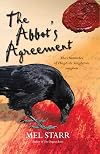
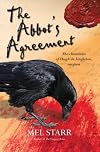
"My life would have been more tranquil in the days after Martinmas had I not seen the crows. Whatever it was that the crows had found lay in the dappled shadow of the bare limbs of the oak, so I was nearly upon the thing before I recognized what the crows were feasting upon. The corpse wore black." Master Hugh is making his way towards Oxford when he discovers the young Benedictine-a fresh body, barefoot-not half a mile from the nearby abbey. The abbey's novice master confirms the boy's show more identity: John, one of three novices. But he had gone missing four days previously, and his corpse is fresh. There has been plague in the area, but this was not the cause of death: the lad has been stabbed in the back. To Hugh's sinking heart, the abbot has a commission for him ... show lessTags
Recommendations










Member Reviews
Mel Starr never ceases to impress. His 7th book in The Chronicles of Hugh de Singleton, Surgeon, The Abbot’s Agreement, just might be his best novel yet. Starr is the master of creating a puzzling mystery set in Medieval England. I highly recommend this book for lovers of mystery fiction, whatever the setting.
Hugh de Singleton, bailiff for Lord Gilbert Talbot, is on his way to purchase a Bible in Oxford. Accompanying him is the loyal and physically dominating groom, Arthur, a handy person to have while traveling the roads of England in the 14th century. But before they travel very far, they discover the remains of a novice at the local abbey, and the old and frail Abbott persuades Hugh with the promise of a free Bible to stay and find show more the felon. Hugh, ever mindful of his growing family and his decreasing purse, agrees.
There is a lot to love about Starr’s mystery series. His characters are always believable and well-drawn. Hugh is especially complex. An intelligent man, bound by the culture and wisdom of his day, he endeavors to find truth in his cases and also in his understanding of God and man. Medieval England comes to life as seen through Hugh’s first person narrative. Hugh may be constrained by the limited scientific knowledge of he day, but he makes up for it with his wit and inventiveness. In The Abbot’s Agreement, Hugh cleverly discovers the how and where of the crime, yet the who and why remain a mystery. In this, human behavior becomes the main focus of the investigation.
Master Hugh is also a man of deep faith. He longs to read the Bible for himself, rather than having others tell him what it says. His study of the Scripture leads him to an understanding that bordered on what those of his day believed heretical. I loved Hugh’s explanation of Jesus’ atoning sacrifice, an idea that many today struggle with as well. Other heretical ideas are also explored — ideas that still seem alive and well in today’s modern world.
While The Abbot’s Agreement can be read as a standalone, I recommend that you start at the beginning. Hugh is a wonderful character and this mystery series is one of the best I have read.
Highly Recommended.
Audience: Adults.
(Thanks to Kregel and Lion Hudson for a review copy. The opinions expressed are mine alone.) show less
Hugh de Singleton, bailiff for Lord Gilbert Talbot, is on his way to purchase a Bible in Oxford. Accompanying him is the loyal and physically dominating groom, Arthur, a handy person to have while traveling the roads of England in the 14th century. But before they travel very far, they discover the remains of a novice at the local abbey, and the old and frail Abbott persuades Hugh with the promise of a free Bible to stay and find show more the felon. Hugh, ever mindful of his growing family and his decreasing purse, agrees.
There is a lot to love about Starr’s mystery series. His characters are always believable and well-drawn. Hugh is especially complex. An intelligent man, bound by the culture and wisdom of his day, he endeavors to find truth in his cases and also in his understanding of God and man. Medieval England comes to life as seen through Hugh’s first person narrative. Hugh may be constrained by the limited scientific knowledge of he day, but he makes up for it with his wit and inventiveness. In The Abbot’s Agreement, Hugh cleverly discovers the how and where of the crime, yet the who and why remain a mystery. In this, human behavior becomes the main focus of the investigation.
Master Hugh is also a man of deep faith. He longs to read the Bible for himself, rather than having others tell him what it says. His study of the Scripture leads him to an understanding that bordered on what those of his day believed heretical. I loved Hugh’s explanation of Jesus’ atoning sacrifice, an idea that many today struggle with as well. Other heretical ideas are also explored — ideas that still seem alive and well in today’s modern world.
While The Abbot’s Agreement can be read as a standalone, I recommend that you start at the beginning. Hugh is a wonderful character and this mystery series is one of the best I have read.
Highly Recommended.
Audience: Adults.
(Thanks to Kregel and Lion Hudson for a review copy. The opinions expressed are mine alone.) show less
Things are not as they should be at tranquil Eynsham Abbey. On his way to Oxford, Hugh de Singleton, surgeon, happens upon the mutilated body of a young Benedictine novice. At the nearby abbey, Hugh learns of a lad who has been missing for four days. Upon further examination of the body, Hugh discovers 'twas not the plague that did him in, but murder. To Hugh's dismay, the abbot commissions him to uncover the culprit in exchange for a Bible. Although the abbot only asks for his best effort, Hugh soon questions his decision to accept. The investigation takes several complicated twists and turns as Hugh seeks a killer and uncovers a sinister secret hidden within Eynsham Abbey.
The Bottom Line: The Chronicles of Hugh de Singleton, surgeon show more are one of my favorite mystery series. In the 7th installment, Hugh's character continues to evolve as both his family and his responsibilities grow. Like the previous books, this is written in the first person in the form of a journal. This quick read touches on darker topics than previous books, and author Mel Starr includes plenty of red herrings to keep readers guessing. My only complaint is that this installment is too short; I'm already looking forward to the next one. Readers of medieval mysteries and Christian fiction will want to give this series a try. Those new to the series will find ample backstory included without having to read the books in order. A glossary of medieval terms and maps are included. show less
The Bottom Line: The Chronicles of Hugh de Singleton, surgeon show more are one of my favorite mystery series. In the 7th installment, Hugh's character continues to evolve as both his family and his responsibilities grow. Like the previous books, this is written in the first person in the form of a journal. This quick read touches on darker topics than previous books, and author Mel Starr includes plenty of red herrings to keep readers guessing. My only complaint is that this installment is too short; I'm already looking forward to the next one. Readers of medieval mysteries and Christian fiction will want to give this series a try. Those new to the series will find ample backstory included without having to read the books in order. A glossary of medieval terms and maps are included. show less
 This review was written for LibraryThing Early Reviewers.
"My life would have been more tranquil in the days after Martinmas had I not seen the birds. But I am an inquisitive sort of man, and the noisy host caught my attention... It is said that curiosity killed the cat. It can prove hazardous for meddlesome bailiffs as well."
It is the year 1368 and Hugh de Singleton, surgeon and bailiff, is on the road near Eynsham, heading to Oxford where he hopes to purchase a Bible. However, when he discovers the body of a young Benedictine monk and the abbot of the nearby Abbey asks him to investigate, how can he refuse especially when he is offered a Bible as payment.
He soon discovers that things are not what they seem or should be at the Abbey. When the abbot falls or is pushed down the stairs and Hugh show more is accused of heresy, he has only a few days to disprove the claim and find the killer if he is to escape prison or worse. But the further he searches for answers, the more clear it becomes that there are many in the Abbey who do not want this particular mystery solved.
The Abbot’s Agreement is the seventh in the Hugh de Singleton series by author Mel Starr. It is a well-written and well-researched portrayal of the period. The pace is rather slow and there is very little action which many might find off-putting but, for anyone who is more interested in the historical rather than the mystery side of the novel (and I include myself here), this is a fascinating look at life in the Middle Ages. show less
It is the year 1368 and Hugh de Singleton, surgeon and bailiff, is on the road near Eynsham, heading to Oxford where he hopes to purchase a Bible. However, when he discovers the body of a young Benedictine monk and the abbot of the nearby Abbey asks him to investigate, how can he refuse especially when he is offered a Bible as payment.
He soon discovers that things are not what they seem or should be at the Abbey. When the abbot falls or is pushed down the stairs and Hugh show more is accused of heresy, he has only a few days to disprove the claim and find the killer if he is to escape prison or worse. But the further he searches for answers, the more clear it becomes that there are many in the Abbey who do not want this particular mystery solved.
The Abbot’s Agreement is the seventh in the Hugh de Singleton series by author Mel Starr. It is a well-written and well-researched portrayal of the period. The pace is rather slow and there is very little action which many might find off-putting but, for anyone who is more interested in the historical rather than the mystery side of the novel (and I include myself here), this is a fascinating look at life in the Middle Ages. show less
As I sit and look at my bookshelves I see all the Bibles that I own, KJV, ESV, NKJV, NIV and so on so when Hugh’s latest chronicle starts it reminds it hasn’t always been so easy or inexpensive to own a Bible – as Hugh is setting out to buy at least a New Testament and if not that, then at least those written by Paul. Of course, he and Arthur become side tracked with the sighting of birds overhead which tells Hugh that there is something dead, he sets off to find a young novice who has been murdered. The Abbot makes a deal – find who did the murder and Hugh will get his Bible as payment. I’ve read the others (not the 1st and 2nd, yet) in this series and I think this has been my favorite so far, it was truly a page turner and show more kept me up late reading, which kept my mind from other things. The whodunit isn’t easily figured out, at least it wasn’t for me, and I enjoyed that – just when I thought Hugh and I had figured it out there was another twist to the plot that threw us both off course.
Of course I also enjoy the historical aspect of the story and the medical complexities that met Hugh as he traveled around trying to find a murderer. Hugh is ahead of his time in things like letting wounds open to the air instead of keeping them covered for best healing. Of course, there is the descriptions of food, which at times doesn’t add to the plot but I think makes the story much more realistic.The other part of the book I enjoyed was the discussion between the dying Abbot (who knew one could die from a broken hip) and Hugh about purgatory and why would we need that to cleanse us when Christ already completed the work? This of course has the archdeacon labeling Hugh a heretic and he is arrested. I won’t give away much more about the book because honestly if you enjoy medieval history, historical or just a good clean (meaning no cussing, s**, etc) mystery then this is a great book.
**I was given a copy of this book from Kregel in exchange for my honest opinion, no other compensation was given. show less
Of course I also enjoy the historical aspect of the story and the medical complexities that met Hugh as he traveled around trying to find a murderer. Hugh is ahead of his time in things like letting wounds open to the air instead of keeping them covered for best healing. Of course, there is the descriptions of food, which at times doesn’t add to the plot but I think makes the story much more realistic.The other part of the book I enjoyed was the discussion between the dying Abbot (who knew one could die from a broken hip) and Hugh about purgatory and why would we need that to cleanse us when Christ already completed the work? This of course has the archdeacon labeling Hugh a heretic and he is arrested. I won’t give away much more about the book because honestly if you enjoy medieval history, historical or just a good clean (meaning no cussing, s**, etc) mystery then this is a great book.
**I was given a copy of this book from Kregel in exchange for my honest opinion, no other compensation was given. show less
Hugh is on his way to Oxford to buy a Bible - an expensive luxury purchase in the middle ages. His wife is due to give birth around Christmas and his life is content. On the way though he finds a dead body, eaten by crows but clearly that of a monk from the local abbey. Hugh is commissioned by the Abbot to find the murderer, his reward will be a Bible. However in searching for a murderer Hugh uncovers blasphemy in the abbey, is accused himself and realises that his monk was more involved with the sins of the flesh that at first glance.
I have read a couple of Mel Starr's books and I find that there is the same problem, 200-odd pages of enjoyable whodunnit set in medieval times and a denouement that seems over in a couple of pages and is show more lightly sketched. That's rather frustrating as Starr obviously has researched the books well and is comfortable writing in period, the characters are round and the plots actually quite tight. In this case I loved the fact that Hugh was convinced he knew all the answers but then suddenly realised that he know nothing and had to formulate a completely different theory.
Very entertaining but just not quite there for me show less
I have read a couple of Mel Starr's books and I find that there is the same problem, 200-odd pages of enjoyable whodunnit set in medieval times and a denouement that seems over in a couple of pages and is show more lightly sketched. That's rather frustrating as Starr obviously has researched the books well and is comfortable writing in period, the characters are round and the plots actually quite tight. In this case I loved the fact that Hugh was convinced he knew all the answers but then suddenly realised that he know nothing and had to formulate a completely different theory.
Very entertaining but just not quite there for me show less
A chilly Autumn 1368 in Bampton, England finds surgeon and bailiff, Hugh de Singleton, happily contemplating his possible acquisition of a Bible, soon to expand his library to six(!) books. Sadly, his journey to an Oxford bookseller is soon disrupted by the foul discovery of the corpse of a young man. It takes little to determine the unfortunate young man had been a novice at a nearby Abbey. What remains -- at Abbot Thurstan's request -- is to discovery the identity of the loathesome murderer. Does evil lurk within the Abbey .... Or without?
A fast moving mystery, replete with ample Medieval detail and vocabulary. There is a handy glossary for those unfamiliar with terms such as 'reredorter' and 'pannaging.' This is the seventh in the show more Chronicles of Hugh de Singleton, but do not be put off if this is your first introduction to the series. I haven't read the others, yet had no trouble picking up with the action. An enjoyable read. show less
A fast moving mystery, replete with ample Medieval detail and vocabulary. There is a handy glossary for those unfamiliar with terms such as 'reredorter' and 'pannaging.' This is the seventh in the show more Chronicles of Hugh de Singleton, but do not be put off if this is your first introduction to the series. I haven't read the others, yet had no trouble picking up with the action. An enjoyable read. show less
This review was written for LibraryThing Early Reviewers.3.5-4 stars
It’s been eighteen months or so since I read my last Hugh de Singleton novel, and I have to admit, despite some of the (entirely legitimate) comments made by other reviewers, this was one of my personal favourites.
Provided expectations are not placed too high, its generally quite good- of course there is no high drama, political intrigue, and little in the way of real action or tension, but this is not something the series generally contains.
Those expecting such things (or a series to the level of another Cadfael) may be disappointed. The Chronicles of Hugh de Singleton are a more slow-paced with the occasional foray into Medieval Medicine and surgery which I for one appreciate as someone personally fascinated with the show more subject.
I personally enjoyed the descriptions of life in and the working of a medieval Benedictine monastery, some of the other descriptions of social life, the impact of the Black Death and the exploration of some of the religious beliefs and ideas of the period. The story did perhaps drag a little in places, and Hugh is certainly not the sharpest tool in the barn, but generally the story was compelling enough that I wanted to read on. There is something endearing about Dear Hugh, despite his occasional failings a sleuth, and even Arthur, his burly bodyguard.
My only major gripe in terms of the plot-line was a serious contradiction given about the evidence of the night the murder was committed. Without meaning to give too much away it was early on stated that there was no moon on that night- and later that there was a full moon and a cloudless sky allowing persons to see clearly. This is not presented as an error, or seemingly even remembered, and for mystery buffs, might be considered a heinous fax pas- and perhaps the solution was a little obvious. Yet for all that, those seeking a ‘light’ mystery with sound historical content, or a clean read with a Christian flavour may be satisfied.
I received this book from Netgalley in exchange for a review. I was not required to write a positive one and all opinions expressed are my own. show less
It’s been eighteen months or so since I read my last Hugh de Singleton novel, and I have to admit, despite some of the (entirely legitimate) comments made by other reviewers, this was one of my personal favourites.
Provided expectations are not placed too high, its generally quite good- of course there is no high drama, political intrigue, and little in the way of real action or tension, but this is not something the series generally contains.
Those expecting such things (or a series to the level of another Cadfael) may be disappointed. The Chronicles of Hugh de Singleton are a more slow-paced with the occasional foray into Medieval Medicine and surgery which I for one appreciate as someone personally fascinated with the show more subject.
I personally enjoyed the descriptions of life in and the working of a medieval Benedictine monastery, some of the other descriptions of social life, the impact of the Black Death and the exploration of some of the religious beliefs and ideas of the period. The story did perhaps drag a little in places, and Hugh is certainly not the sharpest tool in the barn, but generally the story was compelling enough that I wanted to read on. There is something endearing about Dear Hugh, despite his occasional failings a sleuth, and even Arthur, his burly bodyguard.
My only major gripe in terms of the plot-line was a serious contradiction given about the evidence of the night the murder was committed. Without meaning to give too much away it was early on stated that there was no moon on that night- and later that there was a full moon and a cloudless sky allowing persons to see clearly. This is not presented as an error, or seemingly even remembered, and for mystery buffs, might be considered a heinous fax pas- and perhaps the solution was a little obvious. Yet for all that, those seeking a ‘light’ mystery with sound historical content, or a clean read with a Christian flavour may be satisfied.
I received this book from Netgalley in exchange for a review. I was not required to write a positive one and all opinions expressed are my own. show less
Members
- Recently Added By
Author Information

17 Works 2,056 Members
Series

Common Knowledge
- Canonical title
- The Abbot's Agreement
- People/Characters
- Hugh de Singleton
- Important events
- Reign of Edward III, King of England (1327-01-25 | 1377-06-21)
Classifications
Statistics
- Members
- 105
- Popularity
- 308,242
- Reviews
- 21
- Rating
- (3.77)
- Languages
- English
- Media
- Paper, Audiobook, Ebook
- ISBNs
- 7
- ASINs
- 4