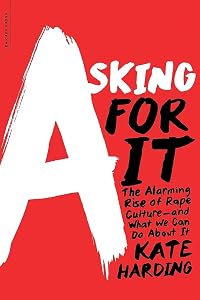
Asking for It: The Alarming Rise of Rape Culture and What We Can Do About It
by Kate Harding
On This Page
Description
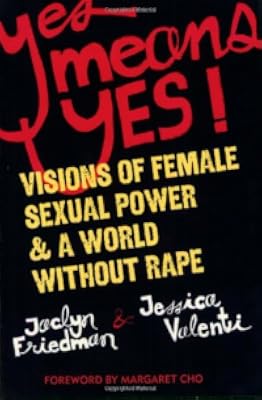
"From Congressman Todd Akin's "legitimate rape" gaffe to the high school rapists of Steubenville, Ohio, to the furor at Vanderbilt, sexual violence has been so prominent in recent years that the feminist term "rape culture" has finally entered the mainstream. But what, exactly, is it? And how do we change it? In Asking for It, Kate Harding answers those questions in the same blunt, bullshit-free voice that has made her a powerhouse feminist blogger. Combining in-depth research with practical show more knowledge, Asking for It makes the case that twenty-first-century America-where it's estimated that out of every 100 rapes only 5 result in felony convictions-supports rapists more effectively than victims. Harding offers ideas and suggestions for how we, as a culture, can take rape much more seriously without compromising the rights of the accused. "-- "If American women couldn't laugh about the way we discuss rape in this culture, half of us would be sobbing constantly, while the other half, one can only assume, would be arming themselves for the revolution. In the last few years, a series of Republican politicians have introduced memorable phrases into the American lexicon that reveal their automatic suspicion of women who report rape: "forcible rape," "honest rape," "legitimate rape," and "emergency rape" are some choice favorites. These qualified terms reveal what a lot of Americans--too many of them in public office--believe down deep: There's rape, and then there's rape-rape. Disturbingly, most of us do support rape, whether in subtle ways ("All women should take self-defense classes!") or blatantly misogynistic ones ("Hot sex with a crazy bitch"). That's how culture works. You're soaking in it. This is the first book since 2008's Yes Means Yes! to tackle the subject of rape culture, and I'm pretty sure it's the first non-academic, single-author book since the 1990s to examine sexual assault as a social phenomenon. Harding explores how rape culture manifests itself via media narratives about sexual assault victims and perpetrators--and how those change, depending on the age, race, sexual orientation, gender identity and fame of both victim and offender. Through that lens, she will take a close look at the three pillars of rape culture--excusing the accused, blaming the victim, and insisting that individual women can and must protect themselves from rape"-- show lessTags
Recommendations








Member Reviews
Asking For It from Kate Harding is, for rational people, a disturbing book. There is not a lot of new information here but the stories we have all heard are here brought together and the common threads that contribute to a rape culture become much more evident.
Rape culture is not just about the numbers, though they are staggering. It isn't just about repeat rapists, though there are more of them than we will likely ever know. Rape culture includes the acceptance of ideas like "I was just a little assertive, I didn't rape her" when in fact she never said yes and never stopped trying to stop him. It is the unwillingness, displayed repeatedly and all across the United States (the country I am most familiar with), on the part of law show more enforcement and the judicial system to treat rapists as "real criminals." This is done often by claiming a lenient sentence is only fair because the rapist has a potentially bright future, even though he raped a fellow human being and that human being will serve a life sentence as a result. It is evident in the kinds of jokes that will be accepted and the fact that an admitted sexual predator can be elected President. This is now a rape culture from the top down.
I would recommend this book to everyone. Even those who disagree with the idea. If you disagree then read this and refute in your mind every bit of evidence that is presented. I know you won't be able to do so honestly and hopefully at some point the information you learned here will resurface in your life and you will see that there is a lot we all need to do so that every person can feel safe in their own society.
Reviewed from a copy made available by the publisher via Edelweiss. show less
Rape culture is not just about the numbers, though they are staggering. It isn't just about repeat rapists, though there are more of them than we will likely ever know. Rape culture includes the acceptance of ideas like "I was just a little assertive, I didn't rape her" when in fact she never said yes and never stopped trying to stop him. It is the unwillingness, displayed repeatedly and all across the United States (the country I am most familiar with), on the part of law show more enforcement and the judicial system to treat rapists as "real criminals." This is done often by claiming a lenient sentence is only fair because the rapist has a potentially bright future, even though he raped a fellow human being and that human being will serve a life sentence as a result. It is evident in the kinds of jokes that will be accepted and the fact that an admitted sexual predator can be elected President. This is now a rape culture from the top down.
I would recommend this book to everyone. Even those who disagree with the idea. If you disagree then read this and refute in your mind every bit of evidence that is presented. I know you won't be able to do so honestly and hopefully at some point the information you learned here will resurface in your life and you will see that there is a lot we all need to do so that every person can feel safe in their own society.
Reviewed from a copy made available by the publisher via Edelweiss. show less
An Insightful, Sometimes-Snarky, Surprisingly Readable Interrogation of Rape Culture
(Full disclosure: I received a free electronic ARC for review through Edelweiss. Obvious trigger warning for rape.)
I've been a fan of Kate Harding's ever since her days blogging at Shakespeare's Sister (now Shakesville). I think I first caught wind of her latest project, Asking for It: The Alarming Rise of Rape Culture--and What We Can Do about It, more than a year ago, and have spent the interim occasionally checking the book's Amazon listing, where the publication date seemed to creep further and further away. And it's no wonder: every month brings with it a new development in the national conversation about rape and rape culture.
As Harding explains show more in the Author's Note:
"When I sold the proposal for this book in 2012, I foolishly agreed to finish the manuscript in six months, because my agent, editor, and I agreed that rape culture was having a moment, as it were. News of the Steubenville, Ohio, gang rape case was picking up steam, and the memory of Missouri Representative Todd Akin's "legitimate rape" gaffe was fresh in all our minds. Sexual violence was suddenly a popular topic, but - based on national conversations about rape in the 1970s and 1990s that started strong and dissipated quickly - we feared that if we waited too long, this book might be released to a public that was already over it.
"The bad news is that it took me way longer than six months to finish the manuscript. The good news - amazingly, wonderful, really sort of mind-blowing news actually - is that years later, Americans are still walking seriously about rape and rape culture."
Asking for It is a welcome addition to the conversation: smart, witty, and surprisingly enjoyable. Well, not enjoyable, exactly - that's not quite right - but Harding's sometimes-snarky tone and penchant for calling bullshit as needed make for a slightly less depressing read.
And there's so much to feel disheartened about. Normally this is where, in a nonfiction book review, I might insert choice excerpts to represent the overall content and tone of the book. In this case: statistics concerning the prevalence of rape (at some point in their lives 1 in 5 women and 1 in 71 men will be raped; 98% of offenders are men; 64% of rapes are never reported, while only 12% lead to arrest); an especially egregious case of victim-blaming (the eleven-year-old Jane Doe from Cleveland, Texas, who was gang-raped and then likened by a defense attorney to a spider, luring his client the fly to certain doom); anti-rape campaigns gone horribly wrong (a 2006 ditty from the British Home Office features a prison rape "joke"!); or scientific studies of law enforcement officers' acceptance of rape culture myths (in one study, 28.8% of participants estimated that 50% or more of rape allegations were false - with some respondents putting the figure at 100%).
But I don't really want to do that here. Even choosing the examples cited above proved an exercise in indecision.
My reluctance isn't just because the book's filled to bursting with surprising (or not, unless you're an off-the-grid hermit) facts and eminently-quotable passages. Rather, the whole is so much greater than the sum of its parts, and I'd be doing it - and you - a disservice by pretending otherwise. In Asking for It, Harding masterfully dissects and interrogates rape culture, critiquing its various components and manifestations, sometimes even identifying unexpected connections. For example, abortion, online trolling, Gamergate, and revenge porn might not seem (at least to the casual observer) to have much - if anything - to do with sexual assault. Yet Harding shows how anti-abortion activists and politicians - and rapists themselves - use reproductive rights as a cudgel to control women and their bodies. Likewise, those who harass women from the comfort and anonymity of the internet often invoke the threat of rape to silence women, removing them - and their voices - from the public sphere.
Though I no longer read feminist blogs with the same religious fervor as my early days on the 'net (I slowly cycled from anger to depression to burnout), I still keep up with the news on social media, and I like to think I'm fairly well-informed with it comes to "women's issues" like rape. (Scare quotes because labeling rape a women's problem a) places the onus on women to stop it and b) helps to remove men from the conversation, when they should be at the epicenter, as Harding astutely notes. The way rape is reported, you'd think it's a perpetratorless crime!) And while I did indeed recognize a number of cases cited by Harding - Steubenville, Bill Cosby, Emma Sulkowicz, Roman Polanski, Julian Assange*, the Central Park Five - a rather surprising minority proved news to me. (How did I manage to miss the whole Ben Roethlisberger catastrofuck?) Likewise, while we've all heard the statistics about rape, the psychological/sociological research presented here is as informative as it is chilling.
I also appreciate the light Harding shines on potential solutions, as promised in the second half of the book's subtitle: "What We Can Do about It". Among these are successful education campaigns, undertaken by organizations, yet Harding also emphasizes the many ways that individuals can have an impact in their own lives, from taking to social media to shame companies, institutions, and artists into doing better, to challenging rape culture within your own social circles. (Dudes, we're looking at you.)
For younger readers, or those new to the topic, Asking for It is an accessible introduction to rape culture. In particular, I think it could be an excellent resource for parents who'd like to broach the subject with their teens, or for intro-level college courses (women's studies, psychology, criminology). Academics and journalists may also find something new and stimulating here; like I said, Harding makes some exciting connections and observations. If nothing else, it may challenge you to see one or more aspects of rape culture from a different angle.
Naturally, there are a few areas I wish Harding has spent more (or some) time on. While Harding approaches the topic with an intersectional focus - teasing out the ways that race, class, sexual orientation, sexual identity, and disability interact with misogyny vis-à-vis rape culture (for the accused as well as victims) - a discussion of the unique challenges faced by, say, trans women would have been welcome. Likewise, a dedicated section on campus rape by college athletes could have helped tease out the many threads that make up the vom-worthy tapestry that is rape culture, sitting as it does on the nexus of campus rape and celebrity. (It's worth noting that journalist Andrea Grimes announced a book deal to address this very topic last August.) And while revenge porn and upskirt photos are mentioned in passing, both are forms of sexual assault that are slowly being recognized as the serious violations that they are (18 states now have laws on the books re: revenge porn) - making them ripe for discussion.
* I cannot thank Harding enough for the (relatively) lengthy look at the Assange case. Liberal dudebros, c'mon! If the CIA really wanted to lock him up, why fabricate charges for the most under-reported, under-prosecuted, under-punished crime of, like, ever? Better to frame him for embezzling donations or a killing a pedestrian in a hit-and-run. Refusing to stop once a consensual sexual encounter became non-consensual? Yeesh. Most people don't even consider that rape. Sad but true.
http://www.easyvegan.info/2015/08/28/asking-for-it-by-kate-harding/ show less
(Full disclosure: I received a free electronic ARC for review through Edelweiss. Obvious trigger warning for rape.)
I've been a fan of Kate Harding's ever since her days blogging at Shakespeare's Sister (now Shakesville). I think I first caught wind of her latest project, Asking for It: The Alarming Rise of Rape Culture--and What We Can Do about It, more than a year ago, and have spent the interim occasionally checking the book's Amazon listing, where the publication date seemed to creep further and further away. And it's no wonder: every month brings with it a new development in the national conversation about rape and rape culture.
As Harding explains show more in the Author's Note:
"When I sold the proposal for this book in 2012, I foolishly agreed to finish the manuscript in six months, because my agent, editor, and I agreed that rape culture was having a moment, as it were. News of the Steubenville, Ohio, gang rape case was picking up steam, and the memory of Missouri Representative Todd Akin's "legitimate rape" gaffe was fresh in all our minds. Sexual violence was suddenly a popular topic, but - based on national conversations about rape in the 1970s and 1990s that started strong and dissipated quickly - we feared that if we waited too long, this book might be released to a public that was already over it.
"The bad news is that it took me way longer than six months to finish the manuscript. The good news - amazingly, wonderful, really sort of mind-blowing news actually - is that years later, Americans are still walking seriously about rape and rape culture."
Asking for It is a welcome addition to the conversation: smart, witty, and surprisingly enjoyable. Well, not enjoyable, exactly - that's not quite right - but Harding's sometimes-snarky tone and penchant for calling bullshit as needed make for a slightly less depressing read.
And there's so much to feel disheartened about. Normally this is where, in a nonfiction book review, I might insert choice excerpts to represent the overall content and tone of the book. In this case: statistics concerning the prevalence of rape (at some point in their lives 1 in 5 women and 1 in 71 men will be raped; 98% of offenders are men; 64% of rapes are never reported, while only 12% lead to arrest); an especially egregious case of victim-blaming (the eleven-year-old Jane Doe from Cleveland, Texas, who was gang-raped and then likened by a defense attorney to a spider, luring his client the fly to certain doom); anti-rape campaigns gone horribly wrong (a 2006 ditty from the British Home Office features a prison rape "joke"!); or scientific studies of law enforcement officers' acceptance of rape culture myths (in one study, 28.8% of participants estimated that 50% or more of rape allegations were false - with some respondents putting the figure at 100%).
But I don't really want to do that here. Even choosing the examples cited above proved an exercise in indecision.
My reluctance isn't just because the book's filled to bursting with surprising (or not, unless you're an off-the-grid hermit) facts and eminently-quotable passages. Rather, the whole is so much greater than the sum of its parts, and I'd be doing it - and you - a disservice by pretending otherwise. In Asking for It, Harding masterfully dissects and interrogates rape culture, critiquing its various components and manifestations, sometimes even identifying unexpected connections. For example, abortion, online trolling, Gamergate, and revenge porn might not seem (at least to the casual observer) to have much - if anything - to do with sexual assault. Yet Harding shows how anti-abortion activists and politicians - and rapists themselves - use reproductive rights as a cudgel to control women and their bodies. Likewise, those who harass women from the comfort and anonymity of the internet often invoke the threat of rape to silence women, removing them - and their voices - from the public sphere.
Though I no longer read feminist blogs with the same religious fervor as my early days on the 'net (I slowly cycled from anger to depression to burnout), I still keep up with the news on social media, and I like to think I'm fairly well-informed with it comes to "women's issues" like rape. (Scare quotes because labeling rape a women's problem a) places the onus on women to stop it and b) helps to remove men from the conversation, when they should be at the epicenter, as Harding astutely notes. The way rape is reported, you'd think it's a perpetratorless crime!) And while I did indeed recognize a number of cases cited by Harding - Steubenville, Bill Cosby, Emma Sulkowicz, Roman Polanski, Julian Assange*, the Central Park Five - a rather surprising minority proved news to me. (How did I manage to miss the whole Ben Roethlisberger catastrofuck?) Likewise, while we've all heard the statistics about rape, the psychological/sociological research presented here is as informative as it is chilling.
I also appreciate the light Harding shines on potential solutions, as promised in the second half of the book's subtitle: "What We Can Do about It". Among these are successful education campaigns, undertaken by organizations, yet Harding also emphasizes the many ways that individuals can have an impact in their own lives, from taking to social media to shame companies, institutions, and artists into doing better, to challenging rape culture within your own social circles. (Dudes, we're looking at you.)
For younger readers, or those new to the topic, Asking for It is an accessible introduction to rape culture. In particular, I think it could be an excellent resource for parents who'd like to broach the subject with their teens, or for intro-level college courses (women's studies, psychology, criminology). Academics and journalists may also find something new and stimulating here; like I said, Harding makes some exciting connections and observations. If nothing else, it may challenge you to see one or more aspects of rape culture from a different angle.
Naturally, there are a few areas I wish Harding has spent more (or some) time on. While Harding approaches the topic with an intersectional focus - teasing out the ways that race, class, sexual orientation, sexual identity, and disability interact with misogyny vis-à-vis rape culture (for the accused as well as victims) - a discussion of the unique challenges faced by, say, trans women would have been welcome. Likewise, a dedicated section on campus rape by college athletes could have helped tease out the many threads that make up the vom-worthy tapestry that is rape culture, sitting as it does on the nexus of campus rape and celebrity. (It's worth noting that journalist Andrea Grimes announced a book deal to address this very topic last August.) And while revenge porn and upskirt photos are mentioned in passing, both are forms of sexual assault that are slowly being recognized as the serious violations that they are (18 states now have laws on the books re: revenge porn) - making them ripe for discussion.
* I cannot thank Harding enough for the (relatively) lengthy look at the Assange case. Liberal dudebros, c'mon! If the CIA really wanted to lock him up, why fabricate charges for the most under-reported, under-prosecuted, under-punished crime of, like, ever? Better to frame him for embezzling donations or a killing a pedestrian in a hit-and-run. Refusing to stop once a consensual sexual encounter became non-consensual? Yeesh. Most people don't even consider that rape. Sad but true.
http://www.easyvegan.info/2015/08/28/asking-for-it-by-kate-harding/ show less
In Asking for It, Harding argues--I think quite successfully--that we live in a culture which, while professing to abhor rape, actually does precious little to prevent, investigate, prosecute, and punish rape. What's worse, we live in a culture which does more to encourage and protect rapists than rape victims (thus the term "rape culture").
This book is very thoroughly researched--the amount of data and scholarly research cited is truly eye-opening--and provides ample evidence to support its central claim: that our culture does not take rape as seriously as it purports to, and that we need to do better. This point is relentlessly driven home as Harding covers media, cultural myths, the criminal justice system, politicians, and much show more more.
Though it's well worth reading simply for Harding's detailed handling of the topic, the book ups the ante: after making the claim that we need to do better, Harding then provides concrete suggestions as to how we can do better. She does not simply identify a pervasive, ugly problem (though goodness knows that's important enough); she outlines ways in which we, as a society, can better address that problem. And that, to me, is one of the most valuable things about the book.
Harding's incisive critique paired with her forward-looking approach makes Asking for It a must-read. show less
This book is very thoroughly researched--the amount of data and scholarly research cited is truly eye-opening--and provides ample evidence to support its central claim: that our culture does not take rape as seriously as it purports to, and that we need to do better. This point is relentlessly driven home as Harding covers media, cultural myths, the criminal justice system, politicians, and much show more more.
Though it's well worth reading simply for Harding's detailed handling of the topic, the book ups the ante: after making the claim that we need to do better, Harding then provides concrete suggestions as to how we can do better. She does not simply identify a pervasive, ugly problem (though goodness knows that's important enough); she outlines ways in which we, as a society, can better address that problem. And that, to me, is one of the most valuable things about the book.
Harding's incisive critique paired with her forward-looking approach makes Asking for It a must-read. show less
Free review copy. Most of the people who will read this probably don’t need to. Tidbits that struck me: the discourse about when non-“no” statements and behaviors signals lack of consent to sex contrasts very sharply with the rest of our social understanding—everywhere else, most men have no trouble deciphering indirect communication, including a “no” that is not said in so many words; rape culture teaches that they just don’t have to pay any attention when it comes to sex. Rape prevention is not a matter of explaining to men what they already know, and it’s definitely not a matter of telling women to be constantly on guard and to use “a degree of assertiveness that we know will instantly mark us as arrogant show more bitches.” The Catch-22 is that women are blamed for “putting themselves” in a position to be sexually assaulted—we drink, we walk alone, we go off with guys—but “if we’re honest about the amount of mental real estate we devote to anticipating danger,” we get lectures about how we’re paranoid and #notallmen. As Harding concludes, “[n]o one will ever specify exactly how much worry is the right amount.”
Harding discusses a victim-centered approach to investigating rape as a crime, which includes “being mindful of how often a victim is asked to repeat her story and by how many people.” There are other parts, but they’re mostly sensible (if we got out of the haze of rape myths, including treating victims’ self-blame as a mitigating factor).
On listening to women: Harding reminds us that “[a]s soon as someone says, ‘I was raped,’ we cannot say, ‘There is no evidence that it happened.’” Her testimony is evidence, even if it’s not conclusive evidence. Relatedly, the infamous Todd Akin/women don’t get pregnant from real rape myth is so seductive because, “[i]f every vagina could intuit the difference between consensual and nonconsensual sex, then we might have more ways of distinguishing rape from nonrape that don’t require listening to a woman’s own account of what happened.” show less
Harding discusses a victim-centered approach to investigating rape as a crime, which includes “being mindful of how often a victim is asked to repeat her story and by how many people.” There are other parts, but they’re mostly sensible (if we got out of the haze of rape myths, including treating victims’ self-blame as a mitigating factor).
On listening to women: Harding reminds us that “[a]s soon as someone says, ‘I was raped,’ we cannot say, ‘There is no evidence that it happened.’” Her testimony is evidence, even if it’s not conclusive evidence. Relatedly, the infamous Todd Akin/women don’t get pregnant from real rape myth is so seductive because, “[i]f every vagina could intuit the difference between consensual and nonconsensual sex, then we might have more ways of distinguishing rape from nonrape that don’t require listening to a woman’s own account of what happened.” show less
This is one of those rare books - a book where nothing rings false, there are no strange things stuck in places they don't belong, it is well edited, and well written. The author details ways in which rape culture has permeated our society, leading to many of the headlines that we have trouble comprehending or doing much about. She also gives a few suggestions, though she is realistic enough to realize that it isn't going to happen quickly. The only place I really depart from her is that it is more difficult for me to be optimistic about the future. Her belief that the current trend toward making a difference is going to continue to accelerate is not well grounded in historical reality, since most successful social movements are quickly show more followed by a strong backlash, often vitriolic and bitter, that undoes much of what has been done. In this case, the backlash started even before the movement, so it remains to be seen which group will win out. That said, this should be a must read for all people who think they know what rape is, and what it isn't. show less
Asking For It: The Alarming Rise of Rape Culture--and What We Can Do about It by Kate Harding I knew this would be an informative book, but I didn't expect to enjoy it this much. It's the kind of book that should be read and analyzed and discussed in classes and prevention training sessions everywhere.
It's been on my TBR since about the time it was published but I just now got it together to read it. I usually hate talking about rape, particularly when I'm already talking about feminism. For years, I had viewed rape and abortion as the only two things feminists talked about and I hated that. That was when I was still in the primary target age and it terrified me to be reminded that often. As I've embraced the label of feminist in show more recent years, it's taken me a while to be okay with talking about rape. It took a while to find my voice in it, but this book would have helped me do that sooner.
See, I'm only slightly younger than the author, so I remember those times in the '90s when it almost seemed like people cared. I remember ingesting all the messages from television and schools that almost made it seem like it wouldn't have been my fault, except that everyone knew it really would have been because it's always actually about how not-cautious and unprepared the victim was. No one was saying yet that we should just teach people not to rape. No one was using the word consent, not around me.
Just as Harding contends, the landscape is changing now and it's changing in a beautiful way. The generation that is coming up now is amazing in its embrace of that the victim didn't invite it, couldn't have invited it. Harding writes beautifully about the problems we've seen in recent decades and the amazing things that were happening around the writing of the book and the things that look like they are on our horizon.
She writes with an entertaining style that was both friendly and firm. She does not let us delude ourselves about the world we live in but she does provide hope and paths to new understandings. Rape has been talked about and taught about one way for so long that changing the conversation isn't going to happen immediately, but her book is another in a line of books that are changing the conversation from "why was she there" "what was she wearing" to "why did he do that". But she doesn't miss the opportunity to stand up for men and that they can be victims too, of each other and of women. She doesn't miss the opportunity to talk about the fact that there are lots of men out there who are perfectly great and respectful partners that don't rape. But there are those who do and we aren't calling them out near enough.
There's lots of information in this book that I had before but there is lots that I didn't. Everyone should read the book, talk about it with others, and analyze it along with the world around them. It's important to talk about rape and consent.
Something not mentioned in the book, but that I would like to add to the conversation is that it is never too early to talk about consent because it is a part of everything at every age. We've been using that word in situations with my son since he was about 3 years old (he's six now). It came up when he expressed that he didn't like being squeezed when we hug him. Instead of using the kind of language that is usually reserved for children of this age, we made the conscientious decision to use the word consent. Hugs must be consented to each time and the appropriate level of squeeze is negotiated throughout. There must be enthusiastic consent to hug any one at any time and that is reinforced with visitors to our home. Or tickle. Or wrestle with. Or touch. Or smooch. Or help him in the bathroom. Or call him by any nickname. Or label him in any way.
I feel like part of the problem with talking about what affirmative consent is and looks like is that we reserve it for discussing sex. That may be too sensitive a topic to start with and it's definitely too old for them to just be learning the concept. By then, we have waited until they've gotten used to being able to touch without asking for it and being touched without giving it. We have waited until they have determined that we can't be that serious about it because they've already done so many things they weren't allowed to do. So we started using consent early.
Pick up this book. Read it. Talk about it. Talk about consent. Use it in everyday situations. Don't miss an opportunity to increase your knowledge of rape culture and your ability to be a part of changing the conversation and helping the next generation improve things. show less
It's been on my TBR since about the time it was published but I just now got it together to read it. I usually hate talking about rape, particularly when I'm already talking about feminism. For years, I had viewed rape and abortion as the only two things feminists talked about and I hated that. That was when I was still in the primary target age and it terrified me to be reminded that often. As I've embraced the label of feminist in show more recent years, it's taken me a while to be okay with talking about rape. It took a while to find my voice in it, but this book would have helped me do that sooner.
See, I'm only slightly younger than the author, so I remember those times in the '90s when it almost seemed like people cared. I remember ingesting all the messages from television and schools that almost made it seem like it wouldn't have been my fault, except that everyone knew it really would have been because it's always actually about how not-cautious and unprepared the victim was. No one was saying yet that we should just teach people not to rape. No one was using the word consent, not around me.
Just as Harding contends, the landscape is changing now and it's changing in a beautiful way. The generation that is coming up now is amazing in its embrace of that the victim didn't invite it, couldn't have invited it. Harding writes beautifully about the problems we've seen in recent decades and the amazing things that were happening around the writing of the book and the things that look like they are on our horizon.
She writes with an entertaining style that was both friendly and firm. She does not let us delude ourselves about the world we live in but she does provide hope and paths to new understandings. Rape has been talked about and taught about one way for so long that changing the conversation isn't going to happen immediately, but her book is another in a line of books that are changing the conversation from "why was she there" "what was she wearing" to "why did he do that". But she doesn't miss the opportunity to stand up for men and that they can be victims too, of each other and of women. She doesn't miss the opportunity to talk about the fact that there are lots of men out there who are perfectly great and respectful partners that don't rape. But there are those who do and we aren't calling them out near enough.
There's lots of information in this book that I had before but there is lots that I didn't. Everyone should read the book, talk about it with others, and analyze it along with the world around them. It's important to talk about rape and consent.
Something not mentioned in the book, but that I would like to add to the conversation is that it is never too early to talk about consent because it is a part of everything at every age. We've been using that word in situations with my son since he was about 3 years old (he's six now). It came up when he expressed that he didn't like being squeezed when we hug him. Instead of using the kind of language that is usually reserved for children of this age, we made the conscientious decision to use the word consent. Hugs must be consented to each time and the appropriate level of squeeze is negotiated throughout. There must be enthusiastic consent to hug any one at any time and that is reinforced with visitors to our home. Or tickle. Or wrestle with. Or touch. Or smooch. Or help him in the bathroom. Or call him by any nickname. Or label him in any way.
I feel like part of the problem with talking about what affirmative consent is and looks like is that we reserve it for discussing sex. That may be too sensitive a topic to start with and it's definitely too old for them to just be learning the concept. By then, we have waited until they've gotten used to being able to touch without asking for it and being touched without giving it. We have waited until they have determined that we can't be that serious about it because they've already done so many things they weren't allowed to do. So we started using consent early.
Pick up this book. Read it. Talk about it. Talk about consent. Use it in everyday situations. Don't miss an opportunity to increase your knowledge of rape culture and your ability to be a part of changing the conversation and helping the next generation improve things. show less
Trigger warning: the following review only talks in the broadest terms about the topic of this book, but I've wrapped it in spoilers anyways.
So, first off- while the majority of this book discusses and deals with the broad picture issues- the statistics behind rape, common myths used to perpetuate rape culture-- it also contains a number of descriptions of heartbreaking incidents. It's not an easy read.
I had a conversation with two acquaintances last week in which they started to argue the usual victim blaming bullshit. I tried to change their views, but found myself fumbling to explain what felt like self-evident truths-- that there's no such thing as "asking for it", that false accusations of rape are rare, that rape doesn't generally happen "by accident", that there's value in teaching affirmative consent.
By the end of that conversation I was dismayed-- not just that people I knew held such backwards beliefs, but that we'd had an honestly frank discussion about rape and I was not able to convince them they were wrong.
This book was well-written, informative, and empathetic without (despite the topic) being emotionally impossible to read. It provided me with some strong arguments to try next time I run into victim blaming, and further motivation to speak up.
show less
So, first off- while the majority of this book discusses and deals with the broad picture issues- the statistics behind rape, common myths used to perpetuate rape culture-- it also contains a number of descriptions of heartbreaking incidents. It's not an easy read.
I had a conversation with two acquaintances last week in which they started to argue the usual victim blaming bullshit. I tried to change their views, but found myself fumbling to explain what felt like self-evident truths-- that there's no such thing as "asking for it", that false accusations of rape are rare, that rape doesn't generally
By the end of that conversation I was dismayed-- not just that people I knew held such backwards beliefs, but that we'd had an honestly frank discussion about rape and I was not able to convince them they were wrong.
This book was well-written, informative, and empathetic without (despite the topic) being emotionally impossible to read. It provided me with some strong arguments to try next time I run into victim blaming, and further motivation to speak up.
Members
- Recently Added By
Lists

Best Feminist Literature
188 works; 26 members

The Mother of All Questions
10 works; 1 member
Author Information

7+ Works 897 Members
Kate Harding is the coauthor of Lessons from the Fat-o-Sphere and a contributor to The Book of Jezebel. A columnist for DAME Magazine, she lives in Minnesota.
Awards and Honors
Awards
Distinctions
Common Knowledge
- Canonical title
- Asking for It: The Alarming Rise of Rape Culture and What We Can Do About It
- Original publication date
- 2015
- Canonical DDC/MDS
- 364.1532
- Canonical LCC
- HV6556.H37
Classifications
- Genres
- Sociology, Nonfiction, Sexuality and Gender Studies, General Nonfiction
- DDC/MDS
- 364.1532 — Society, government, & culture Social problems and social services Crime Criminal offenses Offenses against the person Sex offenses Rape
- LCC
- HV6556 .H37 — Social sciences Social pathology. Social and public welfare. Criminology Social pathology. Social and public welfare. Criminology Crimes and offenses
- BISAC
Statistics
- Members
- 334
- Popularity
- 95,067
- Reviews
- 14
- Rating
- (4.35)
- Languages
- English
- Media
- Paper, Audiobook, Ebook
- ISBNs
- 10
- ASINs
- 2