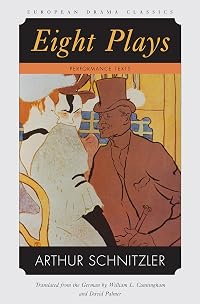
Eight Plays
by Arthur Schnitzler
On This Page
Description
The plays of Arthur Schnitzler have in recent years come to be recognized as masterpieces of modernism. This collection presents the most accurate translations available of Schnitzler's works, passing up opportunities to paraphrase and instead flushing out vivid detail and psychological insight by combining a sensitive interpretation of the playwright's sometimes ironic, sometimes farcical, temperament with a faithful re-creation of dialogue. The volume includes Schnitzler's popular show more Roundelay (La Ronde) and Anatol, as well as rarely translated works like Professor Bernhardi and Hour of Realizing. There are also additional scenes and an alternate ending to Anatol that are seldom found in translation or even in German versions of the play. With conscientious attention to the rhythms of speech and respect for the completeness of the works, these translations offer new possibilities for bringing Schnitzler's works to the contemporary stage and new insights for anyone interested in drama, literature, or history. show lessTags
Members
- Recently Added By
Author Information

449+ Works 7,596 Members
Arthur Schnitzler, Viennese playwright, novelist, short story writer, and physician, was a sophisticated writer much in vogue in his time. He chose themes of an erotic, romantic, or social nature, expressed with clarity, irony, and subtle wit. Reigen, a series of ten dialogues linking people of various social classes through their physical desire show more for one another, has been filmed many times as La Ronde. As a Jew, Schnitzler was sensitive to the problems of anti-Semitism, which he explored in the play Professor Bernhardi (1913), seen in New York in a performance by the Vienna Burgtheater in 1968. Henry Hatfield calls Schnitzler "second only to Hofmannsthal among the Austrian writers of his generation and one of the most underrated of German authors... . He combined the naturalist's devotion to fact with the impressionist's interest in nuance; in other words, he told the truth" (Modern German Literature). In his most famous story, Lieutenant Gustl (1901), Schnitzler employs the stream-of-consciousness technique in an exposition of the follies and gradual disintegration of society in fin de siecle Vienna. Schnitzler has also been linked with Freud (see Vols. 3 and 5) and is credited with consciously introducing elements of modern psychology into his works. (Bowker Author Biography) show less
Classifications
Statistics
- Members
- 5
- Popularity
- 3,432,790
- Languages
- English
- Media
- Paper
- ISBNs
- 1