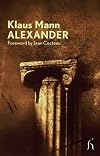
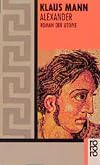
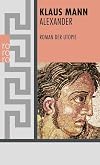
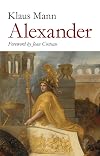
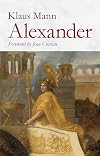
Alexander
by Klaus Mann
On This Page
Description
This historical fantasy, written by the son of the well-known German novelist Thomas Mann, takes Alexander the Great for its subject, charting his life and career, and examining his obsession with conquest and supremacy, regardless of its effects on his friends and lovers. Written in 1920s Germany in the aftermath of World War I, this timeless story can also be viewed as a fascinating study of power with highly political connotations. Alexander is a captivating early work of historical show more fiction from a troubled and unjustly neglected writer. show lessTags
Recommendations



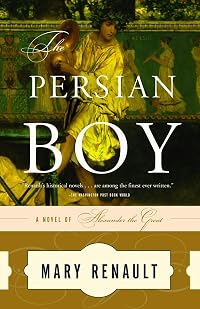

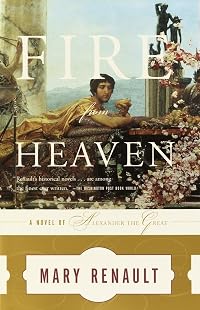
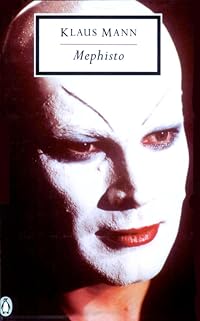

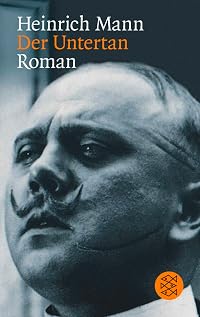




















Member Reviews
As you would expect, Klaus Mann's Alexander covers roughly the same ground as all the other Alexander novels out there, but the emphasis is rather different. The great battles and epic marches are barely footnotes in this story: everything is about the struggle for Alexander's soul between, on the good side: Aristotle's Hellenic (read: Germanic) rationalism and healthy outdoor activity in the nude; on the bad side: Philip's macho ranting, Olympias and the cult of the Mother Goddess, and perfumed Persian sophistication in baggy trousers. Lovely writing, but there's something rather disturbing about seeing someone you're used to thinking of as a political opponent of the Nazis going into ecstasies about the Macedonians' short skirts and show more hard, sunburned bodies... show less
This is a decidedly unromantic account of the life of Alexander, which as historical fiction feels like a cross between a fairy tale and one of Freud's case studies. True to the literary mixed media telling of his life, Alexander's death combines extreme unction with a quasi-stigmata wherein an angel reassures Alexander that he'll reincarnate as Jesus Christ, or something like that. Somewhere off in another part of the library Mary Renault is spinning in her grave.
Anyway, for all that, this isn't a terrible book. If it was meant as a critique of absolute power, it's dyspeptic rather than tragic. (A somewhat embarrassing rendering.) I enjoyed it as a deterministic horror story of desire scorned. I'll never look at Clitus quite the same show more way again. show less
Anyway, for all that, this isn't a terrible book. If it was meant as a critique of absolute power, it's dyspeptic rather than tragic. (A somewhat embarrassing rendering.) I enjoyed it as a deterministic horror story of desire scorned. I'll never look at Clitus quite the same show more way again. show less
The language and structure is neither riveting nor convincing, but the storyline carries one along Alexanders life. Not a masterpiece but a fast moving story on his life.
As opposed to the American lost generation of his time, the author employs a traditional writing style, whilst short sentences would have been more appropriate to Alexander's restless life.
Ein Roman über Alexander den Größen, in dem fast alle Feldzüge und Schlachten nur im vorübergehen erwähnt werden, ja manchmal erfährt man sogar erst über die militarischen Beschäftigungen in einem Nebensatz, wo es steht, dass der Gegner in die Flucht getrieben ist.
Anstatt auf Strategie und machtpolitische Abhandlungen zu konzentrieren, ist Klaus Manns "Alexander" ein Roman über den inneren Leben eines Menschen, der im Leben keine Ruhe findet und unaufhörlich die Grenzen der Welt und des menschlichen Wissens sucht. Manchmal erinnert es an Hermann Hesse (besonders "Siddhartha"), da die Reise nach Indien gleichzeitig eine geistige Reise darstellt. Detailliert werden auch Alexanders Beziehungen zu seinem engsten Umkreis show more beschrieben -- die Mutter, derentwegen er die Welt zu erobern versucht, seine beide Kameraden, mit denen er in einem unglücklichen Dreiecksbeziehung verwickelt ist.
Kein historischer Roman im traditionellen Sinn, sondern ein Charakterstudie. Schön geschrieben, erstaunlich kurzweilig, und bei weitem nicht so langatmig wie die Romane seines Vaters. show less
Anstatt auf Strategie und machtpolitische Abhandlungen zu konzentrieren, ist Klaus Manns "Alexander" ein Roman über den inneren Leben eines Menschen, der im Leben keine Ruhe findet und unaufhörlich die Grenzen der Welt und des menschlichen Wissens sucht. Manchmal erinnert es an Hermann Hesse (besonders "Siddhartha"), da die Reise nach Indien gleichzeitig eine geistige Reise darstellt. Detailliert werden auch Alexanders Beziehungen zu seinem engsten Umkreis show more beschrieben -- die Mutter, derentwegen er die Welt zu erobern versucht, seine beide Kameraden, mit denen er in einem unglücklichen Dreiecksbeziehung verwickelt ist.
Kein historischer Roman im traditionellen Sinn, sondern ein Charakterstudie. Schön geschrieben, erstaunlich kurzweilig, und bei weitem nicht so langatmig wie die Romane seines Vaters. show less
Nov 3, 2012German
2
Ratings
Members
- Recently Added By
Lists

Books Read in 2016
4,666 works; 199 members

Antigua Grecia
43 works; 2 members
Author Information

98+ Works 2,871 Members
Klaus Mann, son of novelist and Nobel Prize winner Thomas Mann, was born in Munich, Germany on November 18, 1906. He emigrated to the United States in the 1930's after working in the theater and journalism in his homeland. Early works, including "Kindernovele" (1926) and "Mephisto" (1936), were published in German, but later works, such as "The show more Turning Point" (1941), were published in English. He committed suicide in Cannes on May 21, 1949. (Bowker Author Biography) show less
Series
Belongs to Publisher Series
rororo (5141)
Common Knowledge
- Canonical title
- Alexander
- Original title
- Alexander. Roman der Utopie
- Original publication date
- 1929
- People/Characters
- Alexander III the Great, 326-253 BC; Philipp II of Macedon; Olympias; Dareius III; Parmenion
- Important places
- Macedonia; Macedon; Aigai, Macedonia; Vergina, Macedonia (today's place of Aigai); Persian Empire; Punjab, India (show all 7); Halicarnassus, Asia Minor
- Important events
- Wars of Alexander the Great (336-323 BC); Indian campaign of Alexander the Great (327-325 BC); Susa weddings (324 BC)
Classifications
- Genres
- Fiction and Literature, General Fiction, Historical Fiction
- DDC/MDS
- 833.912 — Literature & rhetoric German & related literatures German fiction 1900- 1900-1990 1900-1945
- LCC
- PT2625 .A435 .A7513 — Language and Literature German, Dutch and Scandinavian literatures German literature Individual authors or works 1860/70-1960
- BISAC
Statistics
- Members
- 136
- Popularity
- 241,034
- Reviews
- 5
- Rating
- (3.25)
- Languages
- 5 — English, French, German, Italian, Spanish
- Media
- Paper, Ebook
- ISBNs
- 11
- ASINs
- 5