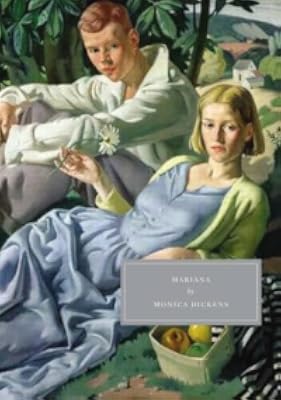
Mariana
by Monica Dickens
On This Page
Description
The story of a young Englishwoman's growth towards maturity in the 1930's, a funny, readable, and perceptive account of life and love.Tags
Recommendations



















Member Reviews
Mariana is the second book from Persephone, which publishes "mainly neglected fiction and non-fiction by women, for women and about women." Published in 1940, it is essentially a coming of age story about an ordinary English woman, and on the basis of that description might easily be dismissed. But what makes Mariana such a charming read is its structure. The book opens with our heroine, Mary, ensconced in a holiday cottage with her dog, Bingo, and a raging storm outdoors. She hears some upsetting news on the radio, but the weather prevents her venturing out to obtain more information. Instead, the reader is treated to the story of Mary's life, from idyllic childhood summers in the country, through her school days and young adulthood in show more London.
Mary grows up surrounded by interesting and influential characters. Her widowed, independent mother fosters a sense of independence in her daughter, even as Mary with school and vocational training. Mary's uncle Geoffrey, an actor, lives with Mary and her mother. His carefree approach to life strikes Mary as much more desirable than her mother's constant worry about having enough money for life's basic necessities. Mary’s first love is her cousin Denys, and it takes years for her to understand their close relationship can be nothing more than platonic. But she is resilient and every relationship with a man teaches her more about what she needs from life and love.
By the time we arrive at those moments in the cottage, we are fully invested in Mary's story and learning the details behind the news report. Monica Dickens reveals those details and wraps up Mary’s story in a most clever fashion. All in all, a very satisfying read. show less
Mary grows up surrounded by interesting and influential characters. Her widowed, independent mother fosters a sense of independence in her daughter, even as Mary with school and vocational training. Mary's uncle Geoffrey, an actor, lives with Mary and her mother. His carefree approach to life strikes Mary as much more desirable than her mother's constant worry about having enough money for life's basic necessities. Mary’s first love is her cousin Denys, and it takes years for her to understand their close relationship can be nothing more than platonic. But she is resilient and every relationship with a man teaches her more about what she needs from life and love.
By the time we arrive at those moments in the cottage, we are fully invested in Mary's story and learning the details behind the news report. Monica Dickens reveals those details and wraps up Mary’s story in a most clever fashion. All in all, a very satisfying read. show less
This may be the loveliest opening to a novel that I have ever read.
“Mary sometimes heard people say: ‘I can’t bear to be alone.” She could never understand this. All her life she had needed the benison of occasional solitude, and she needed it now more than ever. If she could not be with the man she loved, then she would rather be by herself.”
It captured my own feelings perfectly, and expressed them more beautifully than I ever could.
Mary escaped to the country with just her small terrier dog, Bingo, in tow. Her husband was at sea, in the navy, and the country was at war. Because she wanted to be quiet, to remember, to think.
It was lovely watching Mary and Bingo settle in, lovely to be reminded of the depth of Monica show more Dickens’ understanding of character and of her talent for catching exactly the right details to paint a perfect picture.
I was particularly taken with her understanding that a terrier can be sound asleep and alert at the same time …
The peaceful scene was disturbed when Mary switched on the wireless, when she heard that her husband’s ship had been hit. There were survivors, there was hope, but Mary had a night to get through before she found out the next morning if her husband was alive or dead.
It was a sleepless night, and as she lay awake Mary turned over memories in her mind.
She remembered her childhood, with a mother who had been widowed in the last war and who worked as a dressmaker to support them. Her husband’s family would have helped but she didn’t want to be beholden to them. It was enough that they gave Mary lovely, idyllic summer holidays in the country. And a place in a bigger family.
She remembered going to drama school with grand plans, and coming to realise that she was on the wrong path. Fashion college in Paris was a much better idea. She could have a lovely time and she could play a part in the family business. Mary had a wonderful time in Paris, and she made a marvellous catch. But even the most marvellous catch is not necessarily the right catch.
Mary found her happy ending back in England, at the most unexpected moment.
Now it has to be said that Mary is not the most sympathetic of characters. She is often awkward, thoughtless, selfish even. But she was real, and for all her failing I did like her, I did want her to find her path in life, her place in the world. Sometimes fallible heroines are so much easier to love.
And Mary was real, alive, and her emotional journey was so utterly real. There were highs and lows, tears and laughter. Every emotion a young woman might go through. And so many incidents, so many moments to recollect.
All of this was observed so beautifully, with understanding, intelligence, and just the right amount of empathy.
But if Mary’s life was the foreground, the background was just as perfectly realised. Her world was as alive as she was, and every character who was part of that word, even if only for a short while, was caught perfectly.
I loved watching over Mary’s life. It was an ordinary life, but every ordinary life is unique and Monica Dickens highlighted that quite beautifully.
And I could have stayed in her world quite happily, but morning eventually came, and Mary had to face whatever news of her husband might come. And when it came I had to leave.
I’d love to know what happened in the next chapters of Mary’s life, but failing that I’ll go back and read about the years I know all over again one day. Because this is a lovely book, and a lovely way to get lost in another life and another world. show less
“Mary sometimes heard people say: ‘I can’t bear to be alone.” She could never understand this. All her life she had needed the benison of occasional solitude, and she needed it now more than ever. If she could not be with the man she loved, then she would rather be by herself.”
It captured my own feelings perfectly, and expressed them more beautifully than I ever could.
Mary escaped to the country with just her small terrier dog, Bingo, in tow. Her husband was at sea, in the navy, and the country was at war. Because she wanted to be quiet, to remember, to think.
It was lovely watching Mary and Bingo settle in, lovely to be reminded of the depth of Monica show more Dickens’ understanding of character and of her talent for catching exactly the right details to paint a perfect picture.
I was particularly taken with her understanding that a terrier can be sound asleep and alert at the same time …
The peaceful scene was disturbed when Mary switched on the wireless, when she heard that her husband’s ship had been hit. There were survivors, there was hope, but Mary had a night to get through before she found out the next morning if her husband was alive or dead.
It was a sleepless night, and as she lay awake Mary turned over memories in her mind.
She remembered her childhood, with a mother who had been widowed in the last war and who worked as a dressmaker to support them. Her husband’s family would have helped but she didn’t want to be beholden to them. It was enough that they gave Mary lovely, idyllic summer holidays in the country. And a place in a bigger family.
She remembered going to drama school with grand plans, and coming to realise that she was on the wrong path. Fashion college in Paris was a much better idea. She could have a lovely time and she could play a part in the family business. Mary had a wonderful time in Paris, and she made a marvellous catch. But even the most marvellous catch is not necessarily the right catch.
Mary found her happy ending back in England, at the most unexpected moment.
Now it has to be said that Mary is not the most sympathetic of characters. She is often awkward, thoughtless, selfish even. But she was real, and for all her failing I did like her, I did want her to find her path in life, her place in the world. Sometimes fallible heroines are so much easier to love.
And Mary was real, alive, and her emotional journey was so utterly real. There were highs and lows, tears and laughter. Every emotion a young woman might go through. And so many incidents, so many moments to recollect.
All of this was observed so beautifully, with understanding, intelligence, and just the right amount of empathy.
But if Mary’s life was the foreground, the background was just as perfectly realised. Her world was as alive as she was, and every character who was part of that word, even if only for a short while, was caught perfectly.
I loved watching over Mary’s life. It was an ordinary life, but every ordinary life is unique and Monica Dickens highlighted that quite beautifully.
And I could have stayed in her world quite happily, but morning eventually came, and Mary had to face whatever news of her husband might come. And when it came I had to leave.
I’d love to know what happened in the next chapters of Mary’s life, but failing that I’ll go back and read about the years I know all over again one day. Because this is a lovely book, and a lovely way to get lost in another life and another world. show less
This novel, published in 1940, tells the simple story of a girl growing up in England just before World War II breaks out. Mary Shannon is the daughter of a working-class widow, but her father’s family is a wealthier and more genteel, so she spends all her holidays at Charbury, the Shannons’ country house. To Mary, Charbury is the most wonderful place in the world, and she spends an extremely happy childhood there. As Mary grows up, she experiences all the typical trials of school, first love, and uninspiring career paths. Through it all, she searches for – and eventually finds – true love, as well as a deeper understanding of her own identity.
This book is a gentle, slow-paced read that is packed with atmosphere. It’s a show more wonderfully vivid picture of English life in the 1930s, and it was easy to immerse myself in that world. The writing style is very British and fun to read, with several laugh-out-loud moments, especially in the descriptions of Mary’s family and friends. The plot is pretty slow-moving and meandering, following Mary through more than ten years of her life, but it maintains its direction as Mary continues her journey of self-discovery. If you’re in the mood for a coming-of-age story or a period piece, I would definitely recommend this book. show less
This book is a gentle, slow-paced read that is packed with atmosphere. It’s a show more wonderfully vivid picture of English life in the 1930s, and it was easy to immerse myself in that world. The writing style is very British and fun to read, with several laugh-out-loud moments, especially in the descriptions of Mary’s family and friends. The plot is pretty slow-moving and meandering, following Mary through more than ten years of her life, but it maintains its direction as Mary continues her journey of self-discovery. If you’re in the mood for a coming-of-age story or a period piece, I would definitely recommend this book. show less
Originally posted here
It was impressive for me to have finished this book considering I found it insufferably boring. The book opens with the main character Mary, it's during World War 2 and she has just found out that a military vessel has sunk and she has no idea whether her husband is one of the rescued or a casualty. It is the middle of the night and there just so happens to be a violent storm so the telephone lines are down and she has to wait until morning before she can find out anything. The story flashes back from that point to tell Mary's entire life story from childhood; I found the reading experience to be about as interesting as watching paint dry.
I do usually enjoy character driven plots but Mariana made me realise that I show more prefer the main character to go through some sort of hardship in order for it to be compelling to me. Mary experiences no hardship whatsoever, she maybe broke a nail one time or something equally ridiculous. There was nothing about her life that interested me in the slightest. Actually, her brief relationship with Pierre was probably the only part that I enjoyed and that was half a chapter.
There is a lot of cutting and bitchy commentary throughout the entire book, Mary is constantly judging other girls. She is harsh about their looks, weight, intelligence and even slut shames some poor girl because she had a passionate embrace with her fiancé on a bench at a party. I understand this book was originally published in 1940, but still - I guess some things never change. Mary's vitriol is even turned against herself as she buys a dress that is too small and then is full of self-loathing because one of the seams keeps popping open. Mary spends a good majority of the whole book just bemoaning at how fat she is. That is honestly as interesting as the story gets.
I found Mary to be self-absorbed, living in a privileged bubble, spoiled and vapid. She did not have a single interesting thought during the entire book. The other characters just blended into one and I really regret wasting my time struggling to finish it as it never redeemed itself. The biggest disappointment of the year so far. show less
Mary, the protagonist of Mariana, is a wonderful character drawn from life. The narrator's powers of observation are trenchant with a wit that is unsparingly sharpened against Mary and the host of oftentimes ridiculous characters who pass through Mary's life on her way to adulthood. Mary put me in mind of Bridget Jones - she was so endearing, in certain aspects inadequate, honest if derisive, simultaneously self aware and bumbling. Monica Dickens has a way of capturing in just a few lines the essence of her characters and their foibles. I was surprised into laughter throughout the book. But along with the irreverent humor comes moments of poignancy and affection - like the early chapters on the country house Charbury and the childhood show more years Mary spent there with her idiosyncratic, extended family. Nostalgia gilds these chapters and the later ones when Mary visits the old house after she's grown. And then there are the misadventures in love that lead her down many wrong turns, to the moment with which the book opens and Mary is waiting to hear if her husband has survived an attack during WWII. Mariana is full of these contradictory elements of light and dark. Never should it be mistaken for mere fluff however, even at its lightest. It depicts time and place and the vagaries of growing up so well, I'm glad Persephone has recovered this "forgotten treasure." show less
50+
46
Kate Harper
HomeMy Books
Browse ▾
Community ▾
Kate Harper's Reviews > Mariana
Mariana by Monica Dickens
Mariana
by Monica Dickens,
Harriet Lane (Goodreads Author) (Preface)
2130215
Kate Harper's review
Jan 23, 2020 · edit
it was amazing
bookshelves: england, read-in-2020
" 'I want to have my hair bobbed please,' she said in scarcely more than a whisper, to the girl behind the desk ... Mary went away and had a cup of tea and a rock cake. All round her women were eating ham teas. They nearly all had short hair. She wondered whether they had gone through these pangs before they bobbed it, or whether their husbands had laughingly clapped a basin over their heads one fine Putney day and run a pair of scissors round as casually as they would show more trim the garden hedge."
"Mariana describes a young girl's growth towards maturity in the 1930s. We see Mary at school in Kensington and on holiday in Somerset; her love for her cousin Denys; her attempt to go to drama school; her year in Paris learning dressmaking and getting engaged to the wrong man; her romance with Sam. Like Dusty Answer, I Capture the Castle and The Pursuit of Love, this is a novel about a girl encountering life and love which is also funny, readable and perceptive, and a marvellous description of a certain kind of English life at a certain moment in time."
Oh it was wonderful! Absolutely the quintessential slice of English life that I adore. All the characters are superb and believable, the description of life at Charbury, her grandparents house in Somerset, her trials and tribulation in school and drama school -- all are true-to-life glimpses into a life that was lost forever by the advent of WWII, but which is so fondly remembered here in this incredible book. show less
46
Kate Harper
HomeMy Books
Browse ▾
Community ▾
Kate Harper's Reviews > Mariana
Mariana by Monica Dickens
Mariana
by Monica Dickens,
Harriet Lane (Goodreads Author) (Preface)
2130215
Kate Harper's review
Jan 23, 2020 · edit
it was amazing
bookshelves: england, read-in-2020
" 'I want to have my hair bobbed please,' she said in scarcely more than a whisper, to the girl behind the desk ... Mary went away and had a cup of tea and a rock cake. All round her women were eating ham teas. They nearly all had short hair. She wondered whether they had gone through these pangs before they bobbed it, or whether their husbands had laughingly clapped a basin over their heads one fine Putney day and run a pair of scissors round as casually as they would show more trim the garden hedge."
"Mariana describes a young girl's growth towards maturity in the 1930s. We see Mary at school in Kensington and on holiday in Somerset; her love for her cousin Denys; her attempt to go to drama school; her year in Paris learning dressmaking and getting engaged to the wrong man; her romance with Sam. Like Dusty Answer, I Capture the Castle and The Pursuit of Love, this is a novel about a girl encountering life and love which is also funny, readable and perceptive, and a marvellous description of a certain kind of English life at a certain moment in time."
Oh it was wonderful! Absolutely the quintessential slice of English life that I adore. All the characters are superb and believable, the description of life at Charbury, her grandparents house in Somerset, her trials and tribulation in school and drama school -- all are true-to-life glimpses into a life that was lost forever by the advent of WWII, but which is so fondly remembered here in this incredible book. show less
I enjoyed this well enough for what it was - what it wasn't, however, makes me glad that I'm finished with it.
The first half or so dragged - Mary struck me as entirely incapable of thought or reflection and mostly void of personality. It was only when we reached her dramatic exit from drama school that she began to show some character. Not quite enough for me. But some.
The story did pick up a bit as Mary got older, and the humor didn't hurt, when it cropped up. The ending was nearly perfect though.
This is the second book Persephone published, and the eleventh that I've read.
The first half or so dragged - Mary struck me as entirely incapable of thought or reflection and mostly void of personality. It was only when we reached her dramatic exit from drama school that she began to show some character. Not quite enough for me. But some.
The story did pick up a bit as Mary got older, and the humor didn't hurt, when it cropped up. The ending was nearly perfect though.
This is the second book Persephone published, and the eleventh that I've read.
Members
- Recently Added By
Lists

Top Five Books of 2013
1,562 works; 721 members

wilfully eccentric little england (cosy read novels, england)
45 works; 15 members

Persephone
148 works; 3 members
Author Information

66+ Works 4,274 Members
Some Editions
Awards and Honors
Notable Lists
Series
Belongs to Publisher Series
Work Relationships
Common Knowledge
- Canonical title
- Mariana
- Original publication date
- 1940
- People/Characters
- Mary; Bingo
- Important places
- Little Creek End
- Dedication
- To Henry & Fanny
- First words
- Mary sometimes heard people say: "I can't bear to be alone."
Monica Dickens wrote Mariana when she was only twenty-four. (Preface) - Quotations
- She worried a little, but not for long, because the day was too glorious, and she could never worry as intensely in the open air as she did indoors.
- Last words
- (Click to show. Warning: May contain spoilers.)Bingo sneezed and his nail rattled on the linoleum like hail-stones as he shook himself all over the floor.
(Click to show. Warning: May contain spoilers.)You become a person. (Preface)
Classifications
Statistics
- Members
- 706
- Popularity
- 40,535
- Reviews
- 27
- Rating
- (3.92)
- Languages
- English, German, Spanish
- Media
- Paper, Audiobook, Ebook
- ISBNs
- 11
- ASINs
- 12