The Third Tower: Journeys in Italy
by Antal Szerb
On This Page
Description
In August 1936 a Hungarian writer in his mid-thirties arrives by train in Venice, on a journey overshadowed by the coming war and charged with intense personal nostalgia. Aware that he might never again visit this land whose sites and scenes had once exercised a strange and terrifying power over his imagination, he immerses himself in a stream of discoveries, reappraisals and inevitable self-revelations. From Venice, he traces the route taken by the Germanic invaders of old down to Ravenna, show more to stand, fulfilling a lifelong dream, before the sacred mosaics of San Vitale. This journey into his private past brings Antal Szerb firmly, and at times painfully, up against an explosive present, producing some memorable observations on the social wonders and existential horrors of Mussolini's new Roman Imperium. show lessTags
Recommendations






































Member Reviews
Venice is herself a woman, mysterious and alluring, in her brick-pink serenity
Antal Szerb's cult 1937 novel [b:Journey by Moonlight|158217|Journey by Moonlight|Antal Szerb|https://images.gr-assets.com/books/1450565112s/158217.jpg|152699] starts with its protagonist - honeymooner Mihály - choosing a solitary nocturnal ramble in the back alleys of Venice over the pleasures of the bridal bed. It proceeds with Mihály contriving to separate himself from his wife and embarking on a journey of self-discovery nel Bel Paese
If there is any doubt as to whether Szerb's novel is based on personal experiences, "The Third Tower" should put it to rest. Subtitled "Journeys in Italy" and first published in 1936, it can be considered as the non-fiction show more companion to Journey by Moonlight. Like the novel, it opens in the back alleys of Venice and, as in the later work, Italy is described not just from the perspective of the casual traveller, but also through the eyes of a literary critic, who knows Italy well from its portrayal by Goethe, Byron and several Nordic authors. It is Italy "as others see it". The Third Tower also shares with its fictional twin a prescient foreboding associated with the rising Fascist powers - although Szerb's criticism of Mussolini and the unthinking support of the Italian populace is much more explicit and scathing here.
When I read Journey by Moonlight earlier this year, I found it intriguing but quite heavy-going. As the months roll on however, I am still haunted by its images and mood, long after other more "entertaining" books have fallen by the wayside. Szerb has an eye for the striking scene and the gift to evoke it in an arresting way. Consider, for instance, his solitary musings at San Marino, beside the the tower which gives this book its name:
The whole of this part of the country is mine: on one part, rich, twilit Romagna, with its scattering of towns, sloping gently down to the distant sea; and, on the other, the bandit-haunted Appenines of ancient Etruria. Behind them again, I sense the presence of my Eastern kingdom: Urbino, Arezzo, Gubbio, and the whole of Umbria. These are real mountains, as vast as a man could wish... The Appenines are human-scale, just as the whole Italian landscape is human-scale. And that it is why it is lovelier than any other.
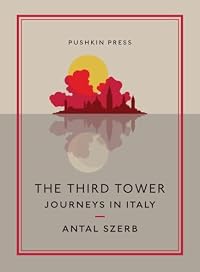
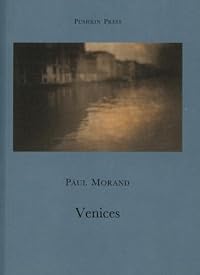
This Pushkin Press edition is a little gem, from the fluent translation by Len Rix (who also contributes an introduction), to the vintage black-and-white illustrations, to its atmospheric cover portraying a watercolour of the Venice skyline.
4.5* show less
Antal Szerb's cult 1937 novel [b:Journey by Moonlight|158217|Journey by Moonlight|Antal Szerb|https://images.gr-assets.com/books/1450565112s/158217.jpg|152699] starts with its protagonist - honeymooner Mihály - choosing a solitary nocturnal ramble in the back alleys of Venice over the pleasures of the bridal bed. It proceeds with Mihály contriving to separate himself from his wife and embarking on a journey of self-discovery nel Bel Paese
If there is any doubt as to whether Szerb's novel is based on personal experiences, "The Third Tower" should put it to rest. Subtitled "Journeys in Italy" and first published in 1936, it can be considered as the non-fiction show more companion to Journey by Moonlight. Like the novel, it opens in the back alleys of Venice and, as in the later work, Italy is described not just from the perspective of the casual traveller, but also through the eyes of a literary critic, who knows Italy well from its portrayal by Goethe, Byron and several Nordic authors. It is Italy "as others see it". The Third Tower also shares with its fictional twin a prescient foreboding associated with the rising Fascist powers - although Szerb's criticism of Mussolini and the unthinking support of the Italian populace is much more explicit and scathing here.
When I read Journey by Moonlight earlier this year, I found it intriguing but quite heavy-going. As the months roll on however, I am still haunted by its images and mood, long after other more "entertaining" books have fallen by the wayside. Szerb has an eye for the striking scene and the gift to evoke it in an arresting way. Consider, for instance, his solitary musings at San Marino, beside the the tower which gives this book its name:
The whole of this part of the country is mine: on one part, rich, twilit Romagna, with its scattering of towns, sloping gently down to the distant sea; and, on the other, the bandit-haunted Appenines of ancient Etruria. Behind them again, I sense the presence of my Eastern kingdom: Urbino, Arezzo, Gubbio, and the whole of Umbria. These are real mountains, as vast as a man could wish... The Appenines are human-scale, just as the whole Italian landscape is human-scale. And that it is why it is lovelier than any other.
This Pushkin Press edition is a little gem, from the fluent translation by Len Rix (who also contributes an introduction), to the vintage black-and-white illustrations, to its atmospheric cover portraying a watercolour of the Venice skyline.
4.5* show less
Venice is herself a woman, mysterious and alluring, in her brick-pink serenity
Antal Szerb's cult 1937 novel [b:Journey by Moonlight|158217|Journey by Moonlight|Antal Szerb|https://images.gr-assets.com/books/1450565112s/158217.jpg|152699] starts with its protagonist - honeymooner Mihály - choosing a solitary nocturnal ramble in the back alleys of Venice over the pleasures of the bridal bed. It proceeds with Mihály contriving to separate himself from his wife and embarking on a journey of self-discovery nel Bel Paese
If there is any doubt as to whether Szerb's novel is based on personal experiences, "The Third Tower" should put it to rest. Subtitled "Journeys in Italy" and first published in 1936, it can be considered as the non-fiction show more companion to Journey by Moonlight. Like the novel, it opens in the back alleys of Venice and, as in the later work, Italy is described not just from the perspective of the casual traveller, but also through the eyes of a literary critic, who knows Italy well from its portrayal by Goethe, Byron and several Nordic authors. It is Italy "as others see it". The Third Tower also shares with its fictional twin a prescient foreboding associated with the rising Fascist powers - although Szerb's criticism of Mussolini and the unthinking support of the Italian populace is much more explicit and scathing here.
When I read Journey by Moonlight earlier this year, I found it intriguing but quite heavy-going. As the months roll on however, I am still haunted by its images and mood, long after other more "entertaining" books have fallen by the wayside. Szerb has an eye for the striking scene and the gift to evoke it in an arresting way. Consider, for instance, his solitary musings at San Marino, beside the the tower which gives this book its name:
The whole of this part of the country is mine: on one part, rich, twilit Romagna, with its scattering of towns, sloping gently down to the distant sea; and, on the other, the bandit-haunted Appenines of ancient Etruria. Behind them again, I sense the presence of my Eastern kingdom: Urbino, Arezzo, Gubbio, and the whole of Umbria. These are real mountains, as vast as a man could wish... The Appenines are human-scale, just as the whole Italian landscape is human-scale. And that it is why it is lovelier than any other.
This Pushkin Press edition is a little gem, from the fluent translation by Len Rix (who also contributes an introduction), to the vintage black-and-white illustrations, to its atmospheric cover portraying a watercolour of the Venice skyline.
4.5* show less
Antal Szerb's cult 1937 novel [b:Journey by Moonlight|158217|Journey by Moonlight|Antal Szerb|https://images.gr-assets.com/books/1450565112s/158217.jpg|152699] starts with its protagonist - honeymooner Mihály - choosing a solitary nocturnal ramble in the back alleys of Venice over the pleasures of the bridal bed. It proceeds with Mihály contriving to separate himself from his wife and embarking on a journey of self-discovery nel Bel Paese
If there is any doubt as to whether Szerb's novel is based on personal experiences, "The Third Tower" should put it to rest. Subtitled "Journeys in Italy" and first published in 1936, it can be considered as the non-fiction show more companion to Journey by Moonlight. Like the novel, it opens in the back alleys of Venice and, as in the later work, Italy is described not just from the perspective of the casual traveller, but also through the eyes of a literary critic, who knows Italy well from its portrayal by Goethe, Byron and several Nordic authors. It is Italy "as others see it". The Third Tower also shares with its fictional twin a prescient foreboding associated with the rising Fascist powers - although Szerb's criticism of Mussolini and the unthinking support of the Italian populace is much more explicit and scathing here.
When I read Journey by Moonlight earlier this year, I found it intriguing but quite heavy-going. As the months roll on however, I am still haunted by its images and mood, long after other more "entertaining" books have fallen by the wayside. Szerb has an eye for the striking scene and the gift to evoke it in an arresting way. Consider, for instance, his solitary musings at San Marino, beside the the tower which gives this book its name:
The whole of this part of the country is mine: on one part, rich, twilit Romagna, with its scattering of towns, sloping gently down to the distant sea; and, on the other, the bandit-haunted Appenines of ancient Etruria. Behind them again, I sense the presence of my Eastern kingdom: Urbino, Arezzo, Gubbio, and the whole of Umbria. These are real mountains, as vast as a man could wish... The Appenines are human-scale, just as the whole Italian landscape is human-scale. And that it is why it is lovelier than any other.
This Pushkin Press edition is a little gem, from the fluent translation by Len Rix (who also contributes an introduction), to the vintage black-and-white illustrations, to its atmospheric cover portraying a watercolour of the Venice skyline.
4.5* show less
I felt bereft when Laurence Sterne’s A Sentimental Journey through France and Italy stopped mid-sentence only in sight of Lyon. Mr Yorick was due to travel down western Italy via Turin, Milan, Florence and Rome as far as Naples but, unhappily for all, the full account was cut short by the small matter of the writer’s death. Fortunately I had Antal Szerb’s The Third Tower recently published in English to console me, though the Hungarian’s travels were essentially down the east coast of Italy only as far south as San Marino. But, just as with Sterne’s writings, this was as much — if not more — about the person than the places visited.
The Third Tower is in the form of journal notes, undated, but all in August 1936. Szerb had show more considered Spain but the civil war decided him against it: he would go to Italy instead “while Italy remains where it is, and while going there is still possible”. War remains the backdrop to all he writes, not just Spain’s conflict but also what’s developing in central Europe as well as in Italy itself. It’s easy for me to say with hindsight, but Szerb writes with some prescience when he adds, “My impressions of Italy always feel like the last visions of a dying man.”
He is shocked by how hot Venice is in August, but still, for now, he feels “more completely myself” while visiting there, praising especially its back alleys for getting away from the crowds. Staying in a pensione in St Mark’s Square he notes that the “Campanile is a modern construction, and one senses a certain sacrilege about it.” Less than a quarter-century old when Szerb saw it, the original had collapsed into rubble in 1902; its replacement was completed in 1912 and dedicated on the feast of St Mark. The mention of the bell-tower in splendid isolation is the first appearance of a leitmotif in The Third Tower, emblematic of the author’s own solitariness during his three-week holiday in the peninsula. In the piazza he observes passing signoras and signorinas, including street girls as young as 12; while he confesses to an even lower level of “sexual restlessness” than ever he believes that Venice is “herself a woman, mysterious and alluring, in her brick-pink serenity”, albeit under a carnival mask.
Vicenza impresses Szerb for its classicism: literary giants like Goethe and English Romantic poets visited the city because of the presence of Palladio’s innovative architectural vision. Verona on the other hand is “grimly handsome” and its associations with Germanic invaders and especially Dietrich von Bern — the Gothic king Theodoric the Great ‘from Verona’ — remind the author of war brewing in Europe, which the M-shaped battlements of Scaliger fortifications only underline. His temper is not improved after taking a room in the Piazza Erbe: not only is he affected by the summer heat and a plague of mosquitoes but he has foolishly chosen the great mid-August Catholic feast of Ferragosto, and the partying in the square keeps him awake until 5am. (We had a similar experience in an hotel near the train station in Rome, with revellers smashing glasses and bottles well after midnight, their place taken by council workmen clearing up the mess in the early hours of the morning.) Szerb escapes to Gardone on the west side of Lake Garda. Here he notes that the cypress tree “standing guard in front of the house” may be a literary cliché but that it is true for all that. Then it’s on to Bologna, for which he needs his sense of humour:
"The journey from Gardone to Bologna takes almost a full day. The section by boat [across Lake Garda] is delightful, but the train from Desenzano to Bologna proves rather less so. It stops for five to ten minutes at every station, the passengers get off, and then get back on. It is called, with the gentle irony of the Italians, the accelerato."
Despite the city’s charms he is disturbed by what he sees Italy becoming, “a country of the self-satisfaction of the masses”. Even though fascism is based on the cult of Mussolini, embodied in that personality cult is “a dictatorship of the people” in whose hands, unlike nominally democratic Britain, real power lies. His malaise is compounded not only by those sentinel cypresses, dark alleyways and castle battlements, but also by the Asinelli and Garisenda towers, the most famous landmarks in Bologna, then as now. “It is no accident,” he writes, that Italians in “moments of grandeur … put on black shirts and go marauding, or march around in procession dressed up as bandits.” Has anything really changed in eight decades?
With some relief — for all of us — he decamps to Ravenna where, in a variation of Stendhal syndrome he is “seized by an intense perturbation” when viewing the exquisite mosaics. Yet we know from Procopius’ The Secret History that behind the glittering façade of Justinian’s court much evil lurked; and Szerb muses even more on the petty and not so petty tyrants that litter history when he goes to view Theodoric’s tomb: “Even as I stood above the grave of Dietrich von Bern, Spanish government troops were being slaughtered in the Guadarrama pass and the insurgents were firing their last rounds at the Toledo Alcázar … It has become a clash of two opposing worlds: two versions of collectivism…”
Will there ever be a third power between these two worlds? He might find an answer in San Marino, which he reaches via Rimini. Here he visits two of the fortifications on Monte Titano with the omnipresent crowds, finally reaching the Third Tower on his own. Here at last he comes “into possession of my soul”. His restlessness throughout this journey he believes arises from “forced contact with the collectivity of the lonely, the euphoric Italian collectivity,” his “solitary happiness threatened by the happiness of the herd, because they were stronger than I was.” The profound loneliness of the outsider in the midst of seething masses has clearly affected him, his pessimism not only an aspect of his personality but also a reflection of the great undercurrents in Europe that were soon to result in a six-year war.
His three-week visit is nearly at an end. In Ferrara his fatigue is pointed up by the monotonous pattern of central piazza, palazzo, hotel, wine, cathedral and so on. Not forgetting the mosquitoes. Finally on the very frontier of Italy he arrives in Trieste. Here – despite the city’s curiously happy pride in the manufacture of enamel chamber pots – its Austro-Hungarian legacy to him “feels like home”. His Italian soggiorno is over: “whatever becomes of Europe, trust in your inner stars. Somewhere, always, a Third Tower will be waiting for you…”
Despite the overall sadness, Szerb’s account is leavened by sly humour and wry observations. I can’t vouch for the accuracy of Len Rix’s translation but at no point did the text read awkwardly. In a little over a hundred pages, with a sprinkling of period photographs, The Third Tower is engaging but, with short chapters, easy to pick up and put down. For me it helped that I had visited some of the places he stays at, but even for those unfamiliar with Italy this gives a vivid feel of a southern European country on the verge of momentous happenings. And, worryingly, many of the national traits he describes are still in evidence, as if we’d never learnt anything from history.
http://wp.me/s2oNj1-towers show less
The Third Tower is in the form of journal notes, undated, but all in August 1936. Szerb had show more considered Spain but the civil war decided him against it: he would go to Italy instead “while Italy remains where it is, and while going there is still possible”. War remains the backdrop to all he writes, not just Spain’s conflict but also what’s developing in central Europe as well as in Italy itself. It’s easy for me to say with hindsight, but Szerb writes with some prescience when he adds, “My impressions of Italy always feel like the last visions of a dying man.”
He is shocked by how hot Venice is in August, but still, for now, he feels “more completely myself” while visiting there, praising especially its back alleys for getting away from the crowds. Staying in a pensione in St Mark’s Square he notes that the “Campanile is a modern construction, and one senses a certain sacrilege about it.” Less than a quarter-century old when Szerb saw it, the original had collapsed into rubble in 1902; its replacement was completed in 1912 and dedicated on the feast of St Mark. The mention of the bell-tower in splendid isolation is the first appearance of a leitmotif in The Third Tower, emblematic of the author’s own solitariness during his three-week holiday in the peninsula. In the piazza he observes passing signoras and signorinas, including street girls as young as 12; while he confesses to an even lower level of “sexual restlessness” than ever he believes that Venice is “herself a woman, mysterious and alluring, in her brick-pink serenity”, albeit under a carnival mask.
Vicenza impresses Szerb for its classicism: literary giants like Goethe and English Romantic poets visited the city because of the presence of Palladio’s innovative architectural vision. Verona on the other hand is “grimly handsome” and its associations with Germanic invaders and especially Dietrich von Bern — the Gothic king Theodoric the Great ‘from Verona’ — remind the author of war brewing in Europe, which the M-shaped battlements of Scaliger fortifications only underline. His temper is not improved after taking a room in the Piazza Erbe: not only is he affected by the summer heat and a plague of mosquitoes but he has foolishly chosen the great mid-August Catholic feast of Ferragosto, and the partying in the square keeps him awake until 5am. (We had a similar experience in an hotel near the train station in Rome, with revellers smashing glasses and bottles well after midnight, their place taken by council workmen clearing up the mess in the early hours of the morning.) Szerb escapes to Gardone on the west side of Lake Garda. Here he notes that the cypress tree “standing guard in front of the house” may be a literary cliché but that it is true for all that. Then it’s on to Bologna, for which he needs his sense of humour:
"The journey from Gardone to Bologna takes almost a full day. The section by boat [across Lake Garda] is delightful, but the train from Desenzano to Bologna proves rather less so. It stops for five to ten minutes at every station, the passengers get off, and then get back on. It is called, with the gentle irony of the Italians, the accelerato."
Despite the city’s charms he is disturbed by what he sees Italy becoming, “a country of the self-satisfaction of the masses”. Even though fascism is based on the cult of Mussolini, embodied in that personality cult is “a dictatorship of the people” in whose hands, unlike nominally democratic Britain, real power lies. His malaise is compounded not only by those sentinel cypresses, dark alleyways and castle battlements, but also by the Asinelli and Garisenda towers, the most famous landmarks in Bologna, then as now. “It is no accident,” he writes, that Italians in “moments of grandeur … put on black shirts and go marauding, or march around in procession dressed up as bandits.” Has anything really changed in eight decades?
With some relief — for all of us — he decamps to Ravenna where, in a variation of Stendhal syndrome he is “seized by an intense perturbation” when viewing the exquisite mosaics. Yet we know from Procopius’ The Secret History that behind the glittering façade of Justinian’s court much evil lurked; and Szerb muses even more on the petty and not so petty tyrants that litter history when he goes to view Theodoric’s tomb: “Even as I stood above the grave of Dietrich von Bern, Spanish government troops were being slaughtered in the Guadarrama pass and the insurgents were firing their last rounds at the Toledo Alcázar … It has become a clash of two opposing worlds: two versions of collectivism…”
Will there ever be a third power between these two worlds? He might find an answer in San Marino, which he reaches via Rimini. Here he visits two of the fortifications on Monte Titano with the omnipresent crowds, finally reaching the Third Tower on his own. Here at last he comes “into possession of my soul”. His restlessness throughout this journey he believes arises from “forced contact with the collectivity of the lonely, the euphoric Italian collectivity,” his “solitary happiness threatened by the happiness of the herd, because they were stronger than I was.” The profound loneliness of the outsider in the midst of seething masses has clearly affected him, his pessimism not only an aspect of his personality but also a reflection of the great undercurrents in Europe that were soon to result in a six-year war.
His three-week visit is nearly at an end. In Ferrara his fatigue is pointed up by the monotonous pattern of central piazza, palazzo, hotel, wine, cathedral and so on. Not forgetting the mosquitoes. Finally on the very frontier of Italy he arrives in Trieste. Here – despite the city’s curiously happy pride in the manufacture of enamel chamber pots – its Austro-Hungarian legacy to him “feels like home”. His Italian soggiorno is over: “whatever becomes of Europe, trust in your inner stars. Somewhere, always, a Third Tower will be waiting for you…”
Despite the overall sadness, Szerb’s account is leavened by sly humour and wry observations. I can’t vouch for the accuracy of Len Rix’s translation but at no point did the text read awkwardly. In a little over a hundred pages, with a sprinkling of period photographs, The Third Tower is engaging but, with short chapters, easy to pick up and put down. For me it helped that I had visited some of the places he stays at, but even for those unfamiliar with Italy this gives a vivid feel of a southern European country on the verge of momentous happenings. And, worryingly, many of the national traits he describes are still in evidence, as if we’d never learnt anything from history.
http://wp.me/s2oNj1-towers show less
The Third Tower is a reminder to pay attention to current affairs. Though Szerb was aware that being able to travel was something that he expected to change, he went to Italy on impulse, only to observe that the beautiful sites that lure us still, were compromised. While he berates himself for being a snob about it, he is aware that the crowds he wasn’t expecting are there because Mussolini has made train travel so cheap and because nationalism is on the rise. Pushkin Press has emphasised the sites Szerb visits with sombre B&W reproductions of photos from that era, contrasting these images with the colourful memories we have if we’ve travelled to Italy.
To read the rest of my review please visit show more target="_top">https://anzlitlovers.com/2020/06/22/the-third-tower-journeys-in-italy-by-antal-s... show less
To read the rest of my review please visit show more target="_top">https://anzlitlovers.com/2020/06/22/the-third-tower-journeys-in-italy-by-antal-s... show less
A neat little travel book to Italy in the mid 1930s. Szerb loved to travel there apparently. I read it by accident, picked off a shelf because it was small and intriguing. Well, maybe not an accident, then. It looks light on the surface, but nothing set in troubled political times is light. But then, there's the past, the renaissance and its art and architecture which loom larger than the troubles of the day.
Italy is in the domain of fascists. But Szerb travels around happily, he does wonder about the politics he finds loathsome. Later I read Szerb's Journey By Moonlight, also set in Italy around the same time. The two books complement each other.
Perhaps one of my GR friends could use it to guide their next visit to Italian art and show more architecture. show less
Italy is in the domain of fascists. But Szerb travels around happily, he does wonder about the politics he finds loathsome. Later I read Szerb's Journey By Moonlight, also set in Italy around the same time. The two books complement each other.
Perhaps one of my GR friends could use it to guide their next visit to Italian art and show more architecture. show less
Members
- Recently Added By
Lists

Books Set in Italy
167 works; 19 members
Author Information

27+ Works 2,490 Members
Some Editions
Series
Belongs to Publisher Series
Common Knowledge
- Canonical title
- The Third Tower: Journeys in Italy
- Original title
- A harmadik torony
- Original publication date
- 1936
- Original language
- Hungarian
Classifications
- Genres
- Travel, Nonfiction, Biography & Memoir, General Nonfiction
- DDC/MDS
- 914.50491 — History & geography Geography & travel Geography of and travel in Europe Italy, San Marino, Vatican City, Malta subdivisions and modified standard subdivisions Travel; guidebooks 1900-
- LCC
- DG429 .S9413 — History of Europe, Asia, Africa and Oceania City History of Italy Medieval and modern Italy, 476- Description and travel
- BISAC
Statistics
- Members
- 60
- Popularity
- 498,111
- Reviews
- 7
- Rating
- (3.96)
- Languages
- English, Hungarian, Swedish
- Media
- Paper, Ebook
- ISBNs
- 5
- ASINs
- 3