On This Page
Description
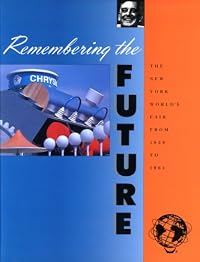
The 1964-1965 New York World's Fair was the largest international exhibition ever built in the United States. More than one hundred fifty pavilions and exhibits spread over six hundred forty-six acres helped the fair live up to its reputation as "the Billion-Dollar Fair." With the cold war in full swing, the fair offered visitors a refreshingly positive view of the future, mirroring the official theme: Peace through Understanding. Guests could travel back in time through a display of show more full-sized dinosaurs, or look into a future where underwater hotels and flying cars were commonplace. They could enjoy Walt Disney's popular shows, or study actual spacecraft flown in orbit. More than fifty-one million guests visited the fair before it closed forever in 1965. The 1964-1965 New York World's Fair captures the history of this event through vintage photographs, published here for the first time. show lessTags
Recommendations


















Member Reviews
I've long had a fascination with the 1964-1965 New York World's Fair because it intersects with several of my interests: New York City history, space age modernism, Disney theme parks, the New York Mets, and one of my most-loathed historical figures, Robert Moses.* I also know the stories from my parents and grandparents attending the fair. These Images of America volumes contain photographs and historical tidbits from two authors who visited the fair when they were young and kept its memory alive every since.
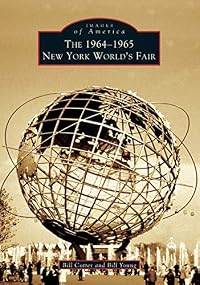
The first volume details the fair itself. Did you know that it was a renegade world's fair, failing to get authorization from the International Bureau of Expositions?As a result there were only a limited number of foreign countries show more participating, and many of their pavilions were operated by big corporations rather than national governments. Most of the pavilions were showcases for states, big corporations, and nonprofit organizations. Taking place in the midst of the race to the moon, many exhibits were themed to the futuristic wonders of the space age as well as the hope for peace in a smaller world. The centerpiece of the fair was the Unisphere, a surviving landmark, erected by United States Steel Corporation complete with light and water displays.
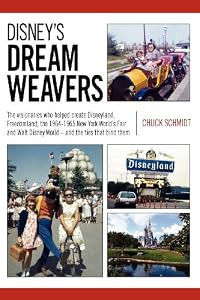
The fair also became a showcase for Walt Disney and company who brought Disneyland-style attractions to the East Coast at four pavilions. These include the Magic Skyway at the Ford Pavilion, an animatronic Abraham Lincoln for the Illinois pavilion, General Electric's Carousel of Progress, and It's a Small World, sponsored by Pepsi-Cola for UNICEF. Disney, however, did not provide all the fair's thrill. Visitor's to the Kodak pavilion could walk along the Moon Deck, the Electric Companies Tower of Light contained dazzling display of lights, and visitors could ride through a history of communication at the Bell Pavilion. While only a portion of foreign nations were represented, guests could tour a recreated Belgian village (and enjoy Belgian waffles) and several newly independent African nations made their global debut.
While fair attendees generally had a good time and it lives on fondly in their memories, the fair was not a success. The fair went bankrupt, few of the predictions for the future came true, and buildings left behind to be adapted for the new park fell into disrepair (most notably the New York State Pavilion, famed for its appearance in Men in Black, which still stands in a derelict state). Despite only operating for two seasons, the fair required a monumental effort. The second volume details a lot of the planning and preparation that went into designing and planning the fair. This includes plans for pavilions that were never completed as well as fair attractions that closed before the fair was over. Some were replaced and some stood empty behind fences for the remainder of the fair! There's also a lot of detail of the demolition of the fair (a process not completed until 1967) and the fair's legacy.
Together these two books are richly illustrated and give a glimpse of an ephemeral world of fun, science, and "Peace Through Understanding" that stood for a short time in Queens, New York.
*I'd like to give Moses credit for the noble vision of a great fair leading into the creation of a "Central Park for the 20th Century" at Flushing Meadows-Corona Park. However, his main legacy is crisscrossing New York with highways, including the ones that surround Flushing Meadows-Corona Park which I believe have prevented the park from achieving its full potential. show less
The first volume details the fair itself. Did you know that it was a renegade world's fair, failing to get authorization from the International Bureau of Expositions?As a result there were only a limited number of foreign countries show more participating, and many of their pavilions were operated by big corporations rather than national governments. Most of the pavilions were showcases for states, big corporations, and nonprofit organizations. Taking place in the midst of the race to the moon, many exhibits were themed to the futuristic wonders of the space age as well as the hope for peace in a smaller world. The centerpiece of the fair was the Unisphere, a surviving landmark, erected by United States Steel Corporation complete with light and water displays.
The fair also became a showcase for Walt Disney and company who brought Disneyland-style attractions to the East Coast at four pavilions. These include the Magic Skyway at the Ford Pavilion, an animatronic Abraham Lincoln for the Illinois pavilion, General Electric's Carousel of Progress, and It's a Small World, sponsored by Pepsi-Cola for UNICEF. Disney, however, did not provide all the fair's thrill. Visitor's to the Kodak pavilion could walk along the Moon Deck, the Electric Companies Tower of Light contained dazzling display of lights, and visitors could ride through a history of communication at the Bell Pavilion. While only a portion of foreign nations were represented, guests could tour a recreated Belgian village (and enjoy Belgian waffles) and several newly independent African nations made their global debut.
While fair attendees generally had a good time and it lives on fondly in their memories, the fair was not a success. The fair went bankrupt, few of the predictions for the future came true, and buildings left behind to be adapted for the new park fell into disrepair (most notably the New York State Pavilion, famed for its appearance in Men in Black, which still stands in a derelict state). Despite only operating for two seasons, the fair required a monumental effort. The second volume details a lot of the planning and preparation that went into designing and planning the fair. This includes plans for pavilions that were never completed as well as fair attractions that closed before the fair was over. Some were replaced and some stood empty behind fences for the remainder of the fair! There's also a lot of detail of the demolition of the fair (a process not completed until 1967) and the fair's legacy.
Together these two books are richly illustrated and give a glimpse of an ephemeral world of fun, science, and "Peace Through Understanding" that stood for a short time in Queens, New York.
*I'd like to give Moses credit for the noble vision of a great fair leading into the creation of a "Central Park for the 20th Century" at Flushing Meadows-Corona Park. However, his main legacy is crisscrossing New York with highways, including the ones that surround Flushing Meadows-Corona Park which I believe have prevented the park from achieving its full potential. show less
I finally learned what everyone was talking about the "New York World's Fair." I thought it was impresive. Also, its interesting to know what happended to the remaining pavilions.
Ratings
Members
- Recently Added By
Author Information
16 Works 254 Members
Bill Cotter was a pre-K art and music teacher for several years in New York City before making books for kids. His title Don't Push the Button Halloween made the best seller list in 2018. He currently lives in his hometown of Cleveland and spends his days drawing and playing music. (Bowker Author Biography)
All Editions
Series

Images of America (New York)
Common Knowledge
- Canonical title
- The 1964-1965 New York World's Fair
- Important places
- Queens, New York, New York, USA
Classifications
Statistics
- Members
- 87
- Popularity
- 365,960
- Reviews
- 2
- Rating
- (4.00)
- Languages
- English
- Media
- Paper, Ebook
- ISBNs
- 6