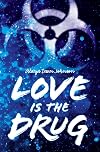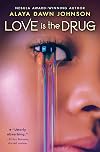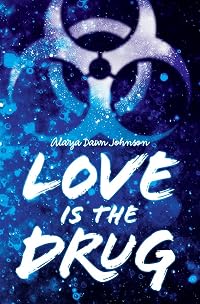
Love Is the Drug
by Alaya Dawn Johnson 
On This Page
Description
Emily Bird is an African American high school senior in Washington D.C., member of a privileged medical family, on the verge of college and the edge of the drug culture, and not really sure which way she will go--then one day she wakes up in the hospital with no memory of what happened.Tags
Recommendations



Member Reviews
This book isn't perfect, but I enjoyed it tremendously. It has so much going on, in a believable chaos of everyday life and international crisis. All the usually crushing pressures of Bird's life - the microaggressions of her fellow students, her fraught relationship with her family, the burning questions of who she really is - meet all the thorny issues of the modern world: climate change, food security, mutating pandemics. The tapestry woven is tight with tensions of many kind - romantic, mysterious, demanding. And it hits in many ways one of the key realisations of growing up: adults don't necessarily have their shit together any more than teens do.
The strong backbone of this for me was Bird's journey to a version of herself she show more could live with. It is not a happy, gentle progress. Every step leaves scars; every step is necessary. It's hard fought and brutal, and it made me want to cheer out loud. show less
The strong backbone of this for me was Bird's journey to a version of herself she show more could live with. It is not a happy, gentle progress. Every step leaves scars; every step is necessary. It's hard fought and brutal, and it made me want to cheer out loud. show less
I've had this in my TBR pile too long and as 2017 is my year of focused clearing of backlist books, I decided to give this one a go. Prep school senior, Emily Bird wakes up in a hospital after having been drugged to the point that her memory of the events of a night are gone and Washington DC is on the verge of full on outbreak crisis intervention and none of that is the worst news.
I expected more intrigue and urgency given the global outbreak of a virus that's decimating the population with some martial law tossed in but this book was surprisingly low-key. I stayed with the story because I was very interested in the characters, most specifically Bird (Emily), Coffee (Alonso), Aaron, Marella, Nicky and even the villainous Roosevelt. I show more was confused by Bird's parents, Carol and Greg. I suppose that was to be expected as Bird is afraid of her mother (with good reason and so was I) and distant from her father but as this story is told in shifting POVs and not told strictly in Bird's voice, I feel there could have been more provided for clarity with the family dynamic. Aaron was the best kid I've had the pleasure to read in a while and I even liked Nicky. While he may not be a paragon of success, he worked consistently to provide for his family, wasn't in any way a criminal and his children knew they were loved. He treated Bird like a second daughter and made her feel a part of a family. One more reason for me to put Carol Bird on ignore. Marella won all the true BFF points and I was pulling for her too. If there's ever a sequel to Love is the Drug or a Marella in Paris story, I'd read that.
By book's end, while the answer to how Bird was drugged and why is given, it was revealed in a way that didn't deliver a punch given all the build up. Again, the urgency was just about non-existent. I thought the relationship between Bird and Coffee was well done and I really liked that this story allowed her to grow on her own so she could save herself and the boy she loved. Bird also didn't display any characteristics or abilities out of the blue to solve her problems and I was glad of that. No insta-solutions or insta-love here and if I could find more YA like this, I'd read them. Another thing that was refreshing was to have Bird be told by Marella and those who were supposed to be her friends before, that she (Bird) either wasn't holding up her end of the friend ship or she wasn't trustworthy. It's not often you have a main character girl in YA who isn't universally & inexplicably loved by all when she does nothing to draw those feelings. Bird had to earn them and improve herself. Well done, ADJ. Points also to the author for the Jack and Jill mentions. I can't recall the last time I came across that in a novel. I also liked the conflict in Bird, a privileged girl of color, on how to be Black in a world where her parents want her to be a proud and accomplished African American but "not too black" so as to single her out in the profoundly white world they've raised her in. This extends to something as simple as how she wears her hair. The socially acceptable pod of other African American teens she's around also exercise a certain amount of pressure to conform and it was interesting how they felt mostly sequestered off from white students (Charlotte notwithstanding). Making the chemist/drug dealer, conspiracy theorist, the root worthy character, is a hell of a feat to pull off but the author does so here and it's believable. He and Marella (who was Black & openly gay, so had her own outcast issues from the "socially acceptable" groups) were the only people who seemed able to accept Bird for who she was & wanted to be.
The way this ends, I could envision a sequel because the danger is still out there. Bird, Coffee & Marella globe trekking, just a step ahead of the enemy could be fun & hopefully have a high-octane feel now that they're out of high school. Recommended. show less
I expected more intrigue and urgency given the global outbreak of a virus that's decimating the population with some martial law tossed in but this book was surprisingly low-key. I stayed with the story because I was very interested in the characters, most specifically Bird (Emily), Coffee (Alonso), Aaron, Marella, Nicky and even the villainous Roosevelt. I show more was confused by Bird's parents, Carol and Greg. I suppose that was to be expected as Bird is afraid of her mother (with good reason and so was I) and distant from her father but as this story is told in shifting POVs and not told strictly in Bird's voice, I feel there could have been more provided for clarity with the family dynamic. Aaron was the best kid I've had the pleasure to read in a while and I even liked Nicky. While he may not be a paragon of success, he worked consistently to provide for his family, wasn't in any way a criminal and his children knew they were loved. He treated Bird like a second daughter and made her feel a part of a family. One more reason for me to put Carol Bird on ignore. Marella won all the true BFF points and I was pulling for her too. If there's ever a sequel to Love is the Drug or a Marella in Paris story, I'd read that.
By book's end, while the answer to how Bird was drugged and why is given, it was revealed in a way that didn't deliver a punch given all the build up. Again, the urgency was just about non-existent. I thought the relationship between Bird and Coffee was well done and I really liked that this story allowed her to grow on her own so she could save herself and the boy she loved. Bird also didn't display any characteristics or abilities out of the blue to solve her problems and I was glad of that. No insta-solutions or insta-love here and if I could find more YA like this, I'd read them. Another thing that was refreshing was to have Bird be told by Marella and those who were supposed to be her friends before, that she (Bird) either wasn't holding up her end of the friend ship or she wasn't trustworthy. It's not often you have a main character girl in YA who isn't universally & inexplicably loved by all when she does nothing to draw those feelings. Bird had to earn them and improve herself. Well done, ADJ. Points also to the author for the Jack and Jill mentions. I can't recall the last time I came across that in a novel. I also liked the conflict in Bird, a privileged girl of color, on how to be Black in a world where her parents want her to be a proud and accomplished African American but "not too black" so as to single her out in the profoundly white world they've raised her in. This extends to something as simple as how she wears her hair. The socially acceptable pod of other African American teens she's around also exercise a certain amount of pressure to conform and it was interesting how they felt mostly sequestered off from white students (Charlotte notwithstanding). Making the chemist/drug dealer, conspiracy theorist, the root worthy character, is a hell of a feat to pull off but the author does so here and it's believable. He and Marella (who was Black & openly gay, so had her own outcast issues from the "socially acceptable" groups) were the only people who seemed able to accept Bird for who she was & wanted to be.
The way this ends, I could envision a sequel because the danger is still out there. Bird, Coffee & Marella globe trekking, just a step ahead of the enemy could be fun & hopefully have a high-octane feel now that they're out of high school. Recommended. show less
QUOTE: She understands with sudden clarity that bravery has nothing to do with the absence of fear, but the response to it.
Dear Fellow Sci-fi Fans,
One of my favorite things about flu-virus apocalypse themes, is that it could so easily be reality. Human beings aren’t really all that hard to kill, we just camouflage how easily we die with how well we kill. Humans are great at killing what we perceive as threats. This is proven quite well in Love is the Drug.
QUOTE: “Morality is something that falls from your pockets when you climb a ladder.”
When I first started the book I was worried that I wouldn’t make it to the end of the book. The ratings for this novel were so up in down, it was as if everyone who read Love is the Drug never show more read the same book, and perhaps this is true. We all take away something different from a book. I, personally, learned a lot of valuable life lessons from the world that Alaya Dawn Johnson created. Maybe a few of you are scoffing that I sometimes take life lessons from fiction, but it’s true that the author packed Love is the Drug with a few philosophies that we could all benefit and learn from.
We all know the saying, “absolute power corrupts absolutely.” This book proves that it doesn’t matter what sort of government leads a county, people in powerful positions always have something to gain or something to hide. To put one’s absolute faith in – and to never question – any government made up of humans is naïve. We all make mistakes, don’t we? It serves that those whom are higher up on the political ladder make the nosiest mistakes of us all and have more to gain by keeping those mistakes quite.
QUOTE: “You’re an iconoclast whose highest aspiration is K Street. You’re a Black DC girl determined to run away to a California suburb with barely any black people. You have a heart, Bird, but you only use your head. You try as hard as you can to be conventional and unoriginal and unthreatening, but somehow you always fail. Just a little bit. Because you know better.”
Not only did I learn that it’s healthy to question authority, but it’s also unhealthy to be someone you’re not, even when it is to please someone else. This is something that really struck close to home. I come from a religious family in The Deep South. My father is so fanatical about religion that nothing and nobody is more important. He’s also great at burning bridges with people who want a life that isn’t dictated by religion, because then he wouldn’t be in control. Suffice to say, I know how it feels to do anything to get a parents approval and still fall short every day.
I imagine the reason I could relate to Emily’s aka “Bird’s” need to please is because of my own relationship with my father. Nothing is more important that success to Carol Bird, something that she has hammered into Bird since she lectured her on the importance of picking appropriate friends in kindergarten. It’s no wonder Bird winds up with friends she can barely tolerate and a boyfriend she mostly keep around because he’s the only thing her mother ever really approved of about her. It’s crazy how easily it is to see something like an unhealthy need to please in one person (fictional or otherwise), but so difficult to admit to having the same problem in my own life.
At the beginning of Love is the Drug, it is clear Emily never questioned authority and she never tip-toed the line. She was a sheep following the masses, a drone following instructions to keep the peace until she could escape to college. Slowly, Emily begins to evolve as she pieces the puzzles together of her missing memory with the sometimes prep school drug dealer and conspiracy theorist, Coffee. She grows to love her real self and finds it easier to have meaningful relationships when she is true to herself.
Watching Emily grow into someone whom is confident and happy with herself really hit me – it can be worse for not only my family, but for me to keep the peace and live a lie than to be honest and proud about who I am. It is easy to see that while Emily is battling to survive in a world where the US government would rather kill her than let her expose their secrets and a flu virus is quickly decimating the population, her biggest battle is with her own self-preservation.
I easily gave this book a five star rating and I hope Johnson plans to continue to write more epidemic themed novels. Love is the Drug was riveting and surprisingly sexy. I recommend it to all readers, even if it is outside of your comfort zone. Give it a try and let me know what you think!
xoxo,
❤One Curvy Blogger
Read more reviews and bookish posts @ http://onecurvyblogger.com show less
Dear Fellow Sci-fi Fans,
One of my favorite things about flu-virus apocalypse themes, is that it could so easily be reality. Human beings aren’t really all that hard to kill, we just camouflage how easily we die with how well we kill. Humans are great at killing what we perceive as threats. This is proven quite well in Love is the Drug.
QUOTE: “Morality is something that falls from your pockets when you climb a ladder.”
When I first started the book I was worried that I wouldn’t make it to the end of the book. The ratings for this novel were so up in down, it was as if everyone who read Love is the Drug never show more read the same book, and perhaps this is true. We all take away something different from a book. I, personally, learned a lot of valuable life lessons from the world that Alaya Dawn Johnson created. Maybe a few of you are scoffing that I sometimes take life lessons from fiction, but it’s true that the author packed Love is the Drug with a few philosophies that we could all benefit and learn from.
We all know the saying, “absolute power corrupts absolutely.” This book proves that it doesn’t matter what sort of government leads a county, people in powerful positions always have something to gain or something to hide. To put one’s absolute faith in – and to never question – any government made up of humans is naïve. We all make mistakes, don’t we? It serves that those whom are higher up on the political ladder make the nosiest mistakes of us all and have more to gain by keeping those mistakes quite.
QUOTE: “You’re an iconoclast whose highest aspiration is K Street. You’re a Black DC girl determined to run away to a California suburb with barely any black people. You have a heart, Bird, but you only use your head. You try as hard as you can to be conventional and unoriginal and unthreatening, but somehow you always fail. Just a little bit. Because you know better.”
Not only did I learn that it’s healthy to question authority, but it’s also unhealthy to be someone you’re not, even when it is to please someone else. This is something that really struck close to home. I come from a religious family in The Deep South. My father is so fanatical about religion that nothing and nobody is more important. He’s also great at burning bridges with people who want a life that isn’t dictated by religion, because then he wouldn’t be in control. Suffice to say, I know how it feels to do anything to get a parents approval and still fall short every day.
I imagine the reason I could relate to Emily’s aka “Bird’s” need to please is because of my own relationship with my father. Nothing is more important that success to Carol Bird, something that she has hammered into Bird since she lectured her on the importance of picking appropriate friends in kindergarten. It’s no wonder Bird winds up with friends she can barely tolerate and a boyfriend she mostly keep around because he’s the only thing her mother ever really approved of about her. It’s crazy how easily it is to see something like an unhealthy need to please in one person (fictional or otherwise), but so difficult to admit to having the same problem in my own life.
At the beginning of Love is the Drug, it is clear Emily never questioned authority and she never tip-toed the line. She was a sheep following the masses, a drone following instructions to keep the peace until she could escape to college. Slowly, Emily begins to evolve as she pieces the puzzles together of her missing memory with the sometimes prep school drug dealer and conspiracy theorist, Coffee. She grows to love her real self and finds it easier to have meaningful relationships when she is true to herself.
Watching Emily grow into someone whom is confident and happy with herself really hit me – it can be worse for not only my family, but for me to keep the peace and live a lie than to be honest and proud about who I am. It is easy to see that while Emily is battling to survive in a world where the US government would rather kill her than let her expose their secrets and a flu virus is quickly decimating the population, her biggest battle is with her own self-preservation.
I easily gave this book a five star rating and I hope Johnson plans to continue to write more epidemic themed novels. Love is the Drug was riveting and surprisingly sexy. I recommend it to all readers, even if it is outside of your comfort zone. Give it a try and let me know what you think!
xoxo,
❤One Curvy Blogger
Read more reviews and bookish posts @ http://onecurvyblogger.com show less
After adoring Trouble the Saints and really becoming immersed in Alaya Dawn Johnson’s writing style, I had high hopes for Love is the Drug. I think these two books are good examples of how intended audience and experience in the field makes a difference in quality. While Trouble the Saints was a beautifully written book with intriguing characters and settings, Love is the Drug (published several years earlier) fumbles for balance and fails to hold the reader. It’s not all bad, but it did not meet expectations.
Love is the Drug succeeds in concept. While I’m still not sure if this book is about love, conspiracy, or personal growth, the external emergency is interesting. Love is the Drug‘s shows us a world where a pandemic has show more broken out but Washington is quarantined and only the important government people and their children have been vaccinated. All of this happens in a very shady way that is generally unknown to the students, like our protagonist Emily Bird, and hidden from the rest of the country. This storyline is especially interesting because of the recent pandemic, it’s a glimpse of how things might have been in a parallel universe. Fortunately, we know the American government didn’t secretly vaccinate because at the onset it refused to take the pandemic seriously and all sorts of government officials from the top down have had COVID. It’s still an interesting story, part dystopia-potential, part conspiracy theory.
That’s where the good stuff ends. Early on, we meet a man named Roosevelt who is convinced Bird knows something she shouldn’t, and we spend the entire book dancing around what that may be. The question persistently does not get answered through the novel… to the point where, as I reader, I stopped caring and really just wanted to move on to something else. We’d often step off the path and dive into a love story that… didn’t make sense. The romantic moments were written well, but the progression of the relationship was clunky. They went from friendly acquaintances to “I’ll cook your Thanksgiving turkey” real fast. Literal turkey, not innuendo! … All these things together and the deflated ending left me underwhelmed about Love is the Drug.
We won’t talk about the incredibly tacky title. Just calling it out.
From a technical perspective, the thing that bothered me the most was the excess of dialogue. We learned most about external forces and our setting through conversations Bird has with others. Often times, these scenes are as awkward as her just walking into a room to have a conversation that provides information and no other purpose. It’s information dropping, sure, but it also created a lack of atmosphere. This is a particular pet peeve for me in book, and it ruined my experience as much as the directionlessness.
Overall… I don’t recommend Love is the Drug. I appreciate that it was a good idea, but the execution didn’t work for me. I would like to think that this is not representative of Alaya Dawn Johnson’s work, as her novel Trouble the Saints was very good. show less
Love is the Drug succeeds in concept. While I’m still not sure if this book is about love, conspiracy, or personal growth, the external emergency is interesting. Love is the Drug‘s shows us a world where a pandemic has show more broken out but Washington is quarantined and only the important government people and their children have been vaccinated. All of this happens in a very shady way that is generally unknown to the students, like our protagonist Emily Bird, and hidden from the rest of the country. This storyline is especially interesting because of the recent pandemic, it’s a glimpse of how things might have been in a parallel universe. Fortunately, we know the American government didn’t secretly vaccinate because at the onset it refused to take the pandemic seriously and all sorts of government officials from the top down have had COVID. It’s still an interesting story, part dystopia-potential, part conspiracy theory.
That’s where the good stuff ends. Early on, we meet a man named Roosevelt who is convinced Bird knows something she shouldn’t, and we spend the entire book dancing around what that may be. The question persistently does not get answered through the novel… to the point where, as I reader, I stopped caring and really just wanted to move on to something else. We’d often step off the path and dive into a love story that… didn’t make sense. The romantic moments were written well, but the progression of the relationship was clunky. They went from friendly acquaintances to “I’ll cook your Thanksgiving turkey” real fast. Literal turkey, not innuendo! … All these things together and the deflated ending left me underwhelmed about Love is the Drug.
We won’t talk about the incredibly tacky title. Just calling it out.
From a technical perspective, the thing that bothered me the most was the excess of dialogue. We learned most about external forces and our setting through conversations Bird has with others. Often times, these scenes are as awkward as her just walking into a room to have a conversation that provides information and no other purpose. It’s information dropping, sure, but it also created a lack of atmosphere. This is a particular pet peeve for me in book, and it ruined my experience as much as the directionlessness.
Overall… I don’t recommend Love is the Drug. I appreciate that it was a good idea, but the execution didn’t work for me. I would like to think that this is not representative of Alaya Dawn Johnson’s work, as her novel Trouble the Saints was very good. show less
There's a lot going on, story-wise, in this novel - an epidemic, martial law, scary CIA types, and a mystery in a lost memory. But what really stands out in this novel is the growth of Emily Bird. Her journey from puppet of her mother to independent thinking young woman is such an interesting one. It isn't easy or always satisfying, but it is real.
LOVE IS THE DRUG by Alaya Dawn Johnson is a fast-paced mystery-suspense set in near-future Washington DC.
Set against the backdrop of a global pandemic, prep-school teen Emily Bird becomes involved in a mysterious homeland security scandal made worse by her memory loss after an elite Washington DC party. This young adult novel involves a wide range of topics that will attract youth including romance, friendships, conspiracy, drugs, and disaster.
The plot moves quickly as the world dives deeper into chaos and our heroine tries to piece together the mystery of her memory loss. The author does a masterful job dealing with social problems, public policy, and contemporary issues facing teens such as drug use and college preparation.
The show more authentic, conversational writing style is likely to appeal to a young adult audience. Like many works of mystery/suspense, movement between the present and flashbacks can be temporarily disorienting. In addition, the story breaks down near the end as the author attempts to tie up all the loose ends. However, the overall plot is fast-paced and engaging.
The diverse cast of characters were skillfully developed and realistically portrayed. Teens will enjoy the strong female lead. Rarely do teen readers have the opportunity to see a realistically portrayed, independent, intelligent young black woman in a leading role.
Each chapter begins with a chemical compound. Careful readers will easily connect the chemicals to the chapter’s focus and students will be thrilled to apply their Chemistry class to the real-world.
With so many series books to choose from, librarians will be happy to see a stand-alone mystery-suspense.
Those readers who enjoy this type of mystery/suspense would also enjoy adult suspense novels by Michael Crichton and John Grisham.
With the Ebola scare making headlines and conspiracy theories everywhere, this book is likely to fly off the shelf.
ARC NetGalley show less
Set against the backdrop of a global pandemic, prep-school teen Emily Bird becomes involved in a mysterious homeland security scandal made worse by her memory loss after an elite Washington DC party. This young adult novel involves a wide range of topics that will attract youth including romance, friendships, conspiracy, drugs, and disaster.
The plot moves quickly as the world dives deeper into chaos and our heroine tries to piece together the mystery of her memory loss. The author does a masterful job dealing with social problems, public policy, and contemporary issues facing teens such as drug use and college preparation.
The show more authentic, conversational writing style is likely to appeal to a young adult audience. Like many works of mystery/suspense, movement between the present and flashbacks can be temporarily disorienting. In addition, the story breaks down near the end as the author attempts to tie up all the loose ends. However, the overall plot is fast-paced and engaging.
The diverse cast of characters were skillfully developed and realistically portrayed. Teens will enjoy the strong female lead. Rarely do teen readers have the opportunity to see a realistically portrayed, independent, intelligent young black woman in a leading role.
Each chapter begins with a chemical compound. Careful readers will easily connect the chemicals to the chapter’s focus and students will be thrilled to apply their Chemistry class to the real-world.
With so many series books to choose from, librarians will be happy to see a stand-alone mystery-suspense.
Those readers who enjoy this type of mystery/suspense would also enjoy adult suspense novels by Michael Crichton and John Grisham.
With the Ebola scare making headlines and conspiracy theories everywhere, this book is likely to fly off the shelf.
ARC NetGalley show less
Rounding down to 3.75. Beautifully written, but it took me longer to read it than it probably should have. The tension between Bird and her mother was palpable. Bird's internal struggles with herself, too, were sometimes almost unbearable.
Members
- Recently Added By
Lists

Recommend the 20 best books you've read in the last five years
2,168 works; 606 members

Books Read in 2015
3,299 works; 127 members
Author Information

33+ Works 2,051 Members
In 2004, writer Alaya Dawn Johnson received a BA in Eastern Asian Languages and Cultures from Columbia University. She has lived and traveled extensively in Japan and once discovered a cave of human bones while backpacking to a small island in the Keramas. She currently lives in New York City. She won the Andre Norton Award 2014 for Young adult show more Science Fiction and Fantasy for her title Love is the Drug. (Bowker Author Biography) show less
Alaya Dawn Johnson is a LibraryThing Author, an author who lists their personal library on LibraryThing.
Some Editions
Awards and Honors
Common Knowledge
- Original publication date
- 2014-10
- People/Characters
- Emily Bird; Alonso Oliveira (aka "Coffee"); David Franklin (aka "Roosevelt David"); Paul Simpson; Carol Bird; Greg Bird (show all 16); Felice; Marella; Charlotte; Trevor Robinson; Pam Robinson; Nicky Washington; Aaron Washington; Bao Tran; Charlotte Andrews; Sasha Calero Granger
- Important places
- Washington, D.C., USA
- Epigraph
- "It is said that once the back of a fine watch is opened for repair or examination it can never again run in the same way, for a fleck of dust will always lodge invisibly in the works and provide a stress, albeit incalculably... (show all) small, to the functioning of the mechanism. So too when a drug opens the clockworks of consciousness for examination, that awareness thereafter becomes ever so slightly more self-aware. And so the question finally becomes: how intimately do we want or need to know ourselves?"
--David Lenson, On Drugs - Dedication
- To Frank, Tibbs, Ms. Schindele, Mr. Wood -- and the old fiction room.
- First words
- Bird wakes up.
- Last words
- (Click to show. Warning: May contain spoilers.)I will remember that the nightmare is over because we ended it, that we are healthy and alive, even if we are never completely safe, and I will hold him close, and I will go back to sleep.
- Publisher's editor
- Levine, Arthur; Clement, Emily
Classifications
Statistics
- Members
- 209
- Popularity
- 155,912
- Reviews
- 17
- Rating
- (3.59)
- Languages
- English
- Media
- Paper, Audiobook, Ebook
- ISBNs
- 10
- ASINs
- 2