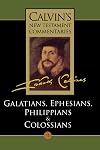
Galatians, Ephesians, Philippians, and Colossians (Calvin's New Testament Commentaries)
by John Calvin
Calvin's New Testament Commentaries (11)
On This Page
Tags
Recommendations

















Member Reviews
Sempre que leio os comentários bíblicos de Calvino me surpreendo com a profundidade e com a relevância de suas análises. Fico ainda mais surpreso ao saber que, mesmo diante de inúmeras descobertas arqueológicas e dos mais importantes e atuais avanços nas pesquisas bíblicas, o texto de Calvino continua provocando, instruindo e libertando as mentes para o entendimentodas verdades de Deus. Karl Barth tinha razão quando afirmou ser demasiado proveitoso passar o resto de nossas vidas lendo Calvino. Mas que poder é esse que se esconde por detrás dos pensamentos e das palavras desse reformador genebrino? Não vejo outra resposta senão o poder das Escrituras. Não é exagero algum dizer que a teologia de Calvino é uma exposição show more da Palavra, e teologar é compreender e proclamar as verdades bíblicas. É por isso que ler Calvino é tão empolgante, fascinante e enriquecedor. Com satisfação, recomendo a leitura destes comentários às epístolas de Gálatas, Efésios, Filipenses e Colossenses! - Pr. Jonas Madureira - Professor de Teologia Sistemática do Seminário Betel Brasileiro - SP.
Top Highlights
“A humildade de Cristo consistiu em ele descer, do pináculo mais elevado de glória à ignomínia mais baixa; nossa humildade consiste em refrear-nos de uma exaltação egoísta por uma falsa estima. Ele renunciou ao seu direito; tudo o que se requer de nós é que não assumamos para nós mesmos mais do que devemos.” (Page 407)
“Cristo vive em nós de duas maneiras: uma consiste em governar-nos por meio de seu Espírito e dirigir todas as nossas ações; a outra, em tornar-nos participantes de sua justiça, de modo que, embora nada possamos fazer por nós mesmos, somos aceitos aos olhos de Deus. A primeira se relaciona à regeneração; a segunda, à justificação pela livre graça. Este é o sentido em que entendo esta passagem. Mas, se alguém achar melhor aplicá-la a ambas as maneiras, concordarei de boa vontade.” (Pages 83–84)
“Visto, pois, que o Filho de Deus desceu de uma altitude tão imensa, quão irracional seria que nós, que nada somos, tentássemos nos exaltar tão orgulhosamente!” (Page 407)
“E certamente o espantoso poder de Deus se exibe quando somos trazidos da morte para a vida; e quando, sendo nós filhos do inferno, somos transformados em filhos de Deus e herdeiros da vida eterna.” (Page 226)
“Disto se pode deduzir que o mundo inteiro, com toda sua pretensa sabedoria e justiça, é considerado como nada, senão trevas aos olhos de Deus, porque, à parte do reino de Cristo, não existe luz.” (Page 504) show less
Top Highlights
“A humildade de Cristo consistiu em ele descer, do pináculo mais elevado de glória à ignomínia mais baixa; nossa humildade consiste em refrear-nos de uma exaltação egoísta por uma falsa estima. Ele renunciou ao seu direito; tudo o que se requer de nós é que não assumamos para nós mesmos mais do que devemos.” (Page 407)
“Cristo vive em nós de duas maneiras: uma consiste em governar-nos por meio de seu Espírito e dirigir todas as nossas ações; a outra, em tornar-nos participantes de sua justiça, de modo que, embora nada possamos fazer por nós mesmos, somos aceitos aos olhos de Deus. A primeira se relaciona à regeneração; a segunda, à justificação pela livre graça. Este é o sentido em que entendo esta passagem. Mas, se alguém achar melhor aplicá-la a ambas as maneiras, concordarei de boa vontade.” (Pages 83–84)
“Visto, pois, que o Filho de Deus desceu de uma altitude tão imensa, quão irracional seria que nós, que nada somos, tentássemos nos exaltar tão orgulhosamente!” (Page 407)
“E certamente o espantoso poder de Deus se exibe quando somos trazidos da morte para a vida; e quando, sendo nós filhos do inferno, somos transformados em filhos de Deus e herdeiros da vida eterna.” (Page 226)
“Disto se pode deduzir que o mundo inteiro, com toda sua pretensa sabedoria e justiça, é considerado como nada, senão trevas aos olhos de Deus, porque, à parte do reino de Cristo, não existe luz.” (Page 504) show less
Ratings
Members
- Recently Added By
Author Information

1,041+ Works 36,047 Members
Born Jean Cauvin in Noyon, Picardy, France, John Calvin was only a boy when Martin Luther first raised his challenge concerning indulgences. Calvin was enrolled at the age of 14 at the University of Paris, where he received preliminary training in theology and became an elegant Latinist. However, following the dictates of his father, he left Paris show more at the age of 19 and went to study law, first at Orleans, then at Bourges, in both of which centers the ideas of Luther were already creating a stir. On his father's death, Calvin returned to Paris, began to study Greek, the language of the New Testament, and decided to devote his life to scholarship. In 1532 he published a commentary on Seneca's De Clementia, but the following year, after experiencing what was considered a sudden conversion, he was forced to flee Paris for his religious views. The next year was given to the study of Hebrew in Basel and to writing the first version of his famous Institutes of the Christian Religion, which he gave to the printer in 1535. The rest of his life-except for a forced exile of three years-he spent in Geneva, where he became chief pastor, without ever being ordained. When he died, the city was solidly on his side, having almost become what one critic called a "theocracy." By then the fourth and much-revised edition of his Institutes had been published in Latin and French, commentaries had appeared on almost the whole Bible, treatises had been written on the Lord's Supper, on the Anabaptists, and on secret Protestants under persecution in France. Thousands of refugees had come to Geneva, and the city-energized by religious fervor-had found room and work for them. Though Calvin was sometimes bitter in his denunciation of those who disagreed with him, intolerant of other points of view, and absolutely sure he was right on the matter of predestination, he was nonetheless one of the great expounders of the faith. From his work the Reformed tradition had its genesis, and from his genius continues to refresh itself. (Bowker Author Biography) show less
Series

Belongs to Publisher Series
Classifications
Statistics
- Members
- 293
- Popularity
- 110,641
- Reviews
- 1
- Rating
- (4.00)
- Languages
- English, French, Latin, Spanish
- Media
- Paper
- ISBNs
- 5
- ASINs
- 1