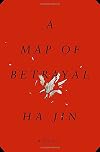
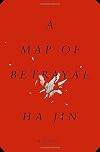
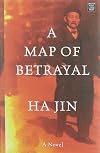
A Map of Betrayal
by Ha Jin
On This Page
Description
"From the award-winning author of Waiting: a spare, haunting tale of espionage and conflicted loyalties that spans half a century in the entwined histories of two countries--China and the United States--and two families as it explores the complicated terrain of love and honor. When Lilian Shang, born and raised in America, discovers her father's diary after the death of her parents, she is shocked by the secrets it contains. She knew that her father, Gary, convicted decades ago of being a show more mole in the CIA, was the most important Chinese spy ever caught. But his diary--an astonishing chronicle of his journey from 1949 Shanghai to Okinawa to Langley, Virginia--reveals the pain and longing that his double life entailed. The trail leads Lilian to China, to her father's long-abandoned other family, whose existence she and her Irish American mother never suspected. As Lilian begins to fathom her father's dilemma--torn between loyalty to his motherland and the love he came to feel for his adopted country--she sees how his sense of duty distorted his life. But as she starts to understand that Gary, too, had been betrayed, she finds that it is up to her to prevent his tragedy from damaging yet another generation of her family"-- show lessTags
Recommendations








Member Reviews
Ha Jin has been an interesting author for many years and he is deserving of the praise and prizes that he has garnered. In “Map of Betrayal” he takes a road much different than previous novels and tells the story of a Chinese spy marooned inside the US after World War II. The narrator, Lillian Shang is the spy’s American daughter and her voice alternates with that of a 3rd person narrator to provide a very compelling story.
“Gary” Shang was fortunate to learn a little English growing up in rural China, and it was enough to get him offered a temporary job working for the Americans in post-war Taiwan. He also comes to the attention of the new Communist government in China and they set him to be a spy, forcing him to abandon his show more family and take up a new, secret life in America. He is later discovered, put on trial by the Americans and sent to prison.
Lillian Shang, after the discovery of her father’s hidden life, decides to find his family in rural China. Of course, she wants to know about this father that she only knew from his life and family in America. Bit by bit she learns of Gary’s early life and gradually meets and gets to know the family he left behind.
At the same time the third person narrator provides an ongoing account of Gary’s life from the beginning, his marriage to girl in his home village and his almost immediate departure from that village for work. Ha Jin utilizes these two parallel tracks to tell a very compelling story of a man who is trapped and who sacrifices a great deal to serve his native country. Over time, as he settles into American life, gets married and has a child, he has to reckon with his growing affection for America and the conflict that creates within him.
I’ve read reviews that criticize many aspects of the novel from the depiction of politics and the world of spying to how this man of many secrets is portrayed. My reaction to the novel, my great admiration for it, is based on the story itself. Gary Shang, like many of us, was forced to make decisions that he thought were in the best interests of his family. He paid a tremendously high price, leaving behind one family, lying every day to another and ultimately being imprisoned for spying on a country he came to love. Ha Jin portrays Gary’s agony and inner turmoil beautifully, and does as well with the character of his daughter, Lillian and many minor characters. This is a beautiful novel and deserves to take its place on the shelf alongside Ha Jin’s earlier works. show less
“Gary” Shang was fortunate to learn a little English growing up in rural China, and it was enough to get him offered a temporary job working for the Americans in post-war Taiwan. He also comes to the attention of the new Communist government in China and they set him to be a spy, forcing him to abandon his show more family and take up a new, secret life in America. He is later discovered, put on trial by the Americans and sent to prison.
Lillian Shang, after the discovery of her father’s hidden life, decides to find his family in rural China. Of course, she wants to know about this father that she only knew from his life and family in America. Bit by bit she learns of Gary’s early life and gradually meets and gets to know the family he left behind.
At the same time the third person narrator provides an ongoing account of Gary’s life from the beginning, his marriage to girl in his home village and his almost immediate departure from that village for work. Ha Jin utilizes these two parallel tracks to tell a very compelling story of a man who is trapped and who sacrifices a great deal to serve his native country. Over time, as he settles into American life, gets married and has a child, he has to reckon with his growing affection for America and the conflict that creates within him.
I’ve read reviews that criticize many aspects of the novel from the depiction of politics and the world of spying to how this man of many secrets is portrayed. My reaction to the novel, my great admiration for it, is based on the story itself. Gary Shang, like many of us, was forced to make decisions that he thought were in the best interests of his family. He paid a tremendously high price, leaving behind one family, lying every day to another and ultimately being imprisoned for spying on a country he came to love. Ha Jin portrays Gary’s agony and inner turmoil beautifully, and does as well with the character of his daughter, Lillian and many minor characters. This is a beautiful novel and deserves to take its place on the shelf alongside Ha Jin’s earlier works. show less
 This review was written for LibraryThing Early Reviewers.
3.5 stars
Lilian Shang, the American daughter of the highest-placed Chinese spy ever captured by the FBI decides to search for her father's first wife's family in China. Her late father's long-time mistress provides key knowledge--and his diaries--to her.
In her search, she finds and learns more than she expected, as do the relatives she finds.
A good read, I kept having to remind myself that this is fiction. However, I doubt I will remember this book in a year.
Lilian Shang, the American daughter of the highest-placed Chinese spy ever captured by the FBI decides to search for her father's first wife's family in China. Her late father's long-time mistress provides key knowledge--and his diaries--to her.
In her search, she finds and learns more than she expected, as do the relatives she finds.
A good read, I kept having to remind myself that this is fiction. However, I doubt I will remember this book in a year.
I was very excited to read this book and actually voted to include it in our Holiday Catalog. But after finishing it, I have to say I was so disappointed that I took my nomination away. The story is about a Chinese man, Gary Shang, who grows up in China during WWII. He becomes a spy for the Chinese government and takes a job as a translator for the CIA. He lives a dual life, with a wife in China and his American family in the US, and for decades, he passes secrets to the Chinese government. The novel is trying to depict the inner conflict he feels between his loyalty to his mother country and the admiration to his new home.
There were several things that bothered me about this book. First, I did not find Gary Shang to be a sympathetic show more character. Rather than feeling guilt about his betrayal of the US, his primary concerns were about self preservation. He showed no loyalty or faithfulness to his American wife, keeping a mistress through most of his life, so it seems odd to think that he would be torn up about loyalties to 2 countries. But my biggest gripe about this book was its portrayal of the immigrant experience in America. Gary Shang came to the US in the 1950’s right after WWII. He has no problems integrating into American society or finding an American wife. That completely does not ring true. My parents emigrated from China to the US post WWII and they did experience quite a bit of racism and bigotry. The US had just finished a war with the Japanese and were understandably wary of Asians. Jhumpa Lahiri’s books do a wonderful job depicting that difficult immersion into another society. Ha Jin makes it seem like a walk in the park. And the other subtle point that bothered me was similarly how his daughter who is half Chinese and half Caucasian is able to pass herself off as completely Chinese while traveling in China. Having 2 Eurasian children and knowing dozens more, I can’t think of a single example where a Eurasian would be mistaken for a Chinese person. Not to mention that even ABCs (American Born Chinese) can’t pass themselves off as native Chinese. Our dress, our mannerisms, the way we walk and talk, etc. make us stand out.
I’m sure this book will appeal to some – but definitely not my cup of Jasmine tea! show less
There were several things that bothered me about this book. First, I did not find Gary Shang to be a sympathetic show more character. Rather than feeling guilt about his betrayal of the US, his primary concerns were about self preservation. He showed no loyalty or faithfulness to his American wife, keeping a mistress through most of his life, so it seems odd to think that he would be torn up about loyalties to 2 countries. But my biggest gripe about this book was its portrayal of the immigrant experience in America. Gary Shang came to the US in the 1950’s right after WWII. He has no problems integrating into American society or finding an American wife. That completely does not ring true. My parents emigrated from China to the US post WWII and they did experience quite a bit of racism and bigotry. The US had just finished a war with the Japanese and were understandably wary of Asians. Jhumpa Lahiri’s books do a wonderful job depicting that difficult immersion into another society. Ha Jin makes it seem like a walk in the park. And the other subtle point that bothered me was similarly how his daughter who is half Chinese and half Caucasian is able to pass herself off as completely Chinese while traveling in China. Having 2 Eurasian children and knowing dozens more, I can’t think of a single example where a Eurasian would be mistaken for a Chinese person. Not to mention that even ABCs (American Born Chinese) can’t pass themselves off as native Chinese. Our dress, our mannerisms, the way we walk and talk, etc. make us stand out.
I’m sure this book will appeal to some – but definitely not my cup of Jasmine tea! show less
I received the audio version of this novel through Early Reviewers. I have read and enjoyed other works by this author - in particular WAITING. I was disappointed in this novel. Going back and forth in time proved to make a rather boring story a bit more interesting. Strange to think that a novel about a Chinese man who becomes a spy for China living in the US and working as a translator could be boring, but it was. I never developed affection for Gary though I believe Ha Jin wanted the reader to sympathize with him. After all Gary left a wife and parents behind in rural China and never even met his twins when he went to work as a translator. Perhaps it was the sense of duty behind Gary's actions. I wanted to care that he was caught and show more spent his last days in prison. The reader is told this very early. But the writing was cool and dispassionate and though I saw Gary's conflict, I never fully engaged with him. This novel had much potential but just didn't live up. show less
This review was written for LibraryThing Early Reviewers.In A MAP OF BETRAYAL, Ha Jin has created an unusual protagonist for a spy novel. Gary Shang is a very ordinary man, who seems quite dull and obedient. He does not have any compelling motivations facility to become a spy. Instead he just coasts into it after college based his need for a job. He succeeds primarily because of excellent English language skills and an ability to communicate well with others.
But this is not a spy thriller. Instead it is an exploration of the conflict between loyalty to the mother country and loyalty to a new country that all immigrants must experience. In Gary’s case, this manifests as conflicts between feelings of love/loyalty and betrayal/guilt. He loves China but learns to admire America after spending show more most of his life there. In his job as a CIA translator, he betrays America but does not seem to feel much guilt about it. Gary is manipulated and betrayed by China by being misled about his family’s welfare and ultimately by not being support when he is exposed. Gary loves his Chinese wife but is forced to betray her and his family by being urged to start another family in America. He does not love his American wife, Nellie, and betrays her by keeping a Chinese mistress, but strangely exposes himself by obtaining money for her new business from the Chinese. Although he seems to have a fulfilling relationship with his Chinese mistress, he never marries her. He loves his American daughter, Lillian, but feels guilty about that because he has had no contact with his Chinese children. Ultimately he is estranged from both America and China and from his two families. His primary betrayal seems to be to himself.
Jin uses a narrative structure that is split between Lillian, who relates her visit to present-day China in search of more understanding about her father’s Chinese family and Gary’s journals, which were given to Lillian by his Gary’s mistress. The latter provide an historical context of post-WWII Chinese-American relations from the unique perspective of an educated Chinese-American and as such are a strength of the story.
This novel suffers from a few flaws. As an educated immigrant fluent in English, Gary’s experience in America is not typical, overlooking the more challenging adaptive process that most immigrants faced then and still face today. Racism is never presented, despite its prevalence in America; and his cultural adjustment appears seamless.
Because Gary never asserts himself, he is not an easy character to admire. Jin’s tone regarding Gary seems confusing: Does having a low profile and being obedient represent how he perceives Chinese immigrants; or is he just being sympathetic toward a patriot who is being manipulated by China?
The pacing of this novel is slow and Jin does not develop much suspense, resulting in a reading slog.
Many of the characters seem manipulative and stereotypical, failing to elicit much empathy or, indeed, interest in their fates.
When exposed, Gary’s defense was that his actions were an effort to avoid problems between the two countries. This seems naïve and disingenuous, but possibly consistent with his lack of any strong convictions. show less
But this is not a spy thriller. Instead it is an exploration of the conflict between loyalty to the mother country and loyalty to a new country that all immigrants must experience. In Gary’s case, this manifests as conflicts between feelings of love/loyalty and betrayal/guilt. He loves China but learns to admire America after spending show more most of his life there. In his job as a CIA translator, he betrays America but does not seem to feel much guilt about it. Gary is manipulated and betrayed by China by being misled about his family’s welfare and ultimately by not being support when he is exposed. Gary loves his Chinese wife but is forced to betray her and his family by being urged to start another family in America. He does not love his American wife, Nellie, and betrays her by keeping a Chinese mistress, but strangely exposes himself by obtaining money for her new business from the Chinese. Although he seems to have a fulfilling relationship with his Chinese mistress, he never marries her. He loves his American daughter, Lillian, but feels guilty about that because he has had no contact with his Chinese children. Ultimately he is estranged from both America and China and from his two families. His primary betrayal seems to be to himself.
Jin uses a narrative structure that is split between Lillian, who relates her visit to present-day China in search of more understanding about her father’s Chinese family and Gary’s journals, which were given to Lillian by his Gary’s mistress. The latter provide an historical context of post-WWII Chinese-American relations from the unique perspective of an educated Chinese-American and as such are a strength of the story.
This novel suffers from a few flaws. As an educated immigrant fluent in English, Gary’s experience in America is not typical, overlooking the more challenging adaptive process that most immigrants faced then and still face today. Racism is never presented, despite its prevalence in America; and his cultural adjustment appears seamless.
Because Gary never asserts himself, he is not an easy character to admire. Jin’s tone regarding Gary seems confusing: Does having a low profile and being obedient represent how he perceives Chinese immigrants; or is he just being sympathetic toward a patriot who is being manipulated by China?
The pacing of this novel is slow and Jin does not develop much suspense, resulting in a reading slog.
Many of the characters seem manipulative and stereotypical, failing to elicit much empathy or, indeed, interest in their fates.
When exposed, Gary’s defense was that his actions were an effort to avoid problems between the two countries. This seems naïve and disingenuous, but possibly consistent with his lack of any strong convictions. show less
This review was written for LibraryThing Early Reviewers.Deceptively simple, kind of a fever dream of a book. You're in it before you realize and experiencing a daughter's increasingly complicated questioning of her family's past. Ha Jim is never a flashy writer and his dialogue sounds like words heard through a body of water -- even the Americans sound like characters from a Chinese fairy tale, and all sound exactly the same. There's no real mystery or twist, and there's way, way, way too much straight information (about Sino-American relations, dumped in almost like a magazine piece). Yet the story is able to withstand it, somehow (I confess I skipped most of it).
I didn't love this as much I hoped. It's an interesting story - daughter (Lillian) researching her father (Weimin/Gary) career in espionage, returning to China to meet family he left behind, getting caught up - to her own detriment - in their lives. Ha Jin writes so brilliantly about people's emotional blind spots - the parts of the novel that are about the toll Gary's choice of career had on the lives of his two families, as well as his own life are so powerful and understated, but then other parts of the novel read like a textbook on American-Sino relations.
I think this is a novel I will enjoy thinking about more than reading.
I think this is a novel I will enjoy thinking about more than reading.
Members
- Recently Added By
Published Reviews
ThingScore 50
Gary’s tragedy is that of most moles. He never belongs: not to America or China; not to his wives, mistress or children; not to the Chinese intelligence service or the C.I.A.; and not, in the end, to himself.
added by ozzer
Lists

Kirkus Reviews Best Fiction of 2014
100 works; 7 members
Author Information

34+ Works 10,455 Members
Ha Jin left his native China in 1985 and is now a professor of English at Emory University. He is author of, among other works, two short-story collections: Ocean of Words, which won the PEN/Hemingway Award, and Under the Red Flag, which won the Flannery O'Connor Award for short fiction. His novel Waiting won the National Book Award for fiction in show more 1999. He lives in Atlanta. (Bowker Author Biography) show less
Awards and Honors
Common Knowledge
- Canonical title
- A Map of Betrayal
- Original publication date
- 2014
Classifications
Statistics
- Members
- 283
- Popularity
- 113,939
- Reviews
- 25
- Rating
- (3.40)
- Languages
- English
- Media
- Paper, Audiobook, Ebook
- ISBNs
- 11
- ASINs
- 4