On This Page
Description
One by one the lighted windows went dark. The silhouette of the dead man could still be seen through the frosted glass like a Chinese shadow puppet. A taxi pulled up. It wasn't the public prosecutor yet. A young woman crossed the courtyard with hurried steps, leaving a whiff of perfume in her wake. Summoned to the dimly-lit Place des Vosges one night, where he sees shadowy figures at apartment windows, Maigret uncovers a tragic story of desperate lives, unhappy families, addiction and a show more terrible, fatal greed. show lessTags
Recommendations






































Member Reviews
This is another one from the first few batches of Maigret stories, a relatively unspectacular case in which a businessman is found murdered in his office, his body blocking the door of an empty safe. The crime is reported by a concièrge who notices that the shadow the murdered man projects on his blinds hasn't moved in a few hours - hence the French title. The English title is so generic and irrelevant that it suggests the publishers couldn't find anything really distictive in the book (although some recent English editions have a title that's a translation of the French one), but it's not without interest if you read it carefully: it's a very nice early example of the way Simenon gets Maigret to dig into the social and psychological show more background to a crime and work out how "respectable" people can be pushed over the edge into criminal acts. Maigret's own emotional engagement with the case comes over very well, too. And there's an entertaining minor character in the shape of the dead man's mistress, the young dancer Mine. Not a top-flight Maigret, but worth a couple of hours of your time. show less
This is described as “one of the earliest Maigrets” and the charm just oozes out, even in translation .By comparison, some of the later works seem to strain at bringing Maigret's personality to the fore. Here he is raw, engaged and personal—we experience each development in the case along with him. It is atmospheric, social and emotional, a crime story of manners rather than a puzzle or a shocker. It works
Another great Maigret. About the poor murdered man Couchet.... a wanderer who drifts from job to job but knows he will one day strike it rich. In the meantime though the awful wife can't wait and trades him in for a boring civil servant with a pension. Couchet is another in the long line of earthy, mistress laden men that Simenon obviously admires- big heart, big appetite, etc. - so the book kind of plays as a warm portrait of this guy. And of the awful wife and spineless civil servant. In their apartment, Maigret reflects: ""It was sad. So sad that it almost made you want to give up on being a man, on living on this earth, even the sun shines over it for several hours a day there are real birds flying freely." Yep, that's Simenon.
Maigret finds himself liking a murdered man that he never met while he looks for his murderer among 28 residents of what an American would call an apartment complex. This Simenon novel has especially strong character portraits of sad and nasty people.
My favorite of the Maigret books so far. Complete with all of the Maigret constants: people in situations that they themselves have made hopeless, millennial types, wastrels, a good murder or two. I wish I could read french, but these new translations have a very constant feel throughout them, despite there being a number of different translators.
Most of the time, I will have read the book before I watch the film. I've read most of the Inspector Maigret books, but those were the ones that had been translated into English. Now that Penguin has undertaken to translate more of them, there are lots of new stories. Thank you, Penguin.
Unfortunately, most of those (that I've read so far) that are just now being translated had been ignored for a reason. Still, some are better than others and this is a good one. In fact, I had already seen the film of this story in the French TV Maigret series starring Bruno Cremer (who plays a great Maigret). Knowing who did it never spoils a Maigret. The pleasure is in the journey.
Unfortunately, most of those (that I've read so far) that are just now being translated had been ignored for a reason. Still, some are better than others and this is a good one. In fact, I had already seen the film of this story in the French TV Maigret series starring Bruno Cremer (who plays a great Maigret). Knowing who did it never spoils a Maigret. The pleasure is in the journey.
Maigret Mystified
Review of the Penguin Classics paperback (2014) a new translation* by Ros Schwartz of the French language original "L'ombre chinoise"** (1932)
The Shadow Puppet was more of a depressing tale in my otherwise enthusiastic survey of the early Maigret romans populaires and the non-Maigret romans durs of Georges Simenon. A successful marketer of popular medicine cures is murdered in his office and his safe is emptied of 360,000 Francs. Maigret suspects that the two crimes are actually separate events and his suspicions fall on the residents of the apartment complex where the office & lab were located. The motive turns out to be one of vicious greed which results in actual insanity.
The one lighter aspect was due to Maigret's show more sympathies for the murdered man's mistress and his attempts to help her out of her financial problems.
See cover at http://www.trussel.com/maig/covers/pen_mys2.jpg
The cover of the first Penguin English language edition of "The Shadow Puppet" translated by Jean Stewart and published as "Maigret Mystified" in 1964. Image sourced from Maigret of the Month.
I've now read more than a dozen of the early Maigret novellas in the past four weeks and they continue to impress with how different they are not only from each other, but also from other "Golden Age of Crime" novels of that interwar era. What is even more impressive is that the first dozen were all published in 1931 as if he wrote one every month. Perhaps it is not that surprising from an author who wrote over 500 books in his lifetime, but it still an eyeopener.
In the continuing confusion for completists, this is Maigret #12 in the recent Penguin Classics series of new translations (2013-2019) of the Inspector Maigret novels and short stories, but it is Maigret #13 in the previous standard Maigret listing on Library Thing.
Trivia and Links
* Some earlier English translations have given the title as Maigret Mystified or as The Shadow in the Courtyard.
** Shadow puppets were first known as Ombre Chinoise (Chinese Shadows) in France, as they were first introduced from China to France by French missionaries in 1767 (Source: Wikipedia).
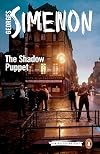
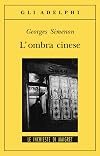
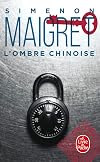
A curiosity (I don't know if it is a case of any rare printings) is that this new translation appears to have been issued with two different cover images by Penguin Classics..
The Shadow Puppet has been adapted in 5 different television versions, in English (once), Italian (twice) and French (twice). Information and links about the various adaptations are available at French Wikipedia.
There is an article about the Penguin Classics re-translations of the Inspector Maigret novels at Maigret, the Enduring Appeal of the Parisian Sleuth by Paddy Kehoe, RTE, August 17, 2019. show less
Review of the Penguin Classics paperback (2014) a new translation* by Ros Schwartz of the French language original "L'ombre chinoise"** (1932)
The Shadow Puppet was more of a depressing tale in my otherwise enthusiastic survey of the early Maigret romans populaires and the non-Maigret romans durs of Georges Simenon. A successful marketer of popular medicine cures is murdered in his office and his safe is emptied of 360,000 Francs. Maigret suspects that the two crimes are actually separate events and his suspicions fall on the residents of the apartment complex where the office & lab were located. The motive turns out to be one of vicious greed which results in actual insanity.
The one lighter aspect was due to Maigret's show more sympathies for the murdered man's mistress and his attempts to help her out of her financial problems.
See cover at http://www.trussel.com/maig/covers/pen_mys2.jpg
The cover of the first Penguin English language edition of "The Shadow Puppet" translated by Jean Stewart and published as "Maigret Mystified" in 1964. Image sourced from Maigret of the Month.
I've now read more than a dozen of the early Maigret novellas in the past four weeks and they continue to impress with how different they are not only from each other, but also from other "Golden Age of Crime" novels of that interwar era. What is even more impressive is that the first dozen were all published in 1931 as if he wrote one every month. Perhaps it is not that surprising from an author who wrote over 500 books in his lifetime, but it still an eyeopener.
In the continuing confusion for completists, this is Maigret #12 in the recent Penguin Classics series of new translations (2013-2019) of the Inspector Maigret novels and short stories, but it is Maigret #13 in the previous standard Maigret listing on Library Thing.
Trivia and Links
* Some earlier English translations have given the title as Maigret Mystified or as The Shadow in the Courtyard.
** Shadow puppets were first known as Ombre Chinoise (Chinese Shadows) in France, as they were first introduced from China to France by French missionaries in 1767 (Source: Wikipedia).
A curiosity (I don't know if it is a case of any rare printings) is that this new translation appears to have been issued with two different cover images by Penguin Classics..
The Shadow Puppet has been adapted in 5 different television versions, in English (once), Italian (twice) and French (twice). Information and links about the various adaptations are available at French Wikipedia.
There is an article about the Penguin Classics re-translations of the Inspector Maigret novels at Maigret, the Enduring Appeal of the Parisian Sleuth by Paddy Kehoe, RTE, August 17, 2019. show less
Members
- Recently Added By
Lists

Books Read in 2016
4,666 works; 199 members

Books Read in 2019
4,052 works; 110 members

Las mejores obras literarias leídas en 2023 -- Magistrales (R. D.)
25 works; 1 member

Reading LIst
648 works; 1 member
Author Information

1,324+ Works 62,954 Members
The prolific Belgian-born writer Georges Simenon produced hundreds of fictional works under his own name and 17 pseudonyms, in addition to more than 70 books about Inspector Maigret, long "the favorite sleuth of highbrow detective-story readers" (SR). More than 50 "Simenons" have been made into films. In addition to his mystery stories, he wrote show more what he called "hard" books, the serious psychological novels numbering well over 100. The autobiographical Pedigree, set in his native town of Liege, is perhaps his finest work. The publication of Simenon's intimate memoirs also attracted considerable attention. Simenon himself once said that he would never write a "great novel." Yet Gide called him "a great novelist, perhaps the greatest and truest novelist we have in French literature today," and Thornton Wilder (see Vol. 1) found that Simenon's narrative gift extends "to the tips of his fingers." The following are some of Simenon's novels, exclusive of the Maigret detective stories, that are in print. (Bowker Author Biography) Georges Simenon was born on February 13, 1903 in Liege, Belgium. He wrote more than 200 fiction works under 16 different pseudonyms. His first book, The Case of Peter the Lent led to 80 more of the like including the main character, Inspector Maigret. He published over 400 books that were translated into 50 different languages and sold by the millions. He also wrote psychological novels, including The Man Who Watched the Train Go By. He died on September 4, 1989 in Lausanne. (Bowker Author Biography) show less
Some Editions
Series

Belongs to Publisher Series
Work Relationships
Is contained in
Common Knowledge
- Canonical title
- The Shadow Puppet
- Original title
- L'Ombre chinoise
- Alternate titles
- Maigret Mystified; The Shadow in the Courtyard
- Original publication date
- 1932 (original French) (original French); 1934 (in English) (in English)
- People/Characters
- Jules Maigret
- Important places
- Paris, France; 36 Quai des Orfèvres, Paris, Île-de-France, France
- Related movies*
- Shadow Play (1961 | IMDb); L'ombra cinese (1966 | IMDb); L'ombre chinoise (1969 | IMDb); Maigret: L'ombra cinese (2004 | IMDb)
- First words
- It was ten p.m.
- Last words
- (Click to show. Warning: May contain spoilers.)l ne pensait plus à Mme Martin, qu'une voiture d'ambulance conduisait à Sainte-Anne, tandis que son mari sanglotait tout seul dans l'escalier vide.
(Click to show. Warning: May contain spoilers.)He no longer thought about Madame Martin, who had been taken by ambulance to Sainte-Anne's, while her husband sobbed alone in the empty stairwell. - Original language
- French
- Disambiguation notice
- In the French original, L'ombre chinoise (1932).
Variously published in English as:
(i) "The Shadow in the Courtyard," with "The Crime at Lock 14" (1934), and in The Triumph of Inspector Maig... (show all)ret (1934); and
(ii) Maigret Mystified (1964), and in Maigret at the Crossroads (1983); and
(iii) The Shadow Puppet (2014).
*Some information comes from Common Knowledge in other languages. Click "Edit" for more information.
Classifications
Statistics
- Members
- 546
- Popularity
- 54,460
- Reviews
- 17
- Rating
- (3.55)
- Languages
- 11 — Bulgarian, Catalan, Danish, Dutch, English, Finnish, French, German, Italian, Portuguese, Spanish
- Media
- Paper, Audiobook, Ebook
- ISBNs
- 31
- ASINs
- 23