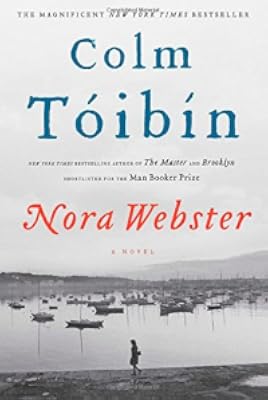
Nora Webster
by Colm Tóibín
On This Page
Description
From one of contemporary literature's bestselling, critically acclaimed and beloved authors, a magnificent new novel set in Ireland, about a fiercely compelling young widow and mother of four, navigating grief and fear, struggling for hope. Set in Wexford, Ireland, Colm Tóibín's superb seventh novel introduces the formidable, memorable and deeply moving Nora Webster. Widowed at forty, with four children and not enough money, Nora has lost the love of her life, Maurice, the man who rescued show more her from the stifling world to which she was born. And now she fears she may be drawn back into it. Wounded, strong-willed, clinging to secrecy in a tiny community where everyone knows your business, Nora is drowning in her own sorrow and blind to the suffering of her young sons, who have lost their father. Yet she has moments of stunning empathy and kindness, and when she begins to sing again, after decades, she finds solace, engagement, a haven-herself. Nora Webster is a masterpiece in character study by a writer at the zenith of his career. In Nora Webster, Tóibín has created a character as iconic, engaging and memorable as Madame Bovary or Hedda Gabler. show lessTags
Recommendations

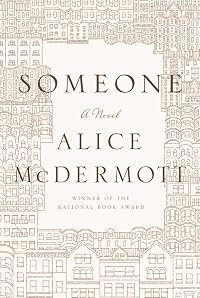
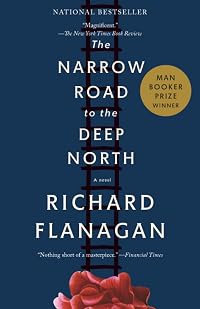
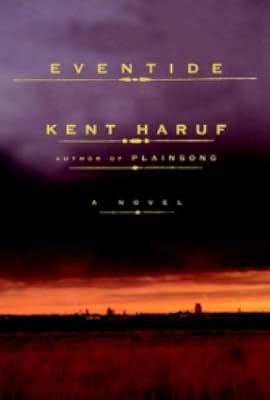
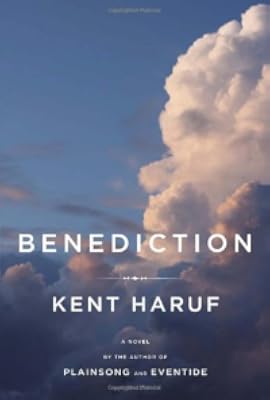

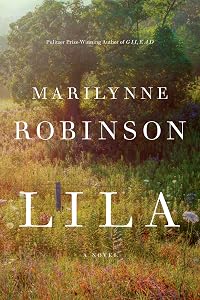
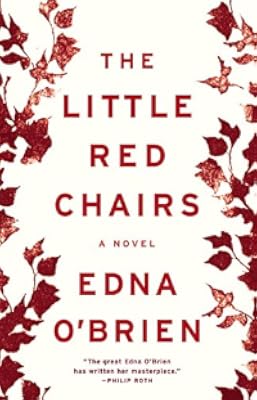
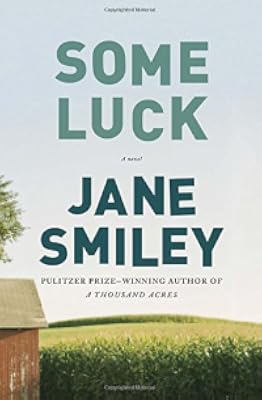

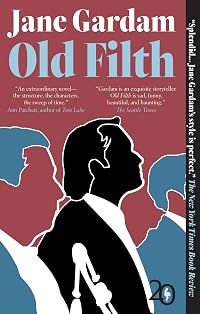
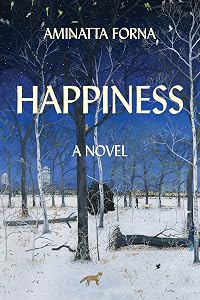
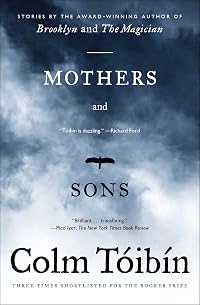
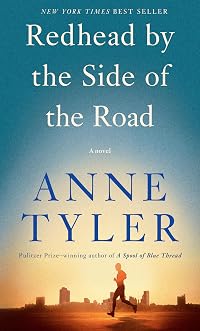
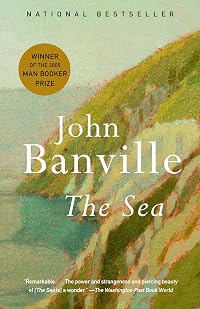
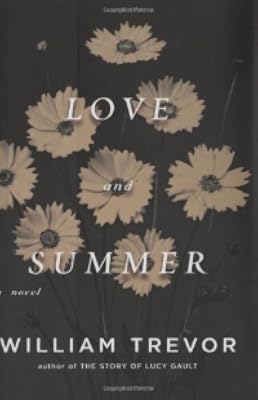
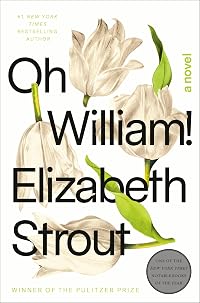
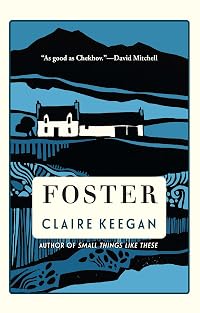
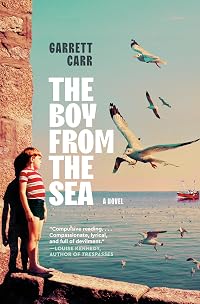


Member Recommendations
Micheller7 Character study more than plot driven.
Member Reviews
A beautifully written novel about the complexities of grief and loss, set in a small town in the southeast of Ireland in the late 1960s and early 1970s. When the book begins, the eponymous Nora is recently widowed, wondering how she will be able to maintain her family with the loss of her husband's wage as a schoolteacher and inchoately furious with the expectations that everyone in Enniscorthy seems to have about a woman in her position.
It's fascinating for me to scroll through some of the other comments on here and to see how many people describe Nora's character as cold, when surely Colm Tóibín draws her as someone who feels intensely but who often doesn't have the words to describe what she's feeling—someone who perhaps lacks show more the ability to articulate her emotions to herself. Equally, I'm bemused by the reviews which state that Nora doesn't convince them as a person and/or as a woman, when she was to me so powerfully representative of a certain generational type of Irishwoman. One of my grandmothers would have been a few years older than Nora and a few notches down on the social ladder. She never once told me she loved me, though I have absolutely no doubt that she did; the idea of other people "knowing your business" was anathema to her. Better to leave some things unsaid than to fear you've said too much.
This is a novel told in vignettes, and I thought some of them were stronger than others; one or two could perhaps have been abstracted and stood alone as short stories, and I can't quite decide where that leaves my opinion about the overall structure. Still, there's no denying Tóibín's ear for dialogue—though I don't think there's ever an adverbial descriptor of tone or manner of delivery, I could hear the speech as I read—or the very quiet, deadpan humour. (Admittedly much of the latter may be lost on a non-Irish audience. Nora and some of the other characters approve of Charlie Haughey because he's the "coming man" who's going to shake things up and has a way with money and is looking out for the widows; there are layers of ironic humour here if you know anything about Haughey's later career. I found the scenes set in a community table quiz and its aftermath in the pub to be mordantly funny, but if you never spent time in a pre-Celtic Tiger rural Irish pub, you might not agree.)
A subtle book about a quiet life. show less
It's fascinating for me to scroll through some of the other comments on here and to see how many people describe Nora's character as cold, when surely Colm Tóibín draws her as someone who feels intensely but who often doesn't have the words to describe what she's feeling—someone who perhaps lacks show more the ability to articulate her emotions to herself. Equally, I'm bemused by the reviews which state that Nora doesn't convince them as a person and/or as a woman, when she was to me so powerfully representative of a certain generational type of Irishwoman. One of my grandmothers would have been a few years older than Nora and a few notches down on the social ladder. She never once told me she loved me, though I have absolutely no doubt that she did; the idea of other people "knowing your business" was anathema to her. Better to leave some things unsaid than to fear you've said too much.
This is a novel told in vignettes, and I thought some of them were stronger than others; one or two could perhaps have been abstracted and stood alone as short stories, and I can't quite decide where that leaves my opinion about the overall structure. Still, there's no denying Tóibín's ear for dialogue—though I don't think there's ever an adverbial descriptor of tone or manner of delivery, I could hear the speech as I read—or the very quiet, deadpan humour. (Admittedly much of the latter may be lost on a non-Irish audience. Nora and some of the other characters approve of Charlie Haughey because he's the "coming man" who's going to shake things up and has a way with money and is looking out for the widows; there are layers of ironic humour here if you know anything about Haughey's later career. I found the scenes set in a community table quiz and its aftermath in the pub to be mordantly funny, but if you never spent time in a pre-Celtic Tiger rural Irish pub, you might not agree.)
A subtle book about a quiet life. show less
After her husband's death, Nora gradually rebuilds her confidence in life, goes back to work, tries to learn to accept help from her family, tries to work out what is going on inside her children's heads, redecorates the back room, and rediscovers her interest in music. In the background, men are walking on the Moon, Jacqueline du Pré, Pinchas Zukerman and Daniel Barenboim are recording Beethoven trios, Troubles are starting in the North, and even County Wexford seems to be taking its first tentative steps into the twentieth century.
This is a book without any obvious big narrative climaxes and turning points, it's a delicate, detailed study of the many little ways in which life changes over a period of time and how families work. And show more Nora is a wonderfully engaging character: the headstrong girl once tamed by her marriage to a respected teacher and political activist but now finding the satisfaction of taking her own decisions again, and being surprised to discover how many people are actually still afraid of her. show less
This is a book without any obvious big narrative climaxes and turning points, it's a delicate, detailed study of the many little ways in which life changes over a period of time and how families work. And show more Nora is a wonderfully engaging character: the headstrong girl once tamed by her marriage to a respected teacher and political activist but now finding the satisfaction of taking her own decisions again, and being surprised to discover how many people are actually still afraid of her. show less
Like Barbara Pym, Colm Tóibín can take ordinary life and make it...well, engaging. Nora Webster has suddenly lost her husband, while she still has two young sons to raise, and two older daughters to get through university. This book is all about her feeling her way through the grief and uncertainty, taking charge of her new life bit by bit, while fending off well-meaning but intrusive neighbors and relatives who know just what she ought to be doing, and sometimes go so far as doing it for her. Somehow she finds the balance between accepting the help she needs, and putting the kibosh on the meddling, but not without missteps and stumbles. We do feel she'll probably be all right in the end, and so will her children. The setting, which show more is mainly in the background, is the late 60's into the start of The Troubles in Ireland, and we get a fascinating glimpse of the times from the perspective of a small community well to the south whose members are so far untouched by the unrest and escalating violence, but have a variety of views on its causes, justification and potential solutions. show less
NORA WEBSTER is a book to savor, but alas, I raced through it; I devoured it. The story of this young widow with four children is perhaps one of the most affecting stories I have read in years. It also gives you a small, inside look at "the Troubles" in Ireland in the late sixties and early seventies, with its allusions to the riots and shootings in Derry and Belfast. And the moon landing coverage on TV sets it early on firmly in 1969, which made me remember my own life from that time - in graduate school, married with a new baby. At the same time Toibin's Nora was struggling with the death of her husband and all the grief and confused feelings that followed, not to mention wondering how she would manage financially with her four show more children. Bottom line: the real subject here is the interior life of a woman who seems as real as a relative or neighbor. Nora Webster is a character that will linger long in my consciousness. A character to savor. I hated to see this book end. Toibin is an incredibly gifted writer. Very highly recommended. show less
I'd forgotten how well Colm Tóibín writes about quiet lives until I was halfway through the first chapter of Nora Webster, and entirely hooked. Set in Ireland, in 1968, the novel centers on a woman in her mid-forties, whose husband has recently died, leaving her to negotiate child-rearing, find a way to support the family and to become someone other than half of a couple. Nora's awesome though, being stubborn and willing to stand her ground when she needs to.
Tóibín is writing about an Ireland that doesn't exist anymore, just as it began to change with the Troubles beginning in Northern Ireland and the conflict a growing concern in the Republic. And women's roles were changing, with Nora's daughters experiencing vastly more freedom show more than she did. Nora, herself, gets to experience some of that independence, slowly and reluctantly choosing hobbies and interests outside of what her family circle enjoys.
There's no great action in this book, no central conflict to resolve. It unfolds like ordinary life, a series of challenges and decisions to be made and lived with, as Nora works to keep her family going and to find her own feet. And the writing is lovely; unassuming and clear. I'll always read whatever Tóibín decides to write because of the quality of his writing, but I also love the care with which focuses on women who live their lives largely unnoticed by others. show less
Tóibín is writing about an Ireland that doesn't exist anymore, just as it began to change with the Troubles beginning in Northern Ireland and the conflict a growing concern in the Republic. And women's roles were changing, with Nora's daughters experiencing vastly more freedom show more than she did. Nora, herself, gets to experience some of that independence, slowly and reluctantly choosing hobbies and interests outside of what her family circle enjoys.
There's no great action in this book, no central conflict to resolve. It unfolds like ordinary life, a series of challenges and decisions to be made and lived with, as Nora works to keep her family going and to find her own feet. And the writing is lovely; unassuming and clear. I'll always read whatever Tóibín decides to write because of the quality of his writing, but I also love the care with which focuses on women who live their lives largely unnoticed by others. show less
Colm Toibin did an excellent job portraying Nora Webster. She is so ordinary you can see yourself in her. She can't bring herself to say the right things and blurt out the wrong things. She wants to laugh when she shouldn't. She offers silence when she doesn't want to say what she should. She frequently is at a loss of what to say in reply. There are so many things she wants to say but doesn't because she knows she shouldn't. She knows less about her sons' lives than her sister-in-law but does not want to admit it. She doesn't know what to do with her children. But she knows what she doesn't want, and is able to stand up for herself. She learns to like music and singing, and make friends. Her instincts of what's best for her children show more turn out to be right. I love her! show less
It is the 1960s and Nora Webster's husband Maurice has died young, and she is left to fend for herself and her four children in a small town in Southern Ireland. Maurice was a teacher who was loved and respected throughout the community: a presence whom people gravitated toward, known for his love of company, his compassion and his strong political beliefs. For the years of their marriage Nora was content to exist in his shadow. But with his death she is thrust into the front line of life and must make a go of it. The two girls, Fiona and Aine, are more or less grown and out of the house, but still at home are Conor and Donal, youngsters who must find their way now without a father. Nora daily feels the tremendous loss of her show more husband--almost minute by minute--but she has no choice but to heal, a process that is gradual and begins with a clearly articulated wish that people would cease their unannounced visits and pitying stares and let her grieve in peace. Eventually she finds herself facing major lifestyle choices (selling the cottage, returning to work) and with each one a subtle distancing from Maurice and his influence takes place, making it easier for her to face the next decision when it comes along. Toibin's novel chronicles Nora's gradual awakening, from tentative widow and mother deferring to the wishes if others and second-guessing her every move, to independent woman getting on with things and making her life her own. The novel is set in life's trenches, where people drag themselves out of bed each morning to face a day that might very well defeat them. Toibin's prose achieves stunning elegance in its very simplicity. The writing is sometimes little more than a chronicle of what happens moment by moment. But this is Toibin's genius. He immerses the reader in Nora's conscious thoughts so that not only do we see the world through her eyes, but we feel her needs and desires and suffer keenly her losses and anxieties and injuries. Such drama as exists is built around encounters and Nora's anticipation (or dread) of them. Because this is art imitating life you might be fooled into thinking you are reading a novel in which nothing happens. It is only at the end when you emerge from Nora’s story and realize where you've been that you grasp the level of skill needed to create a complete and entirely engaging world in prose. show less
Members
- Recently Added By
Lists

Recommend the 20 best books you've read in the last five years
2,168 works; 606 members

Top Five Books of 2015
811 works; 241 members

Books recommended by Barack Obama
295 works; 28 members

EU Fiction: 1950-2022
223 works; 70 members

Irish writers
87 works; 17 members

Top Five Books of 2014
1,064 works; 397 members
Top Five Books of 2016
795 works; 229 members

Books Read in 2014
2,343 works; 89 members

Folio Prize 2015 Longlist
79 works; 2 members

Europe
205 works; 6 members

Dublin Literary Award Longlist 2016
148 works; 4 members

Books Set in Small Towns and Villages
278 works; 16 members

Obama Reads
181 works; 3 members

Books Read in 2016
4,666 works; 197 members

Unmarried women
66 works; 6 members

Fiction (Non-Fantasy) by Irish Authors Set in Ireland
87 works; 3 members

Kirkus Reviews Best Fiction of 2014
100 works; 7 members

Five star books
1,767 works; 110 members
Author Information

87+ Works 25,417 Members
Colm Tóibín was born in Enniscorthy, Ireland in 1955. He studied history and English at University College Dublin, earning his B.A. in 1975. After graduating he moved to Barcelona for three years and taught at the Dublin School of English. In 1978 he returned to Dublin and began working on an M.A. in Modern English and American Literature. He show more wrote for In Dublin, Hibernia, and The Sunday Tribune. He became the Features Editor of In Dublin in 1981, and then a year later accepted the position of Editor for the Irish current affairs magazine Magill. His first book, Walking Along the Border, was published in 1987 and his first novel, The South, was published in 1990. He wrote for The Sunday Independent as a drama or television critic and political commentator. He writes regularly for The London Review of Books. He has written several other novels including The Story of the Night, The Blackwater Lightship, Brooklyn, The Testament of Mary, and Nora Webster. The Heather Blazing received the 1993 Encore Award and The Master received the 2006 International IMPAC Dublin Literary Award, the Stonewall Book Award, and the Lambda Literary Award. In 2015 he made The New Zealand High Profile Titles List with All The Light We Cannot See. He was short listed for the 2015 Folio Prize for his title Nora Webster. (Bowker Author Biography) show less
Some Editions
Awards and Honors
Awards
Distinctions
Series
Belongs to Publisher Series
Keltainen kirjasto (471)
dtv (14629)
Common Knowledge
- Canonical title
- Nora Webster
- Original title
- Nora Webster
- Original publication date
- 2014
- People/Characters
- Nora Webster; Aine Webster; Fiona Webster; Conor Webster; Donal Webster; Francie Kavanagh (show all 14); Elizabeth Gibney; Laurie O'Keefe; Josie; Margaret; Jim; Una; Phyllis; Maurice Webster
- Important places
- Enniscorthy, County Wexford, Ireland; Dublin, Ireland
- Dedication
- Brid Tóibín (1921–2000)
Niall Tóibín (1959–2004) - First words
- "You must be fed up of them. Will they never stop coming?"
- Last words
- (Click to show. Warning: May contain spoilers.)In the meantime, the house was quiet, the silence broken only by the faint noises from Conor upstairs and the crackling of wood burning slowly in the fire.
- Blurbers
- Hadley, Tessa
- Original language*
- Englisch
*Some information comes from Common Knowledge in other languages. Click "Edit" for more information.
Classifications
Statistics
- Members
- 1,710
- Popularity
- 12,972
- Reviews
- 82
- Rating
- (3.86)
- Languages
- 13 — Catalan, Danish, Dutch, English, Finnish, French, German, Italian, Polish, Portuguese, Russian, Spanish, Swedish
- Media
- Paper, Audiobook, Ebook
- ISBNs
- 46
- ASINs
- 14