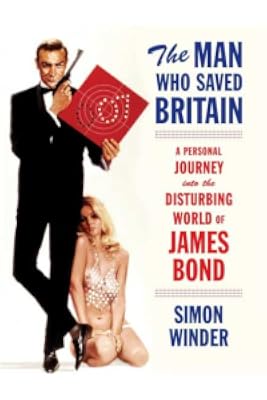
The Man Who Saved Britain: A Personal Journey into the Disturbing World of James Bond
by Simon Winder
On This Page
Description
"To grow up in England in the 1970s was to grow up with James Bond, and The Man Who Saved Britain is, first of all, the story of the author's relationship with this "national religion." Simon Winder lovingly and ruefully re-creates the nadirs and humiliations of fandom while illuminating what Bond's evolution - from books to film, from his roots in the 1940s to his "managed decline" today - says about the conservative movement, sex, the monarchy, food, class, attitudes towards America, and show more everything in between. The result is an insightful and, above all, entertaining exploration of post-War Britain under the palliative influence of the legendary Agent 007"--Jacket. show lessTags
Recommendations
















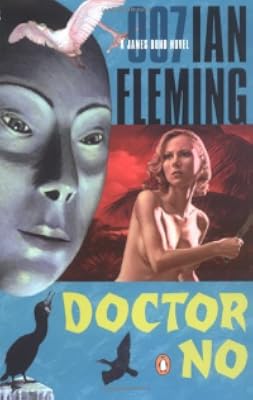
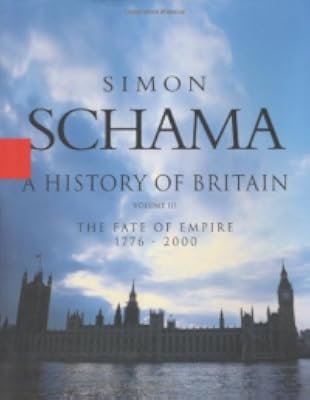

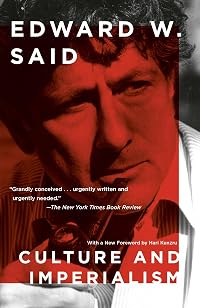

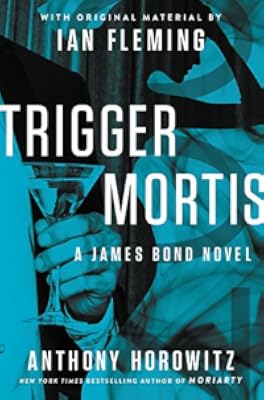


Member Reviews
The Man Who Saved Britain is a hot mess of a book: chaotic, self-indulgent, sloppy, and – underneath it all – frequently brilliant and insightful. Any scholar or serious fan of the James Bond novels and films will probably be seized, at least once while reading it, with an urge to throw it across the room. Even so, every scholar and serious fan should read it.
Winder’s central insight is that the James Bond novels were, in complex and overlapping ways, deeply rooted in post-WWII British culture. They offered British readers – trapped in a nightmare of rationing, rubble-strewn cities, and reduced expectations – a fantasy life filled with fine food, expensive liquor, commitment-free sex, and exotic surroundings. They also offered show more the nation a geopolitical fantasy universe in which British power was undiminished and agents of Her Majesty’s Government held the fate of nations and governments in their hands. Winder elaborates the point by weaving together a careful assessment of Ian Fleming’s novels with an impressionistic portrait of Britain in the fifties and early sixties. Having read the novels in high school and studied the history in grad school, I found both strands of the argument compelling and Winder’s integration of them fascinating.
The good stuff is presented, however, in a zigzag style that is – to be charitable – a challenge to follow. Winder never seems to stay with a single thought for very long before he caroms off in a seemingly random direction to explore another, equally interesting one. That he often returns to the original thought, pages or entire chapters later, is some comfort, but not much. The good stuff is also wrapped in thick layers of authorial showboating: hyperbole, snark, and autobiographical digressions. Its worth wading through all this to get to the good stuff, but I found myself looking at the opposite wall of the room . . . and hefting the book with a gleam in my eye. show less
Winder’s central insight is that the James Bond novels were, in complex and overlapping ways, deeply rooted in post-WWII British culture. They offered British readers – trapped in a nightmare of rationing, rubble-strewn cities, and reduced expectations – a fantasy life filled with fine food, expensive liquor, commitment-free sex, and exotic surroundings. They also offered show more the nation a geopolitical fantasy universe in which British power was undiminished and agents of Her Majesty’s Government held the fate of nations and governments in their hands. Winder elaborates the point by weaving together a careful assessment of Ian Fleming’s novels with an impressionistic portrait of Britain in the fifties and early sixties. Having read the novels in high school and studied the history in grad school, I found both strands of the argument compelling and Winder’s integration of them fascinating.
The good stuff is presented, however, in a zigzag style that is – to be charitable – a challenge to follow. Winder never seems to stay with a single thought for very long before he caroms off in a seemingly random direction to explore another, equally interesting one. That he often returns to the original thought, pages or entire chapters later, is some comfort, but not much. The good stuff is also wrapped in thick layers of authorial showboating: hyperbole, snark, and autobiographical digressions. Its worth wading through all this to get to the good stuff, but I found myself looking at the opposite wall of the room . . . and hefting the book with a gleam in my eye. show less
So long as you accept that this is a rather dated book that was never meant to have a long shelf life, Winder's meanderings about the fall of the British Empire, Ian Fleming's reaction to said fall, and what it says about how the British public made "Bond" a phenomena are actually rather interesting.
Like most of the readers, I could have done with a bit less of Winder's personal history, but as a near contemporary it gave me some food for thought about what the British experience post-1945 was like, particularly since the Brits keep scoring "own goals" on themselves; though as an American in 2025 I'm not in a position to be too smug about it.
Like most of the readers, I could have done with a bit less of Winder's personal history, but as a near contemporary it gave me some food for thought about what the British experience post-1945 was like, particularly since the Brits keep scoring "own goals" on themselves; though as an American in 2025 I'm not in a position to be too smug about it.
Interesting and amusingly written personal musings on the possible socio-cultural impact of Ian Fleming’s James Bond novels and the subsequent films, with respect to Britain’s view of itself and its place in the world following World War II and the collapse of Empire.
Would have been slightly improved by the author reining in his obvious like of excessively long and complex sentences, which occasionally needed two or three readings to unpack.
I spluttered in indignation at the exhortation (around page 223) to readers not to buy soundtrack albums … but that’s just me.
Would have been slightly improved by the author reining in his obvious like of excessively long and complex sentences, which occasionally needed two or three readings to unpack.
I spluttered in indignation at the exhortation (around page 223) to readers not to buy soundtrack albums … but that’s just me.
More a rant and a tirade than a book. Well written, even if you disagree with the author, and quite funny in places, and outrageous in most. Contains a chapter called "Coronation Chicken" , the title referring to a mayonnaise curried chicken on the occasion of Elizabeth II 's coronation, referred to by the author as "flummery", with the note that "World War II was not won by some lords in funny cloaks". Makes a interesting case that IF created JB in part because of his own sadomasochistic, alcoholic tendencies. Explains the circles in which IF moved: "naval, imperial, military, bureaucratic, journalistic, aristocratic and as liaison between spy agencies"
But unconvincing and sometimes incoherent. Takes on a very personal and show more idiosyncratic, first person narrative. About the British psyche in the fifties, about the newspapers the author's household took in, about the author's childhood feelings. His dreams about "Underwater Adventure" by Gerald Durrell, and his reading of "Biggles" stories. etc. etc.
A lot ot it bordering very tangentially if at all on Fleming or Bond, and being mainly a rant. show less
But unconvincing and sometimes incoherent. Takes on a very personal and show more idiosyncratic, first person narrative. About the British psyche in the fifties, about the newspapers the author's household took in, about the author's childhood feelings. His dreams about "Underwater Adventure" by Gerald Durrell, and his reading of "Biggles" stories. etc. etc.
A lot ot it bordering very tangentially if at all on Fleming or Bond, and being mainly a rant. show less
The Man Who Saved Britain
A Personal Journey into the Distrubing World of james Bond
Author: Simon Winder
Publisher: Farrar, Strauss, and Giroux
Published In: New York
Date: 2006
Pgs: 285
REVIEW MAY CONTAIN SPOILERS
Summary:
A shattered great power ensconced in the post-World War II ruin. A proud world power brought low. In this world, Ian Fleming created an alternate world of secret British greatness and glamor. In Bond’s world, Britain was a player, The Player. Fleming via Bond has his say on much of the world in that era; sex, the monarchy, food, class, America, etc. This novel explores the Bondian influence on postwar Britain. Agent 007 reporting. Bond...James Bond.
Genre:
Autobiography and memoir
Behind the Scenes
Classics
Film
History
Literary show more criticism
Non-fiction
Society
War
Why this book:
It’s Bond...James Bond.
______________________________________________________________________________
Favorite Character:
James Bond, even though he isn’t exactly favorably disposed of here, despite being one of the author’s favorite characters.
Least Favorite Character:
Great Britain
The Feel:
The narrative feels almost angry about pulling the curtain back and looking in on the great and powerful Oz, though whether Oz is Bond, Fleming, or the Britain of the era or some combination of all three isn’t necessarily spelled out. Almost like, the author found more and considered more than he was initially prepared to do when he started the process.
Bond stands in contrast. He is from the Britain that they, both the author and the people of Britain who were his first fans, seem to wish existed rather than the one that actually existed during that time.
Favorite Scene:
The author’s mother sitting on the steps of her home in London during the Blitz eating a honey sandwich as planes fly overhead on their way to or from the Battle of Britain.
Where the author is describing the experience of snorkelling after reading the scuba scenes in Bond books…
If someone goes into a tropical sea in a Bond novel the narrative demands the immediate presence of some dangerous fish. Indeed, it would be a banal disgrace if there were not one - just as Bond cannot talk to a girl without having sex with her or enter a casino without winning big. Most unfortunately this has so raised the bar for anyone entering the water as to make the actual experience a bit woeful.
...same with walking into a casino. Standing at a baccarat table in a casino on an American Indian Reservation, while awesome, is not Monte Carlo or wherever Bond happens to be playing. We were spoiled by the fiction, I think.
Pacing:
This book is very well paced. The author bends words in a wonderful way. I have misgivings about the way the book points at and elaborates on its central premise, but it is extremely well written.
Plot Holes/Out of Character:
The author’s characterization of British children of the 70s being more warpornish than kids in other countries is mistake. When he describes setting up toy soldiers and fighting mock battles, he could have been with my brother and I in Lake Dallas, Texas and our armies gathered along both sides of a small drainage in the backyard as we start throwing small rocks, sorry...bullets and mortars, across the ditch at the opposing armies. Warporn may be a generational thing or it may be hardwired into us as a species, but it is assuredly not just a British 50s, 60s, 70s childhood phenomena.
When the author describes the Bond books or Bond as a character, I can feel the rose colored glasses that I’ve always viewed both through falling from my eyes. They are very much a part of their time. Reading about the books when the author summarizes them and comments on them feels a lot like watching sausage be made. I know that Daniel Craig’s Bond in the movies is a more evolved and up-to-date version of the character with the old sensibilities being a flavoring rather than the whole dinner. This may be what saves Bond from the trashbin of history where characters like Matt Helm have fallen.
Hmm Moments:
Is it just me or is this a damned odd paragraph?
As a memoir, this book is fragmentary and scraped together from very slightly interesting bits and bobs. My life has just not been melodramatic enough to take up more than a few pages. I had a cheerful childhood packed with affection, no specific features to incite sympathy and no adventures to speak of. As history it will anger many, filled as it is with shocking generalizations and lack of documentation. I share that anger. This book was written in large part because I want to convey, perhaps in an overdrawn form, some of the ways in which Britain has changed-and by following James Bond show some of a vanished world which he in various ways pulled together.
I get the point of it. So I guess it’s all good. But, the paragraph strikes me as odd. Sort of a introduction denouement.
The author’s comparison of the perception of the last statesmen of the portraiture era vs the first statesmen of the radio and television era is spot on. We look at the last and see vibrant colors and artists bringing the heroic into focus vs the last appearing as staticy, flitty, sound and black and white images that make them seem small and comic opera. This perception is fed by the media of the images and sounds as much as the history that is known about the characters.
The exploration of Bond’s possible literary forebears is interesting; Rohmer’s Fu Manchu novels, Hope’s Prisoner of Zenda, and Haggard’s King Solomon’s Mines.
The idea of postwar Britain as a stuffed cobra and a front room full of bric-a-brac, tourist trap tchotchke crap from the vanishing empire is well presented
One of his commentaries on Conservatives in the postwar British period could have been his speaking on America in the modern day.
Britain was left with a zany system in which the MPs of the Conservative Party, who ruled cumulatively for thirty-five years from 1945, would not themselves have dreamed of using either the public health system or public transport (beyond first class carriages on trains) and would have been socially ostracized if they had sent their children to state schools. This left a long lasting, very peculiar split where the Conservatives, often blue blooded figures of astonishing dimness or over-articulate fatalism, continued to attract support from a broad base - partly aspirational but also, and more important, bitter and angry about the whirlwind ruining their world.
This is a vision of a Britain that I’ve never really been cognizant of, or more properly, I knew of, but this is a depth and flavor to it that I was not aware existed.
Why isn’t there a screenplay?
A screenplay on a book about the history and culture of Britain told through the filter of James Bond...better to watch the Bond films and read the Fleming books. Though I warn you now, they are becoming more and more dated as the years slide passed.
Casting call:
Connery will always be my Bond. I really liked Craig and Brosnan. Moore and Dalton were okay. Was never a Lazenby or Niven guy.
I believe wholeheartedly that Idris Elba should be James Bond. He’d be freaking awesome. Dreamcasting there. And that James Bond should be the cover identity given to the top spy in Britain. 007 should be legion. Always only one, but always evolving with the times and becoming something new.
______________________________________________________________________________
Last Page Sound:
At the end, this piece of nonfiction is the author coming to terms with what his country is and where its at. Amazingly well written. I didn’t like it. but I’m glad I read it. I didn’t like it because it showed me a Britain that isn’t the fantasy that has lived in my head for forever. It is hard to have the lies we tell ourselves brought out into the light and exposed. I’ll never be able to re-read the Bond novels again after this. And that’s okay. This is going to color my experience with those novels and the movies. And that’s okay. Sometimes, the braces have to fall away.
Author Assessment:
Mr Winder sounds in the introduction like he doesn’t like Britain, like he’s disgusted with the Britain that existed in the mid-World War interregnum. And he doesn’t sound like he likes Ian Fleming very much. Though in truthfulness, the way Fleming is described here, I doubt that I would have liked him either.
Winder’s style is interesting and feels personal.
Though the story purports to be about Bond, the world he created and that he was created by and that he is mentioned on every other page, this is tangentially at best about Bond and is more along the lines of a diatribe against what Britain was and what she became in the 1900s. The book is anti-royalist, anti-Conservative, anti-Labour, and is essentially anti-British. This isn’t a love story to the Britain that existed across this era.
I love the way this is written. But there is a bit of feeling like I am being made to look at myself naked in the mirror or to stare at my own feet. Confronting your foibles through the writing of someone else and having a hero be undressed in this fashion is jarring.
Case by case basis, I would absolutely give anything else written by this author a look.
Editorial Assessment:
Could have benefited from the editor drawing the narrative back onto the path a time or three, especially in the introductory chapter.
Knee Jerk Reaction:
glad I read it
Disposition of Book:
Irving Public Library
Irving, TX
Would recommend to:
history buffs, the hardcore James Bond nerd, post war Britain aficionados
______________________________________________________________________________
Errata:
Ian Fleming once had an ongoing affair with the mother of Chris Blackwell. Chris Blackwell and Island Records helped bring Jamaican music out to the world. A ton of artists in many genres found their way through Island Records over the years. show less
A Personal Journey into the Distrubing World of james Bond
Author: Simon Winder
Publisher: Farrar, Strauss, and Giroux
Published In: New York
Date: 2006
Pgs: 285
REVIEW MAY CONTAIN SPOILERS
Summary:
A shattered great power ensconced in the post-World War II ruin. A proud world power brought low. In this world, Ian Fleming created an alternate world of secret British greatness and glamor. In Bond’s world, Britain was a player, The Player. Fleming via Bond has his say on much of the world in that era; sex, the monarchy, food, class, America, etc. This novel explores the Bondian influence on postwar Britain. Agent 007 reporting. Bond...James Bond.
Genre:
Autobiography and memoir
Behind the Scenes
Classics
Film
History
Literary show more criticism
Non-fiction
Society
War
Why this book:
It’s Bond...James Bond.
______________________________________________________________________________
Favorite Character:
James Bond, even though he isn’t exactly favorably disposed of here, despite being one of the author’s favorite characters.
Least Favorite Character:
Great Britain
The Feel:
The narrative feels almost angry about pulling the curtain back and looking in on the great and powerful Oz, though whether Oz is Bond, Fleming, or the Britain of the era or some combination of all three isn’t necessarily spelled out. Almost like, the author found more and considered more than he was initially prepared to do when he started the process.
Bond stands in contrast. He is from the Britain that they, both the author and the people of Britain who were his first fans, seem to wish existed rather than the one that actually existed during that time.
Favorite Scene:
The author’s mother sitting on the steps of her home in London during the Blitz eating a honey sandwich as planes fly overhead on their way to or from the Battle of Britain.
Where the author is describing the experience of snorkelling after reading the scuba scenes in Bond books…
If someone goes into a tropical sea in a Bond novel the narrative demands the immediate presence of some dangerous fish. Indeed, it would be a banal disgrace if there were not one - just as Bond cannot talk to a girl without having sex with her or enter a casino without winning big. Most unfortunately this has so raised the bar for anyone entering the water as to make the actual experience a bit woeful.
...same with walking into a casino. Standing at a baccarat table in a casino on an American Indian Reservation, while awesome, is not Monte Carlo or wherever Bond happens to be playing. We were spoiled by the fiction, I think.
Pacing:
This book is very well paced. The author bends words in a wonderful way. I have misgivings about the way the book points at and elaborates on its central premise, but it is extremely well written.
Plot Holes/Out of Character:
The author’s characterization of British children of the 70s being more warpornish than kids in other countries is mistake. When he describes setting up toy soldiers and fighting mock battles, he could have been with my brother and I in Lake Dallas, Texas and our armies gathered along both sides of a small drainage in the backyard as we start throwing small rocks, sorry...bullets and mortars, across the ditch at the opposing armies. Warporn may be a generational thing or it may be hardwired into us as a species, but it is assuredly not just a British 50s, 60s, 70s childhood phenomena.
When the author describes the Bond books or Bond as a character, I can feel the rose colored glasses that I’ve always viewed both through falling from my eyes. They are very much a part of their time. Reading about the books when the author summarizes them and comments on them feels a lot like watching sausage be made. I know that Daniel Craig’s Bond in the movies is a more evolved and up-to-date version of the character with the old sensibilities being a flavoring rather than the whole dinner. This may be what saves Bond from the trashbin of history where characters like Matt Helm have fallen.
Hmm Moments:
Is it just me or is this a damned odd paragraph?
As a memoir, this book is fragmentary and scraped together from very slightly interesting bits and bobs. My life has just not been melodramatic enough to take up more than a few pages. I had a cheerful childhood packed with affection, no specific features to incite sympathy and no adventures to speak of. As history it will anger many, filled as it is with shocking generalizations and lack of documentation. I share that anger. This book was written in large part because I want to convey, perhaps in an overdrawn form, some of the ways in which Britain has changed-and by following James Bond show some of a vanished world which he in various ways pulled together.
I get the point of it. So I guess it’s all good. But, the paragraph strikes me as odd. Sort of a introduction denouement.
The author’s comparison of the perception of the last statesmen of the portraiture era vs the first statesmen of the radio and television era is spot on. We look at the last and see vibrant colors and artists bringing the heroic into focus vs the last appearing as staticy, flitty, sound and black and white images that make them seem small and comic opera. This perception is fed by the media of the images and sounds as much as the history that is known about the characters.
The exploration of Bond’s possible literary forebears is interesting; Rohmer’s Fu Manchu novels, Hope’s Prisoner of Zenda, and Haggard’s King Solomon’s Mines.
The idea of postwar Britain as a stuffed cobra and a front room full of bric-a-brac, tourist trap tchotchke crap from the vanishing empire is well presented
One of his commentaries on Conservatives in the postwar British period could have been his speaking on America in the modern day.
Britain was left with a zany system in which the MPs of the Conservative Party, who ruled cumulatively for thirty-five years from 1945, would not themselves have dreamed of using either the public health system or public transport (beyond first class carriages on trains) and would have been socially ostracized if they had sent their children to state schools. This left a long lasting, very peculiar split where the Conservatives, often blue blooded figures of astonishing dimness or over-articulate fatalism, continued to attract support from a broad base - partly aspirational but also, and more important, bitter and angry about the whirlwind ruining their world.
This is a vision of a Britain that I’ve never really been cognizant of, or more properly, I knew of, but this is a depth and flavor to it that I was not aware existed.
Why isn’t there a screenplay?
A screenplay on a book about the history and culture of Britain told through the filter of James Bond...better to watch the Bond films and read the Fleming books. Though I warn you now, they are becoming more and more dated as the years slide passed.
Casting call:
Connery will always be my Bond. I really liked Craig and Brosnan. Moore and Dalton were okay. Was never a Lazenby or Niven guy.
I believe wholeheartedly that Idris Elba should be James Bond. He’d be freaking awesome. Dreamcasting there. And that James Bond should be the cover identity given to the top spy in Britain. 007 should be legion. Always only one, but always evolving with the times and becoming something new.
______________________________________________________________________________
Last Page Sound:
At the end, this piece of nonfiction is the author coming to terms with what his country is and where its at. Amazingly well written. I didn’t like it. but I’m glad I read it. I didn’t like it because it showed me a Britain that isn’t the fantasy that has lived in my head for forever. It is hard to have the lies we tell ourselves brought out into the light and exposed. I’ll never be able to re-read the Bond novels again after this. And that’s okay. This is going to color my experience with those novels and the movies. And that’s okay. Sometimes, the braces have to fall away.
Author Assessment:
Mr Winder sounds in the introduction like he doesn’t like Britain, like he’s disgusted with the Britain that existed in the mid-World War interregnum. And he doesn’t sound like he likes Ian Fleming very much. Though in truthfulness, the way Fleming is described here, I doubt that I would have liked him either.
Winder’s style is interesting and feels personal.
Though the story purports to be about Bond, the world he created and that he was created by and that he is mentioned on every other page, this is tangentially at best about Bond and is more along the lines of a diatribe against what Britain was and what she became in the 1900s. The book is anti-royalist, anti-Conservative, anti-Labour, and is essentially anti-British. This isn’t a love story to the Britain that existed across this era.
I love the way this is written. But there is a bit of feeling like I am being made to look at myself naked in the mirror or to stare at my own feet. Confronting your foibles through the writing of someone else and having a hero be undressed in this fashion is jarring.
Case by case basis, I would absolutely give anything else written by this author a look.
Editorial Assessment:
Could have benefited from the editor drawing the narrative back onto the path a time or three, especially in the introductory chapter.
Knee Jerk Reaction:
glad I read it
Disposition of Book:
Irving Public Library
Irving, TX
Would recommend to:
history buffs, the hardcore James Bond nerd, post war Britain aficionados
______________________________________________________________________________
Errata:
Ian Fleming once had an ongoing affair with the mother of Chris Blackwell. Chris Blackwell and Island Records helped bring Jamaican music out to the world. A ton of artists in many genres found their way through Island Records over the years. show less
I wanted dearly to love this book. There are too many contradictions in scope and tone to really love it. It is ultimately, merely a good book. Winder gently criticizes Fleming for writing novels to a certain prescribed length, yet Winder's own book feels this way. Winder is in the publishing business, yet his book is badly in need of an editor. Some critics laud the "journalistic" style, but I find it just sloppy and meandering -- an insult to journalists.
Winder has written a personal book as he takes great pains to repeat this. Part of the fun of the book is to quibble with his viewpoint. Honor Blackman does nothing for Winder, but she still all these years later sends me to the moon. However, the personal nature of the book does not show more rescue the rambling and snarky prose.
I understand that the book was not meant to be an historical or academic text, but the flow would have been greatly improved by using endnotes or footnotes for Winder's many asides, many of which are interesting or at least amusing. Winder's short exposition on the Skatalites is but one example. Important and interesting yes, but it disrupted the flow of his text and argument. Repeatedly Winder begins to say something interesting or states an interesting observation or conclusion, but simply leaves it with me wanting more. Much of the history was apparently very well researched (and Winder is obviously an intelligent and educated man), but much of the learning is lost by overtruncating the analysis and footnotes or endnotes would have greatly helped the exposition of the points Winder otherwise strained to make.
Winder also makes many errors and curious omissions regarding Bond lore. Some are the fault of childhood memory, which is both understandable on one level but nonetheless unfortunate. While Winder is trying to channel the perceptions of his youth in the sixties and seventies, too often he relies solely on memory or refuses to go back and revisit the specific movie. This leads to certain errors, such as discussing Bond going to Japan in "You Only Live Twice". Winder indicates that it was an absurd point of plot since Bond speaks no Japanese. Winder forgot the scene where Moneypenny tosses Bond a book of Japanese grammar or phrases. The Connery Bond reminds Moneypenny: "You forget, I have a first in Oriental Languages from Cambridge". Of course, in "Tomorrow Never Dies", the Brosnan Bond is completely flummoxed when faced with a Chinese language keyboard, but consistency was never Fleming's or the movie producers strong suit.
The most glaring error to me in Winder fleshing out the thesis of his book was the nearly complete lack of reference to Moneypenny and her role in the series. Apart from my adoring Lois Maxwell and her character, and finding the newest Moneypenny, Samantha Bond, incredibly sexy, the role screams for analysis under Winder's thesis: Moneypenny is the aspirational England that Winder is attempting to define and flesh out in the book. To me that is an inexplicable hole in the book that ultimately weakens Winder's overall argument. show less
Winder has written a personal book as he takes great pains to repeat this. Part of the fun of the book is to quibble with his viewpoint. Honor Blackman does nothing for Winder, but she still all these years later sends me to the moon. However, the personal nature of the book does not show more rescue the rambling and snarky prose.
I understand that the book was not meant to be an historical or academic text, but the flow would have been greatly improved by using endnotes or footnotes for Winder's many asides, many of which are interesting or at least amusing. Winder's short exposition on the Skatalites is but one example. Important and interesting yes, but it disrupted the flow of his text and argument. Repeatedly Winder begins to say something interesting or states an interesting observation or conclusion, but simply leaves it with me wanting more. Much of the history was apparently very well researched (and Winder is obviously an intelligent and educated man), but much of the learning is lost by overtruncating the analysis and footnotes or endnotes would have greatly helped the exposition of the points Winder otherwise strained to make.
Winder also makes many errors and curious omissions regarding Bond lore. Some are the fault of childhood memory, which is both understandable on one level but nonetheless unfortunate. While Winder is trying to channel the perceptions of his youth in the sixties and seventies, too often he relies solely on memory or refuses to go back and revisit the specific movie. This leads to certain errors, such as discussing Bond going to Japan in "You Only Live Twice". Winder indicates that it was an absurd point of plot since Bond speaks no Japanese. Winder forgot the scene where Moneypenny tosses Bond a book of Japanese grammar or phrases. The Connery Bond reminds Moneypenny: "You forget, I have a first in Oriental Languages from Cambridge". Of course, in "Tomorrow Never Dies", the Brosnan Bond is completely flummoxed when faced with a Chinese language keyboard, but consistency was never Fleming's or the movie producers strong suit.
The most glaring error to me in Winder fleshing out the thesis of his book was the nearly complete lack of reference to Moneypenny and her role in the series. Apart from my adoring Lois Maxwell and her character, and finding the newest Moneypenny, Samantha Bond, incredibly sexy, the role screams for analysis under Winder's thesis: Moneypenny is the aspirational England that Winder is attempting to define and flesh out in the book. To me that is an inexplicable hole in the book that ultimately weakens Winder's overall argument. show less
Simon Winder explores the theory that the popularity of James Bond in Britain was caused by the collapse of the British Empire and Great Britain's economic downturn after World War II. In a relatively short time, Britain went from being the main player on the world stage to a fairly minor one. Brits needed a hero when all else seemed to be failing and falling apart. Doesn't entirely explain why he is so popular elsewhere in the world though.
Members
- Recently Added By
Author Information

8+ Works 2,045 Members
Common Knowledge
- First words
- My mother used to tell me how her clearest early memory was of sitting on the front step of her family's house in South-East London, aged six, eating a honey sandwich and watching as planes zoomed over her head, engaged in fi... (show all)ghting the Battle of Britain.
- Last words
- (Click to show. Warning: May contain spoilers.)But secretly, secretly, in a luxury hotel somewhere in the world, one man (a man who would today be in his eighties) was slipping a .25 Beretta automatic into his chamois-leather shoulder holster, examining his rather cruel mouth in the bathroom mirror, putting on his dinner jacket and going out into the night to save their world.
Classifications
Statistics
- Members
- 154
- Popularity
- 212,598
- Reviews
- 9
- Rating
- (3.14)
- Languages
- English, French
- Media
- Paper, Ebook
- ISBNs
- 10
- ASINs
- 4