On This Page
Description
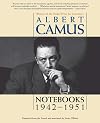
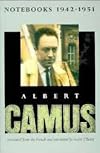
From 1935 until his death, Albert Camus kept a series of notebooks to sketch out ideas for future works, record snatches of conversations and excerpts from books he was reading, and jot down his reflections on death and the horror of war, his feelings about women and loneliness and art, and his appreciations for the Algerian sun and sea. These three volumes, now available together for the first time in paperback, include all entries made from the time when Camus was still completely unknown show more in Europe, until he was killed in an automobile accident in 1960, at the height of his creative powers. In 1957 he had been awarded the Nobel Prize for Literature. A spiritual and intellectual autobiography, Camus' Notebooks are invariably more concerned with what he felt than with what he did. It is intriguing for the reader to watch him seize and develop certain themes and ideas, discard others that at first seemed promising, and explore different types of experience. Although the Notebooks may have served Camus as a practice ground, the prose is of superior quality, which makes a short spontaneous vignette or a moment of sensuous beauty quickly captured on the page a small work of art.Here is a record of one of the most unusual minds of our time. show lessTags
Recommendations
















Member Reviews
Camus through most of his adult life kept notebooks in which he would jot down thoughts and ideas that were important to him and which would serve as an aide-memoire. He was in the habit of making typed copies from his original manuscript and it is these that were published with some corrections after his death. They could be described as intellectual notes, because there is no gossip, no jokes, or anything much that feels like diary entries.
The subject matter of the notes are:
Quotes from Camus' own reading and sometimes his thoughts that develop from them.
Sketches or ideas for his own books
Dialogue from plays that he might wish to use
Occasional things to do lists and attempts to shape his work
Descriptions of landscape when he was away show more from Paris, which feel like they are rehearsals for pages from a novel
His own thoughts and reflections as he struggles to grasp some meaning to his existence and which form the basis of his philosophy
Some clever and thoughtful one liners
His health issues and how he fights against depression.
Some pert and witty comments on love and the whole damn thing.
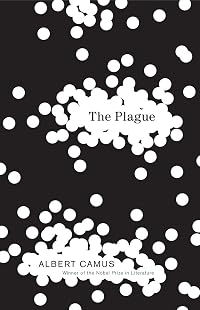
They are divided into three chronological sections, which serves to highlight Camus developing thoughts, within the context of his life and times. The first section January 1942 to September 1945 finds him for much of the time dealing with issues of isolation. He settled in the mountains near Chambon-sur-lignon in mainland France, now cut off from his wife in Algeria. He was there for health reasons and stayed until November 1943 when he moved to Paris and shortly took over the editorship of the underground resistance newspaper Combat. Paris was occupied by the Germans at this time and Camus was busy writing his second novel [The Plague] where his feelings of isolation formed themselves into a major theme of his new novel and in the notebooks there are ideas, some character sketches, scraps of dialogue and structural plans. As one would expect his work in the resistance colours some of his notes:
Novel on Justice. A rebel who performs an act knowing it will cause the death of innocent hostages........ Then he agrees to sign the pardon of a writer he despises.
Section 2 takes us from September 1945 to April 1948 and his thoughts on liberty and justice dominate much of his notes from this period. There is little optimism and one gets the feeling that Camus is fighting hard against despair.
I lived my whole youth with the idea of innocence, in other words with no idea at all. Today.............................
The final section April 1948 - March 1951 finds him emerging from the negativity of the war years; he can write about love again, he can review his work and make plans for the future. The witty one liners are more in evidence and the feeling is of a man who is able to draw breath again.
The notebooks allow the reader to follow the development of Camus thoughts and his philosophy, not in any detailed way, but with flashes here and there of insight. This is essential Camus only for those who are interested in him as a man and as a thinker, there is not much here that doesn't appear in his essays and novels and of course these notes have been well picked over by his biographers. I enjoyed reading his notes, which felt like a primary source, but would not be of interest to the more general reader. A 3.5 star read. show less
The subject matter of the notes are:
Quotes from Camus' own reading and sometimes his thoughts that develop from them.
Sketches or ideas for his own books
Dialogue from plays that he might wish to use
Occasional things to do lists and attempts to shape his work
Descriptions of landscape when he was away show more from Paris, which feel like they are rehearsals for pages from a novel
His own thoughts and reflections as he struggles to grasp some meaning to his existence and which form the basis of his philosophy
Some clever and thoughtful one liners
His health issues and how he fights against depression.
Some pert and witty comments on love and the whole damn thing.
They are divided into three chronological sections, which serves to highlight Camus developing thoughts, within the context of his life and times. The first section January 1942 to September 1945 finds him for much of the time dealing with issues of isolation. He settled in the mountains near Chambon-sur-lignon in mainland France, now cut off from his wife in Algeria. He was there for health reasons and stayed until November 1943 when he moved to Paris and shortly took over the editorship of the underground resistance newspaper Combat. Paris was occupied by the Germans at this time and Camus was busy writing his second novel [The Plague] where his feelings of isolation formed themselves into a major theme of his new novel and in the notebooks there are ideas, some character sketches, scraps of dialogue and structural plans. As one would expect his work in the resistance colours some of his notes:
Novel on Justice. A rebel who performs an act knowing it will cause the death of innocent hostages........ Then he agrees to sign the pardon of a writer he despises.
Section 2 takes us from September 1945 to April 1948 and his thoughts on liberty and justice dominate much of his notes from this period. There is little optimism and one gets the feeling that Camus is fighting hard against despair.
I lived my whole youth with the idea of innocence, in other words with no idea at all. Today.............................
The final section April 1948 - March 1951 finds him emerging from the negativity of the war years; he can write about love again, he can review his work and make plans for the future. The witty one liners are more in evidence and the feeling is of a man who is able to draw breath again.
The notebooks allow the reader to follow the development of Camus thoughts and his philosophy, not in any detailed way, but with flashes here and there of insight. This is essential Camus only for those who are interested in him as a man and as a thinker, there is not much here that doesn't appear in his essays and novels and of course these notes have been well picked over by his biographers. I enjoyed reading his notes, which felt like a primary source, but would not be of interest to the more general reader. A 3.5 star read. show less
If there were any books that made an impression so strong, it would be this! Prior to reading Carnets,1942-1951, i had a faint inkling of Camus as the author of 'The outsider'. This book here, which was a notebook with his rough ideas/sketches for his novels is an extremely rich source of quotes and an insight into his mind.
When he writes somewhere, 'If there were no passion, there would be no virtue, and yet our century has reached this supreme misery where it lacks both passion and virtue; it does good and evil, passive as matter itself' - he is writing not only of his time back then, but something that we know is relevant and reflects today's living from the 21st century.
He quotes Delacroix, Keats, Chesterton, Tolstoy, Dostoievski, show more Gobineau, Richelieu, Stendhal and one realizes how little we've read and know of this world.
Self reflection: I have tried with all my strength, knowing my weakness, to be a moral person. Morality kills.
To live is to verify.
Albert Camus made me reflect on the way i've lived so far. show less
When he writes somewhere, 'If there were no passion, there would be no virtue, and yet our century has reached this supreme misery where it lacks both passion and virtue; it does good and evil, passive as matter itself' - he is writing not only of his time back then, but something that we know is relevant and reflects today's living from the 21st century.
He quotes Delacroix, Keats, Chesterton, Tolstoy, Dostoievski, show more Gobineau, Richelieu, Stendhal and one realizes how little we've read and know of this world.
Self reflection: I have tried with all my strength, knowing my weakness, to be a moral person. Morality kills.
To live is to verify.
Albert Camus made me reflect on the way i've lived so far. show less
wonderfully potent and lucid observations.
> Revue Esprit : https://esprit.presse.fr/article/dedet-christian/albert-camus-carnets-1942-1951-... (02/1965, pp. 438-440)
Mar 23, 2021French
Ratings
Members
- Recently Added By
Author Information

370+ Works 109,024 Members
Born in 1913 in Algeria, Albert Camus was a French novelist, dramatist, and essayist. He was deeply affected by the plight of the French during the Nazi occupation of World War II, who were subject to the military's arbitrary whims. He explored the existential human condition in such works as L'Etranger (The Outsider, 1942) and Le Mythe de Sisyphe show more (The Myth of Sisyphus, 1942), which propagated the philosophical notion of the "absurd" that was being given dramatic expression by other Theatre of the Absurd dramatists of the 1950s and 1960s. Camus also wrote a number of plays, including Caligula (1944). Much of his work was translated into English. He was awarded the Nobel Prize for Literature in 1957. Camus died in an automobile accident in 1960. (Bowker Author Biography) show less
Series

Belongs to Publisher Series
Gallimard, Folio (5618)
Work Relationships
Is contained in
Common Knowledge
- Canonical title*
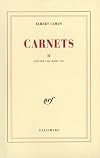
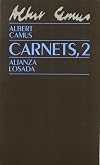
- Carnets. Tome 2 : Janvier 1942 - mars 1951
- Original title
- Carnets. Tome 2 : Janvier 1942 - mars 1951
- Original publication date
- 1965
- People/Characters
- Albert Camus
- Original language*
- Français
*Some information comes from Common Knowledge in other languages. Click "Edit" for more information.
Classifications
- Genres
- Biography & Memoir, Literature Studies and Criticism
- DDC/MDS
- 848.91403 — Literature & rhetoric French Literature French miscellaneous writings 1900- 1900-1999 1945-1999 Diaries, journals, notebooks, reminiscences
- LCC
- PQ2605 .A3734 .Z52 — Language and Literature French, Italian, Spanish and Portuguese literatures French literature Modern literature 1900-1960
- BISAC
Statistics
- Members
- 243
- Popularity
- 134,542
- Reviews
- 4
- Rating
- (4.08)
- Languages
- 7 — Czech, English, French, German, Italian, Spanish, Swedish
- Media
- Paper, Ebook
- ISBNs
- 12
- ASINs
- 6