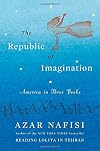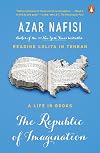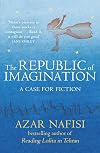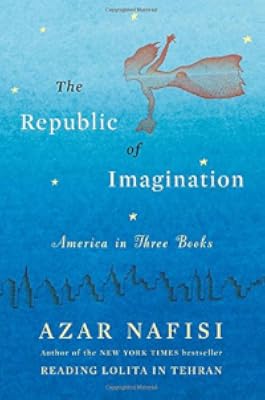
The Republic of Imagination: America in Three Books
by Azar Nafisi
On This Page
Description
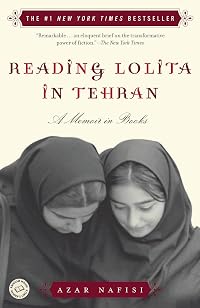
"A passionate hymn to the power of fiction to change people's lives, by the #1 New York Times bestselling author of Reading Lolita in Tehran. Ten years ago, Azar Nafisi electrified readers with her million-copy bestseller, Reading Lolita in Tehran, which told the story of how, against the backdrop of morality squads and executions, she taught The Great Gatsby and other classics to her eager students in Iran. In this exhilarating followup, Nafisi has written the book her fans have been show more waiting for: an impassioned, beguiling, and utterly original tribute to the vital importance of fiction in a democratic society. What Reading Lolita in Tehran was for Iran, The Republic of Imagination is for America. Taking her cue from a challenge thrown to her in Seattle, where a skeptical reader told her that Americans don't care about books the way they did back in Iran, she energetically responds to those who say fiction has nothing to teach us. Blending memoir and polemic with close readings of her favorite American novels-The Adventures of Huckleberry Finn, Babbitt, and The Heart Is a Lonely Hunter, among others-she invites us to join her as citizens of her 'Republic of Imagination,' a country where the villains are conformity and orthodoxy and the only passport to entry is a free mind and a willingness to dream"-- show lessTags
Recommendations












Member Recommendations
Member Reviews
I read Reading Lolita in Tehran before LibraryThing existed, which explains why it isn't in my library. I'll add it as I have just finished the sequel: The Republic of the Imagination: America in Three Books. I remember liking the first one, if you can like a story of increasing repression in a totalitarian regime. The sequel includes a few flashbacks to Azar Nafisi's time in Iran during the Revolution but mostly takes place as she settles in the United States, specifically in Washington, DC, a place that becomes her home with its history and politics and bookstores like Kramerbooks and Politics and Prose. It is books and the sharing of books with friends that form the foundation of this memoir, just as with her first.
She choose show more Huckleberry Finn, Babbitt and The Heart Is a Lonely Hunter although the chapters about the last one are title Carson after the author Carson McCullers and speak more widely to Southern fiction. Nafisi has mastered the ability to weave literary criticism into her personal narrative and we learn about her friends and her life away from Iran. And, she has sparked a desire to explore these classic novels for the first time or again...I read a lot of them in college and graduate school but that was multiple decades ago at this point.
One things fascinated me about Nafisi: why she stayed in Iran for 18 years after the revolution. She was punished for not wearing the veil by being expelled from the university, then after resuming some teaching, she was not allowed to resign. Yet, she met with young women to read banned books every Thursday morning for several years and perhaps that small bit of protest was why she stayed. We have had calls for book burnings in several places in Virginia and not, as you might think, out in the hinterlands. These are communities along the Eastern corridor between Richmond and DC that have a mix of urban, suburban and rural spots. Perhaps the best protest might be public readings of the books on the list: they are many of the old ones but also new ones that celebrate diversity. show less
She choose show more Huckleberry Finn, Babbitt and The Heart Is a Lonely Hunter although the chapters about the last one are title Carson after the author Carson McCullers and speak more widely to Southern fiction. Nafisi has mastered the ability to weave literary criticism into her personal narrative and we learn about her friends and her life away from Iran. And, she has sparked a desire to explore these classic novels for the first time or again...I read a lot of them in college and graduate school but that was multiple decades ago at this point.
One things fascinated me about Nafisi: why she stayed in Iran for 18 years after the revolution. She was punished for not wearing the veil by being expelled from the university, then after resuming some teaching, she was not allowed to resign. Yet, she met with young women to read banned books every Thursday morning for several years and perhaps that small bit of protest was why she stayed. We have had calls for book burnings in several places in Virginia and not, as you might think, out in the hinterlands. These are communities along the Eastern corridor between Richmond and DC that have a mix of urban, suburban and rural spots. Perhaps the best protest might be public readings of the books on the list: they are many of the old ones but also new ones that celebrate diversity. show less
Described by the publisher as "[a] passionate hymn to the power of fiction to change people's lives," Azar Nafisi's The Republic of the Imagination sounded like it would be just up my alley. Unfortunately, I did not pay sufficient attention to the warning that Nafisi would be "blending" her "close readings" of The Adventures of Huckleberry Finn, Babbitt, and The Heart Is a Lonely Hunter with "memoir and polemic." Far from a "blending," The Republic of the Imagination is a disconnected hodge-podge which I had to force myself to finish. I usually read a book in a couple of days; in this case, however, I started at the beginning of December but got so bogged down within the first 20% (after three days) that I abandoned it until late March, show more taking another three days to finish a not particularly long 352 pages.
When Nafisi focused on the three American novels she selected, she had some insightful observations, which earned her two stars. The interpolation of memoir, however, was so fragmented and distracting that I actually was several chapters into the Twain section before I realized I had left the introduction. I could have done without Nafisi's tirades against American consumerism and the Common Core entirely.
Nafisi's editor apparently rejected her plan to include a section on James Baldwin; she states that in September, 2013, she was "thinking of what [she] had taken to calling '[her] Baldwin chapter,'" to which "[her] editor would only say, 'Let's see.'" Accordingly, Nafisi disingenuously concludes The Republic of the Imagination with an "epilogue" which is not an epilogue in the true sense of a comment on or conclusion to the preceding work; it is, in fact, an independent discussion of Baldwin's Go Tell It on the Mountain with some superficial comparisons to Twain thrown in for show. Strangely, despite my irritation at being introduced to a new work in the purported epilogue, I found Nafisi's discussion of Baldwin in the context of America's current hysteria over race relations and trigger warnings to be the most interesting and thought-provoking section of the book. I only wish the previous sections had been as relevant to Nafisi's stated purpose of exploring "America in Three Books."
I received a free copy of The Republic of the Imagination: America in Three Books through NetGalley in exchange for an honest review. show less
When Nafisi focused on the three American novels she selected, she had some insightful observations, which earned her two stars. The interpolation of memoir, however, was so fragmented and distracting that I actually was several chapters into the Twain section before I realized I had left the introduction. I could have done without Nafisi's tirades against American consumerism and the Common Core entirely.
Nafisi's editor apparently rejected her plan to include a section on James Baldwin; she states that in September, 2013, she was "thinking of what [she] had taken to calling '[her] Baldwin chapter,'" to which "[her] editor would only say, 'Let's see.'" Accordingly, Nafisi disingenuously concludes The Republic of the Imagination with an "epilogue" which is not an epilogue in the true sense of a comment on or conclusion to the preceding work; it is, in fact, an independent discussion of Baldwin's Go Tell It on the Mountain with some superficial comparisons to Twain thrown in for show. Strangely, despite my irritation at being introduced to a new work in the purported epilogue, I found Nafisi's discussion of Baldwin in the context of America's current hysteria over race relations and trigger warnings to be the most interesting and thought-provoking section of the book. I only wish the previous sections had been as relevant to Nafisi's stated purpose of exploring "America in Three Books."
I received a free copy of The Republic of the Imagination: America in Three Books through NetGalley in exchange for an honest review. show less
i enjoyed this read -- i found nafisi's voice to be great, and her prose is lovely. it's very clear she is a passionate advocate for literature, and believes deeply in the importance and necessity of fiction in our world. i underlined many passages in the book, and will be pondering on many of nafisi's thoughts and ideas for some time to come. i just feel a bit disconnected from some aspects of the book, perhaps because i am not american? while i am certainly clear on nafisi's messages throughout the book, and much of it is universal, i don't feel i can comfortably debate some aspects of it, or that i can just accept some of nafisi's opinions as truths. (i don't doubt her, don't get me wrong. i just wish i had more knowledge myself. so show more perhaps she, in writing this book, will cause me to learn more? i did, however, spend an awful lot of time wondering which three books could be used for canada.... if this were to become a series. heh.)
saving this link to radio interview nafisi did here in toronto in late-2014; it's awesome: http://www.cbc.ca/thecurrent/episode/2014/11/12/azar-nafisi-fiction-democracy/
suggestion: if you have not read these books, i highly recommend you read them before beginning 'republic of imagination':
* The Adventures of Huckleberry Finn, by Mark Twain
* Babbitt, by Sinclair Lewis
* The Heart is a Lonely Hunter, by Carson McCullers
i have read all three, but it's been so long that i need (want) to go back and reread them. with the publication of nafisi's book, these 4 reads together could make a great american lit. project, if anyone is so inclined. :)
(also, since the afterword features James Baldwin, a reading of Go Tell It on the Mountain ahead of 'republic of imagination' would be great too!) show less
saving this link to radio interview nafisi did here in toronto in late-2014; it's awesome: http://www.cbc.ca/thecurrent/episode/2014/11/12/azar-nafisi-fiction-democracy/
suggestion: if you have not read these books, i highly recommend you read them before beginning 'republic of imagination':
* The Adventures of Huckleberry Finn, by Mark Twain
* Babbitt, by Sinclair Lewis
* The Heart is a Lonely Hunter, by Carson McCullers
i have read all three, but it's been so long that i need (want) to go back and reread them. with the publication of nafisi's book, these 4 reads together could make a great american lit. project, if anyone is so inclined. :)
(also, since the afterword features James Baldwin, a reading of Go Tell It on the Mountain ahead of 'republic of imagination' would be great too!) show less
I read this book for Asian author (Iran) challenge. This is my second book by Azar Nafisi, having read Reading Lolita in Tehran. I also have Read Dangerously on my shelf. I enjoyed this one so much (listened to audio through LIbby) and I want to own it and all the books that are mentioned in the book. The three main books are Huckleberry Finn, Babbitt, and The Heart is a Lonely Hunter. There are many others mentioned as well. The author writes about the US and how we are losing our standings because we no longer value reading and specifically reading literature. She argues the importance of literature is the means to develop independent thought and not just be told what to think. This is not a book that is influenced by the current show more political agendas but one that would like to challenge the reader to form their own opinions. It leans neither right nor left but it fully endorses reading and uses these older classics to show how the writer by writing fiction looks and explores the culture, social, and political. show less
I am frankly disappointed in this book. I loved Reading Lolita in Tehran, and was put off by the preachiness in this book. For the record, I agree that our education system needs fixing and the humanities are dying, but I am not the person Nafisi needs to convince. I am the choir she's preaching to--stop telling me what Common Core is, and tell me how to work around it in my classroom, for Pete's sake!!!
On a petty note: does she not read books past 1960? I can think of so many contemporary examples that are critiquing the things she's critiquing...and doing a damnfine job of it. DeLillo's White Noise, just as a starting point.
In short: my hopes were high and crushed by polemics.
On a petty note: does she not read books past 1960? I can think of so many contemporary examples that are critiquing the things she's critiquing...and doing a damnfine job of it. DeLillo's White Noise, just as a starting point.
In short: my hopes were high and crushed by polemics.
This was a Goodreads First Reads giveaway as well as an advanced uncorrected proof. Reading Lolita in Tehran has been on my to-read list for a while, so when I saw The Republic of Imagination on the giveaway list I figured it would be worth entering. And I'm so glad I did!
Nafisi uses her love of literature and experiences in Tehran and America to define what she considers the quintessential American experience through three novels: The Adventures of Huckleberry Finn by Mark Twain, Babbitt by Sinclair Lewis, and The Heart is A Lonely Heart by Carson McCullers. Part memoir, part literary critique; Nafisi tries to show that fiction will always have something to teach us.
I have to say, I thoroughly enjoyed this one. Long live the Republic show more of Imagination! show less
Nafisi uses her love of literature and experiences in Tehran and America to define what she considers the quintessential American experience through three novels: The Adventures of Huckleberry Finn by Mark Twain, Babbitt by Sinclair Lewis, and The Heart is A Lonely Heart by Carson McCullers. Part memoir, part literary critique; Nafisi tries to show that fiction will always have something to teach us.
I have to say, I thoroughly enjoyed this one. Long live the Republic show more of Imagination! show less
This was a wonderful romp into the world of American literature and literacy, although I regret that I listened to it. Why? Because I was driving and could not take notes. So what I have done? Added it to the list of audiobooks and ebooks I want to own. It is that good. Now, if you want an escape read, this is not the book. You are going to think. You might not always agree with Nafisi; I know I didn't, but isn't that what the best reads are all about? For me, the answer will always be YES!!!
Members
- Recently Added By
Author Information

11+ Works 15,418 Members
AZAR NAFISI is a visiting professor and the director of the Dialogue Project at the Foreign Policy Institute of Johns Hopkins University. She has taught Western literature at the University of Tehran, the Free Islamic University, and the University of Allameh Tabatabai in Iran. In 1994 she won a teaching fellowship from Oxford University, and in show more 1997 she and her family left Iran for America. She has written for The New York Times, The Washington Post, The Wall Street Journal, and The New Republic and has appeared on radio and television programs. Azar's book, Reading Lolita in Tehran, was published in 2003 to wide acclaim. (Bowker Author Biography) show less
Awards and Honors
Distinctions
Notable Lists
Common Knowledge
- Epigraph
- Let America be America again,
Let it be the dream it used to be.
Let it be the pioneer on the plain
Seeking a home where he himself is free.
...
O, yes,
I say it plain,
America was never Ame... (show all)rica to me,
And yet I swear this oath -
America will be!
-Langston Hughes, "Let Ameria Be America Again" - Dedication
- To my family, Bijan, Negar and Dara Naderi
And in memory of my friend Farah Ebrahimi - First words
- A few years ago I was in Seattle signing books at a marvelous independent bookstore called Elliott Bay when I noticed a young man standing by the table, watching me. When the line had dwindled, he finally addressed me. He sai... (show all)d he was passing through Seattle, visiting a friend, and he wanted met to know he had lived in Iran until recently. "It's useless," he said, "your talk about books. These peple are different from us - they're from another world. They don't are about books and such things. It's not like Iran, where we were crazy enough to xerox hundreds of pages of books like Madame Bovary and A Farwell to Arms." -Introduction
"'Huck Finn's Progenies' is not a good subtitle for your book. 'Children' would be better, but not much. Find something easier on the ear," Farah said with finality. "And now, tell me all about it." -Huck, Chapter 1, Part 1 - Canonical DDC/MDS
- 813.009
- Canonical LCC
- PE64.N34
Classifications
Statistics
- Members
- 390
- Popularity
- 80,109
- Reviews
- 15
- Rating
- (3.94)
- Languages
- English, French, Italian
- Media
- Paper, Audiobook, Ebook
- ISBNs
- 13
- ASINs
- 10