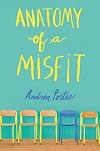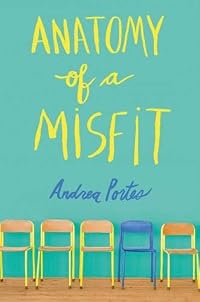
Anatomy of a Misfit
by Andrea Portes
On This Page
Description
"The third most popular girl in school's choice between the hottest boy in town and a lonely but romantic mistfit ends in tragedy and self-realizaition"--Tags
Recommendations





Member Reviews
I know that this is about a romance and a boy and a tragic ending, but I cannot move past the slurs.
I believe people with influence have the responsibility to encourage a community of respect. If this was a book about how racist a place can be, how homophobic a place can be, how sexist a place could be... it would be different. There would be a lesson buried. But it isn't.
How does having a character who calls a character "negro", having that POC character steal, and justifying it through having that same racist character say "some stereotypes exist for a reason" add to the story?
How does having one character refer to a mean girl as the c-word add to the story?
How does the slut shaming add to the story? Stealing Vicodin and drugging her show more boss?
I can keep going. I mean, the main character has a Romanian background, and she disrespects her own culture by calling her father "Count Chocula". Her best friend's mother is moderately religious and is constantly referred to as "totally insane". Every page has something.
Is the author trying to portray that small towns are terrible, inhuman places to live? Okay, well let me tell you about my small town.
My town has 23,000 residents. Lincoln, Nebraska (where Anatomy of a Misfit takes place) has a population of 280,000 residents. So I think I have a better picture of a small town.
Growing up in the 90s, I remember one African-American in my school. We had three Wiccans and two lesbians and one gay that I knew of. Two or three kids of Asian decent. One Indian family, two Greek families. The rest of us? Caucasian as f***. Never ONCE did I witness an incident of racism, sexism, or homophobia among my peers. We loved the variety of religion in our school, having whole days where we'd bring in Tibetan monks (for example) and learn about them.
Does racism, sexism, homophobia, and religious intolerance exist in my community? I'm sure it does! Last year, one of our residents was in the news as a white supremacist. And the community, as a whole, as ashamed. Outraged. Twice as many people showed up to the protests and rallies. He was ostracized.
My point in sharing this is that there is no way this whole town can be a cesspool of intolerance, the way it is described. The author has said that it is a reflection of her childhood. Did she really experience this level of hatred? Or is it a reflection of her own beliefs? I don't even know. But listening to this, at points, made me feel physically ill.
Oh my gosh, let's think of other things that are seriously wrong? Anika doesn't understand the difference between a respectful person and a violent one. Logan is a "bad boy" stereotype. Shelly is a bimbo stereotype. Every character is actually a stereotype. The scene where the family tries to hand out to the POC because they feel bad for her because she's a POC. How the mom marries an "ogre" because she doesn't know better and needs to care for her children.
How the narrator speaks in the worst accents for all the non-white characters.
How the story adds guilt to people in unhealthy relationships. Emotionally abusive relationships are never okay.
I can't get past all this. It could have been a sad, tragic story about a boy in an abusive home, and a devastating ending. That would have been enough. In fact, a kind and loving town doing such a thing would have been a more powerful story. But, instead, Anatomy of a Misfit just teaches its readers that Nebraska is filled with white supremacists and should be burned.
Oh, and apparently it's appropriate to use a memorial service to out a bully and get revenge.
Oh stop. Please stop.
Do stories like this need to be told? Yes! Yes, it needs to be out there so people understand and know the signs and do something before the real world has an ending like this.
But not like this. show less
I believe people with influence have the responsibility to encourage a community of respect. If this was a book about how racist a place can be, how homophobic a place can be, how sexist a place could be... it would be different. There would be a lesson buried. But it isn't.
How does having a character who calls a character "negro", having that POC character steal, and justifying it through having that same racist character say "some stereotypes exist for a reason" add to the story?
How does having one character refer to a mean girl as the c-word add to the story?
How does the slut shaming add to the story? Stealing Vicodin and drugging her show more boss?
I can keep going. I mean, the main character has a Romanian background, and she disrespects her own culture by calling her father "Count Chocula". Her best friend's mother is moderately religious and is constantly referred to as "totally insane". Every page has something.
Is the author trying to portray that small towns are terrible, inhuman places to live? Okay, well let me tell you about my small town.
My town has 23,000 residents. Lincoln, Nebraska (where Anatomy of a Misfit takes place) has a population of 280,000 residents. So I think I have a better picture of a small town.
Growing up in the 90s, I remember one African-American in my school. We had three Wiccans and two lesbians and one gay that I knew of. Two or three kids of Asian decent. One Indian family, two Greek families. The rest of us? Caucasian as f***. Never ONCE did I witness an incident of racism, sexism, or homophobia among my peers. We loved the variety of religion in our school, having whole days where we'd bring in Tibetan monks (for example) and learn about them.
Does racism, sexism, homophobia, and religious intolerance exist in my community? I'm sure it does! Last year, one of our residents was in the news as a white supremacist. And the community, as a whole, as ashamed. Outraged. Twice as many people showed up to the protests and rallies. He was ostracized.
My point in sharing this is that there is no way this whole town can be a cesspool of intolerance, the way it is described. The author has said that it is a reflection of her childhood. Did she really experience this level of hatred? Or is it a reflection of her own beliefs? I don't even know. But listening to this, at points, made me feel physically ill.
Oh my gosh, let's think of other things that are seriously wrong? Anika doesn't understand the difference between a respectful person and a violent one. Logan is a "bad boy" stereotype. Shelly is a bimbo stereotype. Every character is actually a stereotype. The scene where the family tries to hand out to the POC because they feel bad for her because she's a POC. How the mom marries an "ogre" because she doesn't know better and needs to care for her children.
How the narrator speaks in the worst accents for all the non-white characters.
How the story adds guilt to people in unhealthy relationships. Emotionally abusive relationships are never okay.
I can't get past all this. It could have been a sad, tragic story about a boy in an abusive home, and a devastating ending. That would have been enough. In fact, a kind and loving town doing such a thing would have been a more powerful story. But, instead, Anatomy of a Misfit just teaches its readers that Nebraska is filled with white supremacists and should be burned.
Oh, and apparently it's appropriate to use a memorial service to out a bully and get revenge.
Oh stop. Please stop.
Do stories like this need to be told? Yes! Yes, it needs to be out there so people understand and know the signs and do something before the real world has an ending like this.
But not like this. show less
Anika is the third most popular girl in high school, a position she doesn't hold lightly being the strangely-named daughter of a Romanian professor. When two boys compete for her affections, she has to decide how much she cares about the opinions of everyone else, particularly her "friend" Becky, the girl whom everyone hates but whose opinion matters when it comes to who's popular and who's a reject.
This book was the e-book and audiobook chosen for the "Big Library Read," a two-week period in which Overdrive copies are available for any library user to check out simultaneously. It bills itself as a cross between "Mean Girls" and The Perks of Being the Wallflower, and that seems to me a fairly apt description. Anika realistically show more struggles with her fears of what would happen if she chooses Logan, the former social pariah who now has a moped and creatively reaches out to Anika; and Jared, the popular guy whose reputation is as a player, but Anika isn't so sure. In addition, she has a complicated family life and an after-school job with a nutty boss. She also doesn't have a great opinion of herself, saying everyone thinks she's nice but inside she's "spider soup." I could see this appealing to the same crowd that likes Perks, though it's not particularly my cup of tea. show less
This book was the e-book and audiobook chosen for the "Big Library Read," a two-week period in which Overdrive copies are available for any library user to check out simultaneously. It bills itself as a cross between "Mean Girls" and The Perks of Being the Wallflower, and that seems to me a fairly apt description. Anika realistically show more struggles with her fears of what would happen if she chooses Logan, the former social pariah who now has a moped and creatively reaches out to Anika; and Jared, the popular guy whose reputation is as a player, but Anika isn't so sure. In addition, she has a complicated family life and an after-school job with a nutty boss. She also doesn't have a great opinion of herself, saying everyone thinks she's nice but inside she's "spider soup." I could see this appealing to the same crowd that likes Perks, though it's not particularly my cup of tea. show less
ANATOMY OF A MISFIT is like the perfect blend of the movie Heathers and Mean Girls if John Hughes had directed them.
I don't normally comment on dedications and acknowledgments in book reviews, but they ended up weighing heavily on my mind as I finished this book. The dedication reads: "For Dylan. This is a novel based on my ninth-grade year of junior high. I wrote this story because I wish I could go back in time and give this message to myself." Here's the thing, the dedication made me read this book on a personal level, calling up my own regrets from high school and rooting all the more for Anika when she found ways to do what the author didn't (what I didn't). And the acknowledgment at the very end (which I won't share because it's show more kind of spoiler-y) made me cry because there is a reality behind this fictional story that broke my heart to pieces.
So emotional gut punches. Yep, there are plenty. But this book also made me laugh out loud, then cringe, then want to throttle people for being so evil and shake the bystanders for standing by and doing nothing, then laugh out loud again. This is not a simple book, but it is wildly entertaining and equally thought provoking. I guarantee you that there will be parts of this book that offend you (probably more than a few). There will be parts that maybe outrage you from a moral standpoint (whatever that may be). There will be other parts that make you cheer and make you cry, and make you want this book to go on and on and simultaneously end so you can finally breath again.
And the voice of Ankia! Oh the voice! This whole book is like the most intimate of intimate conversations with your best friend. It feels secretive and shocking and conspiratorial and the entire time it's like Anika is talking directly to you:
"My boss doesn’t know I’ve been poisoning him.
Don’t be jealous but Shelli and I got a job at the Bunza Hut. We get to wear lemon-colored fake polos, Kelly-green shorts, and banana LA Gear sneakers. We get to wear this every. Shift."
Seriously. Just stop reading this review and read this book. Go. Right now. show less
I don't normally comment on dedications and acknowledgments in book reviews, but they ended up weighing heavily on my mind as I finished this book. The dedication reads: "For Dylan. This is a novel based on my ninth-grade year of junior high. I wrote this story because I wish I could go back in time and give this message to myself." Here's the thing, the dedication made me read this book on a personal level, calling up my own regrets from high school and rooting all the more for Anika when she found ways to do what the author didn't (what I didn't). And the acknowledgment at the very end (which I won't share because it's show more kind of spoiler-y) made me cry because there is a reality behind this fictional story that broke my heart to pieces.
So emotional gut punches. Yep, there are plenty. But this book also made me laugh out loud, then cringe, then want to throttle people for being so evil and shake the bystanders for standing by and doing nothing, then laugh out loud again. This is not a simple book, but it is wildly entertaining and equally thought provoking. I guarantee you that there will be parts of this book that offend you (probably more than a few). There will be parts that maybe outrage you from a moral standpoint (whatever that may be). There will be other parts that make you cheer and make you cry, and make you want this book to go on and on and simultaneously end so you can finally breath again.
And the voice of Ankia! Oh the voice! This whole book is like the most intimate of intimate conversations with your best friend. It feels secretive and shocking and conspiratorial and the entire time it's like Anika is talking directly to you:
"My boss doesn’t know I’ve been poisoning him.
Don’t be jealous but Shelli and I got a job at the Bunza Hut. We get to wear lemon-colored fake polos, Kelly-green shorts, and banana LA Gear sneakers. We get to wear this every. Shift."
Seriously. Just stop reading this review and read this book. Go. Right now. show less
Anika Dragomir feels like an outsider in her white-bread high school, despite the fact that she is the third most popular girl in school. Her angst is exacerbated when nerd-turned-hottie Logan McDonough starts giving her rides home from school. Anika kind of likes Logan -- okay, really likes Logan -- but she know that she would get endless flack from Becky, the top most popular girl, if she were to date outsider Logan. Anika's romantic troubles are further complicated when THE Jared Kline, possibly the most popular guy in town, or maybe the state, starts showing an interest in her. Sure, it's flattering, but is he just a scam artist who will use her and drop her as soon as he gets bored? And what about Logan and their sweet, secret show more romance?
I read this for my book club, and I foresee some interesting discussion ensuing. Anika's narrative voice was, to me, really annoying. I had a hard time liking her, or even relating to her. Despite the title, I didn't see her as a misfit -- in fact, I began to wonder if the title was supposed to refer to her, or to Logan (who probably qualifies as a misfit, but we don't get nearly as much insight into his character as we do into hers). Anika is a pretty, popular girl from a middle-class family. She has 99 problems, and all of them are first-world problems, mostly caused by her own bad choices. Okay, so she's a teenager, I can usually look past that in a YA book. But the writing was not as tight as I would like it to be. For one thing, the book is interspersed with short chapters, set apart by being typeset in italics, that are foreshadowing of the book's final events -- the character is pedaling on a bike, heading toward some cataclysmic event. I'd have been fine with one chapter like that at the beginning, or conversely I'd have been fine if each successive foreshadowing chapter revealed more key details, but they really didn't reveal anything new or add anything to the story. Also, as we might surmise, Anika is the one riding the bike in the foreshadowing chapters, but it's never mentioned in the earlier parts of the story that she even has a bike. Instead, we get her whining about her long walk home from school. Hmm, I see a solution here... One more criticism: I feel like it's just a little bit lazy when authors from my generation write YA novels and set them in the high school of the '80s or '90s, especially when there's not a strong reason within the plot for the book to be set in the present day. Granted, in this case the author mentions that the book is partially based on her own high-school experience, but seeing as it is fiction and not memoir, perhaps the pop culture references and such could have been updated a bit. I can't find a plot-based reason why the characters are name-checking Madonna and Bruce Willis instead of Lady Gaga and Orlando Bloom, or whoever kids these days name-check. Maybe I am being too picky, because the book did grab me once I got past being irritated at the narrative voice and settled into the story. I think this will appeal to fans of YA realistic fiction along the lines of The Perks of Being a Wallflower, but it wasn't really my cup of tea. show less
I read this for my book club, and I foresee some interesting discussion ensuing. Anika's narrative voice was, to me, really annoying. I had a hard time liking her, or even relating to her. Despite the title, I didn't see her as a misfit -- in fact, I began to wonder if the title was supposed to refer to her, or to Logan (who probably qualifies as a misfit, but we don't get nearly as much insight into his character as we do into hers). Anika is a pretty, popular girl from a middle-class family. She has 99 problems, and all of them are first-world problems, mostly caused by her own bad choices. Okay, so she's a teenager, I can usually look past that in a YA book. But the writing was not as tight as I would like it to be. For one thing, the book is interspersed with short chapters, set apart by being typeset in italics, that are foreshadowing of the book's final events -- the character is pedaling on a bike, heading toward some cataclysmic event. I'd have been fine with one chapter like that at the beginning, or conversely I'd have been fine if each successive foreshadowing chapter revealed more key details, but they really didn't reveal anything new or add anything to the story. Also, as we might surmise, Anika is the one riding the bike in the foreshadowing chapters, but it's never mentioned in the earlier parts of the story that she even has a bike. Instead, we get her whining about her long walk home from school. Hmm, I see a solution here... One more criticism: I feel like it's just a little bit lazy when authors from my generation write YA novels and set them in the high school of the '80s or '90s, especially when there's not a strong reason within the plot for the book to be set in the present day. Granted, in this case the author mentions that the book is partially based on her own high-school experience, but seeing as it is fiction and not memoir, perhaps the pop culture references and such could have been updated a bit. I can't find a plot-based reason why the characters are name-checking Madonna and Bruce Willis instead of Lady Gaga and Orlando Bloom, or whoever kids these days name-check. Maybe I am being too picky, because the book did grab me once I got past being irritated at the narrative voice and settled into the story. I think this will appeal to fans of YA realistic fiction along the lines of The Perks of Being a Wallflower, but it wasn't really my cup of tea. show less
This book showed up in my radar touted as a community read, geared to the non-reading teen population. Wrongly, I assumed that it would be engaging and interesting from page one. It seems to be all the worst parts of contemporary teen culture: slut shaming, fascist cliques, terrible & tired stereotypes, do-nothing 2 dimensional adults. And that's in the first 35 pages. I abandoned it when the protagonist attempted to bond with another person by sharing a magazine and pointing out all the things were "so gay." And that pages after being called an "N-word vampire." WTF?
Mixed feelings because there were definitely moments of beauty and extreme hilarity...
I have no problem reading about a younger generation, but the way these 15-year-olds held a conversation with each other was cringe-worthy at times. I kept thinking to myself, "I sincerely hope I did not talk like that when I was 15."
Regardless of all that, there was a definite beauty in the message of growing up...and what it means to be a crowd follower, what it means to step on people along the way, and finding out what it means to alter that perspective.
I have no problem reading about a younger generation, but the way these 15-year-olds held a conversation with each other was cringe-worthy at times. I kept thinking to myself, "I sincerely hope I did not talk like that when I was 15."
Regardless of all that, there was a definite beauty in the message of growing up...and what it means to be a crowd follower, what it means to step on people along the way, and finding out what it means to alter that perspective.
The end was definitely a surprise for me. Everything escalated so quickly and ended without readers getting to truly deal with the consequences of what they read. Up until the end, only first world problems and teenage angst were the focus of this book, but the last thirty or so pages flipped that around. There were many emotional moments, in which I would laugh or cry or even feel angered, but I could not find it in myself to put down this book.
Members
- Recently Added By
Lists

Books Read in 2018
4,360 works; 110 members
Author Information

14 Works 815 Members
Classifications
Statistics
- Members
- 272
- Popularity
- 118,725
- Reviews
- 21
- Rating
- (3.53)
- Languages
- English, French, Italian, Portuguese
- Media
- Paper, Audiobook, Ebook
- ISBNs
- 17
- UPCs
- 1
- ASINs
- 1