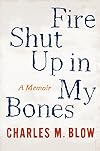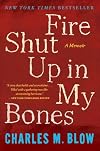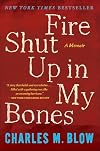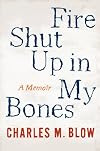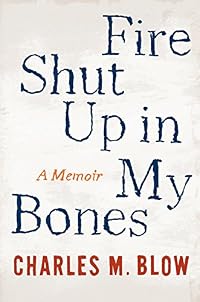
Fire Shut Up in My Bones
by Charles M. Blow
On This Page
Description
A New York Times Notable Book | Lambda Literary Award Winner | Long-listed for the PEN Open Book Award"Charles Blow is the James Baldwin of our age." — Washington Blade
"[An] exquisite memoir . . . Delicately wrought and arresting." — New York Times
Universally praised on its publication, Fire Shut Up in My Bones is a pioneering journalist's indelible coming-of-age tale.
Charles M. Blow's mother was a fiercely driven woman with five sons, brass knuckles in her glove box, and a job show more plucking poultry at a factory near their segregated Louisiana town, where slavery's legacy felt close. When her philandering husband finally pushed her over the edge, she fired a pistol at his fleeing back, missing every shot, thanks to "love that blurred her vision and bent the barrel." Charles was the baby of the family, fiercely attached to his "do-right" mother. Until one day that divided his life into Before and After—the day an older cousin took advantage of the young boy. The story of how Charles escaped that world to become one of America's most innovative and respected public figures is a stirring, redemptive journey that works its way into the deepest chambers of the heart.
"Stunning . . . Blow's words grab hold of you . . . [and] lead you to a place of healing." — Essence
"The memoir of the year." — A. V. Club. show less
Tags
Recommendations










Member Reviews
Charles M. Blow recounts the story of his childhood and growing into adulthood, a journey that was shaped greatly by his cousin's sexual abuse and his own confusion about his sexuality.
This searing memoir resonates strongly with me. I did not grow up poor and black in the southern U.S., but I have experienced a similar trauma that left me with a "before" and "after" too. "Before" took a little getting into, his early memories having a sort of stream of consciousness, impressions with no particular order. But before long, I was hooked by the writing style and the vivid images he evokes. The author doesn't go into great detail about the event, which he terms the "betrayal" from then on, but he shows how it affected him, the need for show more affection and attention that left him vulnerable to it, and the emotional baggage he dealt with afterwards. His emotions of feeling dead and consumed by the event to coming alive and at peace was a journey I have been on too. The descriptive language he uses to convey memories is lovely, and he has a way of writing with immediacy, both remembering his child's reaction and also having a more mature understanding looking back on what happened in his life. A lovely, hopeful memoir that I highly recommend. show less
This searing memoir resonates strongly with me. I did not grow up poor and black in the southern U.S., but I have experienced a similar trauma that left me with a "before" and "after" too. "Before" took a little getting into, his early memories having a sort of stream of consciousness, impressions with no particular order. But before long, I was hooked by the writing style and the vivid images he evokes. The author doesn't go into great detail about the event, which he terms the "betrayal" from then on, but he shows how it affected him, the need for show more affection and attention that left him vulnerable to it, and the emotional baggage he dealt with afterwards. His emotions of feeling dead and consumed by the event to coming alive and at peace was a journey I have been on too. The descriptive language he uses to convey memories is lovely, and he has a way of writing with immediacy, both remembering his child's reaction and also having a more mature understanding looking back on what happened in his life. A lovely, hopeful memoir that I highly recommend. show less
I bought a cheap Kindle copy of this one because I knew that Charles Blow writes op-eds for the New York Times. I'm not a regular reader of that paper, but I figured that his employment there at least guaranteed a good read. I wasn't wrong about that, but, while it probably can't be considered a classic of the midlife memoir genre, "Fire Shut Up in My Bones" also has a number of real strengths that make it easily recommendable to anyone with an interest in the genre. I found it to be a surprisingly life-affirming read, as well as, at times, a charmingly peculiar one.
What first struck me about this book is it's overwhelming sense of strangeness. I'm a white guy whose family is from Massachusetts factory towns, but the rural Louisiana show more that the author describes seems stuck in another century: we're in prime Faulkner country here. We're talking about a small town whose high school held separate pageants for black and white prom courts well into the eighties and whose cemetery was strictly segregated. The sort of town that had a cane field with a one-mule cane press. Blow talks easily about his town's juke joints and boogie-woogie dives. Blow, to his credit, is exquisitely sensitive to the judgments that the neighbors he grew up with made on the basis of race and class: it's a reality that seems to have left a deep impression on him. Still, reading this one, I sometimes asked myself, "where are we, again, and when?"
The real subject of "Fire Shut Up in My Bones," though, is Charles McRay Blow and his journey to accept himself and become somebody in a world that seemed more or less determined to keep him in the grinding poverty that he was born into. It's a narrative of growth and escape. Still, the details are captivating: he's the son of a philandering former musician and an enormously determined mother, a woman who once worked at the local chicken plant and ended up on the school board. Charles seems to have had to fight for space in a big, tightly-knit family as a kid. The way he tells it, it was often difficult to get enough food or enough space. His accounts of his mother's efforts to keep her family fed and off of the welfare rolls is downright inspiring: she grew and canned her own food, and when there wasn't enough she stretched what she had so that the family could make do. His description of the loneliness he endured when he got lost in the shuffle of a big family or failed to make connections outside of it are genuinely sadenning. Even so, there are times where I think the author rather overplays his hand. He's got a good story, and he knows it. But, occasionally, he can't stop himself from throwing in a passage like, "I wanted to scream, but couldn't -- wanted to cry, but couldn't. I was dead now, and dead boys forget how to cry." Charles, I know that you grew up rough, but you might be laying it on a bit thick here.
"Fire Shut Up in My Bones" is also a story of personal transformation, and not just the one that the author underwent as he grew into manhood. Throughout this book, Blow pays loving homage to the individuals that he believes made him into who he is today: the old folks that sat with him for countless hours when he was a kid, teachers who believed in him, and town outcasts who nevertheless found ways of surviving it what was often a lonely, repressive social environment. He also tells us about other experiences that shaped his values, spending numerous pages on the brutal hazing he endured in order to be admitted to.a fraternity. While he doesn't deny that his membership in this organization provided him with a chance to form what would become lifetime friendships, the outright cruelty that this process often involved gave him an opportunity to draw some hard moral lines. While he doesn't regret participating in frat life, Hell Week showed him that there are real sadists out there and certain rituals that serve to enable them. Lastly, it's heartening to read about the changes that his parents -- his hot-headed mother, his no-account father -- underwent as they got older. The author's mother seems to have grown into herself while his father slowly became more responsible and spent his latter years making genuine attempts to atone for his failures as a family man. "Fire Shut Up in My Bones" is a book that takes the long view.
The last thematic element that I think that the author handles masterfully here is his own sexuality. I'm old enough to remember when gay people where almost automatically social pariahs in most circles, but the cruelty and erasure that sexual minorities experienced in Blow's rural Louisiana went far beyond anything I ever witnessed. Blow is unsparing with himself as he describes the long-term consequences of the molestation he suffered as a child, his attempts to hide the effects of these experiences from others, and the numerous, mostly unsuccessful attempts to deny or repress his own attraction to men. While he now calls himself bisexual, it took Blow many years to realize that it's possible that he doesn't fit neatly into any category: attraction, for him, is something that ebbs and flows beyond his control. This hard-won realization seems to have helped him define and value himself, and while some readers may consider this yet another unnecessary pean to self-esteem, when I consider the whole of the author's experience, I couldn't help but admire his determination to accept himself as he is. "Fire Shut Up in My Bones" isn't a world-beating classic, perhaps, but it's recommended to fans of good writing an unusual autobiographies. show less
What first struck me about this book is it's overwhelming sense of strangeness. I'm a white guy whose family is from Massachusetts factory towns, but the rural Louisiana show more that the author describes seems stuck in another century: we're in prime Faulkner country here. We're talking about a small town whose high school held separate pageants for black and white prom courts well into the eighties and whose cemetery was strictly segregated. The sort of town that had a cane field with a one-mule cane press. Blow talks easily about his town's juke joints and boogie-woogie dives. Blow, to his credit, is exquisitely sensitive to the judgments that the neighbors he grew up with made on the basis of race and class: it's a reality that seems to have left a deep impression on him. Still, reading this one, I sometimes asked myself, "where are we, again, and when?"
The real subject of "Fire Shut Up in My Bones," though, is Charles McRay Blow and his journey to accept himself and become somebody in a world that seemed more or less determined to keep him in the grinding poverty that he was born into. It's a narrative of growth and escape. Still, the details are captivating: he's the son of a philandering former musician and an enormously determined mother, a woman who once worked at the local chicken plant and ended up on the school board. Charles seems to have had to fight for space in a big, tightly-knit family as a kid. The way he tells it, it was often difficult to get enough food or enough space. His accounts of his mother's efforts to keep her family fed and off of the welfare rolls is downright inspiring: she grew and canned her own food, and when there wasn't enough she stretched what she had so that the family could make do. His description of the loneliness he endured when he got lost in the shuffle of a big family or failed to make connections outside of it are genuinely sadenning. Even so, there are times where I think the author rather overplays his hand. He's got a good story, and he knows it. But, occasionally, he can't stop himself from throwing in a passage like, "I wanted to scream, but couldn't -- wanted to cry, but couldn't. I was dead now, and dead boys forget how to cry." Charles, I know that you grew up rough, but you might be laying it on a bit thick here.
"Fire Shut Up in My Bones" is also a story of personal transformation, and not just the one that the author underwent as he grew into manhood. Throughout this book, Blow pays loving homage to the individuals that he believes made him into who he is today: the old folks that sat with him for countless hours when he was a kid, teachers who believed in him, and town outcasts who nevertheless found ways of surviving it what was often a lonely, repressive social environment. He also tells us about other experiences that shaped his values, spending numerous pages on the brutal hazing he endured in order to be admitted to.a fraternity. While he doesn't deny that his membership in this organization provided him with a chance to form what would become lifetime friendships, the outright cruelty that this process often involved gave him an opportunity to draw some hard moral lines. While he doesn't regret participating in frat life, Hell Week showed him that there are real sadists out there and certain rituals that serve to enable them. Lastly, it's heartening to read about the changes that his parents -- his hot-headed mother, his no-account father -- underwent as they got older. The author's mother seems to have grown into herself while his father slowly became more responsible and spent his latter years making genuine attempts to atone for his failures as a family man. "Fire Shut Up in My Bones" is a book that takes the long view.
The last thematic element that I think that the author handles masterfully here is his own sexuality. I'm old enough to remember when gay people where almost automatically social pariahs in most circles, but the cruelty and erasure that sexual minorities experienced in Blow's rural Louisiana went far beyond anything I ever witnessed. Blow is unsparing with himself as he describes the long-term consequences of the molestation he suffered as a child, his attempts to hide the effects of these experiences from others, and the numerous, mostly unsuccessful attempts to deny or repress his own attraction to men. While he now calls himself bisexual, it took Blow many years to realize that it's possible that he doesn't fit neatly into any category: attraction, for him, is something that ebbs and flows beyond his control. This hard-won realization seems to have helped him define and value himself, and while some readers may consider this yet another unnecessary pean to self-esteem, when I consider the whole of the author's experience, I couldn't help but admire his determination to accept himself as he is. "Fire Shut Up in My Bones" isn't a world-beating classic, perhaps, but it's recommended to fans of good writing an unusual autobiographies. show less
Memoirs are a tricky genre. Not all are factual and not all are interesting. We, the audience, have to care about the life of the person at the center of the story. Charles M. Blow succeeds admirably here, crafting a story with an explosive opening and then providing us the necessary backstory to explain it. We care about him because ultimately, he resonates with us. Even without having ever visited the Louisiana of his youth, I was still moved to care about it, because Blow's writing makes it possible to identify with his hurts, fears, and dark secrets. I felt like we were able to see not only the parts of his life where his strength shines through, but also those moments when he was clearly ashamed of his own actions. (To be honest, show more the scenes of fraternity hazing left me quite shocked.) If I hadn't already known about his career as a NYT columnist, I may not have picked up this book, but it was well worth reading. show less
Personal struggles can either confound or bring insight. Charles Blow’s insight offered to pass to others, not self-congratulate and beautifully demonstrated by his turns of phrases, exquisitely unique descriptive expressions and metaphors. Subtly he reminds his readers of the confusion growing up is, lack of understanding of context or the complex or distorted perspectives of those close around the child, and the importance each of us – particularly parents – has by our communications or lack in helping the child grow, gain insight the sooner the better, and the skill of insight. The absence of a parent fulfilling parental role, the solid base of a parent’s love, understanding, guidance and touchstone, and the role each of us show more plays, knowingly or not, in the growth of a child are wonderfully expressed.
Blow’s depiction of his struggling, successful, fitful development is artfully written. The beauty of his words both frame the beauty in his development and contrast the tragic events. The clarity of his expression those familiar with his well-sourced and fact-tied commentary in the New York Times will see that, but enhanced by his beautiful manners of expression. Each of us has the struggle of emerging from childhood to adult; Blow tells his in a way both highly personal and subjective, but with the grace to translate to universal concepts. We need not have suffered, other than by reading, his angst, to celebrate the maturity he displays as a writer. Without a word of praise of himself, the reader does not struggle to see him as a great mentor to his children and his awareness of his role, understating his influence, in the development of children. And by that, he eloquently and gently teaches his readers – you, too, have this role so fulfill it well. show less
Blow’s depiction of his struggling, successful, fitful development is artfully written. The beauty of his words both frame the beauty in his development and contrast the tragic events. The clarity of his expression those familiar with his well-sourced and fact-tied commentary in the New York Times will see that, but enhanced by his beautiful manners of expression. Each of us has the struggle of emerging from childhood to adult; Blow tells his in a way both highly personal and subjective, but with the grace to translate to universal concepts. We need not have suffered, other than by reading, his angst, to celebrate the maturity he displays as a writer. Without a word of praise of himself, the reader does not struggle to see him as a great mentor to his children and his awareness of his role, understating his influence, in the development of children. And by that, he eloquently and gently teaches his readers – you, too, have this role so fulfill it well. show less
https://msarki.tumblr.com/post/160400369043/fire-shut-up-in-my-bones-by-charles-...
My disappointment in this book is unrivaled in light of the level of anticipation I had for reading this memoir. During the 2016 political campaign and the emergence of Donald J. Trump as a force to be reckoned with, Charles M. Blow took voice with the opposition and became a champion to me for his attacks on this awful man and now his presidency. Blow’s writing for the NY Times is always powerful and poignant. His appearances as a commentator on television prove to be remarkable events in themselves. But sad to say this book is a different story.
One admiring reviewer describes his awe in the author's command and use of the English language. Not so. But show more should have been. Too sweet and flowery for my tastes. Didn’t feel honest. And a not-so-admiring reviewer states he may have fire in his bones, but certainly not in his writing. It's tedious and boring and he takes what would be a gripping read of his difficult young life and turned it into a carefully worded, deliberately constructed poetic recitation. I get absolutely no sense of any "fire" whatsoever. I wish it were not so, but I must concur. And I know why this book fails on par with his articles. It feels as if a different man is speaking on the page. Not the Charles M. Blow I was attracted to. Sort of takes the starch out of his stance. show less
My disappointment in this book is unrivaled in light of the level of anticipation I had for reading this memoir. During the 2016 political campaign and the emergence of Donald J. Trump as a force to be reckoned with, Charles M. Blow took voice with the opposition and became a champion to me for his attacks on this awful man and now his presidency. Blow’s writing for the NY Times is always powerful and poignant. His appearances as a commentator on television prove to be remarkable events in themselves. But sad to say this book is a different story.
One admiring reviewer describes his awe in the author's command and use of the English language. Not so. But show more should have been. Too sweet and flowery for my tastes. Didn’t feel honest. And a not-so-admiring reviewer states he may have fire in his bones, but certainly not in his writing. It's tedious and boring and he takes what would be a gripping read of his difficult young life and turned it into a carefully worded, deliberately constructed poetic recitation. I get absolutely no sense of any "fire" whatsoever. I wish it were not so, but I must concur. And I know why this book fails on par with his articles. It feels as if a different man is speaking on the page. Not the Charles M. Blow I was attracted to. Sort of takes the starch out of his stance. show less
How does one review a memoir? Certainly not for plot, or at least, not in the same way as one would review fiction. Maybe the best way to approach this is from the point of "curation", the way the vignettes involved are constructed into a narrative-- but I don't know if I can bring myself to offer critical judgement there, either.
This is someone's life, written in stark words.
Well written, heartbreaking, hopeful. Sometimes Blow charges straight at tragedy, sometimes he offers a wry laugh, and other times he circles the abyss of trauma in elliptical orbits. The writing is most effective when it's at its most personal, but loses some impact when he attempts to generalize from personal anecdote to broader contexts. Still an interesting, show more powerful read. show less
This is someone's life, written in stark words.
Well written, heartbreaking, hopeful. Sometimes Blow charges straight at tragedy, sometimes he offers a wry laugh, and other times he circles the abyss of trauma in elliptical orbits. The writing is most effective when it's at its most personal, but loses some impact when he attempts to generalize from personal anecdote to broader contexts. Still an interesting, show more powerful read. show less
The youngest of five boys in an extended family where one was rarely alone, where great effort was put into using the gifts of the land to feed everyone, where men and women rarely stayed married to each other but had bonds that didn't break, and where dignity and respect shone, Charles Blow remembers those days of his boyhood and young adulthood and brings them vividly to life in his memoir.
Fire Shut Up in My Bones recounts Blow's journey from a hardscrabble family held together by strong-willed women to the beginning of his career as a respected New York Times commentator. His story from child to man has some foundational points that show why he is respected today.
Poverty is there, but it is a story of how family members individually show more and working together did the best they could and, in some cases, surmounted it. His mother is an inspiration in showing that she didn't give up, not even with a brood of children and an absent husband. She made it back to school and became a teacher and an educational leader. And didn't give up on her children.
Her drive and determination are not sugar-coated, but told simply. So are the tales of how the family was fed, whether through growing their food or taking advantage of a highway wreck involving a load of cattle, much in the way cargo from shipwrecks is saved by coastal dwellers. They all must deal with Jim Crow racism as well, which is strongly interwoven into the generational poverty.
Another foundational point is Blow's search for knowing himself, including his sexuality. He was abused as a child and it both scared him and scarred him. As with many abuse victims, he thought he had done something wrong, especially as the abuser was someone he initially admired. Part of his recovery process includes a search through his spirituality, told in plain, heart-searching fashion.
Blow does his readers the service of not glossing over any of his own missteps, including things he did that he is not proud of as a fraternity leader during his college days. The harm done in hazing to both abuser and victim is not connected with his physical abuse, but the way he has to work through both hazing and sexual abuse demonstrates that if a person continues to question, they can find answers.
This memoir is a stirring account of how one child became a man, carrying on the respect he learned from his strong family members while seeing ways he could leave the hurtful acts behind. show less
Fire Shut Up in My Bones recounts Blow's journey from a hardscrabble family held together by strong-willed women to the beginning of his career as a respected New York Times commentator. His story from child to man has some foundational points that show why he is respected today.
Poverty is there, but it is a story of how family members individually show more and working together did the best they could and, in some cases, surmounted it. His mother is an inspiration in showing that she didn't give up, not even with a brood of children and an absent husband. She made it back to school and became a teacher and an educational leader. And didn't give up on her children.
Her drive and determination are not sugar-coated, but told simply. So are the tales of how the family was fed, whether through growing their food or taking advantage of a highway wreck involving a load of cattle, much in the way cargo from shipwrecks is saved by coastal dwellers. They all must deal with Jim Crow racism as well, which is strongly interwoven into the generational poverty.
Another foundational point is Blow's search for knowing himself, including his sexuality. He was abused as a child and it both scared him and scarred him. As with many abuse victims, he thought he had done something wrong, especially as the abuser was someone he initially admired. Part of his recovery process includes a search through his spirituality, told in plain, heart-searching fashion.
Blow does his readers the service of not glossing over any of his own missteps, including things he did that he is not proud of as a fraternity leader during his college days. The harm done in hazing to both abuser and victim is not connected with his physical abuse, but the way he has to work through both hazing and sexual abuse demonstrates that if a person continues to question, they can find answers.
This memoir is a stirring account of how one child became a man, carrying on the respect he learned from his strong family members while seeing ways he could leave the hurtful acts behind. show less
Members
- Recently Added By
Published Reviews
ThingScore 100
Blow has written a complex bildungsroman of a memoir. … Blow’s crisis is also an existential one, about cultures of masculinity. He marries. He divorces. He entertains the possibility that he is bisexual, an issue that refuses neat resolution. More clearly, however, his confusion about his sexuality operates as a symbolic middle ground between all the other dualities presented in this show more book: murder and suicide, mind and matter, right and wrong, traumatized silence and voluble confession. show less
added by rybie2
Author Information

2 Works 581 Members
Charles M. Blow is an acclaimed journalist and op-ed columnist for the New York Times who hosts Prime with Charles M. Blow on the Black News Channel. He is also the author of the New York Times bestselling memoir Fire Shut Up in My Bones. He lives in Atlanta.
Awards and Honors
Awards
Distinctions
Common Knowledge
- Original publication date
- 2014-09-23
- Important places
- Louisiana, USA
Classifications
- Genres
- Biography & Memoir, Nonfiction, LGBTQ+, General Nonfiction, Sexuality and Gender Studies
- DDC/MDS
- 070.92 — Computer science, information & general works News media, journalism & publishing Documentary media, educational media, news media; journalism; publishing Biography And History Biographies
- LCC
- PN4874 .B575 .A3 — Language and Literature Literature (General) Literature (General) Journalism. The periodical press, etc. By region or country
- BISAC
Statistics
- Members
- 406
- Popularity
- 76,402
- Reviews
- 15
- Rating
- (3.84)
- Languages
- English
- Media
- Paper, Audiobook, Ebook
- ISBNs
- 8
- ASINs
- 5