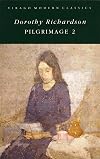
Pilgrimage II: The Tunnel; Interim
by Dorothy M. Richardson
Pilgrimage (Collections and Selections — II; 4-5)
On This Page
Description
'Pilgrimage' was the first expression in English of what it is to be called 'stream of conciousness' technique, predating the work of both Joyce and Woolf, echoing that of Proust with whom Dorothy Richardson stands as one of the great innovatory figures of our time. These four volumes record in detail the life of Miriram Henderson. Through her experience - personal, spiritual, intellectual - Dorothy Richardson explores intensely what it means to be a woman, presenting feminine conciousness show more with a new voice, a new identity. show lessTags
Recommendations
















Member Reviews
These two parts of the cycle, published in February and December 1919, follow on directly from each other, with no real break. Miriam moves into lodgings in the St Pancras area and is working as assistant to a posh dentist in Wimpole Street. Money is tight, but nonetheless she's enjoying the life of the independent working woman and exploring what the capital has to offer: she goes to concerts and galleries, visits artist friends, sees Henry Irving playing Shakespeare and hears Lord Kelvin lecturing on colour photography (I suspect she's got this last one mixed up: it was Gabriel Lippmann who developed a colour photography process in the 1890s, and he gave a paper on the subject at the Royal Institution in April 1896; Kelvin was show more supposed to be lecturing but was unable to attend). She takes lessons at a cycling-school, acquires some cycling knickers, and — after the inevitable wobbly start — is ravished to discover the joy of solitary bike-rides.
Potentially interesting men flutter about and then flutter away again — her dentist boss briefly shows an interest and then embarrassingly draws back when he's warned off by his sisters and his cousins and his aunts, and then in Interim there's a whole house full of eligible Canadian junior doctors she wastes by gadding about with the much more amusing, but not in the least eligible, M. Mendizzable. Female friendship is a little more rewarding: there are splendidly girly nights-in eating ragout irlandaise in Mag and Jan's flat, there is Christmas with some of her North London friends from Backwater, and there are arty expeditions with Miss Szigmondy. But her sister Eve's brief attempt to work in London is a disappointment, and there is also the appallingly needy Miss Dear, forever getting into embarrassments and expecting her friends to bail her out.
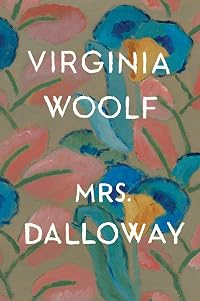
A book absolutely bubbling with youthful energy, full of gushing reflections on this, that and the other: it's hard to imagine how Richardson managed to recapture the feeling of being twenty and open to everything life might throw at her in the postwar glumness of 1919. Mrs Dalloway on speed, perhaps... But enormous fun to read. show less
Potentially interesting men flutter about and then flutter away again — her dentist boss briefly shows an interest and then embarrassingly draws back when he's warned off by his sisters and his cousins and his aunts, and then in Interim there's a whole house full of eligible Canadian junior doctors she wastes by gadding about with the much more amusing, but not in the least eligible, M. Mendizzable. Female friendship is a little more rewarding: there are splendidly girly nights-in eating ragout irlandaise in Mag and Jan's flat, there is Christmas with some of her North London friends from Backwater, and there are arty expeditions with Miss Szigmondy. But her sister Eve's brief attempt to work in London is a disappointment, and there is also the appallingly needy Miss Dear, forever getting into embarrassments and expecting her friends to bail her out.
A book absolutely bubbling with youthful energy, full of gushing reflections on this, that and the other: it's hard to imagine how Richardson managed to recapture the feeling of being twenty and open to everything life might throw at her in the postwar glumness of 1919. Mrs Dalloway on speed, perhaps... But enormous fun to read. show less
I feel like Richardson has really hit her stride in this 4th installment of Pilgrimage. Miriam's mother has died and she has struck out on her own, away from the traditional governess scene. Instead, Miriam gets a "room of her own" (yes she uses this term a decade before Woolf) in London and works as a secretary for a dental office. The descriptions of her office work are amusing as she tries to keep on top of everything. But, the real interest here is Miriam discovering London, going to concerts, and reading avidly. She wanders and bikes!! around London, meeting new people and observing the city. In her musings a streak of feminism is becoming more and more prevalent. She notices the limiting expectations on women and the differences show more between the sexes.
I was so struck in this novel that Virginia Woolf must have been influenced by this work. Miriam being out in London reminded me of Clarissa Dalloway and the importance of Miriam's own space both within her flat and in claiming London is also a prevalent them in Woolf's later work.
Richardson has come up with a unique style. It is all Miriam's point of view and to keep that narrow focus characters flit in and out, sometimes without much explanation of who they are. I think this was Richardson's way of keeping Miriam the focus, but it does make for challenging reading.
I'm really impressed with this work and so glad to be reading it.
In the 5th novel of Richardson's Pilgrimage, Miriam mainly observes others. Particularly noticeable was her rendering of different accents and pronunciations of the people she meets. This was spot on and amusing. There are new boarders in the house with her that provide a lot of this observation.
Also, her sister leaves her governess job with the Greens for a job in the city and her own apartment, presumably following in Miriam's footsteps. This doesn't work out for her, though, and she's back to governess-ing by the end of the novel. I'm sure this gives Miriam some personal satisfaction, that she can survive in London on her own despite it not being easy.
Miriam also gets her own bike - exciting! - and even more freedom. show less
I was so struck in this novel that Virginia Woolf must have been influenced by this work. Miriam being out in London reminded me of Clarissa Dalloway and the importance of Miriam's own space both within her flat and in claiming London is also a prevalent them in Woolf's later work.
Richardson has come up with a unique style. It is all Miriam's point of view and to keep that narrow focus characters flit in and out, sometimes without much explanation of who they are. I think this was Richardson's way of keeping Miriam the focus, but it does make for challenging reading.
I'm really impressed with this work and so glad to be reading it.
In the 5th novel of Richardson's Pilgrimage, Miriam mainly observes others. Particularly noticeable was her rendering of different accents and pronunciations of the people she meets. This was spot on and amusing. There are new boarders in the house with her that provide a lot of this observation.
Also, her sister leaves her governess job with the Greens for a job in the city and her own apartment, presumably following in Miriam's footsteps. This doesn't work out for her, though, and she's back to governess-ing by the end of the novel. I'm sure this gives Miriam some personal satisfaction, that she can survive in London on her own despite it not being easy.
Miriam also gets her own bike - exciting! - and even more freedom. show less
Pilgrimage 2 encompasses the fourth and fifth novels - The Tunnel and Interim. The Tunnel starts out with Miriam taking lodging in London where she works in a dental office. Interim continues, with the main change being that the lodging house has turned into a boarding house - now the inhabitants take their meals together. The stream of consciousness style continues with lots and lots of detail of everything that Miriam sees and feels. Miriam is enjoying her independence and solitude; she does engage with different groups of people throughout the book - her co-workers at the dental office, hanging out with two older single women, visiting an ill female acquaintance, going to concerts and lectures, chatting with her fellow boarders. It's show more interesting that she would really rather be alone and doesn't necessarily enjoy the change to a boarding house. I also thought it was interesting that she was regularly misunderstood by the men around her. And, although this is a stream of consciousness book, I'm little bit suspicious of Miriam as a narrator. I'm interested to see what happens next. show less
Ratings
Members
- Recently Added By
Lists

Books referenced in A Very Great Profession: The Woman's Novel 1914-39
199 works; 6 members
Talk Discussions
Past Discussions
Group Read: Pilgrimage by Dorothy Richardson, vol 2 (The Tunnel, Interim) in Virago Modern Classics (April 2016)
Author Information

27+ Works 979 Members
Series

Belongs to Publisher Series
Work Relationships
Is contained in
Contains
Common Knowledge
- Canonical title
- Pilgrimage II: The Tunnel; Interim
- First words
- Of the early twentieth-century English modernists, there is no one who has been more neglected than Dorothy Miller Richardson. (Introduction)
Miriam paused with her heavy bag dragging at her arm. (The Tunnel)
Miriam thumped her Gladstone bag down on to the doorstep. (Interim) - Last words
- (Click to show. Warning: May contain spoilers.)It is to be hoped that this first paperback edition of Pilgrimage to be published in England points to a new, rich and perceptive understanding of Richardson's achievement. (Introduction)
(Click to show. Warning: May contain spoilers.)There would be people going about, in possession, all over the front steps and at the dining-room windows and along the drawing-room balcony. (The Tunnel)
(Click to show. Warning: May contain spoilers.)'She walks in Beauty. I saw her sandalled feet; upon the Hills. (Interim) - Blurbers
- West, Rebecca; Powys, John Cowper
- Disambiguation notice
- This Work collects the fourth and fifth novels in Dorothy Richardson's "Pilgrimage" Series: The Tunnel (1919), and Interim (1920). Please distinguish between this collection and individual novels (especially th... (show all)e second novel in the Series, Backwater, which might be described as "Pilgrimage 2"). Thank you.
Classifications
Statistics
- Members
- 114
- Popularity
- 282,865
- Reviews
- 4
- Rating
- (3.75)
- Languages
- English
- Media
- Paper
- ISBNs
- 2
- ASINs
- 4