On This Page
Description
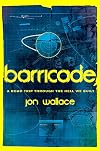
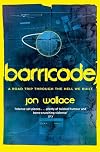
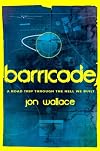
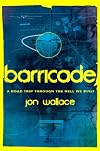
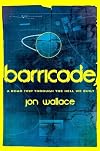
Kenstibec was genetically engineered to build a new world, but the apocalypse forced a career change. These days he drives a taxi instead. A fast-paced, droll and disturbing novel, BARRICADE is a savage road trip across the dystopian landscape of post-apocalypse Britain; narrated by the cold-blooded yet magnetic antihero, Kenstibec. Kenstibec is a member of the 'Ficial' race, a breed of merciless super-humans. Their war on humanity has left Britain a wasteland, where Ficials hide in show more barricaded cities, besieged by tribes of human survivors. Originally optimised for construction, Kenstibec earns his keep as a taxi driver, running any Ficial who will pay from one surrounded city to another. The trips are always eventful, but this will be his toughest yet. His fare is a narcissistic journalist who's touchy about her luggage. His human guide is constantly plotting to kill him. And that's just the start of his troubles. On his journey he encounters ten-foot killer rats, a mutant king with a TV fixation, a drug-crazed army, and even the creator of the Ficial race. He also finds time to uncover a terrible plot to destroy his species for good - and humanity too. show lessTags
Recommendations















Member Reviews
This book caught my eye in the library as it opens in Edinburgh and features a post-apocalyptic road trip. It was a quick read as it’s a first person action thriller set in a Britain ruined by nuclear winter and war. The narrator is on the non-human side of this war, as he’s a ‘ficial’ or artificial lifeform. Given the constant violence, there is never any time for an explanation of what ficials are exactly. It seems they have nanotech that makes them impervious to disease, very quick to heal, generally extremely hardy, and also subdues their emotions. This raises a lot of questions: why isn’t this health-enhancing tech also available to humans? What exactly is the difference between human and ficial brains? Is the whole thing show more meant to be an unwieldy slavery metaphor? And what kind of idiot would create technology this independent without including a kill (or at least incapacitate) switch? The nature of Control was also intriguing and ambiguous. This entity did seem to be an AI, however I wondered how its apparent ascendancy over all ficials came about. In short, I found the setting of this novel very appealing, but felt that the plot sacrificed depth for constant bloody violence. It was fun to read, though. I was often reminded of the classic (to me) film Doomsday, in which Scotland is walled off after a plague and Glasgow descends into one long cannibalistic dance party. That also has a Chelsea Tractor-type vehicle in a key role, although the main character is a lot more interesting.
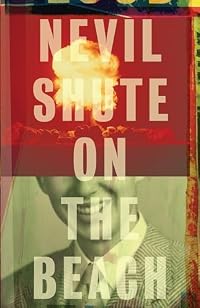
'Barricade' also supported my theory about the shift in post-apocalyptic fiction since the fall of the USSR and end of the cold war, which I talk about in this review. Like most post-apocalyptic fiction of the last quarter century, this novel assumes a descent into extreme violence, rape, and murder, but is not willing to contemplate the utter extinction of the human species (or the ficial species, in this case). Cold War post-apocalyptic fiction is memorable for its belief that humanity might head into the afterlife in its entirety. Nevil Shute’s [b:On the Beach|38180|On the Beach|Nevil Shute|https://i.gr-assets.com/images/S/compressed.photo.goodreads.com/books/1327943327l/38180._SY75_.jpg|963772] is the most memorable and devastating example of this. These days, authors seem to focus on the ability of One Special Man (it’s nearly always a man) to survive, even as millions perish around him. Perhaps I see neoliberal individualism everywhere, or maybe there’s something in this as a cultural tendency.In any event, I felt the impact of ‘Barricade’ was critically undermined by the tacked-on happy ending. There was no reason for the narrator and his hostage/frenemy ‘Fatty’ to survive, other than to leave the book open to a sequel. Which it really does not need! Kenstibec the narrator is not a sufficiently developed character for me to care how he subsequently gets by. In short, I wanted to know more about the post-apocalyptic world and how it came to be, which would have required multiple points of view and a more complex plot. The memorably odd names and moments of dark humour were great, though. show less
'Barricade' also supported my theory about the shift in post-apocalyptic fiction since the fall of the USSR and end of the cold war, which I talk about in this review. Like most post-apocalyptic fiction of the last quarter century, this novel assumes a descent into extreme violence, rape, and murder, but is not willing to contemplate the utter extinction of the human species (or the ficial species, in this case). Cold War post-apocalyptic fiction is memorable for its belief that humanity might head into the afterlife in its entirety. Nevil Shute’s [b:On the Beach|38180|On the Beach|Nevil Shute|https://i.gr-assets.com/images/S/compressed.photo.goodreads.com/books/1327943327l/38180._SY75_.jpg|963772] is the most memorable and devastating example of this. These days, authors seem to focus on the ability of One Special Man (it’s nearly always a man) to survive, even as millions perish around him. Perhaps I see neoliberal individualism everywhere, or maybe there’s something in this as a cultural tendency.
I thought it an interesting effort to tell the post-apocalyptic journey across England from the post-human point of view (that 'orrible human rabble cluttering up the place). Unfortunately fell into a number of rhetorical traps - calling a major character "Fatty" is the most memorable, but not the worst. An original ending, but not really sure about the journey.
If Barricade had been a little less hyped by its publicist then I might have enjoyed it more. Instead, the sketchy characters and derivative plot struggled to live up to the publisher’s promise of a ‘cold-blooded yet magnetic’ genetically-engineered artificial anti-hero to rival Takeshi Kovacs. That comparison with Richard Morgan’s brilliant Altered Carbon series did Barricade no favours, in fact…
But Barricade is written in an easily-accessible style and the opening chapters scramble along from one violent encounter to the next, swapping between here-and-now action and flashback sequences which explain how society collapsed. We meet a female pleasure model who instantly converts any human male into a dribbling sex-crazed loon show more (just a tiny bit unlikely in the circumstance) and a no-hoper human who acts as a guide through the badlands.
The protagonist is a Ficial, Kenstibec, a biological conscious and thinking entity – more like a Replicant from Blade Runner than a C3PO android – who has been optimised for working in construction under human masters in the pre-collapse civilisation. Like all Ficials, he’s not burdened by feelings or irrational desires, and his nanos rapidly repair any damage to his physical structure.
The unlikely trio travel deep into trouble and – at roughly the halfway point – the purpose of their journey starts to reveal itself.
The result is a reasonably enjoyable romp. There’s heaps of action, plenty of gunplay and physical violence. In fact, it seems absurd how much punishment the humans seems to be able to take and how they kinda line up to be gunned down by the efficient Ficials. But the extended fight sequences become much like the rest of the novel; a dreary trudge through a muddy wasteland. They can’t match the razor-edge tension or black humour of Richard Morgan’s ruthless futuristic killer.
More thoughts here: http://murdermayhemandmore.wordpress.com/2014/04/14/barricade-the-end-of-the-wor...
Overall, it's a 7/10. show less
But Barricade is written in an easily-accessible style and the opening chapters scramble along from one violent encounter to the next, swapping between here-and-now action and flashback sequences which explain how society collapsed. We meet a female pleasure model who instantly converts any human male into a dribbling sex-crazed loon show more (just a tiny bit unlikely in the circumstance) and a no-hoper human who acts as a guide through the badlands.
The protagonist is a Ficial, Kenstibec, a biological conscious and thinking entity – more like a Replicant from Blade Runner than a C3PO android – who has been optimised for working in construction under human masters in the pre-collapse civilisation. Like all Ficials, he’s not burdened by feelings or irrational desires, and his nanos rapidly repair any damage to his physical structure.
The unlikely trio travel deep into trouble and – at roughly the halfway point – the purpose of their journey starts to reveal itself.
The result is a reasonably enjoyable romp. There’s heaps of action, plenty of gunplay and physical violence. In fact, it seems absurd how much punishment the humans seems to be able to take and how they kinda line up to be gunned down by the efficient Ficials. But the extended fight sequences become much like the rest of the novel; a dreary trudge through a muddy wasteland. They can’t match the razor-edge tension or black humour of Richard Morgan’s ruthless futuristic killer.
More thoughts here: http://murdermayhemandmore.wordpress.com/2014/04/14/barricade-the-end-of-the-wor...
Overall, it's a 7/10. show less
Ratings
Members
- Recently Added By
Author Information

6+ Works 95 Members
Some Editions
Series

Classifications
Statistics
- Members
- 53
- Popularity
- 572,322
- Reviews
- 3
- Rating
- (3.80)
- Languages
- English, German
- Media
- Paper, Ebook
- ISBNs
- 4
- ASINs
- 2