On This Page
Description
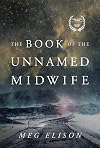
When she fell asleep, the world was doomed. When she awoke, it was dead. In the wake of a fever that decimated the earth's population--killing women and children and making childbirth deadly for the mother and infant--the midwife must pick her way through the bones of the world she once knew to find her place in this dangerous new one. Gone are the pillars of civilization. All that remains is power--and the strong who possess it. A few women like her survived, though they are scarce. Even show more fewer are safe from the clans of men, who, driven by fear, seek to control those remaining. To preserve her freedom, she dons men's clothing, goes by false names, and avoids as many people as possible. But as the world continues to grapple with its terrible circumstances, she'll discover a role greater than chasing a pale imitation of independence. After all, if humanity is to be reborn, someone must be its guide. show lessTags
Recommendations



Member Reviews
As The Book of the Unnamed Midwife by Meg Elison falls totally in my wheelhouse, it’s no surprise that I really loved this story. An apocalypse that is caused by an unknown illness is claiming many victims, particularly children, babies and women. Our main character falls victim to the disease but she was one of the very few women that recovered. The world she came back to was a totally different one and her first priority was finding somewhere safe. Women were being taken against their will and had become a valuable commodity to the gangs of men who were wandering around.
Disguising herself as a man, she takes to the road and the book unfolds as if we were reading the pages of her journal as well as entries from others she meets on show more the road. Over the course of a number of years she wanders, leaving behind her past life in San Francisco and her career as a nurse/midwife, but her medical skills become an important aid to her survival. The virus appears to still live in the survivors and is a huge danger to both the unborn fetus and the pregnant woman.
The Book of the Unnamed Midwife is both gripping and grim, yet I felt it never went too far over the top to become unbelievable. I am simply glad that I only get to read about this type of disaster as I wouldn't survive more than a day or two if it actually real. Although this woman’s story is pretty much wrapped up by the end of the book, there are still many avenues left to explore regarding the status of women in this post-apocalyptic world and I am glad that there is sequel that will hopefully expand on this issue. show less
Disguising herself as a man, she takes to the road and the book unfolds as if we were reading the pages of her journal as well as entries from others she meets on show more the road. Over the course of a number of years she wanders, leaving behind her past life in San Francisco and her career as a nurse/midwife, but her medical skills become an important aid to her survival. The virus appears to still live in the survivors and is a huge danger to both the unborn fetus and the pregnant woman.
The Book of the Unnamed Midwife is both gripping and grim, yet I felt it never went too far over the top to become unbelievable. I am simply glad that I only get to read about this type of disaster as I wouldn't survive more than a day or two if it actually real. Although this woman’s story is pretty much wrapped up by the end of the book, there are still many avenues left to explore regarding the status of women in this post-apocalyptic world and I am glad that there is sequel that will hopefully expand on this issue. show less
What an amazing story! This story is about one of the few women left in the world who has survived a plague that targets all of humanity but the mortality rate is even worse among women, especially those who are pregnant. No babies survive and many take their mothers with them to the grave. When our protagonist wakes several days after succumbing to the fever that's taken everyone she wakes to find the world has died. She was a midwife/nurse at a busy hospital in San Francisco and decides to leave town when she realizes that women are a rare commodity that are being taken by gangs of men prowling the city.
Her journey is mostly solitary, dressing as a man to keep safer, writing down her thoughts and observations as she makes her way show more north then west across country. The few situations she comes across where women are being captive she makes deals to get alone time with them and gives them birth control to try and help them avoid pregnancies and potential death. The Florence Nightingale of women's health so to speak. There were many memorable lines in this story but the one that I keep thinking about is when they talk about a couple she spent time with and their story ends with the line "They lived together the rest of their lives and never saw another human being." It just strikes a nerve....thinking about spending the rest of your life and NEVER seeing anyone else. It's mind boggling.
The ending of the book described some new characters in other parts of the world that sounded super interesting and I was so pleased to see that there is another book coming out. I'll definitely be getting it.
To me this was a very realistic view of what could potentially happen one day and it was a very insightful look at what it means to be truly alone. show less
Her journey is mostly solitary, dressing as a man to keep safer, writing down her thoughts and observations as she makes her way show more north then west across country. The few situations she comes across where women are being captive she makes deals to get alone time with them and gives them birth control to try and help them avoid pregnancies and potential death. The Florence Nightingale of women's health so to speak. There were many memorable lines in this story but the one that I keep thinking about is when they talk about a couple she spent time with and their story ends with the line "They lived together the rest of their lives and never saw another human being." It just strikes a nerve....thinking about spending the rest of your life and NEVER seeing anyone else. It's mind boggling.
The ending of the book described some new characters in other parts of the world that sounded super interesting and I was so pleased to see that there is another book coming out. I'll definitely be getting it.
To me this was a very realistic view of what could potentially happen one day and it was a very insightful look at what it means to be truly alone. show less
This review also includes the other two books in the series: The Book of Etta and The Book of Flora.
I am a huge science fiction/fantasy fan. The Stand by Stephen King was my favorite apocalyptic novel. This series rates among the best in the genre. It has the good vs evil and end time nightmares. What makes this so great stand out above the usual in that genre is that the author addresses issues that have been hidden since time immemorial. The idea of gender identity and intimacy details that "normal" heterosexuals have no clue about and are usually unwilling to even discuss are explored and presented in details that made me love the characters and I felt I was truly invested in their lives. This author took me places that I had never show more explored in my imagination. It does have triggering events, rape and violence against women and children but that doesn't detract from the story and it helps underline the existence of those horrors in real life.
I will be reading more from this author and am sure her other works will be eye opening as well. show less
I am a huge science fiction/fantasy fan. The Stand by Stephen King was my favorite apocalyptic novel. This series rates among the best in the genre. It has the good vs evil and end time nightmares. What makes this so great stand out above the usual in that genre is that the author addresses issues that have been hidden since time immemorial. The idea of gender identity and intimacy details that "normal" heterosexuals have no clue about and are usually unwilling to even discuss are explored and presented in details that made me love the characters and I felt I was truly invested in their lives. This author took me places that I had never show more explored in my imagination. It does have triggering events, rape and violence against women and children but that doesn't detract from the story and it helps underline the existence of those horrors in real life.
I will be reading more from this author and am sure her other works will be eye opening as well. show less
In some not-too-distant future, a plague has wiped out most of humanity but it has been especially devastating to women. Not only have they died in hugely disproportionate numbers to men but the few who survive and become pregnant mostly die in childbirth. And even in the rare occasions when the mother survives, every single pregnancy ends in miscarriage, stillbirth, or death of the baby at or very shortly after birth. Because of their scarcity, women quickly become hardly more than commodities to be sexually and physically abused often by groups of men as well as traded for other things. But all men are not evil and all women are not victims. Some men try to protect the women they meet often at great risk to themselves. There are also show more groups called ‘hives’ that form around a single woman who is in charge and sets the rules and where often the men are only marginally treated better than women who have been enslaved.
The Unnamed Midwife by author Meg Elison is an often grim and almost unrelentingly dark novel about the devastating effects of disasters especially on women. It begins, in a more distant future, as an older woman instructs a group of young men to copy the journals of one woman, the unnamed midwife of the title. She had been a nurse before the plague and, afterwards, travelled the country disguised as a man seeking a safe haven. Having seen the dangers for women in childbirth, she has gathered all of the contraceptives she can find and distributes them whenever possible to any women she meets. In her journeys, she encounters women who have been captured and chained as slaves and a Mormon haven that seems at first a safe place for the women there but harbours some dark secrets. Eventually and by accident, she encounters a couple who convince her to accompany them to a place called Fort Nowhere. Although it is led by a man, a fact that at first makes her uncertain about staying, she soon learns that it is a caring and accepting community, one that welcomes her and respects her for her skills and where people can freely explore different gender roles without judgment or censure.
The novel won the Philip K. Dick Award for 2014 and it is easy to see why. The unnamed midwife who goes by various names throughout (but never her real one) is a strong and interesting character who can be caring and kind but capable of doing whatever it takes to survive. The story is told from different sources including her journal in which, along with her own story, she has transcribed the journals of others that she met on her journey. But it is also departs from the journals to describe events that she is unaware of including the fate of many of the people she met on the way as well as people she knew before the plague. It is, as I said, almost unrelentingly dark but it does hint at a brighter future some time long after the unnamed midwife’s own story has ended. This is a beautifully written and engrossing novel and I would recommend it highly to anyone who enjoys dystopian tales especially novels like Margaret Atwood’s The Handmaid’s Tale. show less
The Unnamed Midwife by author Meg Elison is an often grim and almost unrelentingly dark novel about the devastating effects of disasters especially on women. It begins, in a more distant future, as an older woman instructs a group of young men to copy the journals of one woman, the unnamed midwife of the title. She had been a nurse before the plague and, afterwards, travelled the country disguised as a man seeking a safe haven. Having seen the dangers for women in childbirth, she has gathered all of the contraceptives she can find and distributes them whenever possible to any women she meets. In her journeys, she encounters women who have been captured and chained as slaves and a Mormon haven that seems at first a safe place for the women there but harbours some dark secrets. Eventually and by accident, she encounters a couple who convince her to accompany them to a place called Fort Nowhere. Although it is led by a man, a fact that at first makes her uncertain about staying, she soon learns that it is a caring and accepting community, one that welcomes her and respects her for her skills and where people can freely explore different gender roles without judgment or censure.
The novel won the Philip K. Dick Award for 2014 and it is easy to see why. The unnamed midwife who goes by various names throughout (but never her real one) is a strong and interesting character who can be caring and kind but capable of doing whatever it takes to survive. The story is told from different sources including her journal in which, along with her own story, she has transcribed the journals of others that she met on her journey. But it is also departs from the journals to describe events that she is unaware of including the fate of many of the people she met on the way as well as people she knew before the plague. It is, as I said, almost unrelentingly dark but it does hint at a brighter future some time long after the unnamed midwife’s own story has ended. This is a beautifully written and engrossing novel and I would recommend it highly to anyone who enjoys dystopian tales especially novels like Margaret Atwood’s The Handmaid’s Tale. show less
The Book of the Unnamed Midwife by Meg Elison is a very highly recommended plague/post-apocalyptic novel that held my rapt attention from start to finish.
Society has fallen apart. A disease, a plague of Biblical proportions, has stricken the world. It’s likely autoimmune, but nothing seems to stop it: "No antibiotic. No interferon. No anti-inflammatory, no sedative, no emetic, nothing. Nothing touches this once it starts." This has resulted in the death of 98% of the world's men, but it has been even more devastatingly fatal to women and children. It seemingly targets women and children. Childbirth is deadly for both mother and baby, but always for the baby.
An unnamed woman, a labor and delivery nurse in San Francisco who toiled in show more vain to try to save women and babies during the height of the plague before she became ill, wakes up in the hospital, alive, with no survivors around her. She knows who she is, where she is, and that she has survived the illness, but has no idea how long she was sick or what day it is. She makes it home, realizing that the world has changed since her illness. The first person she encounters is a man who breaks into her apartment that first night and tries to brutally rape her.
"When the sirens quit, the rules gave out. Some people had been waiting their whole lives to live lawlessly, and they were the first to take to the streets. Some people knew that would happen; they knew better than to open their doors when they heard cries of help. Others didn’t. What disease cannot do, people accomplish with astonishing ease."
Our heroine quickly learns that being a woman is a dangerous proposition in this new world where women are very rare and are captured to become sex slaves for gangs of men. Even men who might be allies don't want a woman with them because it makes them targets for the gangs who aren't as civilized. She makes the life-saving decision to shave her head, wear a chest binder, and dress like a man. When she meets anyone, she gives them a false name. We never learn her real name, which she guards closely, a secret piece of her that she keeps to herself.
She finds a gun and arms herself, which wasn't easy in California. Because of her experiences as a nurse, she collects medical supplies, especially birth control because if she meets any women this can save their lives. As she makes her way north and then east, she sees women chained as slaves, used as a commodity (sex) for trading goods, and brutally used and abused by their captors. She has to kill men trying to capture her. Long portions of her time are spent alone, although she saved and travel with another woman for a while. She meets some survivors. Most importantly is that she manages to stay alive in this new world.
The novel is partly written as journal entries, and as such the language is very informal, just as it would be if you were writing something for yourself. In the opening we know that young scribes in the future are being charged with making a copy of this journal, so it is startling to see the stark difference between the formal language in the opening followed by the language of the journal entries.
The Book of the Unnamed Midwife is a gritty, harsh, raw story. Elison tells it like it would very likely be in this scenario. Nothing is sugar coated. There are no safe places for a woman. If you have ever felt that society tends toward the misogynistic now, then this is what happens when there are no filters or restraints. I was hooked from the beginning mention of the plague and read it straight through. Sure I lost some sleep but this is one post-apocalyptic tale that is worthy of the time. It is realistic, thought provoking, brutal. After reading it, I have been thinking about it, pondering parts of it, for days, and that, my friends, says it all. Deservedly, it won the 2014 Philip K. Dick Award Winner for Distinguished Science Fiction.
There is a part two, The Book of Etta, due to be released in February 2017.
Disclosure: My advanced reading copy was courtesy of the publisher/author.
http://shetreadssoftly.blogspot.com/2016/10/the-book-of-unnamed-midwife.html
https://www.goodreads.com/review/show/1785660871 show less
Society has fallen apart. A disease, a plague of Biblical proportions, has stricken the world. It’s likely autoimmune, but nothing seems to stop it: "No antibiotic. No interferon. No anti-inflammatory, no sedative, no emetic, nothing. Nothing touches this once it starts." This has resulted in the death of 98% of the world's men, but it has been even more devastatingly fatal to women and children. It seemingly targets women and children. Childbirth is deadly for both mother and baby, but always for the baby.
An unnamed woman, a labor and delivery nurse in San Francisco who toiled in show more vain to try to save women and babies during the height of the plague before she became ill, wakes up in the hospital, alive, with no survivors around her. She knows who she is, where she is, and that she has survived the illness, but has no idea how long she was sick or what day it is. She makes it home, realizing that the world has changed since her illness. The first person she encounters is a man who breaks into her apartment that first night and tries to brutally rape her.
"When the sirens quit, the rules gave out. Some people had been waiting their whole lives to live lawlessly, and they were the first to take to the streets. Some people knew that would happen; they knew better than to open their doors when they heard cries of help. Others didn’t. What disease cannot do, people accomplish with astonishing ease."
Our heroine quickly learns that being a woman is a dangerous proposition in this new world where women are very rare and are captured to become sex slaves for gangs of men. Even men who might be allies don't want a woman with them because it makes them targets for the gangs who aren't as civilized. She makes the life-saving decision to shave her head, wear a chest binder, and dress like a man. When she meets anyone, she gives them a false name. We never learn her real name, which she guards closely, a secret piece of her that she keeps to herself.
She finds a gun and arms herself, which wasn't easy in California. Because of her experiences as a nurse, she collects medical supplies, especially birth control because if she meets any women this can save their lives. As she makes her way north and then east, she sees women chained as slaves, used as a commodity (sex) for trading goods, and brutally used and abused by their captors. She has to kill men trying to capture her. Long portions of her time are spent alone, although she saved and travel with another woman for a while. She meets some survivors. Most importantly is that she manages to stay alive in this new world.
The novel is partly written as journal entries, and as such the language is very informal, just as it would be if you were writing something for yourself. In the opening we know that young scribes in the future are being charged with making a copy of this journal, so it is startling to see the stark difference between the formal language in the opening followed by the language of the journal entries.
The Book of the Unnamed Midwife is a gritty, harsh, raw story. Elison tells it like it would very likely be in this scenario. Nothing is sugar coated. There are no safe places for a woman. If you have ever felt that society tends toward the misogynistic now, then this is what happens when there are no filters or restraints. I was hooked from the beginning mention of the plague and read it straight through. Sure I lost some sleep but this is one post-apocalyptic tale that is worthy of the time. It is realistic, thought provoking, brutal. After reading it, I have been thinking about it, pondering parts of it, for days, and that, my friends, says it all. Deservedly, it won the 2014 Philip K. Dick Award Winner for Distinguished Science Fiction.
There is a part two, The Book of Etta, due to be released in February 2017.
Disclosure: My advanced reading copy was courtesy of the publisher/author.
http://shetreadssoftly.blogspot.com/2016/10/the-book-of-unnamed-midwife.html
https://www.goodreads.com/review/show/1785660871 show less
This is a novel take on the theme of plague apocalypse. I’m not sure if George R. Stewart was the first to use this idea in “Earth Abides”, but that was certainly the first such book that I read – many years ago. The plot of that book is not highly memorable beyond its basic message, which is that while humankind may survive a devastating plague, as a species, civilization will not if the surviving people are too few, too scattered, and too random in their knowledge and skill sets. We see this again in “The Book of the Unnamed Midwife.” The twist Meg Elison adds is that her plague kills far more women than men, and also kills fetuses and newborns, often taking the mother with them. Her story is essentially a sociological show more study of what happens when this situation is superimposed upon the collapse of civilization. It isn’t pretty. This is not a book to read if you are looking for positive male characters. There aren’t a lot. I’m not sure I’m convinced that there wouldn’t be more good men left, but one has to take into account that the female protagonist is in such a precarious position that she generally can’t risk waiting to find out.
The events of the story are compellingly told, using an odd mix of first person journal entries and omniscient third person narration. The language is very raw. Events and visual descriptions are often horrific. This is a hard-hitting book. Plot-wise, though, I thought it was a little weak in that the protagonist – the midwife – has no goal beyond survival. She more or less wanders through the world witnessing the state that humanity has descended into. The book is nominally science fiction because it is set in the future and the plague is a “natural” disease rather than something magical or supernatural, but the science is social science, not biology. We never learn the origin of the plague, nor are given any explanation of how it does what it does to people. When in the end it finally relents, we are given no explanation for that, either. Elison takes a swipe at conservative Christianity (LDS, specifically) for having an unjustified “God will save us because we are righteous” attitude, but her plague might as well be an act of God for all the scientific explanation she provides. To be clear, Elison’s emphasis is plainly on human adaptation, not microbiology, and the book is best read with that perspective. show less
The events of the story are compellingly told, using an odd mix of first person journal entries and omniscient third person narration. The language is very raw. Events and visual descriptions are often horrific. This is a hard-hitting book. Plot-wise, though, I thought it was a little weak in that the protagonist – the midwife – has no goal beyond survival. She more or less wanders through the world witnessing the state that humanity has descended into. The book is nominally science fiction because it is set in the future and the plague is a “natural” disease rather than something magical or supernatural, but the science is social science, not biology. We never learn the origin of the plague, nor are given any explanation of how it does what it does to people. When in the end it finally relents, we are given no explanation for that, either. Elison takes a swipe at conservative Christianity (LDS, specifically) for having an unjustified “God will save us because we are righteous” attitude, but her plague might as well be an act of God for all the scientific explanation she provides. To be clear, Elison’s emphasis is plainly on human adaptation, not microbiology, and the book is best read with that perspective. show less
This book. THIS BOOK. This book, you guys. It kept me up for three nights in a row, vacation days where I had other things I needed to be doing during the day, old friends that I had promised to meet with, family that I wanted to spend time with. But every night, back at my hotel, I would pick up this book and read until I realized that it was way too late, much, much later than I had planned on staying up. And it wasn't because I wanted to be in the world that Meg Elison has created; quite the opposite. I stayed up every night horrified and addicted and needing to know that things would be ok again on Meg Elison's devastated post-apocalyptic Earth, even though I knew that there was no way that could happen.
It doesn't feel right to say show more that I loved a book that terrified me, that broke my heart, that kept me awake at night because my brain couldn't relax without knowing the ending. And yet. I love this book. It's stunning. Our unnamed main character is tough but vulnerable, resourceful but humanly flawed. The women that she meets in her travels run the gamut from broken to crafty to seductive to resilient to just plain lucky. The men are just as varied, but much more terrifying in a world where women are rare and coveted. I love, love, love, that despite the fact that it's not necessary to the story, our main character is bisexual. That she is willing to queer her gender for survival. That we get to see that story.
I love this heartbreaking story and will recommend it to anyone willing to have their own heart broken by a truly great story. It's just... guys. Go read this.
This review first appeared on my blog. show less
It doesn't feel right to say show more that I loved a book that terrified me, that broke my heart, that kept me awake at night because my brain couldn't relax without knowing the ending. And yet. I love this book. It's stunning. Our unnamed main character is tough but vulnerable, resourceful but humanly flawed. The women that she meets in her travels run the gamut from broken to crafty to seductive to resilient to just plain lucky. The men are just as varied, but much more terrifying in a world where women are rare and coveted. I love, love, love, that despite the fact that it's not necessary to the story, our main character is bisexual. That she is willing to queer her gender for survival. That we get to see that story.
I love this heartbreaking story and will recommend it to anyone willing to have their own heart broken by a truly great story. It's just... guys. Go read this.
This review first appeared on my blog. show less
Members
- Recently Added By
Lists

Favorite Science Fiction by Women Authors
737 works; 196 members

Top Five Books of 2020
982 works; 350 members
LGBTQ+ Speculative Fiction
821 works; 51 members

Books Read in 2015
3,299 works; 129 members

First Novels
373 works; 17 members

Books Read in 2017
4,249 works; 130 members

TBR Insta
81 works; 1 member
Author Information

15+ Works 1,681 Members
Some Editions
Awards and Honors
Series

Common Knowledge
- Canonical title
- The Book of the Unnamed Midwife
- Original title
- The Book of the Unnamed Midwife
- Original publication date
- 2014
Classifications
Statistics
- Members
- 911
- Popularity
- 29,531
- Reviews
- 50
- Rating
- (4.03)
- Languages
- English, French
- Media
- Paper, Audiobook, Ebook
- ISBNs
- 9
- ASINs
- 4