On This Page
Description
"Sixteen-year-old, not-so-openly-gay Simon Spier is blackmailed into playing wingman for his classmate or else his sexual identity--and that of his pen pal--will be revealed"--Tags
Recommendations

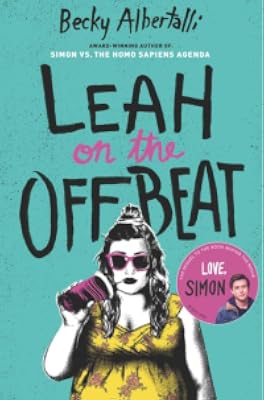
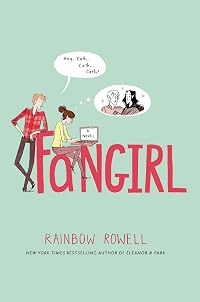

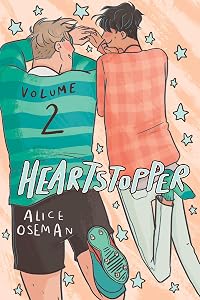
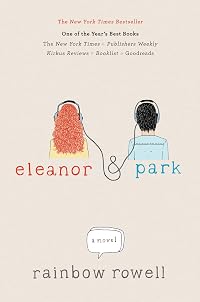
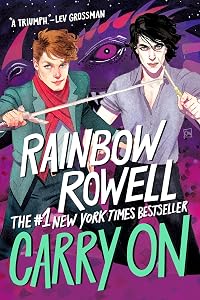
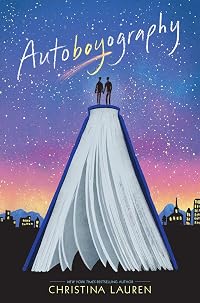
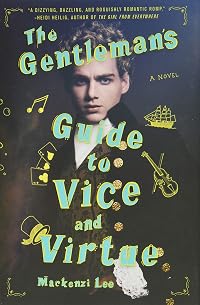
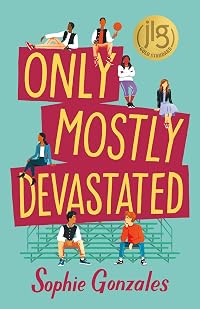







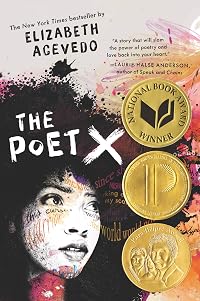
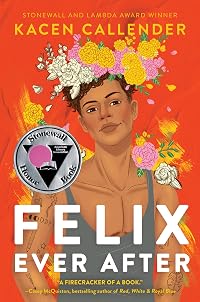
Member Recommendations
Member Reviews
Simon has a millennial age secret. He is gay and he is not ashamed of it. A 17-year-old suburban white kid with close friends and a chummy, functional family, Simon is not so fearful about being socially ostracized. His Gen Z size worry seems to be that people he already trusts to accept homosexuality will make his coming out a "big deal." What is at stake for gay Simon in a post-acceptance era is that his differentness from the hetero default will eclipse the adult identity he is still in the process of constructing, and that people who would otherwise completely approve of his sexual preference, will appropriate their associations with him for their personal agendas.
As a coming-out novel, Simon Vs. The Homo Sapiens Agenda, written show more with soaring emotional intelligence by Becky Albertalli, approaches the subject rather different than the kind of young adult material of my 1980's teen years. If there were coming-out stories, I did not read them. What I remember is clunky afterschool TV specials like What If I’m Gay? and The Truth About Alex. In both of those stories, which intended to present an affirming message about homosexuality, a high school jock’s closetedness is exposed through accidental circumstances, unleashing havoc on girlfriends, families, and sympathetic friends. In subtext, coming-out was audacious and reckless. Were teenagers of the era ready for The Truth? Where I grew up the only thing these specials produced were homophobic punchlines in the locker room.
Closeted Simon, growing up in present-day suburban Atlanta, has been engaging in an anonymous online romance with a mysterious boy from the same high school, going by the faceless moniker Blue. Simon is not a jock but a theater kid with a popular personality. A less popular and more awkward classmate, Martin, happens upon a school library computer display of Simon and Blue's private homosexually revealing emails, which Simon accidentally forgot to close. Martin is not even homophobic, but he is a conniver and he threatens to abuse the secret unless Simon helps Martin get the attention of a female friend who is way out of Martin’s league. When the girlfriend does not show romantic interest, Martin posts a vulgar, fake coming-out confession on behalf of Simon to the high school's gossip blog, and also hints at outing Blue. Simon might try to deny the gay truth, but instead our Twenty-first Century hero reluctantly accepts it an opportunity to start coming-out publicly. Some taunting and humiliation comes down from the jock clan at school, but mostly what is unleashed on Simon is a series of embarrassing endorsements. A dozen straight kids make a point of saying they support him. His BFF’s pick out guys they think are boyfriend prospects and squabble over who got to be first told. Teachers stand on guard for bullies. A lesbian couple hugs Simon and hands him their phone numbers. One girl reassures him that Jesus still loves him. Simon tolerates the undue attention, but he worries that the hullaballoo will somehow collaterally uncloset Blue. Will he lose Blue after his own carelessness with the library computer has set off a chain of events that might include schoolmate’s being so determined to embrace gay people, they will shortcut Blue coming-out on his own terms?
In Simon's generally enlightened middle-class suburbs, one coming to terms with one's identity can be just as scary, or risky, or embarrassing as it ever was. Albertalli has released a version of the coming-out story that updates the order of consequences. Simon is not ashamed of being gay, but he anticipates the unfairness of people coming to know him as that one thing. Before he has even had any real sexual experience, he will be redefined as his sexual preference. As Simon writes to Blue, "Do you ever feel locked into yourself? ...Sometimes it feels like everyone knows who I am except me.” If Simon comes out, will his would-be allies receive him as he truly is, or will they impose some new version of himself he does not even know yet? Simon, version 2.gay ?
What is so fresh about the Simon character is that as he experiences typical teen rites of passage, he is also emotionally mature enough to recognize sexual preference as one part of himself. "I’m tired of coming out. All I ever do is come out. I try not to change, but I keep changing, in all these tiny ways. I get a girlfriend. I have a beer. And every freaking time, I have to reintroduce myself to the universe all over again.” Albertalli is suggesting that all teenagers reach a stage at which the adult they are struggling to find within feels like a secret identity. That every teen feels like the person they are perceived to be is a disguise over the person they actually are. That it is a universal experience to come-out as someone other than who family and peers recognize. "I don’t know how to tell them something like this and still come out feeling like Simon. Because if they don’t recognize me, I don’t recognize myself anymore.” Albertalli’s suburbs are progressive, but imperfect.
Progress has another modern consequence, as demonstrated by people in Simon’s orbit who use his sexual identity like an invisible token that can be invested into some other enterprise. As when Simon describes his coming-out to his family on Christmas morning: “I guess it’s about what I expected. My mom’s asking about my feelings and my dad’s trying to turn it into a joke. Alice is getting political…” What Simon intuitively fears is that his differentness is something other people will treat as an object that may be taken from his hands. And it is. Martin, a kid who cares about his own gay brother and marches in a Pride parade, selfishly outs Simon on the gossip blog thinking that while it might be embarrassing it would be relatively inconsequential. Simon has to chew out Martin: “You don’t get to say it’s not a big thing. This was supposed to be mine. I’m supposed to decide when and where and who knows and how I want to say it… You took that from me.”
Recalling the good old 80’s again, I am reminded of a friend who was forced out of the closet at age fourteen when his father caught him messing around with another boy in a tent. Not only did the father make the remainder of his teen years a torment, he became a pariah among his classmates and community. No doubt ostracization still happens to gay and genderqueer kids, but the queer stigma in most American places is fortunately becoming relic. Simon is less concerned with people disliking him or being violent towards him, than he is in being defined by his society in a way that is both narrow and manipulable.
Simon Vs The Homo Sapiens Agenda is a radical coming out novel. Because what is more salinent now in our culture is not gay-or-straight, but the lingering requirement of a person to have a static sexual identity at all, or the requirement that one should have to articulate one’s sex life to the whole homo sapien demos. These issues are still confusing at a time when people are, for the most part, accepting of homosexuality, and people who are publicly unaccepting often become social pariahs themselves. Tolerance, fortunately came to sound too patronizing, and today in America acceptance might be said to imply cis-chauvinism, even when the accepting party's intentions are good. Because knowing what sort of sex partner another person prefers, or knowing whether the person considers them self only male or female, is no longer an acceptable method of knowing the person. As it reads in one of Blue's emails to Simon, "You can memorize someone's gestures but you can never know their thoughts... people are like houses with vast rooms and tiny windows." show less
As a coming-out novel, Simon Vs. The Homo Sapiens Agenda, written show more with soaring emotional intelligence by Becky Albertalli, approaches the subject rather different than the kind of young adult material of my 1980's teen years. If there were coming-out stories, I did not read them. What I remember is clunky afterschool TV specials like What If I’m Gay? and The Truth About Alex. In both of those stories, which intended to present an affirming message about homosexuality, a high school jock’s closetedness is exposed through accidental circumstances, unleashing havoc on girlfriends, families, and sympathetic friends. In subtext, coming-out was audacious and reckless. Were teenagers of the era ready for The Truth? Where I grew up the only thing these specials produced were homophobic punchlines in the locker room.
Closeted Simon, growing up in present-day suburban Atlanta, has been engaging in an anonymous online romance with a mysterious boy from the same high school, going by the faceless moniker Blue. Simon is not a jock but a theater kid with a popular personality. A less popular and more awkward classmate, Martin, happens upon a school library computer display of Simon and Blue's private homosexually revealing emails, which Simon accidentally forgot to close. Martin is not even homophobic, but he is a conniver and he threatens to abuse the secret unless Simon helps Martin get the attention of a female friend who is way out of Martin’s league. When the girlfriend does not show romantic interest, Martin posts a vulgar, fake coming-out confession on behalf of Simon to the high school's gossip blog, and also hints at outing Blue. Simon might try to deny the gay truth, but instead our Twenty-first Century hero reluctantly accepts it an opportunity to start coming-out publicly. Some taunting and humiliation comes down from the jock clan at school, but mostly what is unleashed on Simon is a series of embarrassing endorsements. A dozen straight kids make a point of saying they support him. His BFF’s pick out guys they think are boyfriend prospects and squabble over who got to be first told. Teachers stand on guard for bullies. A lesbian couple hugs Simon and hands him their phone numbers. One girl reassures him that Jesus still loves him. Simon tolerates the undue attention, but he worries that the hullaballoo will somehow collaterally uncloset Blue. Will he lose Blue after his own carelessness with the library computer has set off a chain of events that might include schoolmate’s being so determined to embrace gay people, they will shortcut Blue coming-out on his own terms?
In Simon's generally enlightened middle-class suburbs, one coming to terms with one's identity can be just as scary, or risky, or embarrassing as it ever was. Albertalli has released a version of the coming-out story that updates the order of consequences. Simon is not ashamed of being gay, but he anticipates the unfairness of people coming to know him as that one thing. Before he has even had any real sexual experience, he will be redefined as his sexual preference. As Simon writes to Blue, "Do you ever feel locked into yourself? ...Sometimes it feels like everyone knows who I am except me.” If Simon comes out, will his would-be allies receive him as he truly is, or will they impose some new version of himself he does not even know yet? Simon, version 2.gay ?
What is so fresh about the Simon character is that as he experiences typical teen rites of passage, he is also emotionally mature enough to recognize sexual preference as one part of himself. "I’m tired of coming out. All I ever do is come out. I try not to change, but I keep changing, in all these tiny ways. I get a girlfriend. I have a beer. And every freaking time, I have to reintroduce myself to the universe all over again.” Albertalli is suggesting that all teenagers reach a stage at which the adult they are struggling to find within feels like a secret identity. That every teen feels like the person they are perceived to be is a disguise over the person they actually are. That it is a universal experience to come-out as someone other than who family and peers recognize. "I don’t know how to tell them something like this and still come out feeling like Simon. Because if they don’t recognize me, I don’t recognize myself anymore.” Albertalli’s suburbs are progressive, but imperfect.
Progress has another modern consequence, as demonstrated by people in Simon’s orbit who use his sexual identity like an invisible token that can be invested into some other enterprise. As when Simon describes his coming-out to his family on Christmas morning: “I guess it’s about what I expected. My mom’s asking about my feelings and my dad’s trying to turn it into a joke. Alice is getting political…” What Simon intuitively fears is that his differentness is something other people will treat as an object that may be taken from his hands. And it is. Martin, a kid who cares about his own gay brother and marches in a Pride parade, selfishly outs Simon on the gossip blog thinking that while it might be embarrassing it would be relatively inconsequential. Simon has to chew out Martin: “You don’t get to say it’s not a big thing. This was supposed to be mine. I’m supposed to decide when and where and who knows and how I want to say it… You took that from me.”
Recalling the good old 80’s again, I am reminded of a friend who was forced out of the closet at age fourteen when his father caught him messing around with another boy in a tent. Not only did the father make the remainder of his teen years a torment, he became a pariah among his classmates and community. No doubt ostracization still happens to gay and genderqueer kids, but the queer stigma in most American places is fortunately becoming relic. Simon is less concerned with people disliking him or being violent towards him, than he is in being defined by his society in a way that is both narrow and manipulable.
Simon Vs The Homo Sapiens Agenda is a radical coming out novel. Because what is more salinent now in our culture is not gay-or-straight, but the lingering requirement of a person to have a static sexual identity at all, or the requirement that one should have to articulate one’s sex life to the whole homo sapien demos. These issues are still confusing at a time when people are, for the most part, accepting of homosexuality, and people who are publicly unaccepting often become social pariahs themselves. Tolerance, fortunately came to sound too patronizing, and today in America acceptance might be said to imply cis-chauvinism, even when the accepting party's intentions are good. Because knowing what sort of sex partner another person prefers, or knowing whether the person considers them self only male or female, is no longer an acceptable method of knowing the person. As it reads in one of Blue's emails to Simon, "You can memorize someone's gestures but you can never know their thoughts... people are like houses with vast rooms and tiny windows." show less
It is definitely annoying that straight (and white, for that matter) is the default, and that the only people who have to think about their identity are the ones who don't fit that mold. Straight people really should have to come out, and the more awkward it is, the better. Awkwardness should be a requirement.
I don't usually read realistic YA and I don't usually read "cute" books, but this is both and it's fantastic. Becky Albertalli has been described as "the love child of [a:John Green|1406384|John Green|https://images.gr-assets.com/authors/1353452301p2/1406384.jpg] and [a:Rainbow Rowell|4208569|Rainbow Rowell|https://images.gr-assets.com/authors/1342324527p2/4208569.jpg]," and while I don't read John Green*, I would place Albertalli show more in the same category as my BFF* Rainbow.
I love Simon, with his all his foul-mouthed, wise-cracking, earnestness.
I love that Simon's family and friends aren't homophobic, but he still struggles with "coming out" to them.
I love the way Albertalli captures the awkwardness and craziness of adolescence, the emotions of first love (similarly but differently than RR does in [b:Eleanor & Park|40498325|Eleanor & Park|Rainbow Rowell|https://images.gr-assets.com/books/1528534457s/40498325.jpg|17225055]), the complications of life in the interweb age (except do kids really call it "the tumblr"?).
I love that there are books like this for kids like Simon to read and feel less alone, and books that show that bullying doesn't alway look like a football player pushing a nerd against his locker.
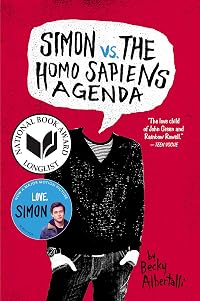
Overall, I just love this book. Underneath the cute cover and the quirky title, it's a great book that manages to be both fun and thought-provoking.
*Nothing against John Green. I actually really enjoy his Crash Course History videos, but again, realistic YA is not my thing and I don't like to read books where I know ahead of time who is going to die.
**Rainbow does not necessarily know we are BFFs, but we are. show less
I don't usually read realistic YA and I don't usually read "cute" books, but this is both and it's fantastic. Becky Albertalli has been described as "the love child of [a:John Green|1406384|John Green|https://images.gr-assets.com/authors/1353452301p2/1406384.jpg] and [a:Rainbow Rowell|4208569|Rainbow Rowell|https://images.gr-assets.com/authors/1342324527p2/4208569.jpg]," and while I don't read John Green*, I would place Albertalli show more in the same category as my BFF* Rainbow.
I love Simon, with his all his foul-mouthed, wise-cracking, earnestness.
I love that Simon's family and friends aren't homophobic, but he still struggles with "coming out" to them.
I love the way Albertalli captures the awkwardness and craziness of adolescence, the emotions of first love (similarly but differently than RR does in [b:Eleanor & Park|40498325|Eleanor & Park|Rainbow Rowell|https://images.gr-assets.com/books/1528534457s/40498325.jpg|17225055]), the complications of life in the interweb age (except do kids really call it "the tumblr"?).
I love that there are books like this for kids like Simon to read and feel less alone, and books that show that bullying doesn't alway look like a football player pushing a nerd against his locker.
Overall, I just love this book. Underneath the cute cover and the quirky title, it's a great book that manages to be both fun and thought-provoking.
*Nothing against John Green. I actually really enjoy his Crash Course History videos, but again, realistic YA is not my thing and I don't like to read books where I know ahead of time who is going to die.
**Rainbow does not necessarily know we are BFFs, but we are. show less
I finished this book during study hall with twenty minutes left and now don’t know what to do with myself. As I was pulling this up a Love Simon ad came on through Pandora and I was trying not to laugh obsessively because I’m in public surrounded by my scary peers. As for the book. This glorious beautiful stunning book. It was adorable and fun and I flew through it without even realizing it. I felt so many emotionsssss. I think I would be fine perpetually reading this book if there weren’t so many other books I want to get to on my tbr. If you’re thinking about reading this book but are hesitant JUST READ IT. Me and about a bajillion other people can vouch that this book is stunning. It was realistic and teenagery and yeah. I show more could easily see so much of this book happening in a real high school. I could gush about this book for hours but I’m going to go watch the Live, Simon trailers.... again. ❤️ show less
Simon vs. the Homo Sapiens Agenda was one of the happiest books I’ve read this year. Recently released as a movie, it originally came out in 2015, earning a well-deserved place on YA must-read lists for its depiction of a gay protagonist.
It’s also the best use of first person present I’ve read so far.
Simon, a young man starting his junior year of high school, has a trio of close friends, a loving family, and is generally secure about his life save for one thing — he is gay but hasn’t told anyone yet. (Amusingly, he discovered he was gay by crushing on Daniel Radcliff’s portrayal of Harry Potter.) The only one who knows is a mysterious poster, also gay, on his school’s website forum whom he calls Blue; as the two correspond show more Simon develops a crush on him as well as the desire to meet.
It’s lightweight stuff, but surprisingly deep. There’s musings about growing up in general and having one’s understanding of the world deepen – discovering hidden sides to others as they mature and grow beyond stereotypes, and gradually Simon’s waking up occurs as well. In his world coming out is not the tension-fraught horror it would have been in a 1970s or 80s book, as Simon’s friends and family are liberal and accepting. It’s that he doesn’t want all the fuss, and perhaps, the work of growing up that comes with it. He also develops real feelings for Blue and there’s a lot of comedy as he tries to discover who Blue really is.
There’s also a subplot in that the class clown is blackmailing him because he knows of Blue’s and Simon’s secret exchanges – in return for keeping quiet, he wants Simons help in breaking the ice with his own crush, one of Simon’s female friends. In keeping with the sweet nature of the book, the blackmail is not of the thuggish or leering variety, but of the “Hey, let’s do a guy a favor” sort. Simon resents it, but it’s also made clear to the reader that these are basically nice kids.
It’s an introspective book. Nothing terrible happens around the coming-out theme; the worst is some jeering at a school musical Simon’s performing in that is quickly dealt with by the teacher. But it was very profound, mostly because of the author’s voice. Simon is one of those rare books where a YA first person present POV is done well, in that I believe a real character is talking to me, and not a mouthpiece of the author’s to lend “immediacy” but winds up reading like a screenplay with I’s subbed in for third person pronouns. Simon’s POV is limited and since he doesn’t care about playing to his audience, he leaves us much to infer about his life. For example, he’s is involved in a school production of Oliver! but doesn’t describe the plot to us, just that there’s Fagin and orphans and music. This was very refreshing to me compared to books like Red Queen and Children of Blood and Bone, where it’s clear the narrator is a stand-in for the author who’s pulling the strings to set the scene. Simon is not trying to manipulate us for tension and stakes. These flow out naturally from what he says and how he feels.
Also refreshingly, Simon doesn’t gasp, grunt, guzzle, heave for breath, or describe other physiological responses ad infinitum as first person present writers also tend to do.
If there is a weakness to the book, it’s that Simon’s situation is all rather sanguine. There’s realism there, but nothing nasty. I’d could be I’m just projecting, though. Teens of the 2010s enjoy a different familial situation than the ones of the 1960s and 1970s, where children were often pitted against parents and expected to become independent and get away from them as soon as possible.
A sweet read, and worth doing so just for examining the technique of a YA writer who GOT IT RIGHT. show less
It’s also the best use of first person present I’ve read so far.
Simon, a young man starting his junior year of high school, has a trio of close friends, a loving family, and is generally secure about his life save for one thing — he is gay but hasn’t told anyone yet. (Amusingly, he discovered he was gay by crushing on Daniel Radcliff’s portrayal of Harry Potter.) The only one who knows is a mysterious poster, also gay, on his school’s website forum whom he calls Blue; as the two correspond show more Simon develops a crush on him as well as the desire to meet.
It’s lightweight stuff, but surprisingly deep. There’s musings about growing up in general and having one’s understanding of the world deepen – discovering hidden sides to others as they mature and grow beyond stereotypes, and gradually Simon’s waking up occurs as well. In his world coming out is not the tension-fraught horror it would have been in a 1970s or 80s book, as Simon’s friends and family are liberal and accepting. It’s that he doesn’t want all the fuss, and perhaps, the work of growing up that comes with it. He also develops real feelings for Blue and there’s a lot of comedy as he tries to discover who Blue really is.
There’s also a subplot in that the class clown is blackmailing him because he knows of Blue’s and Simon’s secret exchanges – in return for keeping quiet, he wants Simons help in breaking the ice with his own crush, one of Simon’s female friends. In keeping with the sweet nature of the book, the blackmail is not of the thuggish or leering variety, but of the “Hey, let’s do a guy a favor” sort. Simon resents it, but it’s also made clear to the reader that these are basically nice kids.
It’s an introspective book. Nothing terrible happens around the coming-out theme; the worst is some jeering at a school musical Simon’s performing in that is quickly dealt with by the teacher. But it was very profound, mostly because of the author’s voice. Simon is one of those rare books where a YA first person present POV is done well, in that I believe a real character is talking to me, and not a mouthpiece of the author’s to lend “immediacy” but winds up reading like a screenplay with I’s subbed in for third person pronouns. Simon’s POV is limited and since he doesn’t care about playing to his audience, he leaves us much to infer about his life. For example, he’s is involved in a school production of Oliver! but doesn’t describe the plot to us, just that there’s Fagin and orphans and music. This was very refreshing to me compared to books like Red Queen and Children of Blood and Bone, where it’s clear the narrator is a stand-in for the author who’s pulling the strings to set the scene. Simon is not trying to manipulate us for tension and stakes. These flow out naturally from what he says and how he feels.
Also refreshingly, Simon doesn’t gasp, grunt, guzzle, heave for breath, or describe other physiological responses ad infinitum as first person present writers also tend to do.
If there is a weakness to the book, it’s that Simon’s situation is all rather sanguine. There’s realism there, but nothing nasty. I’d could be I’m just projecting, though. Teens of the 2010s enjoy a different familial situation than the ones of the 1960s and 1970s, where children were often pitted against parents and expected to become independent and get away from them as soon as possible.
A sweet read, and worth doing so just for examining the technique of a YA writer who GOT IT RIGHT. show less
(3.5)
This may one of the few times I'm actually looking forward to the movie version. Not to say the book was bad, but there were parts that I enjoyed so little that I'm hoping the movie got rid of them altogether or at least ... just really put as little emphasis on them as possible.
Book content warnings:
homophobia
bullying
gay fetishizing
Using the email account hourtohour.notetonote@gmal.com, 16yo Simon Spier can come out of the closet to someone named Blue and express himself honestly in a way he can't to anyone "irl". Unfortunately, a kid named Martin from drama class sees his email when Simon forgets to log off in the library and blackmails him: help Martin get close to Simon's friend Abby or everyone will know Simon's gay (and show more worse, because screenshots will be released, Blue is involved in it too).
Basically, it's a messy soup of a high school coming-of-age story mixed with a coming-out story mixed with one hell of an adorable romance. What's not to love?? I honestly stayed up many nights to read a bit longer.
So why the 3.5?
Sometimes the text got to be a tad cringy; I mean, I get it takes a book a few years to get from finished mss to published text, so already you have some outdated slang (e.g. "I can't even"), but some dialogue exchanges could be a bit awkward. I just couldn't imagine kids talking like this, or even the adult characters either. Things just ran a bit stilted.
But the real villain of this book was Leah. An anime-obsessed yaoi-loving gay-fetishizing friend of Simon who was supposed to be an ally??? I don't think so. But this book never changed its stance on her. Simon keeps his opinion that she's like ... the most understanding out of all his friends because she introduced him to "slash fanfiction".
So let me make this clear, as a wlw: people who love yaoi (especially women and especially women who call themselves "fujoshi") basically fetishize gay people, and fetishizers are not allies.
Just like Simon, on page 21, says he thinks gay women have it easier (LOL), because dudes find them hot. Again, fetishizing gay people isn't the same thing as being allies. GOD, this part made me so furious. Almost to the point of quitting the book right there on page 21.
Anyway, despite this (which made me despise every single time Leah showed up in the book), I still loved the book as an easy romantic read. But since it looks like the next book is all about Leah ?? I definitely won't read on. There are enough stuff about gay fetishization out there being seen in a positive light. Yuck. show less
This may one of the few times I'm actually looking forward to the movie version. Not to say the book was bad, but there were parts that I enjoyed so little that I'm hoping the movie got rid of them altogether or at least ... just really put as little emphasis on them as possible.
Book content warnings:
homophobia
bullying
gay fetishizing
Using the email account hourtohour.notetonote@gmal.com, 16yo Simon Spier can come out of the closet to someone named Blue and express himself honestly in a way he can't to anyone "irl". Unfortunately, a kid named Martin from drama class sees his email when Simon forgets to log off in the library and blackmails him: help Martin get close to Simon's friend Abby or everyone will know Simon's gay (and show more worse, because screenshots will be released, Blue is involved in it too).
Basically, it's a messy soup of a high school coming-of-age story mixed with a coming-out story mixed with one hell of an adorable romance. What's not to love?? I honestly stayed up many nights to read a bit longer.
So why the 3.5?
Sometimes the text got to be a tad cringy; I mean, I get it takes a book a few years to get from finished mss to published text, so already you have some outdated slang (e.g. "I can't even"), but some dialogue exchanges could be a bit awkward. I just couldn't imagine kids talking like this, or even the adult characters either. Things just ran a bit stilted.
But the real villain of this book was Leah. An anime-obsessed yaoi-loving gay-fetishizing friend of Simon who was supposed to be an ally??? I don't think so. But this book never changed its stance on her. Simon keeps his opinion that she's like ... the most understanding out of all his friends because she introduced him to "slash fanfiction".
So let me make this clear, as a wlw: people who love yaoi (especially women and especially women who call themselves "fujoshi") basically fetishize gay people, and fetishizers are not allies.
Just like Simon, on page 21, says he thinks gay women have it easier (LOL), because dudes find them hot. Again, fetishizing gay people isn't the same thing as being allies. GOD, this part made me so furious. Almost to the point of quitting the book right there on page 21.
Anyway, despite this (which made me despise every single time Leah showed up in the book), I still loved the book as an easy romantic read. But since it looks like the next book is all about Leah ?? I definitely won't read on. There are enough stuff about gay fetishization out there being seen in a positive light. Yuck. show less
Re-read 3/21/18: I really love you, Simon.
Original Review: AMAZING. I have no words except: "go read this, right now!!!".
Okay, I have a few more words than that, but most of the time when I try to articulate my feelings on this book it becomes incoherent babble that mainly consists of the most positive and wholesome adjectives I can think of.
Mainly I just want to say that I am so similar to Simon it's almost scary and I want to thank Becky Albertalli for making such a wonderful relatable character.
Also I think want to impress upon everyone that I READ THIS IN ONE DAY. ONE. For me, that is unprecedented. Like, this is the first, and currently only, time on record that I have read a full blown novel in under a day. So props for that, show more Simon!
I think what drove me to keep reading was the perfect blend of sickeningly adorable romance, a fun mystery (Blue's identity) which I had to know the answer to, and some heartfelt drama which I understood on a metaphysical level.
I love this book. I love "Simon vs the Homo Sapiens Agenda". I Love. This. Book. I'm now making it my mission to get people to read this wonderful sugar-spun delight of a novel. You better go read it before I come to your house and make you. (Seriously, it's so fluffy but so good). Knock-knock, what's that? Oh it's me - at your door professing the gospel of "Simon Vs"! Now read it!
Okay, I'm off to shout my love for this book from the rooftops now. show less
Original Review: AMAZING. I have no words except: "go read this, right now!!!".
Okay, I have a few more words than that, but most of the time when I try to articulate my feelings on this book it becomes incoherent babble that mainly consists of the most positive and wholesome adjectives I can think of.
Mainly I just want to say that I am so similar to Simon it's almost scary and I want to thank Becky Albertalli for making such a wonderful relatable character.
Also I think want to impress upon everyone that I READ THIS IN ONE DAY. ONE. For me, that is unprecedented. Like, this is the first, and currently only, time on record that I have read a full blown novel in under a day. So props for that, show more Simon!
I think what drove me to keep reading was the perfect blend of sickeningly adorable romance, a fun mystery (Blue's identity) which I had to know the answer to, and some heartfelt drama which I understood on a metaphysical level.
I love this book. I love "Simon vs the Homo Sapiens Agenda". I Love. This. Book. I'm now making it my mission to get people to read this wonderful sugar-spun delight of a novel. You better go read it before I come to your house and make you. (Seriously, it's so fluffy but so good). Knock-knock, what's that? Oh it's me - at your door professing the gospel of "Simon Vs"! Now read it!
Okay, I'm off to shout my love for this book from the rooftops now. show less
I'll be honest, I saw the movie before I read the book. The age-old saying still holds true; the book is better than the movie! I loved how realistically Simon and his friends spoke. They sounded and acted like real teenagers, which is really nice. The problems they face feel (and are) real problems that teenagers nowadays have to face. I also loved that we got a look into Simon and Bram's relationship and that it didn't end as soon as they got together. Reading this makes me want to read Leah Offbeat and other books by Albertalli.
Members
- Recently Added By
Lists

Best Young Adult
399 works; 101 members

Steph Laymon's 2016 Read
34 works; 1 member

Books Read in 2017
4,249 works; 129 members

Top Five Books of 2017
757 works; 231 members

Books Read in 2018
4,360 works; 110 members

Hazel & Katniss & Harry & Starr Podcast
195 works; 1 member

Fiction with Men's Given Names in the Title
302 works; 11 members

School library books removed after TX state legislator inquiry
429 works; 6 members

Florida's Book Bans and Challenges
311 works; 4 members

Favorite Romance Fiction
247 works; 115 members

Florida
366 works; 3 members

Books recommended by Calgary Public Library staff
1,588 works; 4 members

Gay YA
15 works; 1 member

LGBTQIA+ TBR
33 works; 1 member

Books Read in 2026
1,952 works; 66 members
Author Information

11+ Works 15,316 Members
Some Editions
Awards and Honors
Awards
Distinctions
Notable Lists
Series

Work Relationships
Is contained in
Has the adaptation
Is abridged in
Common Knowledge
- Canonical title
- Simon vs. the Homo Sapiens Agenda
- Original title
- Simon vs. the Homo Sapiens Agenda
- Alternate titles
- Love, Simon
- Original publication date
- 2015
- People/Characters
- Simon Spier; Martin Addison; Abby Suso; Nick Eisner; Leah Burke
- Important places
- Shady Creek, Georgia, USA
- Related movies
- Love, Simon (2018 | IMDb)
- Dedication
- To Brian, Owen, and Henry,
who are the reason I write love stories - First words
- It’s a weirdly subtle conversation.
- Last words
- (Click to show. Warning: May contain spoilers.)Maybe I want it to be
- Original language
- English
- Canonical DDC/MDS
- 813.6
- Canonical LCC
- PZ7.A434
Classifications
Statistics
- Members
- 6,089
- Popularity
- 2,071
- Reviews
- 265
- Rating
- (4.16)
- Languages
- 15 — Danish, Dutch, English, Estonian, Finnish, French, German, Hungarian, Italian, Polish, Romanian, Spanish, Swedish, Turkish, Portuguese (Portugal)
- Media
- Paper, Audiobook, Ebook
- ISBNs
- 79
- ASINs
- 15