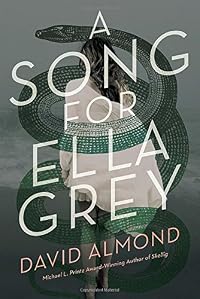
A Song for Ella Grey
by David Almond
On This Page
Description
Claire witnesses a love so dramatic it is as if Ella Grey has been captured and taken from her, but the loss of her best friend to the arms of Orpheus is nothing compared to the loss she feels when Ella is taken from the world in this modern take on the myth of Orpheus and Eurydice set in Northern England.Tags
Recommendations




Member Reviews
It was the song of everything, all life, all love, all creation. It was his song for my friend Ella Grey.
Comencé a leer este libro sabiendo que era un retelling del mito de Orfeo y Eurídice, pero realmente no sabía nada del mito Orfeo y Eurídice, y creo que fue particularmente por eso que encontré esta historia tan... bizarra. No se me ocurre otra palabra para describirla.
La mitología no se caracteriza por ser super realista, todo lo contrario, lo sé. Pero no estaba preparada para esto y, sobre todo, no estaba preparada para ese final.
Esta escrita de una manera hermosa, poética. Con frases como:
"Follow me, one word then another, one sentence then another, one death then another. Don't hesitate. Keep moving forward with me through the night. It won't take long. Don't look back."
...y...
"How can you turn yourself into something you want to be when you're alredy what you are?" (Esta me puso a pensar)
Que no es un tipo de escritura para todo el mundo, pero que a mi me encanta. Pero también está llena de slang inglés que rompia la armonia de todo y me sacaba de quicio. Palabras como “nowt”, “mebbe” y “nae”, no deberian ser permitidas por los editores.
Y es que este es el libro de las contradicciones.
Es una historia de amor... pero no realmente. Al menos no en el sentido convencional. Es una historia del amor entre entre Orfeo y Ella, contada por Claire, la mejor amiga de la protagonista. Nunca había leído una historia de amor que no fuese contada desde el punto de vista de alguno de los involucrados, o en tercera persona, así que me resultó un poco extraño, porque no nos enteramos de lo que sienten o piensan los protagonistas, sino de lo que Claire cree que sienten o piensan.
Es una historia acerca de lo que significa ser joven, cuando te sientes salvaje, libre e invencible, pero también te sientes insatisfecho, vacío e incapaz. Te presenta a personajes adolescentes que beben, tienen sexo y actúan de manera descontrolada un minuto, y al minuto siguiente están discutiendo el significado de la vida, la belleza del mundo.
Es una historia acerca de lo que significa encontrarte a ti mismo, y acerca de lo que significa perderte. Es una historia acerca de la vida y también acerca de la muerte. Es una historia que me encantó, pero que no estoy segura de que realmente me guste. Si es que eso tiene sentido. Si es que algo tiene sentido. show less
A Song for Ella Grey is a modern retelling of the story of Orpheus and Eurydice.
Claire and Ella are best friends who grew up together in Northumberland. On the cusp of their senior year of high school, the two girls make plans to live free and camp on the beach with their group of friends. Their group is known as the "hippies"in their small town. Claire and her friends shops in vintage clothing stores and play instruments. They smoke weed and drink wine; celebrating love and freedom. Everyone, including Ella, is aware that Claire is madly in love with her friend. Their lives are changed forever when on their trip to the northern beaches, the group of teens meets Orpheus. He plays his lyre for them and sings songs so sweet they weep show more with joy. Ella's parents forbade her from joining her friends on their trip, but Claire calls Ella while Orpheus plays and Ella is instantly enchanted. Orpheus eventually meets Ella and they fall madly in love. They decide to wed on the very beach where everyone met Orpheus. Right after Claire gives Ella away, Ella follows Orpheus into the dunes and steps on a nest of adders, dying from the snake venom. Claire and Orpheus are distraught. Orpheus tries to bring Ella back from the underworld but needs Claire's help. Using a mask she made in her child hood, Claire enters the underworld as Orpheus, finds Ella, and brings her back. Only, just as in the myth, when they reach the gates near the end, Ella touches Claire's shoulder and she looks back at her. Ella is then swept away back into the underworld for all eternity.
While I enjoyed reading A Song for Ella Grey, I did not find it terribly successful as a retelling. It is basically the exact story of Orpheus set in modern times with an extra main character thrown in. The story was fairly straightforward until Claire puts on the mask to take the place of Orpheus in the underworld. It isn't very clear why this is necessary or why Claire needs to go in his place. Does she love Ella more? Is it their history? I did greatly appreciate the strangeness and aesthetics of the book. When Claire enters the underworld as Orpheus, the pages turn black and the print white - opposite of the real world. The writing is also quite lyrical and beautiful to match the philosophies of the main characters. This book was just strange enough that I don't think teens will be rushing to read it, but it will speak to a select crowd. Fans of Sofia Coppola movies would probably enjoy this title.
Grade Range: 9-12
Genre: Retelling, Mythology
Literary Merit: Good
Characterization: Excellent
Recommendation: Recommended show less
Claire and Ella are best friends who grew up together in Northumberland. On the cusp of their senior year of high school, the two girls make plans to live free and camp on the beach with their group of friends. Their group is known as the "hippies"in their small town. Claire and her friends shops in vintage clothing stores and play instruments. They smoke weed and drink wine; celebrating love and freedom. Everyone, including Ella, is aware that Claire is madly in love with her friend. Their lives are changed forever when on their trip to the northern beaches, the group of teens meets Orpheus. He plays his lyre for them and sings songs so sweet they weep show more with joy.
While I enjoyed reading A Song for Ella Grey, I did not find it terribly successful as a retelling. It is basically the exact story of Orpheus set in modern times with an extra main character thrown in. The story was fairly straightforward until Claire puts on the mask to take the place of Orpheus in the underworld. It isn't very clear why this is necessary or why Claire needs to go in his place. Does she love Ella more? Is it their history? I did greatly appreciate the strangeness and aesthetics of the book. When Claire enters the underworld as Orpheus, the pages turn black and the print white - opposite of the real world. The writing is also quite lyrical and beautiful to match the philosophies of the main characters. This book was just strange enough that I don't think teens will be rushing to read it, but it will speak to a select crowd. Fans of Sofia Coppola movies would probably enjoy this title.
Grade Range: 9-12
Genre: Retelling, Mythology
Literary Merit: Good
Characterization: Excellent
Recommendation: Recommended show less
Man, this was a let-down. I love the myth of Orpheus and Eurydice, I love David Almond, and I am down with contemporary re-tellings. But this was a slog. I couldn't finish.
I also don't believe this is mean for young adults - just because it's about teenagers (but is it? I guess they're in the UK somewhere, so longer school breaks, but they felt more college-aged to me) doesn't mean it's for them. The language, the dreaminess, the atmosphere... none of this would appeal to many teens, if any.
I also don't believe this is mean for young adults - just because it's about teenagers (but is it? I guess they're in the UK somewhere, so longer school breaks, but they felt more college-aged to me) doesn't mean it's for them. The language, the dreaminess, the atmosphere... none of this would appeal to many teens, if any.
Si alguien lo hace llegar a mi casa en navidad (o antes o cualquier fecha), no me molesto ☺
También en: El Extraño Gato del Cuento
Para contarles sobre A Song for Ella Grey, tengo que contarles el por qué y cómo y demás detalles de mi obsesión con el mito original, una historia que no es feliz y si te pones a pensar más, tampoco es bonita. En la mitología griega, hay una historia que para mí resalta más que cualquier otra, la de Eurídice y Orfeo. Ahora que me puse a pensar el porqué de esto, me di cuenta que quizá sea Orfeo quién inicio mi fetiche por los músicos y las historias de amor retorcidas y trágicas. Trataré de ir contándote mi obsesión particular con el mito mientras intento reseñar el libro de la manera show more más imparcial posible.
¿Es un retelling?
No, no es un retelling aunque puede tomarse por uno. Es más una adaptación actual al mito, ahora, sé que eso puede describir exactamente al retelling pero no. Un retelling por lo general toma la historia original y crea una historia paralela o se desarrolla desde dónde se dejó el original. En el caso de A Song for Ella Grey es como si el mito nunca hubiera ocurrido, como si Eurídice y Orfeo no fueran parte de la historia griega, sino una historia que está naciendo en el mundo actual, lo cual le dio ese lado retorcido que no noté muy bien en el mito original.
Un libro para amantes del mito
Sí, hay una gran probabilidad de que si no estás familiarizado con la historia original, no te guste A Song for Ella Grey ¿Por qué? Por el instalove, por la personalidad de Ella y por lo destructivo de Orfeo. El mito es un poco más comprensible porque Orfeo, el magnífico músico logra despertar a una Ninfa, de la cual queda completamente enamorado al verla. Eurídice. Una ninfa, alguien que nunca vio el mundo, lo único que puede vocalizar al inicio es su nombre, y vamos, Orfeo se aprovecha de eso, la pobre muchacha no sabía en lo que se metía, como digo, la historia original es oscura (mucho más de lo que recordaba). ¿Cómo trajo el escritor la parte de ninfa a la actualidad? Primero le cambio de nombre, Ella (tan bonito su nombre…) y le dio ciertos rasgos MPDG (Manic Pixie Dream Girl): distraída, liberal, cariñosa (si sabes, a lo que me refiero, las ninfas son conocidas por…) y una vez que se enamora de Orfeo lo deja todo (familia, colegio, que si hacemos un paralelismo con el mito original, sería Eurídice saliendo del interior del árbol). Mientras que Orfeo sigue siendo ese músico viajero, uno con un gran problema de socialización. Y así la historia fluye con el mito modernizado.
Para amantes de la narración.
Kitten, si eres de los que disfrutan de una narración (me gusta más la expresión en inglés: storytelling), A Song for Ella Grey es el libro que DEBES leer, puede que la historia no vaya a ser de tu agrado, como dije no es una historia que todo el mundo guste, pero la narración, qué cosa más bonita, más intensa. Al principio empieza muy sencillo, nada que resaltar, luego, cuando Orfeo hace su aparición y canta para Claire, la voz de ella se vuelve tan adictiva. Hay momentos donde es prácticamente imposible no leerlo en voz alta para luego terminar exhausto de tanta emoción que transmite. Muchos son frases sencillas, no tengo idea si fue porque estaba tan metida en la historia, pero en serio kitten, es un libro que debes experimentar.
Twitter || Blog || Pinterest || Tumblr || Instagram || Facebook show less
También en: El Extraño Gato del Cuento
Para contarles sobre A Song for Ella Grey, tengo que contarles el por qué y cómo y demás detalles de mi obsesión con el mito original, una historia que no es feliz y si te pones a pensar más, tampoco es bonita. En la mitología griega, hay una historia que para mí resalta más que cualquier otra, la de Eurídice y Orfeo. Ahora que me puse a pensar el porqué de esto, me di cuenta que quizá sea Orfeo quién inicio mi fetiche por los músicos y las historias de amor retorcidas y trágicas. Trataré de ir contándote mi obsesión particular con el mito mientras intento reseñar el libro de la manera show more más imparcial posible.
¿Es un retelling?
No, no es un retelling aunque puede tomarse por uno. Es más una adaptación actual al mito, ahora, sé que eso puede describir exactamente al retelling pero no. Un retelling por lo general toma la historia original y crea una historia paralela o se desarrolla desde dónde se dejó el original. En el caso de A Song for Ella Grey es como si el mito nunca hubiera ocurrido, como si Eurídice y Orfeo no fueran parte de la historia griega, sino una historia que está naciendo en el mundo actual, lo cual le dio ese lado retorcido que no noté muy bien en el mito original.
Un libro para amantes del mito
Sí, hay una gran probabilidad de que si no estás familiarizado con la historia original, no te guste A Song for Ella Grey ¿Por qué? Por el instalove, por la personalidad de Ella y por lo destructivo de Orfeo. El mito es un poco más comprensible porque Orfeo, el magnífico músico logra despertar a una Ninfa, de la cual queda completamente enamorado al verla. Eurídice. Una ninfa, alguien que nunca vio el mundo, lo único que puede vocalizar al inicio es su nombre, y vamos, Orfeo se aprovecha de eso, la pobre muchacha no sabía en lo que se metía, como digo, la historia original es oscura (mucho más de lo que recordaba). ¿Cómo trajo el escritor la parte de ninfa a la actualidad? Primero le cambio de nombre, Ella (tan bonito su nombre…) y le dio ciertos rasgos MPDG (Manic Pixie Dream Girl): distraída, liberal, cariñosa (si sabes, a lo que me refiero, las ninfas son conocidas por…) y una vez que se enamora de Orfeo lo deja todo (familia, colegio, que si hacemos un paralelismo con el mito original, sería Eurídice saliendo del interior del árbol). Mientras que Orfeo sigue siendo ese músico viajero, uno con un gran problema de socialización. Y así la historia fluye con el mito modernizado.
Para amantes de la narración.
Kitten, si eres de los que disfrutan de una narración (me gusta más la expresión en inglés: storytelling), A Song for Ella Grey es el libro que DEBES leer, puede que la historia no vaya a ser de tu agrado, como dije no es una historia que todo el mundo guste, pero la narración, qué cosa más bonita, más intensa. Al principio empieza muy sencillo, nada que resaltar, luego, cuando Orfeo hace su aparición y canta para Claire, la voz de ella se vuelve tan adictiva. Hay momentos donde es prácticamente imposible no leerlo en voz alta para luego terminar exhausto de tanta emoción que transmite. Muchos son frases sencillas, no tengo idea si fue porque estaba tan metida en la historia, pero en serio kitten, es un libro que debes experimentar.
Twitter || Blog || Pinterest || Tumblr || Instagram || Facebook show less
/Received an ARC in exchange for an honest review/
A modern retelling of the Orpheus and Eurydice myth, “A Song for Ella Grey” does a decent job of presenting the myth to a young adult audience in a contemporary setting. However, Almond takes a gigantic risk in utilizing a strong north English dialect for the characters’ speech; a risk that ultimately fails as it the effect quickly tires for non north English readers.
The beginning part of the book is by far the strongest point. Almond hooks readers in immediately, informing us that there will be two deaths. He then gives us the fulcrum of the novella, one of the confirmed dead running away with a boy she’s never met in person before. With those two tidbits provided, the focus then show more switches back to the beginning as he has the narrator, Claire, begin to unwind the events that led to the demise of Ella.
Were this a simple, straightforward contemporary retelling, “A Song for Ella Grey” may have been fantastic, and would definitely have received more than the two star rating I’m giving it. Even with the dialect writing, the story of Ella and Orpheus was done well. Unfortunately, Almond splices through the myth with large sections of existentialist ramblings that detract from the main theme, the main story, and only work at boring the reader. I’m all for existential crises, but I don’t want to reread the same issues of self awareness every few pages when I am supposed to be reading a simple retelling. Especially when the two halves of the book, the myth and the existentialism, never seem to connect or even highlight one another. I was incredibly tempted to give “A Song for Ella Grey” a one star rating, but my love for the myth bumped it up to two. I also do think that there are some that would enjoy the novella, but mostly that would be a small niche audience of fifteen year olds in North England.
A Song for Ella Grey Review was originally published on By Lulu with Love show less
A modern retelling of the Orpheus and Eurydice myth, “A Song for Ella Grey” does a decent job of presenting the myth to a young adult audience in a contemporary setting. However, Almond takes a gigantic risk in utilizing a strong north English dialect for the characters’ speech; a risk that ultimately fails as it the effect quickly tires for non north English readers.
The beginning part of the book is by far the strongest point. Almond hooks readers in immediately, informing us that there will be two deaths. He then gives us the fulcrum of the novella, one of the confirmed dead running away with a boy she’s never met in person before. With those two tidbits provided, the focus then show more switches back to the beginning as he has the narrator, Claire, begin to unwind the events that led to the demise of Ella.
Were this a simple, straightforward contemporary retelling, “A Song for Ella Grey” may have been fantastic, and would definitely have received more than the two star rating I’m giving it. Even with the dialect writing, the story of Ella and Orpheus was done well. Unfortunately, Almond splices through the myth with large sections of existentialist ramblings that detract from the main theme, the main story, and only work at boring the reader. I’m all for existential crises, but I don’t want to reread the same issues of self awareness every few pages when I am supposed to be reading a simple retelling. Especially when the two halves of the book, the myth and the existentialism, never seem to connect or even highlight one another. I was incredibly tempted to give “A Song for Ella Grey” a one star rating, but my love for the myth bumped it up to two. I also do think that there are some that would enjoy the novella, but mostly that would be a small niche audience of fifteen year olds in North England.
A Song for Ella Grey Review was originally published on By Lulu with Love show less
This book was really hard for me to rate. Almond's writing is beautiful and lyrical and helps you stay interested in the story. Also the setting is just as beautiful. The main problem I had with the story is that everything felt so rushed. There wasn't really any build up to Ella and Claire's relationship which made it really unbelievable for me and also made me doubt how "close" the girls really were. Even the parents in the story seemed 2d to me. They ranged from one scale to the other drastically. At one point Almond describes Ella's parents as always being dressed in grey which made me laugh out loud since it was obvious that Almond was trying way too hard to make Ella's parents the complete opposite of Ella. The myth of Orpheus show more here (named the character directly after him which to me lacks creativity since he renamed Eurydice to Ella) felt so random and I didn't like how he transitioned to Orpheus's point of view.
Overall it wasn't a bad book/story but there were many holes that made the story less enjoyable. I kept wanting to like it more but I just couldn't get passed these issues. show less
Overall it wasn't a bad book/story but there were many holes that made the story less enjoyable. I kept wanting to like it more but I just couldn't get passed these issues. show less
As much as I wanted to, I just could not seem to connect with this story. The odd random dialect and the attempt to update an old story just seemed to take away from the storyline I knew and loved. I typically love retellings but maybe this one just had bad timing
Members
- Recently Added By
Lists

Mythology
16 works; 1 member
Author Information

60+ Works 10,737 Members
David Almond was born on May 15, 1951 in the United Kingdom. He writes novels for children and young adults including The Savage, Slog's Dad, My Name Is Mina, The Boy Who Swam with Piranhas, and The Tightrope Walkers. He has received numerous awards including the Carnegie Medal for Skellig, two Whitbread Awards, the Michael L. Printz Award for show more young-adult books for Kit's Wilderness, the Smarties Prize and the Boston Globe Horn Book Award for The Fire-Eaters, the 2015 Guardian Children's Fiction Prize for A Song for Ella Grey, and the Hans Christian Andersen Award. (Bowker Author Biography) show less
Awards and Honors
Awards
Distinctions
Classifications
Statistics
- Members
- 226
- Popularity
- 143,467
- Reviews
- 9
- Rating
- (3.17)
- Languages
- English, French, Italian
- Media
- Paper, Ebook
- ISBNs
- 12
- ASINs
- 6