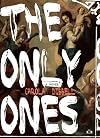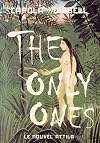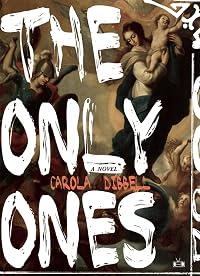
The Only Ones
by Carola Dibbell (Author), Miguel Cabrera (Cover artist)
On This Page
Description
"Inez wanders a post-pandemic world, strangely immune to disease, making her living by volunteering as a test subject. She is hired to provide genetic material to a grief-stricken, affluent mother, who lost all four of her daughters within four short weeks. This experimental genetic work is policed by a hazy network of governmental Ethics committees, and threatened by the Knights of Life, religious zealots who raze the rural farms where much of this experimentation is done. When the mother show more backs out at the last minute, Inez is left responsible for the product, which in this case is a baby girl, Ani. Inez must protect Ani, who is a scientific breakthrough, keeping her alive, dodging authorities and religious fanatics, and trying to provide Ani with the childhood that Inez never had, which means a stable home and an education" -- show lessTags
Recommendations


Member Reviews
This post-pandemic novel reminded me a lot of Peter Heller's The Dog Stars, in that the main character has a unique, not entirely coherent narrative voice that's a direct result of what has happened to them. In both cases, I started the book thinking "I'll never get through a few hundred pages written like this," but in both cases the linguistic idiosyncrasies quickly became transparent and natural to me.
In The Only Ones, a character who goes simply by "I" (for Inez) survives from day to day by doing work in dangerous areas that have been touched by the many viruses that have swept the globe, or by donating blood, teeth, or tissue samples. She is a "hardy," or someone who is immune, for reasons unknown, to every plague and virus she has show more so far encountered. Her life changes drastically when a former veterinarian dabbling in animal cloning wants to see whether her "hardiness" can be passed on to offspring, in a world where children are so scare that people stare at them on the streets.
This novel was issued by a fairly small publisher and isn't particularly being marketed as science fiction. It's one of those sci-fi books that feels very literary, like Margaret Atwood's The Handmaid's Tale or even Audrey Niffenegger's The Time Traveler's Wife. Definitely recommended. show less
In The Only Ones, a character who goes simply by "I" (for Inez) survives from day to day by doing work in dangerous areas that have been touched by the many viruses that have swept the globe, or by donating blood, teeth, or tissue samples. She is a "hardy," or someone who is immune, for reasons unknown, to every plague and virus she has show more so far encountered. Her life changes drastically when a former veterinarian dabbling in animal cloning wants to see whether her "hardiness" can be passed on to offspring, in a world where children are so scare that people stare at them on the streets.
This novel was issued by a fairly small publisher and isn't particularly being marketed as science fiction. It's one of those sci-fi books that feels very literary, like Margaret Atwood's The Handmaid's Tale or even Audrey Niffenegger's The Time Traveler's Wife. Definitely recommended. show less
The Only Ones is your average mother-daugther story, except the setting is a post-apocalyptic wasteland ravaged by disease and the daughter is a clone. I know you're thinking, thanks for the spoiler, but these details are all established very early in the story. I'm not giving too much away here.
Surprisingly, what works best about this story is the mind of the mother. She's a little slow at times. She's also extremely repetitive (“I will tell you this,” “maybe you are thinking,” “I don't even have to,” “I just,” “I must of,” “it's all I can...”, etc, etc.); it's neverending. Aside from her quirks, Inez is in many ways a typical mother with typical worries who has a way of earning the reader's sympathies. If she show more were someone you met in your daily life, you'd likely find her irritating or far from interesting, but given a window into her mind, she becomes your very own mother, the good and the bad. It is this universal mother that shapes this story and gives it all of its strengths. Sure there are raiders and philosophical questions about life and pages full of scientific explanation, as there are many intense moments, yet at its heart, The Only Ones is a story of a mother's heart. It's as simple as that. show less
Surprisingly, what works best about this story is the mind of the mother. She's a little slow at times. She's also extremely repetitive (“I will tell you this,” “maybe you are thinking,” “I don't even have to,” “I just,” “I must of,” “it's all I can...”, etc, etc.); it's neverending. Aside from her quirks, Inez is in many ways a typical mother with typical worries who has a way of earning the reader's sympathies. If she show more were someone you met in your daily life, you'd likely find her irritating or far from interesting, but given a window into her mind, she becomes your very own mother, the good and the bad. It is this universal mother that shapes this story and gives it all of its strengths. Sure there are raiders and philosophical questions about life and pages full of scientific explanation, as there are many intense moments, yet at its heart, The Only Ones is a story of a mother's heart. It's as simple as that. show less
(Reprinted from the Chicago Center for Literature and Photography [cclapcenter.com]. I am the original author of this essay, as well as the owner of CCLaP; it is not being reprinted illegally.)
The jacket copy for Carola Dibbell's The Only Ones claims that this book proves that there's still original things to be done in the post-apocalyptic genre; and damned if that didn't turn out to be spectacularly true, although I suppose we should expect no less from the always excellent Two Dollar Radio. A novel which continues Two Dollar's habit of stories told in the first-person voice of abused but smart girls, the thing that sets this apart is the fascinatingly incomplete narration of our confused hero, a New York teenage prostitute in a world show more whose population has been decimated by a series of pandemic diseases, who gets hired to go on a road trip by an out-of-state customer and only very slowly comes to understand what's going on. (For what it's worth, what's "going on" is that the girl is one of the few lucky people to have been born with a natural immunity to the diseases that have wracked the human race, and her "john" is a black-market doctor who's been hired by a desperate client to see if he can't make healthy babies out of the girl's genetic material; or at least, that's the gist I got from the addictively vague way this storyline is actually parceled out by the unknowing narrator in question.) Featuring a style that can best be called "blue-collar poetry," with information that is very slowly and very deliberately dolloped out bit by bit over 375 pages, this is an easily readable, page-turning genre thriller that doubles as a smart and philosophical indie-lit novel; and although admittedly you're going to have to already be a fan of post-apocalyptic stories to really love this one, if you are then this is an absolute must-have, one of the better books of this genre that I've ever read.
Out of 10: 8.9, or 9.8 for fans of post-apocalyptic literature show less
The jacket copy for Carola Dibbell's The Only Ones claims that this book proves that there's still original things to be done in the post-apocalyptic genre; and damned if that didn't turn out to be spectacularly true, although I suppose we should expect no less from the always excellent Two Dollar Radio. A novel which continues Two Dollar's habit of stories told in the first-person voice of abused but smart girls, the thing that sets this apart is the fascinatingly incomplete narration of our confused hero, a New York teenage prostitute in a world show more whose population has been decimated by a series of pandemic diseases, who gets hired to go on a road trip by an out-of-state customer and only very slowly comes to understand what's going on. (For what it's worth, what's "going on" is that the girl is one of the few lucky people to have been born with a natural immunity to the diseases that have wracked the human race, and her "john" is a black-market doctor who's been hired by a desperate client to see if he can't make healthy babies out of the girl's genetic material; or at least, that's the gist I got from the addictively vague way this storyline is actually parceled out by the unknowing narrator in question.) Featuring a style that can best be called "blue-collar poetry," with information that is very slowly and very deliberately dolloped out bit by bit over 375 pages, this is an easily readable, page-turning genre thriller that doubles as a smart and philosophical indie-lit novel; and although admittedly you're going to have to already be a fan of post-apocalyptic stories to really love this one, if you are then this is an absolute must-have, one of the better books of this genre that I've ever read.
Out of 10: 8.9, or 9.8 for fans of post-apocalyptic literature show less
'The Only Ones' started off 5-star strong.
I loved the character of Inez - her voice was incredibly well-developed and believable. She's an ultimately pragmatic individual, horribly uneducated, with a limit of vision that restricts her scope and her ability to understand things in a terrifying way. However, within her own sphere she is a tough, capable survivor. I absolutely loved the combination of her slangy Queens vocabulary and the half-understood medical argot which she has picked up through her years of working as an experimental subject. (The matter-of-fact way in which she repeats, "It was invasive" - bone-chilling and heartbreaking.)
In this falling-apart future NYC (and the whole world), plagues are everywhere, and babies are show more hard to come by. However, Inez seems to be immune to all the horrific ailments that are decimating the planet. When a vet-turned-amateur-geneticist-for-hire notices this immunity, a scheme is hatched to get immune babies out of Inez. However, since her reproductive system was destroyed by a previous medical experiment gone wrong, the only possibility may be cloning. And although this is a dystopic future full of weird and grotesque horrors, cloning seems to be the one 'unnatural' things that society still is repulsed by (this is a major weakness of the book, in my opinion.)
When the client who'd agreed to 'purchased' the cloned babies pulls out of the deal, forcing Inez to take a baby in an agreement which seems to exist just to further the plot, at first I was impressed. Inez' attempt to care for an infant, without any experience or planning for motherhood, is grueling and more realistic than any other depiction of taking care of a baby during an apocalypse that I've ever read.
However, then the book gets into what I feel is the author's main reason for writing the book - and that's where it lost me.
The story begins to work on a metaphorical level, exploring the issues of motherhood and identity. Inez' daughter is a clone of herself, and she's terrified, from what she's been told, that her daughter may in some way BE herself. It gets into some depth exploring how parents might emotionally invest their children with their own (the parents') identity. It also goes on at length (a lot of length) about the self-sacrifice of parents, the lengths they're willing to go to for their children, and how the children are inherently ungrateful, as they are incapable of seeing how and why such things might be a sacrifice. It also acknowledges that these sacrifices may be misguided.
This part of the book is undeniably well-done. However, it was also unspeakably tedious. I am just not that interested in the travails of motherhood, and I am not at all interested in the details of efforts to get a child into the best school possible. Not even in an apocalypse.
Read for post-apocalyptic book club. show less
I loved the character of Inez - her voice was incredibly well-developed and believable. She's an ultimately pragmatic individual, horribly uneducated, with a limit of vision that restricts her scope and her ability to understand things in a terrifying way. However, within her own sphere she is a tough, capable survivor. I absolutely loved the combination of her slangy Queens vocabulary and the half-understood medical argot which she has picked up through her years of working as an experimental subject. (The matter-of-fact way in which she repeats, "It was invasive" - bone-chilling and heartbreaking.)
In this falling-apart future NYC (and the whole world), plagues are everywhere, and babies are show more hard to come by. However, Inez seems to be immune to all the horrific ailments that are decimating the planet. When a vet-turned-amateur-geneticist-for-hire notices this immunity, a scheme is hatched to get immune babies out of Inez. However, since her reproductive system was destroyed by a previous medical experiment gone wrong, the only possibility may be cloning. And although this is a dystopic future full of weird and grotesque horrors, cloning seems to be the one 'unnatural' things that society still is repulsed by (this is a major weakness of the book, in my opinion.)
When the client who'd agreed to 'purchased' the cloned babies pulls out of the deal, forcing Inez to take a baby in an agreement which seems to exist just to further the plot, at first I was impressed. Inez' attempt to care for an infant, without any experience or planning for motherhood, is grueling and more realistic than any other depiction of taking care of a baby during an apocalypse that I've ever read.
However, then the book gets into what I feel is the author's main reason for writing the book - and that's where it lost me.
The story begins to work on a metaphorical level, exploring the issues of motherhood and identity. Inez' daughter is a clone of herself, and she's terrified, from what she's been told, that her daughter may in some way BE herself. It gets into some depth exploring how parents might emotionally invest their children with their own (the parents') identity. It also goes on at length (a lot of length) about the self-sacrifice of parents, the lengths they're willing to go to for their children, and how the children are inherently ungrateful, as they are incapable of seeing how and why such things might be a sacrifice. It also acknowledges that these sacrifices may be misguided.
This part of the book is undeniably well-done. However, it was also unspeakably tedious. I am just not that interested in the travails of motherhood, and I am not at all interested in the details of efforts to get a child into the best school possible. Not even in an apocalypse.
Read for post-apocalyptic book club. show less
This is an unusual dystopian read. About half-way through it becomes a story of day to day motherhood, which is not usually my thing, but I enjoyed the voice of the protagonist and was invested and wanted to know how things played out.
If covid is a trigger for you, this book should be a hard pass. It was published in 2015 but some of it is uncanny (a never-ending pandemic with different new strains, surprise when children show up at school without masks, etc.)
If covid is a trigger for you, this book should be a hard pass. It was published in 2015 but some of it is uncanny (a never-ending pandemic with different new strains, surprise when children show up at school without masks, etc.)
Heard audiobook...the pacing and intonation of the reader, Jennifer Hubbard, greatly added to the pleasurre of this book.
The story traced the development of an orphaned young adult from selling her body (valued for it's disease-resistant "hardy" genes) to seeing her own life as having some value. At some point we hear that she never had any friends, was basically shut up in a cellar for years, and only figures out about the world around her from others in her same social strata.
The basic story combines future shade-tree science in a world falling apart (due to unrelenting population decimation from epidemics) with current prejudiced and classist social structure. And while the story had merit, I was more struck by how all the hardships show more Inez goes through, and the inner strength and determination she facees them with, and her constant fascination with learning something whenever she has a chance. show less
The story traced the development of an orphaned young adult from selling her body (valued for it's disease-resistant "hardy" genes) to seeing her own life as having some value. At some point we hear that she never had any friends, was basically shut up in a cellar for years, and only figures out about the world around her from others in her same social strata.
The basic story combines future shade-tree science in a world falling apart (due to unrelenting population decimation from epidemics) with current prejudiced and classist social structure. And while the story had merit, I was more struck by how all the hardships show more Inez goes through, and the inner strength and determination she facees them with, and her constant fascination with learning something whenever she has a chance. show less
This is really the first dystopian novel that I have ever read. I had a hard time at the beginning with the language, as I am not familiar with this genre.
Inez creates Ani, who ends up being her "daughter" after a deal to sell her to an individual doesn't work out. Inez raises Ani and celebrates every day that she is alive.
This really felt more to me about a story about the love of parents, regardless of how or when a child is born.
Inez creates Ani, who ends up being her "daughter" after a deal to sell her to an individual doesn't work out. Inez raises Ani and celebrates every day that she is alive.
This really felt more to me about a story about the love of parents, regardless of how or when a child is born.
Members
- Recently Added By
Lists

2016 Hugo Eligible Novels
90 works; 32 members
Author Information
All Editions
Awards and Honors
Awards
Distinctions
Common Knowledge
- Original publication date
- 2015-06-15
Classifications
Statistics
- Members
- 167
- Popularity
- 196,524
- Reviews
- 10
- Rating
- (3.85)
- Languages
- English, French
- Media
- Paper, Audiobook, Ebook
- ISBNs
- 11
- ASINs
- 1