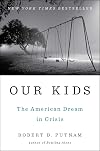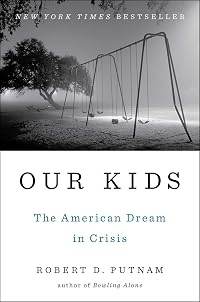
Our Kids: The American Dream in Crisis
by Robert D. Putnam
On This Page
Description
"A groundbreaking examination of the growing inequality gap from the bestselling author of Bowling Alone: why fewer Americans today have the opportunity for upward mobility. It's the American dream: get a good education, work hard, buy a house, and achieve prosperity and success. This is the America we believe in--a nation of opportunity, constrained only by ability and effort. But during the last twenty-five years we have seen a disturbing "opportunity gap" emerge. Americans have always show more believed in equality of opportunity, the idea that all kids, regardless of their family background, should have a decent chance to improve their lot in life. Now, this central tenet of the American dream seems no longer true or at the least, much less true than it was. Robert Putnam--about whom The Economist said, "his scholarship is wide-ranging, his intelligence luminous, his tone modest, his prose unpretentious and frequently funny"--offers a personal but also authoritative look at this new American crisis. Putnam begins with his high school class of 1959 in Port Clinton, Ohio. By and large the vast majority of those students--"our kids"--went on to lives better than those of their parents. But their children and grandchildren have had harder lives amid diminishing prospects. Putnam tells the tale of lessening opportunity through poignant life stories of rich and poor kids from cities and suburbs across the country, drawing on a formidable body of research done especially for this book. Our Kids is a rare combination of individual testimony and rigorous evidence. Putnam provides a disturbing account of the American dream that should initiate a deep examination of the future of our country"-- "The best-selling author of Bowling Alone offers a groundbreaking examination of the American Dream in crisis: how and why opportunities for upward mobility are diminishing, jeopardizing the prospects of an ever larger segment of Americans"-- show lessTags
Recommendations




Member Reviews
Shattering Insight
America is becoming rigid. It is settling into immobile classes. The classes don’t mix, not in neighborhoods, not in schools, not in marriage and not in work. This is precisely the opposite of the ideals of the nation and the opposite of the way it was just 60 years ago. Usually, it’s hard to see the trends when you’re immersed in them, but this is all pretty clear in the USA in 2015. Putnam explores it through the proxy of his own experience, and intensive (sometimes horrifying) interviews with people in key communities from coast to coast. In his hometown, a rustbelt community, everyone in his generation did far better than their parents. Now, crime, poverty, underemployment, unemployment and minimal prospects show more for improvement are the rule. This even transcends race as the issue of the day. Blacks divide by class just as whites do. The upper classes live separate, relatively charmed lives of unlimited prospects and opportunities. The rest are lucky to make it through high school to a job of any kind. Upward mobility is all but out of the question.
Putnam examines the family, the community, the school and the support network. He finds unlimited proof that in every case. The upper classes are moving forward with ease, while the lower classes and the poor are trapped in a world of violence, debt, and lack of resources. Even their social networks lack the kinds of weak ties that allow rich kids’ parents to make a phone call for them.
There is all kinds of irony. The principle of scarcity means the more uncertain parents are about income, jobs, and housing, the less attention they can pay to their children. Despite being around more, the stress level and the frustration level mean less parental guidance, more violence and abuse, and of course that violence, being the norm, is carried on by the children. Their experience of life is summed up as “Love gets you hurt; trust gets you killed”. Survival means keeping to yourself. Don’t get involved in anyone else’s business. This is the exact opposite of the 20th century, when neighbors kept watch, and everyone chipped in to help. Today, no good deed goes unpunished is the philosophical backstop of most Americans.
Families no longer provide the boost they did to young minds. Working and poor classes have fewer dinners together, where events and issues get aired. Their children hear far fewer words, and spend less time in after school (or any) activities. While rich kids get more face time, poor kids get more screen time Only 23% of lower class children start school already knowing the alphabet, vs 77% of the better educated classes. This chasm was not a result of a hippie revolution in the 60s. Family breakdown is a result of joblessness and lower expectations beginning in the 80s. Today, the poor and the working poor get married less often. They start families every time they start a new relationship, devoting less time to their children in total. Teen pregnancies are down significantly, but once out in the world, additional out of wedlock children are the norm.
In school, socio-economic status has become more important than test scores in determining who graduates from college. The numbers are stark. Poorer kids participate in fewer after school activities, often because of pay to play, which their parents can’t afford. Marching band is totally out of the question unless you come from wealth. Equal access in school has become quaint history. Lower class parents, having little or no experience with these activities, don’t push their kids into them like soccer moms do. And studies show gigantic gains in income, networks and long term health for those who do participate. Informal mentoring doesn’t exist for the poor kids; their parents have no support network to consult. Disengagement and retreat to social isolation affects the lower classes disproportionately. And disengagement is what the internet society is all about. The book is filled with dozens of ugly charts that all decline or point downward.
The result is a totally different America, dealing with unnecessary poverty, childhood poverty, additional taxpayer burden, Lost competitiveness, lost earnings, lower consumer spending, lower growth, and of course, the dissolution of social cohesion. And near zero economic mobility for most. We are becoming two countries in the style of the kingdoms of old. The classes don’t meet, mix, or trade, despite being just on the other side of the interstate highway.
Putnam points to himself, revealing he could not imagine what life is like for the lower classes, because his generation was mobile and escaped them. Anyone reading this book will also likely be from the more successful class and will similarly have zero experience with the mean world of “the 99%”. It makes for a gripping, shocking, appalling read. There is too much to say about this important book. Read it and it will change you.
David Wineberg show less
America is becoming rigid. It is settling into immobile classes. The classes don’t mix, not in neighborhoods, not in schools, not in marriage and not in work. This is precisely the opposite of the ideals of the nation and the opposite of the way it was just 60 years ago. Usually, it’s hard to see the trends when you’re immersed in them, but this is all pretty clear in the USA in 2015. Putnam explores it through the proxy of his own experience, and intensive (sometimes horrifying) interviews with people in key communities from coast to coast. In his hometown, a rustbelt community, everyone in his generation did far better than their parents. Now, crime, poverty, underemployment, unemployment and minimal prospects show more for improvement are the rule. This even transcends race as the issue of the day. Blacks divide by class just as whites do. The upper classes live separate, relatively charmed lives of unlimited prospects and opportunities. The rest are lucky to make it through high school to a job of any kind. Upward mobility is all but out of the question.
Putnam examines the family, the community, the school and the support network. He finds unlimited proof that in every case. The upper classes are moving forward with ease, while the lower classes and the poor are trapped in a world of violence, debt, and lack of resources. Even their social networks lack the kinds of weak ties that allow rich kids’ parents to make a phone call for them.
There is all kinds of irony. The principle of scarcity means the more uncertain parents are about income, jobs, and housing, the less attention they can pay to their children. Despite being around more, the stress level and the frustration level mean less parental guidance, more violence and abuse, and of course that violence, being the norm, is carried on by the children. Their experience of life is summed up as “Love gets you hurt; trust gets you killed”. Survival means keeping to yourself. Don’t get involved in anyone else’s business. This is the exact opposite of the 20th century, when neighbors kept watch, and everyone chipped in to help. Today, no good deed goes unpunished is the philosophical backstop of most Americans.
Families no longer provide the boost they did to young minds. Working and poor classes have fewer dinners together, where events and issues get aired. Their children hear far fewer words, and spend less time in after school (or any) activities. While rich kids get more face time, poor kids get more screen time Only 23% of lower class children start school already knowing the alphabet, vs 77% of the better educated classes. This chasm was not a result of a hippie revolution in the 60s. Family breakdown is a result of joblessness and lower expectations beginning in the 80s. Today, the poor and the working poor get married less often. They start families every time they start a new relationship, devoting less time to their children in total. Teen pregnancies are down significantly, but once out in the world, additional out of wedlock children are the norm.
In school, socio-economic status has become more important than test scores in determining who graduates from college. The numbers are stark. Poorer kids participate in fewer after school activities, often because of pay to play, which their parents can’t afford. Marching band is totally out of the question unless you come from wealth. Equal access in school has become quaint history. Lower class parents, having little or no experience with these activities, don’t push their kids into them like soccer moms do. And studies show gigantic gains in income, networks and long term health for those who do participate. Informal mentoring doesn’t exist for the poor kids; their parents have no support network to consult. Disengagement and retreat to social isolation affects the lower classes disproportionately. And disengagement is what the internet society is all about. The book is filled with dozens of ugly charts that all decline or point downward.
The result is a totally different America, dealing with unnecessary poverty, childhood poverty, additional taxpayer burden, Lost competitiveness, lost earnings, lower consumer spending, lower growth, and of course, the dissolution of social cohesion. And near zero economic mobility for most. We are becoming two countries in the style of the kingdoms of old. The classes don’t meet, mix, or trade, despite being just on the other side of the interstate highway.
Putnam points to himself, revealing he could not imagine what life is like for the lower classes, because his generation was mobile and escaped them. Anyone reading this book will also likely be from the more successful class and will similarly have zero experience with the mean world of “the 99%”. It makes for a gripping, shocking, appalling read. There is too much to say about this important book. Read it and it will change you.
David Wineberg show less
Important topic, beautifully researched, dully written. Professor Putnam is such a smart, thoughtful person. I wish he didn't write like we was laying out the contents of a suitcase. He could stand to bring the same fire and passion to his words that I hear from him when he speaks publicly.
Last year I read this author's now-20 year old classic ("Bowling Alone") about waning social ties in America, and this is a related study that goes in quite a different direction. The author and research assistants conducted interviews with teenage/college-age kids and their parents in communities around the country, including his hometown of Port Clinton, Ohio to contrast this generation's prospects for stability in income and employment vs. his own. In short: the barriers are much bigger and more systemic today, ensuring that only the kids from two-parent households with higher than average incomes are guaranteed a good start to their adulthoods. Much like other sociological titles, I would have liked to see a little more in the show more solutions department, but it was still worthwhile. show less
Hands down one of the best books I've ever read. Putnam combines case studies with data to paint a heartbreaking picture of just how deeply poverty affects our kids. I dare you to read this book and not come away looking at issues in a different light resulting in a renewed sense of purpose. A must read for anybody who cares about the future of our society.
Our Kids by Robert Putnam is a powerful book that highlights an ever-worsening problem. However, I feel like the author was merely offering up hard evidence for cultural trends that most of us already intuitively know. The truth is evident for those who are aware of this generational regression. I'll admit that after a while I was skimming through the individual profiles. These were real people supposedly and yet their stories seemed like clichés. Also, did anyone find Putnam's descriptions of life in the 1950's a shade too rosy?
The most interesting takeaway for me—and again, hardly surprising—was that one's childhood surroundings do have a significant effect on growth. I tend to favor the nature argument over the nurture one, but show more environment does play a role. And a bad environment is not where you want to be. An impoverished child attending public school with other mostly impoverished children is statistically going to do worse, much worse, than a middle class child surrounded by middle class peers. This is also true of a child's life at home. show less
The most interesting takeaway for me—and again, hardly surprising—was that one's childhood surroundings do have a significant effect on growth. I tend to favor the nature argument over the nurture one, but show more environment does play a role. And a bad environment is not where you want to be. An impoverished child attending public school with other mostly impoverished children is statistically going to do worse, much worse, than a middle class child surrounded by middle class peers. This is also true of a child's life at home. show less
Putnam's (born 1941) generation grew up in the post-war period and experienced the economic boom and opportunities for upwards social mobility of that era. Their kids, the subjects of this book, have not done as well, however. Drawing mostly on interview material, Putnam tells the stories of many struggling families and how a class divide is growing. That divide is partly economic, but the cultural dimension is just as important, in particular the one having to do with parental behavior. Resourceful parents plan when to have kids, manage to exploit all opportunities, prevent risks, and raise their children to have the right attitudes, while parents with bad parenting styles don't. Residential and social sorting is part of the problem - show more kids of not-so-great parents get less exposure to other good role-models than before. Putnam is concerned, first on the part of these people themselves, but also on part of democratic governance, as "the opportunity gap undermines political equality and thus democratic legitimacy (p.239)", and "[a]n inert and atomized mass of alienated and estranged citizens, disconnected from social institutions (p. 239)" might give rise to "antidemocratic extremism (p. 239)" when pressured, as in Germany in the 1930s. He stresses that we have not seen the worst yet, as he believes that this type of inequality is still growing, and that we will see that when today's kids become parts of the labor and education statistics. Recommended. show less
This book offered a startling view on the state of the American dream and the future of our kids. Ultimately, I enjoyed how much research was provided in this, and that it wasn't all exposition and editorialized. I understand that this is an incredibly intricate issues, however I do think so important pieces were left out, including the sexism rampant in our society. After reading a few reviews and questions asking if there was a "conservative version" of this book, i was worried that this book would be full of opinions with little base other than political affiliation, but it was very matter of fact about the state of affairs and the urgency for action.
Members
- Recently Added By
Published Reviews
ThingScore 58
"Putnam has made a real contribution in calling our attention to a situation of profoundly divergent experiences for different classes that Americans ought to find morally unacceptable, as he obviously does. It’s especially useful that he offers so much detail about the social aspects of inequality, which haven’t had the broad discussion they deserve. But many of his readers will conclude show more from his argument that the heart of the problem is a decline in individual (not overall) mobility from a previously high level, and that the heart of the solution is to shore up the social capital in less well-off communities. Both propositions are overstated, and by making them so insistently Putnam risks using the attention he commands to narrow the discussion about what to do now to a set of possibilities that are far too limited for a problem this big." show less
added by elenchus
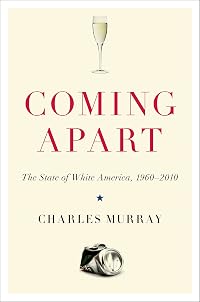
"Scholars have written about class gaps for years. Charles Murray, a more conservative analyst than Putnam, covered similar terrain in his 2012 book Coming Apart: The State of White America, 1960-2010 (Crown Forum). But two things distinguish Our Kids. One is its scope. Putnam combines a panoramic synthesis of scholarly literature (on family structure, parenting, schooling, and community life) show more with real stories about growing up in America today (culled from ethnographic interviews with upper- and lower-class families around the country).
The second is its author’s personal crusade. "
"The basic argument: To do well in life, kids need family stability, good schools, supportive neighbors, and parental investment of time and money. All of those advantages are increasingly available to the Miriams of the world and not to the Mary Sues, a disparity that Putnam calls "the opportunity gap."' show less
The second is its author’s personal crusade. "
"The basic argument: To do well in life, kids need family stability, good schools, supportive neighbors, and parental investment of time and money. All of those advantages are increasingly available to the Miriams of the world and not to the Mary Sues, a disparity that Putnam calls "the opportunity gap."' show less
added by jodi
"You’d never know from “Our Kids” just how radically income inequality has grown; how much influence the wealthy now exercise in politics; and how well they protect their stakes. (We do hear a lot, by contrast, about the importance of family dinners.) To frame inequality, as Putnam largely does, as a product of inadequate empathy and weakened civic institutions is to overlook the extent show more to which it’s also a story about interests and power.
Where Putnam succeeds is in describing the diverging life chances of children in rich and poor families.""
"The recent growth of inequality, which began in the 1970s, would be glimpsed better a few rungs up the ladder, among the besieged working class. Oddly in a book about inequality we never learn how much money any of the families have." show less
Where Putnam succeeds is in describing the diverging life chances of children in rich and poor families.""
"The recent growth of inequality, which began in the 1970s, would be glimpsed better a few rungs up the ladder, among the besieged working class. Oddly in a book about inequality we never learn how much money any of the families have." show less
added by jodi
Lists

Non-Fiction Worth Reading
1,016 works; 262 members

Books for Educators
164 works; 6 members

Best 21st Century Books (So Far)
670 works; 86 members
Author Information

Robert D. Putnam is the Peter and Isabel Malkin Professor of Public Policy at Harvard University. A leading humanist and a renowned scientist, he has consulted for the last four U.S. Presidents. He has written fourteen books including Better Together: Restoring the American Community, Democracies in Flux: The Evolution of Social Capital in show more Contemporary Society, and Our Kids: The American Dream in Crisis. (Bowker Author Biography) show less
All Editions
Some Editions
Awards and Honors
Distinctions
Notable Lists
Common Knowledge
- Related movies
- Our Kids (2019 | IMDb)
- Canonical DDC/MDS
- 305.5130973
- Canonical LCC
- HN90.S65
Classifications
- Genres
- Sociology, Economics, Nonfiction, General Nonfiction, History
- DDC/MDS
- 305.5130973 — Society, government, & culture Social sciences, sociology & anthropology Social group - Age, Gender, Ethnicity People by social and economic levels Theory
- LCC
- HN90 .S65 — Social sciences Social history and conditions. Social problems. Social reform Social history and conditions. Social problems. By region or country
- BISAC
Statistics
- Members
- 587
- Popularity
- 50,070
- Reviews
- 15
- Rating
- (4.10)
- Languages
- English
- Media
- Paper, Audiobook, Ebook
- ISBNs
- 7
- ASINs
- 4