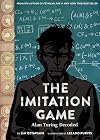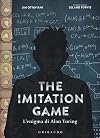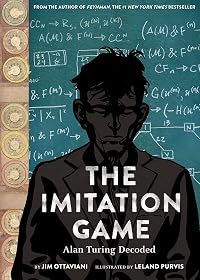
The Imitation Game: Alan Turing Decoded
by Jim Ottaviani
On This Page
Description
Award winning authors Jim Ottaviani and Leland Purvis present a historically accurate graphic novel biography of English mathematician and scientist Alan Turing in The Imitation Game.English mathematician and scientist Alan Turing (1912–1954) is credited with many of the foundational principles of contemporary computer science. The Imitation Game presents a historically accurate graphic novel biography of Turing's life, including his groundbreaking work on the fundamentals of cryptography show more and artificial intelligence. His code breaking efforts led to the cracking of the German Enigma during World War II, work that saved countless lives and accelerated the Allied defeat of the Nazis. While Turing's achievements remain relevant decades after his death, the story of his life in post-war Europe continues to fascinate audiences today.
Award-winning duo Jim Ottaviani (the #1 New York Times bestselling author of Feynman and Primates) and artist Leland Purvis (an Eisner and Ignatz Award nominee and occasional reviewer for the Comics Journal) present a factually detailed account of Turing's life and groundbreaking research—as an unconventional genius who was arrested, tried, convicted, and punished for being openly gay, and whose innovative work still fuels the computing and communication systems that define our modern world. Computer science buffs, comics fans, and history aficionados will be captivated by this riveting and tragic story of one of the 20th century's most unsung heroes.
. show less
Tags
Recommendations




















Member Reviews
I was hoping this book would be an excellent companion of sorts to the recent film, but it pales in comparison. Like most of Ottaviani's biographies of scientists, this volume is packed with facts but fails to really bring the subject alive for me. And the conceit of trying to frame the narration of the book as an actual imitation game seems like a clever idea but really does nothing but force the narrative into a format that continually distracts.
Once again, a biographical comic crossed my desk and captured my attention. This time, Alan Turing. I knew a little about him: about his genius, his contributions to cryptography during WWII, his sexuality, public exposure, trial, punishment, and his (apparent) suicide. I didn't realize his impact on modern computing, that his theories formed the basis for what we know about computers and artificial intelligence. I had no idea he was an Olympic class runner. I didn't know that his death by suicide has been in question, and may in fact have been a tragic accident. I recently read a graphic biography of Stephen Hawking by this author, and he has a flair for bringing stories of eccentric geniuses to life, and making them accessible to show more younger readers. These esoteric scientific and mathematical concepts are so far beyond my own intellectual scope that reading them in this format allows me to (almost) understand them. And knowing what happened to Turing allows me to gain a greater understanding of the world. As the author's note concludes: "I wish I lived in a world that benefited from decades more of Alan Turing, alive and well, thinking and discovering." We need deep thinkers, people who can see beyond the world as it exists, now more than ever. show less
Graphic novel "biopic" about the life of Alan Turing, without with we probably wouldn't be looking at things on computers today. To say nothing of the fact that we probably wouldn't have won WWII. Tragically, he was convicted of the crime of being gay in 1952. He was forced to endure chemical castration and died in 1954 of cyanide poisoning. There's still debate on whether it was accidental or suicide. He was only 41. This was an unintentional selection for Pride Month, but I'm glad I read it.
This biographical graphic novel focuses on Alan Turing, a brilliant mathematician and logician who could theoretically figure out a bunch of stuff way over my head, and was instrumental in the Bletchley Park efforts at decoding the German system Enigma during World War 2. The structure of the narrative gives different people in Turing's life turns about talking about him - his mother, school friends, co-workers - and took a little getting used to as I had to pay attention to who was narrating at any given time. Well done and intrigued me enough to want to read a full length biography.
Even after reading the massive biography by Andrew Hodges, and seeing the movie “The Imitation Game,” I am still eager to learn more about the life and work of Alan Turing. “The Imitation Game: Alan Turing Decoded” is a graphic novel (biography) somewhere between those two, and continues to tell his story in an entertaining and informative manner. This medium, too, is one I am growing very fond of, for its creativity and ease of presentation, in a series of frames like comics, its ability to demonstrate in ways that written text alone cannot. So, do we need more biographies of this man? Yes, and “The Imitation Game” is one of them.
One innovation in this presentation is that people who knew Alan appear to be interviewed, show more though by whom is not shown. More than any of these people is Alan’s mother, and in memories or flashbacks, we see the people relive their experiences, and Alan himself is the central narrator. At first, I wondered if some pages were missing, the sequence seemed jumpy, and, sketchy (pun intended). If you were not familiar with Turing, many allusions might not make sense, or come across as inside jokes (or similar). Some of the more technical ideas are given more explanation, which is not bad. Another trend is the dodging around his homosexuality, which is more openly discussed as the book goes along – an interesting technique, I like how that was done. Also, those who worked at Bletchley Park during World War II remain unable to speak of their work, which carries historical significance to Turing’s legacy.
Sara Turing, Alan’s mother, is inexplicably interrupted and asked to leave; then, one of the “computers” or “wrens” – women who operated the machines at Bletchley – is brought in, followed by Joan Clarke, Alan’s co-worker and one-time fiancé; Don Bayley at Henslope Park, where Turing went after his second trip to the U.S. and his departure from Bletchley – he was working on radio-transmitted voice decryption at that time; his friends, David Champernowne and Robin Gandy, visiting him at the University of Manchester, after the war; Arnold Murray, whom Alan took a romantic interest in, yet who may not have robbed Alan but blamed someone else he was seeing, the whole incidence leading to their arrest and Alan’s unjust punishment; and Alan’s brother John. Some people even appear as ghosts. Dear Professor Max Newman, one of Alan’s mentors and colleagues, was called in to the court as a character reference, as was chess champion and fellow code-breaker Hugh Alexander, but again, it was Alan’s mother more than anyone who had something to say. I have not read her biography of her son, but I would like to, to further complete the picture. With so many accounts coming forth, there are inconsistencies. For example, Sara Turing says Alan never returned to the U.S. after his time at Princeton, but during the war, he was a sort of ambassador, working with scientists at Bell Laboratories. Also, I don’t know if he wrote quite as many letters in these times as people felt he did (I could be wrong), and he did really like literature and theatre, especially works by George Bernard Shaw. The “Keep Calm and Carry On” signs in background are nice touch, but I thought those weren’t used at that time; however, the activity was off the record, so who knows (and I could be wrong again). But this book picks up on things that the long biography and the movie did not, and focuses on different people, such as Dilly Knox, and events like Winston Churchill’s visit to Bletchley, where Joan Clarke explained their whole operating process. For accented visual and auditory plays, the “bombe” machines are churning away, and generating heat too, such that the computers often worked in their underwear. This book then, like Alan himself, does have some humor.
One thing I find so fascinating, and elegant, about Turing is how the questions that burned inside him came to be part of all the work he pursued or took part in. “The Imitation Game” is such an appropriate title, a thread running through everything – and, Alan loved games, from chess to those he invented, described here like his other experiments. In the author’s note is a fair suggestion to maybe not read this as “pure and objective history,” but it is a fair representation from many perspectives. This is a well-researched and well-crafted book that is a welcome addition to our understanding of Alan Turing. He had a beautiful mind, a beautiful life; so brilliant, so human, and, so tragic and triumphant.
Note: this e-book was provided through Net Galley. For more reviews, follow my blog at http://matt-stats.blogspot.com/ show less
One innovation in this presentation is that people who knew Alan appear to be interviewed, show more though by whom is not shown. More than any of these people is Alan’s mother, and in memories or flashbacks, we see the people relive their experiences, and Alan himself is the central narrator. At first, I wondered if some pages were missing, the sequence seemed jumpy, and, sketchy (pun intended). If you were not familiar with Turing, many allusions might not make sense, or come across as inside jokes (or similar). Some of the more technical ideas are given more explanation, which is not bad. Another trend is the dodging around his homosexuality, which is more openly discussed as the book goes along – an interesting technique, I like how that was done. Also, those who worked at Bletchley Park during World War II remain unable to speak of their work, which carries historical significance to Turing’s legacy.
Sara Turing, Alan’s mother, is inexplicably interrupted and asked to leave; then, one of the “computers” or “wrens” – women who operated the machines at Bletchley – is brought in, followed by Joan Clarke, Alan’s co-worker and one-time fiancé; Don Bayley at Henslope Park, where Turing went after his second trip to the U.S. and his departure from Bletchley – he was working on radio-transmitted voice decryption at that time; his friends, David Champernowne and Robin Gandy, visiting him at the University of Manchester, after the war; Arnold Murray, whom Alan took a romantic interest in, yet who may not have robbed Alan but blamed someone else he was seeing, the whole incidence leading to their arrest and Alan’s unjust punishment; and Alan’s brother John. Some people even appear as ghosts. Dear Professor Max Newman, one of Alan’s mentors and colleagues, was called in to the court as a character reference, as was chess champion and fellow code-breaker Hugh Alexander, but again, it was Alan’s mother more than anyone who had something to say. I have not read her biography of her son, but I would like to, to further complete the picture. With so many accounts coming forth, there are inconsistencies. For example, Sara Turing says Alan never returned to the U.S. after his time at Princeton, but during the war, he was a sort of ambassador, working with scientists at Bell Laboratories. Also, I don’t know if he wrote quite as many letters in these times as people felt he did (I could be wrong), and he did really like literature and theatre, especially works by George Bernard Shaw. The “Keep Calm and Carry On” signs in background are nice touch, but I thought those weren’t used at that time; however, the activity was off the record, so who knows (and I could be wrong again). But this book picks up on things that the long biography and the movie did not, and focuses on different people, such as Dilly Knox, and events like Winston Churchill’s visit to Bletchley, where Joan Clarke explained their whole operating process. For accented visual and auditory plays, the “bombe” machines are churning away, and generating heat too, such that the computers often worked in their underwear. This book then, like Alan himself, does have some humor.
One thing I find so fascinating, and elegant, about Turing is how the questions that burned inside him came to be part of all the work he pursued or took part in. “The Imitation Game” is such an appropriate title, a thread running through everything – and, Alan loved games, from chess to those he invented, described here like his other experiments. In the author’s note is a fair suggestion to maybe not read this as “pure and objective history,” but it is a fair representation from many perspectives. This is a well-researched and well-crafted book that is a welcome addition to our understanding of Alan Turing. He had a beautiful mind, a beautiful life; so brilliant, so human, and, so tragic and triumphant.
Note: this e-book was provided through Net Galley. For more reviews, follow my blog at http://matt-stats.blogspot.com/ show less
Enjoyable graphic version of the Turing story. Drawn from, but much easier to absorb than Hodges’ dense “Enigma” book. Good, sensitive depiction of facial expression and posture to convey sentiments not said or even thought explicitly – in the drawings of Alan and his mother particularly.
The Imitation Game was a very interesting take on Alan Turing's life. I was familiar with some of his work in computer science but not on what exactly he did. Ottaviani clearly did a great deal of research to make the story as accurately as possible. What really made the story interesting, though, was the story of his personal life. How the government handled this at the time is clearly something many in 2016 could not possibly fathom. Turing was humiliated and how the story ended proved just how much that affected him. The art was also well done. This wasn't a superhero story so there was no need for the bright colors and crisp drawing. This story felt real and the art perfectly complimented that.
Members
- Recently Added By
Lists

Books Read in 2016
4,666 works; 199 members

Historical Fiction Books
99 works; 5 members

World War II Books
34 works; 1 member

Books Read in 2023
5,547 works; 145 members
Author Information

21+ Works 3,181 Members
Awards and Honors
Awards
Distinctions
Common Knowledge
- Canonical title
- The Imitation Game: Alan Turing Decoded
- Original title
- The Imitation Game
- Original publication date
- 2014-06 (online) (online); 2016-03-22 (print) (print)
- People/Characters
- Alan Turing; Ethel Turing; Dilly Knox; Joan Clarke; Ian Fleming; Winston Churchill (show all 9); Donald Bayley; Max Newman; Arnold Murray
- Important places
- Bletchley Park, Bletchley, Buckinghamshire, England, UK; University of Cambridge, Cambridge, Cambridgeshire, England, UK; Princeton University, Princeton, New Jersey, USA; University of Manchester
- Important events
- World War II
- First words
- Yes, I can hear him. Who couldn't?
- Last words
- (Click to show. Warning: May contain spoilers.)Mrs. Clayton, his housekeeper, found his body the next evening.
- Original language
- English
- Disambiguation notice
- This is the graphic novel biography of Alan Turing, originally published on Tor.com (in 2014), here:
... (show all)ew">http://www.tor.com/stories/2014/06/th...
The print edition was published in 2016 by Abrams ComicArts.
Classifications
Statistics
- Members
- 221
- Popularity
- 147,661
- Reviews
- 11
- Rating
- (3.82)
- Languages
- English, Italian, Spanish
- Media
- Paper, Ebook
- ISBNs
- 6
- ASINs
- 1