On This Page
Description
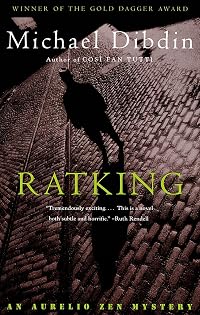
In this masterpiece of psychological suspense, Italian Police Commissioner Aurelio Zen is dispatched to investigate the kidnapping of Ruggiero Miletti, a powerful Perugian industrialist. But nobody much wants Zen to succeed: not the local authorities, who view him as an interloper, and certainly not Miletti's children, who seem content to let the head of the family languish in the hands of his abductors -- if he's still alive. Was Miletti truly the victim of professionals? Or might his show more kidnapper be someone closer to home: his preening son Daniele, with his million-lire wardrobe and his profitable drug business? His daughter, Cinzia, whose vapid beauty conceals a devastating secret? The perverse Silvio, or the eldest son Pietro, the unscrupulous fixer who manipulates the plots of others for his own ends? As Zen tries to unravel this rat's nest of family intrigue and official complicity, Michael Dibdin gives us one of his most accomplished thrillers, a chilling masterpiece of police procedure and psychological suspense. show lessTags
Recommendations











































Member Reviews
In Ratking, by Michael Dibdin, Aurelio Zen, a disgraced Venetian police commissioner now assigned to a dreary housekeeping function in Rome, is unexpectedly sent to Perugia to take over the case of a very wealthy man who has been kidnapped and whose family is not cooperating with the police in their attempts to resolve the matter. He is thrown into this tense situation with very little information, and everybody around him either resents him for usurping their roles or has something to hide from him or has a reason to mislead him, but Zen has no choice but to somehow muddle his way through all their machinations. When a family go-between is found dead in the trunk of a car, the stakes become even higher, but the barriers placed in front show more of Zen still remain, seemingly, insurmountable.... This is the first in a long (11-book) series about this very complex copper, a character I only discovered from a recent BBC series (featuring Rufus Sewell as Zen). I'm glad I did; Dibdin's writing is very evocative, and he takes the time to build the story rather than hastening the reader along. Indeed, I found this novel almost stressful to read because Dibdin conveys Zen's confusion and sense of being a fish out of water so well. I can't wait to read more books in the series; recommended! show less
Michael Dibdin introduced Italian police detective Aurelio Zen in the Ratking and carried off the 1988 Crime Writers' Association Gold Dagger Award. An industrialist has been kidnapped in Perugia and the powers-that-be want a high-powered detective sent up from Rome to solve the crime. In mad rush of bureaucratic CYA, the police in Rome dispatch Auerlio Zen. The joke is that Zen is a has-been, blamed for the bungled end of the Aldo Moro kidnapping some four years earlier.
Dibdin develops a complex crime scenario. Is the entire kidnapping a fake, a put up job? Is the industrialist's messed up family behind the kidnapping? Why does the family not cooperate with the police? Can Zen arrange for his safe return? If not, will Zen end up back show more in his duties in Rome?
Zen likens the family to a 'ratking' and whether you believe that ratkings actually exist in nature, these folks are the real thing (look it up - I won't spoil the surprise).
Dibdin, however, does not stop with a mere police mystery, but develops a multi-layered story. He presents a largely dysfunctional Italian society where few people work much or very hard, certainly no more than absolutely necessary. Every individual is subject to power exercised often arbitrarily by nearly everyone else - and that's the trade-off; everyone gets at least a little power to lord over anyone wandering into their bailiwick. And Dibdin also begins to develop Zen as a complex character whose American expat girlfriend resents his sudden involvement in real police work, who lives with his mother, and who mourns the loss of a father he never really knew. In Dibdin's obit (he died in 2007), the Guardian observed that the Ratking's plot existed mainly for the presentation of "mordant dialogue and world-weary observation".
The story did drag at times; perhaps it suffered a bit from setting up Zen's back story, which took the reader away from the main story. One assumes the reader's patience will be rewarded in the remaining ten Zen novels. I look forward to reading Vendetta (Zen), the second book in the series. Highly recommended. show less
Dibdin develops a complex crime scenario. Is the entire kidnapping a fake, a put up job? Is the industrialist's messed up family behind the kidnapping? Why does the family not cooperate with the police? Can Zen arrange for his safe return? If not, will Zen end up back show more in his duties in Rome?
Zen likens the family to a 'ratking' and whether you believe that ratkings actually exist in nature, these folks are the real thing (look it up - I won't spoil the surprise).
Dibdin, however, does not stop with a mere police mystery, but develops a multi-layered story. He presents a largely dysfunctional Italian society where few people work much or very hard, certainly no more than absolutely necessary. Every individual is subject to power exercised often arbitrarily by nearly everyone else - and that's the trade-off; everyone gets at least a little power to lord over anyone wandering into their bailiwick. And Dibdin also begins to develop Zen as a complex character whose American expat girlfriend resents his sudden involvement in real police work, who lives with his mother, and who mourns the loss of a father he never really knew. In Dibdin's obit (he died in 2007), the Guardian observed that the Ratking's plot existed mainly for the presentation of "mordant dialogue and world-weary observation".
The story did drag at times; perhaps it suffered a bit from setting up Zen's back story, which took the reader away from the main story. One assumes the reader's patience will be rewarded in the remaining ten Zen novels. I look forward to reading Vendetta (Zen), the second book in the series. Highly recommended. show less
Even better than the PBS series dramatization Zen! One thing in particular I don't remember from the show is the definition of the term 'ratking' -- in the book, this occurs in Chapter 3:
'Bartocci shook his head. " ... A ratking is something that happens when too many rats have to live in too small a space under too much pressure. Their tails become entwined and the more they strain and stretch to free themselves the tighter grows the knot binding them, until at last it becomes a solid mass of embedded tissue. And the creature thus formed, as many as thirty rats tied together by the tail, is called a ratking. You wouldn't expect such a living contradiction to survive, would you? That's the most amazing thing of all. Most of the ratkings show more that are discovered, in the plaster of old houses or beneath the floorboards of a barn, are heathy and flourishing. ..."'
Ewww! But this definition colored my reading of what followed in Zen's investigation into the kidnapping of Ruggerio Miletti. I also love how Dibdin brought this definition back into play when discussing how Zen planned to crack the case at the end. show less
'Bartocci shook his head. " ... A ratking is something that happens when too many rats have to live in too small a space under too much pressure. Their tails become entwined and the more they strain and stretch to free themselves the tighter grows the knot binding them, until at last it becomes a solid mass of embedded tissue. And the creature thus formed, as many as thirty rats tied together by the tail, is called a ratking. You wouldn't expect such a living contradiction to survive, would you? That's the most amazing thing of all. Most of the ratkings show more that are discovered, in the plaster of old houses or beneath the floorboards of a barn, are heathy and flourishing. ..."'
Ewww! But this definition colored my reading of what followed in Zen's investigation into the kidnapping of Ruggerio Miletti. I also love how Dibdin brought this definition back into play when discussing how Zen planned to crack the case at the end. show less
When a friend of kidnapped businessman calls in some favors to ramp up the seemingly stalled local investigation, Police Commissioner Aurelio Zen is recalled from his banishment to a dead end desk job. The businessman's family has been uncooperative with the local police, and they aren't likely to be more cooperative with an outsider. Zen can't expect much help from the Perugian police, either, who will resent his interference in their territory. Zen seems to be in a no-win situation, yet unlike everyone else involved with the case who are willing to do only what needs to be done to preserve their own reputations, Zen keeps digging for the truth.
If I hadn't known when I started reading that this is the first book in a series, I wouldn't show more have detected it from the quality of the writing. This is a strong series debut. It has a wonderful sense of place. I've been lucky enough to travel to Italy a couple of times, and Dibdin's descriptions brought back memories of things I had noticed during my travels that I thought I had forgotten. Although the book was first published more than 20 years ago, it doesn't feel too dated, except for a noticeable absence of cell phones.
Zen has to do more than just identify the guilty; he has to outwit those with wealth and political power who try to use their influence to direct the investigation to their own ends. It might have cross-over appeal for readers who enjoy political thrillers. show less
If I hadn't known when I started reading that this is the first book in a series, I wouldn't show more have detected it from the quality of the writing. This is a strong series debut. It has a wonderful sense of place. I've been lucky enough to travel to Italy a couple of times, and Dibdin's descriptions brought back memories of things I had noticed during my travels that I thought I had forgotten. Although the book was first published more than 20 years ago, it doesn't feel too dated, except for a noticeable absence of cell phones.
Zen has to do more than just identify the guilty; he has to outwit those with wealth and political power who try to use their influence to direct the investigation to their own ends. It might have cross-over appeal for readers who enjoy political thrillers. show less
The first in the Aurelio Zen series and what a debut it is! Here we are introduced to our protagonist as a Commissioner sent to Perugia to investigate a kidnapping case, which ends up being quite the tangled web of scheming, double-dealing and dirty tricks. We get glimpses of Zen's resourcefulness in the face of seemingly insuperable corruption within the mechanisms of the state and how he plays that corruption to his own advantage. We see how people constantly underestimate him, much to their peril. We also see his trademark humour, often showcased through Dibdin's sparkling narration. If you like Italy and you like your protagonists with a bit of cleverness, then pick up this book.
It must be several years ago when I caught a couple of episodes of the TV series only to find the broadcast was finished. Since then I've been looking for Dibdin's books. I found a couple from later in the series and enjoyed them enough that I kept up the search and have since added a few more to my collection. This one is the first in the series that I wanted to read it before starting any others. I can't say anything against Dibdin or Aurelio Zen. The story was complex without being convoluted, the main character, an unfairly demoted police commissioner, was intricate and appealing, and Dibdin provided a good picture of the differences in regional Italian culture and police methods. More than a murder mystery, this one has an show more excellent story, I enjoyed every page. show less
Commisioner Aurelio Zen, attached to the Rome offfice of the National Police force, is serving in a meaningless position thanks to his involvement in the Aldo Moro kidnapping case. But the kidnapping of the head of a prominent Perugian family takes place, and Zen, merely because of his availability, is sent to Perugia, ostensibly to head up the stalled investigation thanks to his expertise; in reality, he is only window dressing to appease powerful friends of the Maletti family.
Naturally, Zen's unrequested presence is resented by the local police force. cooperation is nearly non-existent until the Assitant Prosecutor, a Communist with his own agenda, decides to make an ally of Zen.
Zen proceeds with the investigation despite roadblocks show more thrown in his way by Perugian officiladom and the family itself. He finally solves the case, thanks to the assumptions generated by the endemic corruption. The ending is excellent.
The plot is excellent and the book is very well written. Like Donna Leon's books about Venice, an integral part of the story is the power-brokering and corruption of official Italy. it adds presence to the story.
Characters are very well drawn and except for Zen, pretty much unlikeable. There is a love interest in Zen's life that plays no major role in the story--it almost seems like an afterthought.
The emotional sense of the entire book is one of melancholy, even a sort of despair. Hanging over it all is the uneasy feeling of something sinister--the writing is permeated with it. This is not a light-hearted or even affectionate look at Italy but a very dark one.
An excellent read and a book that leaves the reader wanting to read more of Zen. Highly recommended. show less
Naturally, Zen's unrequested presence is resented by the local police force. cooperation is nearly non-existent until the Assitant Prosecutor, a Communist with his own agenda, decides to make an ally of Zen.
Zen proceeds with the investigation despite roadblocks show more thrown in his way by Perugian officiladom and the family itself. He finally solves the case, thanks to the assumptions generated by the endemic corruption. The ending is excellent.
The plot is excellent and the book is very well written. Like Donna Leon's books about Venice, an integral part of the story is the power-brokering and corruption of official Italy. it adds presence to the story.
Characters are very well drawn and except for Zen, pretty much unlikeable. There is a love interest in Zen's life that plays no major role in the story--it almost seems like an afterthought.
The emotional sense of the entire book is one of melancholy, even a sort of despair. Hanging over it all is the uneasy feeling of something sinister--the writing is permeated with it. This is not a light-hearted or even affectionate look at Italy but a very dark one.
An excellent read and a book that leaves the reader wanting to read more of Zen. Highly recommended. show less
Members
- Recently Added By
Lists

The Guardian's 1000 Novels Everyone Must Read
1,005 works; 551 members

The 100 Best Crime Novels and Thrillers since 1945
100 works; 6 members
Author Information

31+ Works 9,655 Members
Michael Dibdin is the author of thirteen previous novels. A native of England, he now lives in Seattle, Washington, with his wife, the mystery writer Katherine Beck. (Bowker Author Biography)
Awards and Honors
Awards
Notable Lists
Series

Belongs to Publisher Series
Work Relationships
Is contained in
Has the adaptation
Common Knowledge
- Canonical title
- Ratking
- Original title
- Ratking
- Original publication date
- 1988
- People/Characters
- Aurelio Zen
- Important places
- Perugia, Umbria, Italy
- Related movies
- Zen (2011 | IMDb)
- Dedication
- Agli amici di quel tempo
- First words
- "Hello?"
- Last words
- (Click to show. Warning: May contain spoilers.)"Gilberto," he croaked. "Come in. Close the door."
- Blurbers
- Rendell, Ruth
- Original language*
- Engels
*Some information comes from Common Knowledge in other languages. Click "Edit" for more information.
Classifications
Statistics
- Members
- 1,038
- Popularity
- 24,946
- Reviews
- 32
- Rating
- (3.65)
- Languages
- 9 — Danish, Dutch, English, Finnish, French, German, Portuguese, Swedish, Turkish
- Media
- Paper, Audiobook, Ebook
- ISBNs
- 36
- UPCs
- 1
- ASINs
- 14