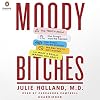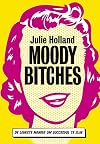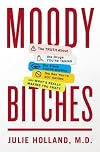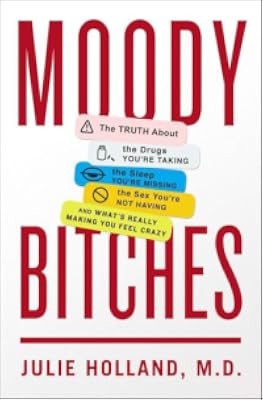
Moody Bitches: The Truth About the Drugs You're Taking, The Sleep You're Missing, The Sex You're Not Having, and What's Really Making You Crazy
by Julie Holland
On This Page
Description
As women, we learn from an early age that our moods are a problem. To succeed in life, we are told, we must have it all under control: we have to tamp down our inherent shifts in favor of a more static way of being. But our bodies are wiser than we imagine. Moods are not an annoyance to be stuffed away, they are a finely-tuned feedback system that can tell us how best to manage our lives. Our changing moods let us know when our bodies are primed to tackle different challenges and when we show more should be alert to developing problems. They help us select the right tool for each of our many jobs. If we deny our emotionality, we deny the breadth of our talents. With the right care of our inherently dynamic bodies, we can master our moods to avail ourselves of this great natural strength. Yet millions of American women are medicating away their emotions because our culture says that moodiness is a problem to be fixed. Over-prescribed medications can have devastating consequences for women in many areas of our lives--and even if we don't pop a pill, women everywhere are numbing their emotions with food, alcohol, and a host of addictive behaviors that deny the wisdom of our bodies and keep us from addressing the real issues that we face. Here, Dr. Julie Holland shares a better way.--From publisher description. show lessTags
Recommendations







Member Reviews
People who will like this book: A/B/O Fanfic authors that need new trope ideas. Not joking, this is full of 'em. Jordan Peterson. Alphas. People who still call feminism "women's lib" like they are in an episode of Mad Men.
People who will not like this book: Queer folks, trans folks, anyone who has generally had an experience that does not comport with heteronormativity, men who would not like to be reduced to two possible categories of "dad" or "cad", people who care as much about the operation of the frontal cortex as other parts of human physiology.
I really wanted to like this book, but this book went out of its way to press my buttons. It does the thing with popular science that I find so frustrating; presenting science is hard. show more Presenting it in a compelling way is super hard. So sometimes scientists cut corners and present research in a way that lacks the nuance it desperately needs. And this book does that on a Dr. Oz level. Yes! It cites a ton of studies. Really interesting studies! Then the author, whose book "Weekends at Bellevue" I really liked, makes huge leaps to make vast generalizations that make me super suspicious. She hand waves rational thought and gets super into biological determinism. Does socialization influence how we love and relate to each other? Maybe, but have you heard about this study of animals that are normally monogamous??? We should definitely use that to decide how humans should act.
It might be a "translating science to digestible messages" error but that error is a really dangerous one. I know stats are boring. I know reviewing the rigor, generalizability, repeatability, and validity of studies does not make for as fun reading as "this explains cougars!!". But at LEAST give me something.
I was really hoping for something that validated different experiences of women and then reviewed new science without making wild claims. This is not that book. THIS book cites "The Rules". So if you really want to return to 1995, or 1965, or maybe 1875, go for it. Enjoy this book. show less
People who will not like this book: Queer folks, trans folks, anyone who has generally had an experience that does not comport with heteronormativity, men who would not like to be reduced to two possible categories of "dad" or "cad", people who care as much about the operation of the frontal cortex as other parts of human physiology.
I really wanted to like this book, but this book went out of its way to press my buttons. It does the thing with popular science that I find so frustrating; presenting science is hard. show more Presenting it in a compelling way is super hard. So sometimes scientists cut corners and present research in a way that lacks the nuance it desperately needs. And this book does that on a Dr. Oz level. Yes! It cites a ton of studies. Really interesting studies! Then the author, whose book "Weekends at Bellevue" I really liked, makes huge leaps to make vast generalizations that make me super suspicious. She hand waves rational thought and gets super into biological determinism. Does socialization influence how we love and relate to each other? Maybe, but have you heard about this study of animals that are normally monogamous??? We should definitely use that to decide how humans should act.
It might be a "translating science to digestible messages" error but that error is a really dangerous one. I know stats are boring. I know reviewing the rigor, generalizability, repeatability, and validity of studies does not make for as fun reading as "this explains cougars!!". But at LEAST give me something.
I was really hoping for something that validated different experiences of women and then reviewed new science without making wild claims. This is not that book. THIS book cites "The Rules". So if you really want to return to 1995, or 1965, or maybe 1875, go for it. Enjoy this book. show less
One of my doctors recommended this, and Christiane Northrup is quoted on the cover, so this book seemed totally up my alley. But after finishing it and sitting with the information for a couple of days, I can't decide whether to recommend it.
The book is split into three parts. The second part covers dating, long term relationships, motherhood, and perimenopause. (Full disclosure: I did not read the chapters on motherhood and perimenopause.) The third part is a guide to using this information in areas like daily nutrition, sleep, and exercise.
Positives:
Any book that teaches women more about their bodies and cites research heavily in order to do so is a valuable tool of empowerment. Holland tells us that women's bodies are cyclical, and show more that fluctuations, especially in mood, are tied to that cycle and have a biological and evolutionary basis. She tells us that being "moody" is normal, and more than that, it is "the source of our power (1)." I was silently cheering at a lot of what she wrote in part 1, and I really learned a lot that I did not know.
Holland talks extensively about the effects of birth control and anti-depressants on our hormones, and she gives a lot of specifics. She made me think differently about the value of marijuana as a more natural option than other drugs. The chapters on dating and long term relationships were really interesting, and informed a lot of experiences I had previously found confusing. The information on how our mood and body changes throughout our cycle is something I only started learning about with Toni Weschler when I tried FAM a couple of months back, so it's something I still know very little about. This book really increased my knowledge.
Overall, this book communicates a message of "You are totally okay and enough as you are," and it does so with a lot of research backing it up. That's a powerful message, and one that women can't hear enough. There's a lot of "women are x way and men are y way," and while that may be a problematic message (for reasons I explain below), it's also a reassuring one. Holland talks a lot about how understudied women are in medical research (most human and animal subjects are male), going as far to say, "Women are still, very simply, second-class citizens in the world of medicine (32)." Did you know that women's pain sensitivity fluctuates with where we are in our menstrual cycle? That eight of ten drugs removed between 1997 and 2001 were removed because they posed greater health risks for men than women, but they had only ever been tested on men in experiments (32)?
At the end of the first chapter, Holland says the following: "We are not men. We are women. We feel more deeply, express our emotions more frequently, and get moody monthly. It's normal. It's nature's way. And we don't necessarily have to medicate away the essence of who we are to make others more comfortable. In fact, once we better understand our bodies and our own moods, we will realize that as women we have many natural tools, for tackling all of the challenges of our busy, complex lives (33)."
Negatives:
This book fell into all three of the traps I was hoping it wouldn't. I fully acknowledge that the second negative is subjective, but the other two are pretty concrete absences for a book addressing the influence of the patriarchy on women's wellness.
1. If women are like this and men are like this, what do you mean by "woman"?
2. If the science is simple enough that I can understand it, I question its accuracy.
3. Fat shaming in the exercise chapter
1. What do you mean by "woman"?
In any book that says "women are like biologically and evolutionarily this," I need a definition of what women are. Are you talking gender, which is as least partially, if not completely, sociological? Sex, which was once believed to be a true dichotomy? Is a woman a person who has certain sex organs, like a uterus? Who menstruates from menarche to menopause? Who has secondary sexual characteristics like breasts? Who has more estrogen than testosterone? This isn't just semantics - this book is meant to inform and empower women, and it's important to define who the group "women" includes and excludes. Also, as a book like this would know, people who believe in complementary gender roles will use information about "women are biologically and evolutionarily like this" to support anti-women agendas and a false gender binary. The audience needs to know that this information won't be used to further disempower us.
I am sympathetic to the difficulty of defining a term like "women," especially since each of the research articles cited may define it differently. But I need the author to acknowledge that difficulty and try to give the best definition possible.
Holland addresses this on page 23, and to my memory, it is the only time she does.
"Obviously, we must be cautious in discussing differences between the sexes because there is large variation within each gender, and nurture and culture factor in nearly as much as nature does. There is interplay between our natural abilities and how we are molded to behave that is impossible to fully tease apart. Case studies of children with ambiguous genitalia who are raised to be male or female even though they possess the opposite genetic material are rare, but they do help to teach us one thing: the influence of biology cannot be underestimated. Often, our own balance of testosterone and estrogen levels dictates how aggressive we'll be in a pickup game of basketball (or if we'd ever be caught dead in a pickup game of basketball) more than anything our parents ever taught us (23)."
I'm glad this passage exists, but I expect more. Also, the problematic interchangeability of "gender" and "sex" in this passage is continued throughout the book. It wasn't a dealbreaker for me, but I can definitely understand how that would be enough of a reason for someone not to pick up this book.
2. The scientific catch-22
"Add to the cocainelike mix of dopamine and norepinephrine a healthy shot of endorphins, our naturally circulating opiates, nature's painkillers and stress relievers. So falling in love is pharmacologcally a bit like a speedball. But there's more, because experiencing intense infatuation, and especially love at first sight, is like taking a psychadelic drug, too (61)."
This is a really fun passage and the word choice is evocative and memorable. In contrast, interactions of hormones are really complex, and I know that the actual description of what happens with love at first sight would be dull and impenetrable. But I also know that this is far too simplified, so I have trouble knowing how much to trust it as true. This was the problem I had with most of the book. It was eminently readable, so I didn't know how much I could believe the science.
I don't really know how to resolve that problem, but it does help that Holland cites heavily.
3. Fat shaming
Fortunately, fat shaming was mostly limited to the exercise/body image chapter, with a little in the nutrition chapter. I understand that obesity has health risks, but the harm that fat-shaming causes to mental health (and to physical health, with things like doctor bias) seems like it far outweighs the benefit of constantly telling people those health risks. There is a way to talk about having a healthy level of activity without focusing on the size of people's waists, and this book did NOT strike that balance. If you have triggers around body image, I would skip this chapter.
The exercise chapter includes a section on body positivity and acceptance, and another section around accepting secondary female sex characteristics (hips and breasts) as normal. Yay! But it would also be great to not have fat shaming at all, or, if you're going to talk extensively about obesity, to address the concept of fat shaming and try and separate it from the scientific terminology and research.
Overall:
I'd recommend to treat the book as a reference, and to read in chapter-long sittings. I'd recommend being aware of the three negatives I mentioned, and reading critically. But every book is an interaction between the reader and the author, and I would say that if you read sparingly and critically, there is a lot to get from this book, both in terms of empowerment and information. show less
The book is split into three parts. The second part covers dating, long term relationships, motherhood, and perimenopause. (Full disclosure: I did not read the chapters on motherhood and perimenopause.) The third part is a guide to using this information in areas like daily nutrition, sleep, and exercise.
Positives:
Any book that teaches women more about their bodies and cites research heavily in order to do so is a valuable tool of empowerment. Holland tells us that women's bodies are cyclical, and show more that fluctuations, especially in mood, are tied to that cycle and have a biological and evolutionary basis. She tells us that being "moody" is normal, and more than that, it is "the source of our power (1)." I was silently cheering at a lot of what she wrote in part 1, and I really learned a lot that I did not know.
Holland talks extensively about the effects of birth control and anti-depressants on our hormones, and she gives a lot of specifics. She made me think differently about the value of marijuana as a more natural option than other drugs. The chapters on dating and long term relationships were really interesting, and informed a lot of experiences I had previously found confusing. The information on how our mood and body changes throughout our cycle is something I only started learning about with Toni Weschler when I tried FAM a couple of months back, so it's something I still know very little about. This book really increased my knowledge.
Overall, this book communicates a message of "You are totally okay and enough as you are," and it does so with a lot of research backing it up. That's a powerful message, and one that women can't hear enough. There's a lot of "women are x way and men are y way," and while that may be a problematic message (for reasons I explain below), it's also a reassuring one. Holland talks a lot about how understudied women are in medical research (most human and animal subjects are male), going as far to say, "Women are still, very simply, second-class citizens in the world of medicine (32)." Did you know that women's pain sensitivity fluctuates with where we are in our menstrual cycle? That eight of ten drugs removed between 1997 and 2001 were removed because they posed greater health risks for men than women, but they had only ever been tested on men in experiments (32)?
At the end of the first chapter, Holland says the following: "We are not men. We are women. We feel more deeply, express our emotions more frequently, and get moody monthly. It's normal. It's nature's way. And we don't necessarily have to medicate away the essence of who we are to make others more comfortable. In fact, once we better understand our bodies and our own moods, we will realize that as women we have many natural tools, for tackling all of the challenges of our busy, complex lives (33)."
Negatives:
This book fell into all three of the traps I was hoping it wouldn't. I fully acknowledge that the second negative is subjective, but the other two are pretty concrete absences for a book addressing the influence of the patriarchy on women's wellness.
1. If women are like this and men are like this, what do you mean by "woman"?
2. If the science is simple enough that I can understand it, I question its accuracy.
3. Fat shaming in the exercise chapter
1. What do you mean by "woman"?
In any book that says "women are like biologically and evolutionarily this," I need a definition of what women are. Are you talking gender, which is as least partially, if not completely, sociological? Sex, which was once believed to be a true dichotomy? Is a woman a person who has certain sex organs, like a uterus? Who menstruates from menarche to menopause? Who has secondary sexual characteristics like breasts? Who has more estrogen than testosterone? This isn't just semantics - this book is meant to inform and empower women, and it's important to define who the group "women" includes and excludes. Also, as a book like this would know, people who believe in complementary gender roles will use information about "women are biologically and evolutionarily like this" to support anti-women agendas and a false gender binary. The audience needs to know that this information won't be used to further disempower us.
I am sympathetic to the difficulty of defining a term like "women," especially since each of the research articles cited may define it differently. But I need the author to acknowledge that difficulty and try to give the best definition possible.
Holland addresses this on page 23, and to my memory, it is the only time she does.
"Obviously, we must be cautious in discussing differences between the sexes because there is large variation within each gender, and nurture and culture factor in nearly as much as nature does. There is interplay between our natural abilities and how we are molded to behave that is impossible to fully tease apart. Case studies of children with ambiguous genitalia who are raised to be male or female even though they possess the opposite genetic material are rare, but they do help to teach us one thing: the influence of biology cannot be underestimated. Often, our own balance of testosterone and estrogen levels dictates how aggressive we'll be in a pickup game of basketball (or if we'd ever be caught dead in a pickup game of basketball) more than anything our parents ever taught us (23)."
I'm glad this passage exists, but I expect more. Also, the problematic interchangeability of "gender" and "sex" in this passage is continued throughout the book. It wasn't a dealbreaker for me, but I can definitely understand how that would be enough of a reason for someone not to pick up this book.
2. The scientific catch-22
"Add to the cocainelike mix of dopamine and norepinephrine a healthy shot of endorphins, our naturally circulating opiates, nature's painkillers and stress relievers. So falling in love is pharmacologcally a bit like a speedball. But there's more, because experiencing intense infatuation, and especially love at first sight, is like taking a psychadelic drug, too (61)."
This is a really fun passage and the word choice is evocative and memorable. In contrast, interactions of hormones are really complex, and I know that the actual description of what happens with love at first sight would be dull and impenetrable. But I also know that this is far too simplified, so I have trouble knowing how much to trust it as true. This was the problem I had with most of the book. It was eminently readable, so I didn't know how much I could believe the science.
I don't really know how to resolve that problem, but it does help that Holland cites heavily.
3. Fat shaming
Fortunately, fat shaming was mostly limited to the exercise/body image chapter, with a little in the nutrition chapter. I understand that obesity has health risks, but the harm that fat-shaming causes to mental health (and to physical health, with things like doctor bias) seems like it far outweighs the benefit of constantly telling people those health risks. There is a way to talk about having a healthy level of activity without focusing on the size of people's waists, and this book did NOT strike that balance. If you have triggers around body image, I would skip this chapter.
The exercise chapter includes a section on body positivity and acceptance, and another section around accepting secondary female sex characteristics (hips and breasts) as normal. Yay! But it would also be great to not have fat shaming at all, or, if you're going to talk extensively about obesity, to address the concept of fat shaming and try and separate it from the scientific terminology and research.
Overall:
I'd recommend to treat the book as a reference, and to read in chapter-long sittings. I'd recommend being aware of the three negatives I mentioned, and reading critically. But every book is an interaction between the reader and the author, and I would say that if you read sparingly and critically, there is a lot to get from this book, both in terms of empowerment and information. show less
I was intrigued by the premise of the book, but it continuously let me down. Julie Holland writes from a highly heteronormative perspective, as well as a gender essentialist one. She is also anti-polyamory (though I can't tell if she realizes it). At times, it's hard to believe this book didn't come out decades ago, especially when she is being downright sexist in the way she talks about both women and men. I won't call it a total loss - some of her information is interesting as far as just the pure facts go - but I wish it were presented by someone more up to the task.
The premise: Women are moody by nature, and that is a strength rather than something to be medicated away.
I was hoping for practical, data-based suggestions for managing moods, but instead found disproven assumptions about differences between "male" and "female" brains and a too-heavy reliance on the author's personal experience and opinions (e.g, she ignores the risks of cannabis for those with underlying psychiatric issues and stereotypes SAHDs as lazy).
The suggestions that are here are of a very basic, common-sense nature. Many of them are fine, they're just better suited to a blog post than to a book that's 400-ish pages long.
I was hoping for practical, data-based suggestions for managing moods, but instead found disproven assumptions about differences between "male" and "female" brains and a too-heavy reliance on the author's personal experience and opinions (e.g, she ignores the risks of cannabis for those with underlying psychiatric issues and stereotypes SAHDs as lazy).
The suggestions that are here are of a very basic, common-sense nature. Many of them are fine, they're just better suited to a blog post than to a book that's 400-ish pages long.
Fantastic. So much information that I found myself taking notes half the time while I was reading. It's like an owner's manual for your body at all the stages of life. Loved it.
Hate the title. Love the practical information on medications. Didn't realize that mood changes could be beneficial in any way. Lots of repetitiveness.
i received this book for free as part of a first reads promotion
Members
- Recently Added By
Author Information

5+ Works 870 Members
Julie Holland graduated from the University of Pennsylvania and Temple University Medical School. She has been a psychiatrist in private practice since 1996. She majored in the Biological Basis of Behavior at the University of Pennsylvania and received her M.D. in 1992 from Temple University School of Medicine. At Mount Sinai Medical Center, she show more completed a residency program in psychiatry, where she created a research project that treated schizophrenics with a new medication. In 1994, she received the Outstanding Resident Award from the National Institute of Mental Health. From 1996 until 2005 she worked weekends running Bellevue Hospital's psychiatric emergency room, and she's written an autobiography of this time entitled "Weekends at Bellevue: Nine Years on the Night Shift at the Psych ER". She also provides expert testimony and forensic consultation on a range of drug related behavior and phenomena with a focus on PCP and MDMA. (Bowker Author Biography) show less
Common Knowledge
- Original publication date
- 2015-03-03
- Dedication
- For Sara Starr Wolff,
teacher, therapist, and gardener,
who wanted what she had, and said what she meant,
And for her son, Jeremy,
whose shining love and acceptance
allow me to blossom. - First words
- Women today are overworked and exhausted.
- Last words
- (Click to show. Warning: May contain spoilers.)Be a wise woman, a healer, and a warrior for peace--yours and others'.
- Blurbers
- Northrup, Christiane; Corio, Laura; Rushkoff, Douglas; Maté, Gabor; Jetha, Cacilda; Ryan, Christopher (show all 8); Shenk, Joshua Wolf; Weil, Andrew
Classifications
- Genres
- Nonfiction, General Nonfiction, Sexuality and Gender Studies
- DDC/MDS
- 616.85 — Applied science & technology Medicine & health Diseases, Allergies, Skin Conditions Nervous Disorders: Autism, Anorexia, OCD Miscellaneous
- LCC
- RA778 .H755 — Medicine Public aspects of medicine Public aspects of medicine Public health. Hygiene. Preventive medicine Personal health and hygiene
- BISAC
Statistics
- Members
- 201
- Popularity
- 161,849
- Reviews
- 7
- Rating
- (3.78)
- Languages
- Dutch, English, German, Korean
- Media
- Paper, Audiobook, Ebook
- ISBNs
- 14
- UPCs
- 1
- ASINs
- 4