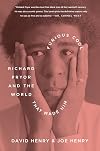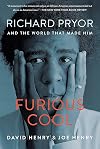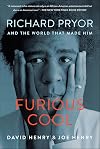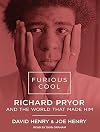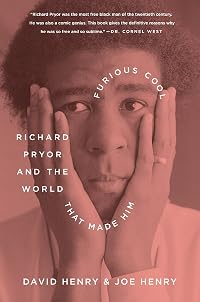
Furious Cool: Richard Pryor and the World That Made Him
by David Henry, Joe Henry
On This Page
Description
Richard Pryor was arguably the single most influential performer of the second half of the twentieth century, and certainly he was the most successful black actor/comedian ever. Controversial and somewhat enigmatic in his lifetime, Pryor's performances opened up a new world of possibilities, merging fantasy with angry reality in a way that wasn't just new--it was heretofore unthinkable. His childhood in Peoria, Illinois, was spent just trying to survive. Yet the culture into which Richard show more Pryor was born--his mother was a prostitute; his grandmother ran the whorehouse--helped him evolve into one of the most innovative and outspoken performers ever, a man who attracted admiration and anger in equal parts. Both a brilliant comedian and a very astute judge of what he could get away with, Pryor was always pushing the envelope, combining anger and pathos, outrage and humor, into an art form, laying the groundwork for the generations of comedians who followed, including such outstanding performers as Eddie Murphy, Chris Rock, and Louis C.K. Now, in this groundbreaking and revelatory work, Joe and David Henry bring him to life both as a man and as an artist, providing an in-depth appreciation of his talent and his lasting influence, as well as an insightful examination of the world he lived in and the influences that shaped both his persona and his art.--Publisher's description. show lessTags
Recommendations



Member Reviews
I absolutely loved this book. I requested it from Early Reviewers just to try something a little bit outside my normal literary fiction genre and wow, am I glad I did. This is no dry biography, but the authors pick out the more interesting parts in Pryor's life, not only in regards to his development, but the world around him at the time. I really began to see what an innovator he was and was equally a poet and performance artist as well as a comedian. It sure is a sad, heartbreaking biography to read though as he was a deeply troubled man and just never seemed happy or even remotely content about his life, talents and fame. He also was absolutely awful to some people (as they were to him), so that is all hard to read. However, there is show more a lot to say here too about genius, innovation, not only the downfalls but benefits (albeit at an enormous price) of drugs, and the climate those things succeed or fail in. Highly recommended (if you can handle the crude language/sex, drug abuse and the cruel treatment of women subject matter - as there is much of all three). show less
 This review was written for LibraryThing Early Reviewers.
Unlike most biographies, clinically assembled from reams of letters, with forced neutrality and distance, Furious Cool is a product of two lifelong fans’ clear passion. They give the book a perspective and an evaluation you don’t often see, at least not competently. Furious Cool puts the whole package together tightly and swiftly.
Richard Pryor was a comedic trailblazer, but he did it almost by accident. He stumbled for years. His skills came along later, and he abused them like he abused his wives, his friends and himself. He did not recognize his own peak as it passed, thankfully, onto DVD instead of oblivion. He missed his rapid descent, because he didn’t care any more. His later films were all useless trash; he freely admitted show more doing them for the money, which was freely tossed at him because of his fame.
He reminds me of Lenny Bruce, flailing in all directions at the end – about his own plight - while succumbing to drugs and alcohol. Pryor was at his sharpest when he portrayed an entire community of characters, at his weakest when he explained Richard Pryor. The authors compare him to Shakespeare’s Falstaff, but that is too superficial. His tragedy was a slow motion violent train wreck over decades, preventable at every step of the way, but irrelevant to Pryor himself.
When he was on his game, he was in total control – of the whole world: “You perched on the edge of your seat, just in case Richard at any moment did something that would make it necessary for every black person to suddenly drop whatever he or she was doing and run like hell.” He knocked over racial barriers and taboos like sandcastles, freely stepped on toes and raised race to a new high in public conscience and appreciation.
He lost that power because he couldn’t handle the fame, the money, or the love of anyone. He kept guns and used them at the slightest whim, making him a danger not only to himself. His fits of anger could be controlled by his dysfunctional nuclear family who wouldn’t stand for his spoiled brat fits. But as a star, he could beat his many wives and mistresses with total impunity and for no reason whatsoever. He could show up late, drunk and stoned, and no one could call him on it. He became the monster he parodied: exaggerated, larger than life, living absurdly.
His humor evolved from Cosby-imitation jokes, to outlandish character stories, to just plain horrific truth. No punchline required. But with a delivery that by then was so evolved, you laughed till you cried. He never worried about anyone stealing his jokes; they could only get laughs from Richard Pryor.
It’s been a very long time since I laughed out loud reading a book. Couldn’t help it. show less
Richard Pryor was a comedic trailblazer, but he did it almost by accident. He stumbled for years. His skills came along later, and he abused them like he abused his wives, his friends and himself. He did not recognize his own peak as it passed, thankfully, onto DVD instead of oblivion. He missed his rapid descent, because he didn’t care any more. His later films were all useless trash; he freely admitted show more doing them for the money, which was freely tossed at him because of his fame.
He reminds me of Lenny Bruce, flailing in all directions at the end – about his own plight - while succumbing to drugs and alcohol. Pryor was at his sharpest when he portrayed an entire community of characters, at his weakest when he explained Richard Pryor. The authors compare him to Shakespeare’s Falstaff, but that is too superficial. His tragedy was a slow motion violent train wreck over decades, preventable at every step of the way, but irrelevant to Pryor himself.
When he was on his game, he was in total control – of the whole world: “You perched on the edge of your seat, just in case Richard at any moment did something that would make it necessary for every black person to suddenly drop whatever he or she was doing and run like hell.” He knocked over racial barriers and taboos like sandcastles, freely stepped on toes and raised race to a new high in public conscience and appreciation.
He lost that power because he couldn’t handle the fame, the money, or the love of anyone. He kept guns and used them at the slightest whim, making him a danger not only to himself. His fits of anger could be controlled by his dysfunctional nuclear family who wouldn’t stand for his spoiled brat fits. But as a star, he could beat his many wives and mistresses with total impunity and for no reason whatsoever. He could show up late, drunk and stoned, and no one could call him on it. He became the monster he parodied: exaggerated, larger than life, living absurdly.
His humor evolved from Cosby-imitation jokes, to outlandish character stories, to just plain horrific truth. No punchline required. But with a delivery that by then was so evolved, you laughed till you cried. He never worried about anyone stealing his jokes; they could only get laughs from Richard Pryor.
It’s been a very long time since I laughed out loud reading a book. Couldn’t help it. show less
“Richard was a junkie first, a genius second. Always. - Paul Mooney
The words of comedian Paul Mooney, whom few would contest is Richard Pryor’s greatest and most knowledgeable disciple, capture the two facets of Richard Pryor’s life most already know. However, Furious Cool: Richard Pryor and the World that Made Him by David and Joe Henry, adds the perspective needed to understand how truly great Richard was as a comedian, and how unbelievably tragic it was that Richard’s genius was consumed by his addiction. There is no flinching at all while looking at Richard’s life, and there is much that would make one flinch. The best example is Richard’s return home to Peoria, Illinois after becoming a star. Looking down the seemingly show more endless line of folks waiting to get an autograph, or book signed, Richard recognizes a face from his childhood. It is the neighborhood bully who sexually assaulted Richard when he was in elementary school. Had the Henry brothers flinched in discussing this episode of Richard’s life, and the many, many other disturbances that would follow, it would have diminished Richard’s great achievement on stage. Richard told the truth on stage, and no matter how painful that truth, Richard offered no hiding place from it’s light, or offered any other option than to laugh. show less
The words of comedian Paul Mooney, whom few would contest is Richard Pryor’s greatest and most knowledgeable disciple, capture the two facets of Richard Pryor’s life most already know. However, Furious Cool: Richard Pryor and the World that Made Him by David and Joe Henry, adds the perspective needed to understand how truly great Richard was as a comedian, and how unbelievably tragic it was that Richard’s genius was consumed by his addiction. There is no flinching at all while looking at Richard’s life, and there is much that would make one flinch. The best example is Richard’s return home to Peoria, Illinois after becoming a star. Looking down the seemingly show more endless line of folks waiting to get an autograph, or book signed, Richard recognizes a face from his childhood. It is the neighborhood bully who sexually assaulted Richard when he was in elementary school. Had the Henry brothers flinched in discussing this episode of Richard’s life, and the many, many other disturbances that would follow, it would have diminished Richard’s great achievement on stage. Richard told the truth on stage, and no matter how painful that truth, Richard offered no hiding place from it’s light, or offered any other option than to laugh. show less
Authors David and Joe Henry have written part analysis, part hagiography of the comedic great. Much is made of the tragedy of Pryor, but they emphasize more the impact and pioneering aspect of his humor as well as the work he put into perfecting delivery and content of his stunning rants and transformations on stage. I think they ably support their premise that Pryor was an innovative comic genius battling racism as well as not shying away from self-destructive behavior. This has made me pull out my Laff Records sides for further review and appreciation.
Reflecting back on the sociological dimensions of the book and listening back to recorded performances it is jarring and sad how much police brutality, disenfranchisement, etc. were show more issues then that so much resonates with today's headlines.
A special treat is how narrator Dion Graham courageously and adeptly launches into dialect and impressions here. show less
Reflecting back on the sociological dimensions of the book and listening back to recorded performances it is jarring and sad how much police brutality, disenfranchisement, etc. were show more issues then that so much resonates with today's headlines.
A special treat is how narrator Dion Graham courageously and adeptly launches into dialect and impressions here. show less
This well written and thoroughly researched biography paints a vivid picture of Richard Pryor. The book was easy and enjoyable to read, the writing was lyrical and and I got a sense that the authors had done their best to really get to know Richard Pryor, a task that unfortunately seems to have been impossible. Richard Pryor seemed to deny anyone access to really knowing him. Being a successful comedian seems to come with an unknowable burden of pain and emptiness. Richard Pryor seemed to be seeking approval, from the world, from those around him, from himself. He was always reaching for greatness, all the while running from himself. The painful conflict of his life seems to repeat itself over and over again. It is unfortunate that show more those that make us laugh the hardest are often unable to harness a measure of the joy they bring to others. show less
This review was written for LibraryThing Early Reviewers.A well written, easy to read, engaging work of hagiography. A gold ring bio in a pig's snout life. Pryor was a wicked person who was extremely gifted at making people suffer. And laugh. The Bros. Henry give us a portrait of a highly influential comedian whose comedy can't be imitated, and whose life shouldn't be.
This review was written for LibraryThing Early Reviewers.It took me six months to start this book, but once I did, I couldn't put it down.
I know the name Richard Pryor, but I've only seen a few clips of his work. The Henry brothers manage to bring Pryor's routines to life in a way that makes clear Pryor's place as one of the two or three most important entertainers of the 20th century.
The brothers are at their best when they hold themselves a step back from their subject (serving, I would argue, as proper biographers), but they can't seem to help reminding the reader that they came to this project as fans first. Al the same, the clarity they bring to the era and to Pryor's place in pushing boundaries makes me wish that every biographer was willing examine our great performers so fluently and show more critically (in the sense of honest evaluation, not just judgement).
Their book makes me want to watch more Richard Pryor.
I do have a complaint about one comparison- Pryor to Shakespeare's Falstaff, who the Henry Brothers suggest appeared in Henry IV pt 1 and 2 and Henry V. Except that Falstaff (famously) does not appear in Henry V; he dies offstage at the beginning of the play- a clear signal to the Elizabethan audience that they should not confuse Henry V with some sort of Henry IV part 3. I don't know enough of Pryor or the era's history to do more than absorb what the authors tell me, but when I came across that error in the book's closing pages, it did make we wonder what other sorts of fact checking errors they might have made in a book that draws liberally from a huge range of art, music and film. show less
I know the name Richard Pryor, but I've only seen a few clips of his work. The Henry brothers manage to bring Pryor's routines to life in a way that makes clear Pryor's place as one of the two or three most important entertainers of the 20th century.
The brothers are at their best when they hold themselves a step back from their subject (serving, I would argue, as proper biographers), but they can't seem to help reminding the reader that they came to this project as fans first. Al the same, the clarity they bring to the era and to Pryor's place in pushing boundaries makes me wish that every biographer was willing examine our great performers so fluently and show more critically (in the sense of honest evaluation, not just judgement).
Their book makes me want to watch more Richard Pryor.
I do have a complaint about one comparison- Pryor to Shakespeare's Falstaff, who the Henry Brothers suggest appeared in Henry IV pt 1 and 2 and Henry V. Except that Falstaff (famously) does not appear in Henry V; he dies offstage at the beginning of the play- a clear signal to the Elizabethan audience that they should not confuse Henry V with some sort of Henry IV part 3. I don't know enough of Pryor or the era's history to do more than absorb what the authors tell me, but when I came across that error in the book's closing pages, it did make we wonder what other sorts of fact checking errors they might have made in a book that draws liberally from a huge range of art, music and film. show less
This review was written for LibraryThing Early Reviewers.Members
- Recently Added By
Lists

To read: Celebrity Biographies/Memoirs
39 works; 2 members

Books Read in 2014
2,343 works; 89 members

Unshelved Book Clubs
579 works; 5 members
Author Information
1 Work 160 Members
10+ Works 231 Members
Awards and Honors
Distinctions
Notable Lists
Common Knowledge
- People/Characters
- Richard Pryor
- Blurbers
- West, Cornel
Classifications
- Genres
- Nonfiction, Biography & Memoir, General Nonfiction, History
- DDC/MDS
- 792.702 — Arts & recreation Recreation, sports, and performing arts Stage presentations Variety shows and theatrical dancing; burlesque, cabaret, vaudeville, music hall, nightclubs modified standard subdivisions Techniques, procedures, apparatus, equipment, materials, miscellany
- LCC
- PN2287 .P77 .H46 — Language and Literature Literature (General) Literature (General) Drama Dramatic representation. The theater Special regions or countries
- BISAC
Statistics
- Members
- 161
- Popularity
- 203,330
- Reviews
- 28
- Rating
- (4.02)
- Languages
- English
- Media
- Paper, Audiobook, Ebook
- ISBNs
- 11
- ASINs
- 5