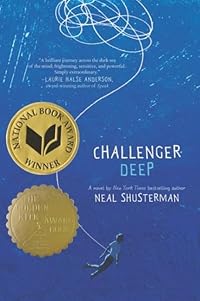
Challenger Deep
by Neal Shusterman
On This Page
Description
National Book Award * Golden Kite Award Winner * Six Starred ReviewsA captivating novel about mental illness that lingers long beyond the last page, Challenger Deep is a heartfelt tour de force by New York Times bestselling author Neal Shusterman.
Caden Bosch is on a ship that's headed for the deepest point on Earth: Challenger Deep, the southern part of the Marianas Trench.
Caden Bosch is a brilliant high school student whose friends are starting to notice his odd behavior.
Caden Bosch is show more designated the ship's artist in residence to document the journey with images.
Caden Bosch pretends to join the school track team but spends his days walking for miles, absorbed by the thoughts in his head.
Caden Bosch is split between his allegiance to the captain and the allure of mutiny.
Caden Bosch is torn.
Challenger Deep is a deeply powerful and personal novel from one of today's most admired writers for teens. Laurie Halse Anderson, award-winning author of Speak, calls Challenger Deep "a brilliant journey across the dark sea of the mind; frightening, sensitive, and powerful. Simply extraordinary."
. show less
Tags
Recommendations








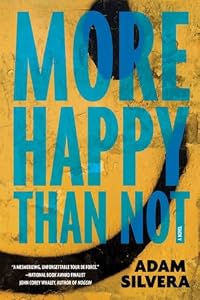

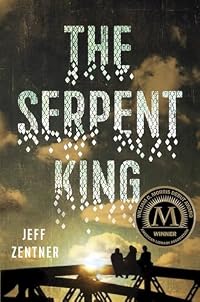
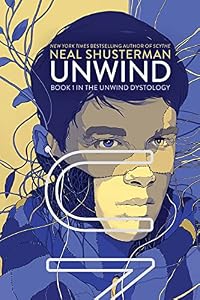
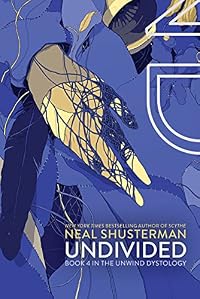












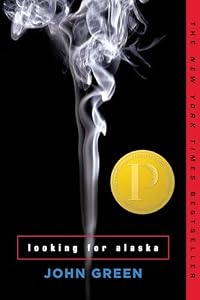






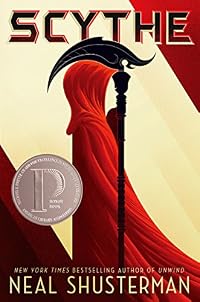
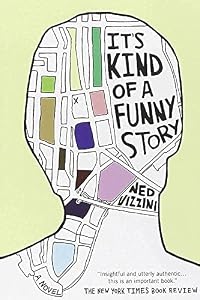


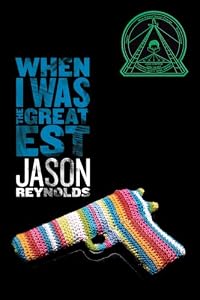

Member Recommendations
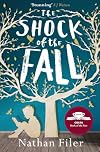
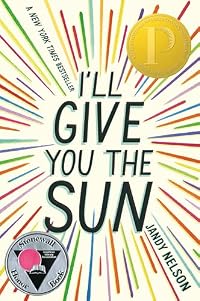
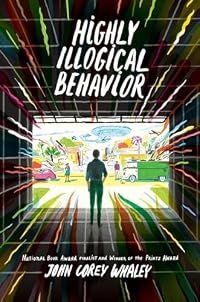
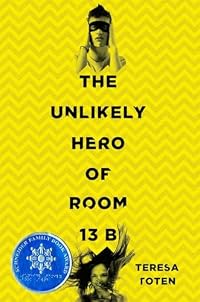
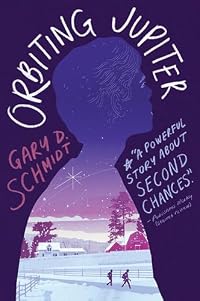
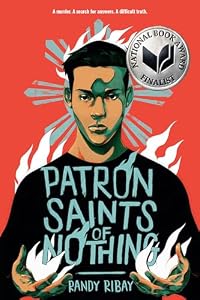
souloftherose Both books do a great job of helping the reader understand what it's like to experience a mental illness. Whilst neither shy away from the suffering that accompanies this both are ultimately hopeful books.
Member Reviews
I first read “Challenger Deep” a couple of years ago when it was getting a lot of press and hype for its themes of mental illness. Given that I went through some nasty battles with depression in high school and college, I was very interested to see what Neal Shusterman was going to do with it, especially since I knew that his own son was diagnosed with schizophrenia when he was a teen (and therein inspired this book). Reading it the first time was a very rewarding and somewhat personal experience, but reading it a second time gave me the chance to read it knowing what was coming and how all the symbolism was going to come together.
One of the most striking things about “Challenger Deep” is how Shusterman frames it, in that it’s show more a very disorienting read for the reader, giving him or her a sense of what constant disorientation may feel like for those who are struggling with mental illness. Shusterman is careful to not put any kind of mental disorder into a box, and does take care to mention that this one experience that Caden is having is not necessarily universal to all people who suffer from schizophrenia. The story is all from Caden’s perspective, but you do kind of get insight into what those who are around him may be feeling based on their reactions and the decisions that they make. The parallels between what is going on in Caden’s ‘reality’ and what is going on on ‘the ship’ was very interesting to see, and it was powerful to be able to see the glimpses of reality within the hallucinations (the captain, the figurehead, etc).
I also liked that Shusterman never felt condescending or cloying in his storytelling, and never got preachy about what Caden should or shouldn’t do, or should or shouldn’t feel. He presents a situation and lets the reader decide for themselves what conclusions to draw. He also doesn’t wrap everything up in a neat little bow; you get the sense that things aren’t over for Caden and that he will always have these struggles. As hard as that is to accept, it’s also very realistic, as mental illness is for many people something they are going to have their entire lives, degrees of seriousness changing all the time. It’s a realistic take, but it doesn’t feel bleak or nihilistic. Given that this book is so personal for Shusterman and his family, I’m not surprised that he didn’t approach it with easy answers or cut and dry solutions. I think that it’s very important that teens can see this kind of story, so that they can either see themselves in a book, or they can gain some insight into something that those close to them may be dealing with.
“Challenger Deep” is a poignant and powerful novel, and I’m pleased that we kicked off our B-Sides Book Club Theme with it!
-----
I had never read anything by Shusterman until I picked up “Scythe” last summer. So all I knew was that I liked him as a dystopian, YA author. Tackling a tough subject like mental illness is another thing all together! But I should have had faith, as Shusterman once again blew me away with his sensitive, unflinching yet compassionate, tale.
As Kate already touched on, one of the strongest aspects of this story is the subtle manner in which Shusterman depicts the slow, almost unnoticeable, descent into confusion and paranoia that Caden slips into. The reader, too, is unsure of what is happening, not only with the events on the ship, but the timeline between one section and another. It isn’t until halfway through the story that I was able to begin to piece together these two disparate storylines. This perfectly aligns with the point at which Caden, too, begins to gain a bit of clarity, though he is by no means out of the woods.
The ship itself, obviously, is an extensive metaphorical look into the world that Caden has projected around himself. However, for readers looking to gain more insight into what loved ones experiencing mental health challenges are going through, the author also sprinkles in some shockingly simple but apt comparisons that I found incredibly insightful and helpful. In this way, the book speaks not only to an “own experience” reader looking to see themselves and their challenges on the page, but also as a perfect portal for friends and family to understand a bit better what could be going on. As Kate said, Shusterman is careful to never imply that this is by any means a road map for all mental health experiences and that even any given diagnosis is not the same for every individual experiencing it.
It is clear that Shusterman was writing from a very real place, having been the parent of a teenage boy who struggled with mental health. His son not only provided insights to help direct the creation of this story, but there are also images sprinkled throughout the story that Shusterman’s son drew in the midst of his own crisis. Every time a new image appeared, I found myself taking quite a bit of time looking at it. Most were unclear, scribble-like creations that, while not clearly depicting a scene or object, spoke quite strongly to the swirl of emotions that its creator felt. Caden’s own art and his use of it to not only express himself but what he sees in others was also a great lens through which to read his experiences. His family and friends first begin to note changes in him by the changes in his art, and Caden uses his artistic ability to get at deep truths of the other teens he meets who have their own struggles.
I absolutely adored this story, and it was a great start to our new season of bookclub! show less
One of the most striking things about “Challenger Deep” is how Shusterman frames it, in that it’s show more a very disorienting read for the reader, giving him or her a sense of what constant disorientation may feel like for those who are struggling with mental illness. Shusterman is careful to not put any kind of mental disorder into a box, and does take care to mention that this one experience that Caden is having is not necessarily universal to all people who suffer from schizophrenia. The story is all from Caden’s perspective, but you do kind of get insight into what those who are around him may be feeling based on their reactions and the decisions that they make. The parallels between what is going on in Caden’s ‘reality’ and what is going on on ‘the ship’ was very interesting to see, and it was powerful to be able to see the glimpses of reality within the hallucinations (the captain, the figurehead, etc).
I also liked that Shusterman never felt condescending or cloying in his storytelling, and never got preachy about what Caden should or shouldn’t do, or should or shouldn’t feel. He presents a situation and lets the reader decide for themselves what conclusions to draw. He also doesn’t wrap everything up in a neat little bow; you get the sense that things aren’t over for Caden and that he will always have these struggles. As hard as that is to accept, it’s also very realistic, as mental illness is for many people something they are going to have their entire lives, degrees of seriousness changing all the time. It’s a realistic take, but it doesn’t feel bleak or nihilistic. Given that this book is so personal for Shusterman and his family, I’m not surprised that he didn’t approach it with easy answers or cut and dry solutions. I think that it’s very important that teens can see this kind of story, so that they can either see themselves in a book, or they can gain some insight into something that those close to them may be dealing with.
“Challenger Deep” is a poignant and powerful novel, and I’m pleased that we kicked off our B-Sides Book Club Theme with it!
-----
I had never read anything by Shusterman until I picked up “Scythe” last summer. So all I knew was that I liked him as a dystopian, YA author. Tackling a tough subject like mental illness is another thing all together! But I should have had faith, as Shusterman once again blew me away with his sensitive, unflinching yet compassionate, tale.
As Kate already touched on, one of the strongest aspects of this story is the subtle manner in which Shusterman depicts the slow, almost unnoticeable, descent into confusion and paranoia that Caden slips into. The reader, too, is unsure of what is happening, not only with the events on the ship, but the timeline between one section and another. It isn’t until halfway through the story that I was able to begin to piece together these two disparate storylines. This perfectly aligns with the point at which Caden, too, begins to gain a bit of clarity, though he is by no means out of the woods.
The ship itself, obviously, is an extensive metaphorical look into the world that Caden has projected around himself. However, for readers looking to gain more insight into what loved ones experiencing mental health challenges are going through, the author also sprinkles in some shockingly simple but apt comparisons that I found incredibly insightful and helpful. In this way, the book speaks not only to an “own experience” reader looking to see themselves and their challenges on the page, but also as a perfect portal for friends and family to understand a bit better what could be going on. As Kate said, Shusterman is careful to never imply that this is by any means a road map for all mental health experiences and that even any given diagnosis is not the same for every individual experiencing it.
It is clear that Shusterman was writing from a very real place, having been the parent of a teenage boy who struggled with mental health. His son not only provided insights to help direct the creation of this story, but there are also images sprinkled throughout the story that Shusterman’s son drew in the midst of his own crisis. Every time a new image appeared, I found myself taking quite a bit of time looking at it. Most were unclear, scribble-like creations that, while not clearly depicting a scene or object, spoke quite strongly to the swirl of emotions that its creator felt. Caden’s own art and his use of it to not only express himself but what he sees in others was also a great lens through which to read his experiences. His family and friends first begin to note changes in him by the changes in his art, and Caden uses his artistic ability to get at deep truths of the other teens he meets who have their own struggles.
I absolutely adored this story, and it was a great start to our new season of bookclub! show less
A fantastic book from a fantastic author. As someone who suffers from a mental illness (though not as described here), the portrayal of Caden's struggle and eventual realization that it will never be over rings true and, somehow, hopeful.
The characters are never stereotypes, and the struggles are real while still maintaining an air of surreality.
The characters are never stereotypes, and the struggles are real while still maintaining an air of surreality.
Neal Shusterman never ceases to amaze me. In the last 3 months I have read 4 of his novels and they are all so different. I like an author who isn't stuck in a rut and S seems to have a very braod view when it comes to writing fiction. In this novel, he delves close to his heart to look at the tragic consequences of mental illness/psychosis in young teenage boys after having a son who suffers from mental illness. The book is told in two parts, the first is Caden's journey on a ship with various strange companions (most distortions of real people), the second is what is happening in Caden's world is really happening. As a parent who has known the devastation of psychosis on a teenage child, I can say that he writes with great sensitivity show more but also pulls no punches - there is no glossing over the truth - that Caden is seriously ill and needs help and support, even if he doesn't think so. This book reminded me also a little of the L:ife of Pi in some aspects. show less
Well that was a descent to somewhere I was not expecting. The contrast of Caden's imaginings and reality was weird and confusing at times. Most of the time I skimmed the imagining part because it just confused me. Obviously, there is a reason for this.
It was interesting to see how everything came together. This is I think the fourth book I've read about schizophrenia. It's now impacting me more because my father finally confirmed that my grandmother was schizophrenic. I feel like this book disturbs me more now than I thought it could because it's in the back of my mind that I have the genes for this. I know there are other environmental factors but I'm just freaked out. But books on mental illness have made me more and more empathetic show more and understanding. I'm grateful that I read this but it was intense. show less
It was interesting to see how everything came together. This is I think the fourth book I've read about schizophrenia. It's now impacting me more because my father finally confirmed that my grandmother was schizophrenic. I feel like this book disturbs me more now than I thought it could because it's in the back of my mind that I have the genes for this. I know there are other environmental factors but I'm just freaked out. But books on mental illness have made me more and more empathetic show more and understanding. I'm grateful that I read this but it was intense. show less
I both love the fact that Challenger Deep exists, and I hated reading it.
Let me back up.
This book is so. Incredibly! Well! Done!
I cannot emphasize enough the skill of Neal Shusterman here as a writer, and how effortlessly he flows between real/not real while creating an engaging world with relatable characters and a realistic view on the state of mental health facilities. I have no, absolutely no, criticisms about Challenger Deep as a work of art. Because it abso-freaking-lutely is a work of art.
It’s also one of the most difficult books I’ve ever read.
Not in a sense of boredom, or writing style, or theme or language. The voice gave me so much anxiety – about the same amount as Turtles All the Way Down, which is another excellent show more YA book about mental health. While Turtles was #OwnVoices… Challenger Deep is once-removed and was written with great respect and deference to Shusterman’s son. It still has the feel of an #OwnVoices novel, and is … just … so wonderfully created. I know there’s a lot of noise in the world about not-#OwnVoices writers tackling various issues (whether that’s race, mental health, or gender identity). Many of them are terrible and should be criticised. Challenger Deep is incredible.
Challenger Deep is the type of book to be read slowly and carefully, because the lines between worlds blur… sometimes even in the same sentence. The beginning is a bit chaotic (as it should be, and this made sense to me later on) but once I got into the flow of things I began identifying the parallels a bit better between Caden’s world and the outside world. I loved Caden – I cared immediately about what happened to him. I wanted him to succeed and the waves of his reconciliation and recovery – so well-aligned with real life – put me through a rollercoaster of emotions.
Regardless of whether or not you’re a fan of Shusterman’s, I cannot recommend Challenger Deep enough. It’s not one of those entertaining books. It’s very heavy, but I also think in many ways it’s important and eye-opening. This one is definitely worth your time. show less
Let me back up.
This book is so. Incredibly! Well! Done!
I cannot emphasize enough the skill of Neal Shusterman here as a writer, and how effortlessly he flows between real/not real while creating an engaging world with relatable characters and a realistic view on the state of mental health facilities. I have no, absolutely no, criticisms about Challenger Deep as a work of art. Because it abso-freaking-lutely is a work of art.
It’s also one of the most difficult books I’ve ever read.
Not in a sense of boredom, or writing style, or theme or language. The voice gave me so much anxiety – about the same amount as Turtles All the Way Down, which is another excellent show more YA book about mental health. While Turtles was #OwnVoices… Challenger Deep is once-removed and was written with great respect and deference to Shusterman’s son. It still has the feel of an #OwnVoices novel, and is … just … so wonderfully created. I know there’s a lot of noise in the world about not-#OwnVoices writers tackling various issues (whether that’s race, mental health, or gender identity). Many of them are terrible and should be criticised. Challenger Deep is incredible.
Challenger Deep is the type of book to be read slowly and carefully, because the lines between worlds blur… sometimes even in the same sentence. The beginning is a bit chaotic (as it should be, and this made sense to me later on) but once I got into the flow of things I began identifying the parallels a bit better between Caden’s world and the outside world. I loved Caden – I cared immediately about what happened to him. I wanted him to succeed and the waves of his reconciliation and recovery – so well-aligned with real life – put me through a rollercoaster of emotions.
Regardless of whether or not you’re a fan of Shusterman’s, I cannot recommend Challenger Deep enough. It’s not one of those entertaining books. It’s very heavy, but I also think in many ways it’s important and eye-opening. This one is definitely worth your time. show less
Powerfully, refreshingly unique, with the kind of lyrical writing and strange sensitivity to each theme and character that I've become used to in Shusterman's writing. There are plenty of books, movies, and shows out there about this particular subject, but this one has a ring of surreal, unsensationalized truth about it that will definitely linger with you.
In essence, this is the story of the two parallel lives of Caden Bosch: the one he lives with his parents and sister, where he is slowly becoming increasingly convinced that his thoughts can cause natural disasters and people at school are trying to harm him, and the one he lives as a ship's artist aboard a mysterious galleon sailing monster-infested waters with a faceless crew and a show more madly philosophical captain and his parrot. Caden isn't sure which of these lives is real...and he's rapidly losing the ability to decide where the boundary of reality lies at all.
This book was fascinatingly written; Caden's narrative voice, full of surrealism couched in certainty and haunting, totally believable metaphors and turns of phrase, is what kept me reading pretty much nonstop. The atmosphere is perfect; it gives you just the right combination of uneasiness and fascination, understanding and confusion.
I don't have much personal knowledge of schizophrenia or its related disorders, but famous UCLA professor Elyn Saks spoke to my college psych class once about her experiences with schizophrenia, and over and over again I found echoes of what she spoke about in Challenger Deep. Hollywood has a tendency to use schizophrenia as a bombastic poster child for mental disorders, playing up the symptoms of hallucinations and disordered thought patterns in an often unrealistic way in order to catch the audience's awe and attention or provide twist endings. In contrast, possibly due to his own connections with this type of disorder via his son, Shusterman writes Caden's journey in a constant roller coaster in and out of lucidity and reality, weaving up and down and sideways through time and space in much the way Caden experiences them. And Caden himself remains sympathetic, relatable, and a consistent yet dynamic character throughout. His story is haunting without being cheaply and insensitively 'spooky' or 'magical', painful without being emotionally manipulative, and full of an amazingly grounded strength and character despite the fact that the majority of it floats in the realm of that extremely well-done surrealism. And there's no pointing fingers or hinting blame at anyone involved, no easy dismissals or presentation of a 'cure', and no heavy-handed moral to devalue what people with mental disorders of every stripe fight against every day. It was all just so brilliant and refreshing. Highly recommended. show less
In essence, this is the story of the two parallel lives of Caden Bosch: the one he lives with his parents and sister, where he is slowly becoming increasingly convinced that his thoughts can cause natural disasters and people at school are trying to harm him, and the one he lives as a ship's artist aboard a mysterious galleon sailing monster-infested waters with a faceless crew and a show more madly philosophical captain and his parrot. Caden isn't sure which of these lives is real...and he's rapidly losing the ability to decide where the boundary of reality lies at all.
This book was fascinatingly written; Caden's narrative voice, full of surrealism couched in certainty and haunting, totally believable metaphors and turns of phrase, is what kept me reading pretty much nonstop. The atmosphere is perfect; it gives you just the right combination of uneasiness and fascination, understanding and confusion.
I don't have much personal knowledge of schizophrenia or its related disorders, but famous UCLA professor Elyn Saks spoke to my college psych class once about her experiences with schizophrenia, and over and over again I found echoes of what she spoke about in Challenger Deep. Hollywood has a tendency to use schizophrenia as a bombastic poster child for mental disorders, playing up the symptoms of hallucinations and disordered thought patterns in an often unrealistic way in order to catch the audience's awe and attention or provide twist endings. In contrast, possibly due to his own connections with this type of disorder via his son, Shusterman writes Caden's journey in a constant roller coaster in and out of lucidity and reality, weaving up and down and sideways through time and space in much the way Caden experiences them. And Caden himself remains sympathetic, relatable, and a consistent yet dynamic character throughout. His story is haunting without being cheaply and insensitively 'spooky' or 'magical', painful without being emotionally manipulative, and full of an amazingly grounded strength and character despite the fact that the majority of it floats in the realm of that extremely well-done surrealism. And there's no pointing fingers or hinting blame at anyone involved, no easy dismissals or presentation of a 'cure', and no heavy-handed moral to devalue what people with mental disorders of every stripe fight against every day. It was all just so brilliant and refreshing. Highly recommended. show less
"Just because it's a long voyage, it doesn't mean you're on it forever."
What an amazingly emotional book this is. I know very little about the details of schizophrenia. I know the sensationalized stuff, but not the day to day heartbreaking reality of it.
I'm glad this book is confusing and interesting, told a little as an adventure tale but you can see what it does to Caden. The day he's out talking to people and being guided by the signs. I was brought to tears at the thought of it as a parent - of what your child is going through that you don't even know.
The note at the end, from [a:Neal Shusterman|19564|Neal Shusterman|https://d.gr-assets.com/authors/1246977170p2/19564.jpg]. What an amazing parent he is for lovingly taking this hard show more time in their lives and using it to educate with such a well thought out book. show less
What an amazingly emotional book this is. I know very little about the details of schizophrenia. I know the sensationalized stuff, but not the day to day heartbreaking reality of it.
I'm glad this book is confusing and interesting, told a little as an adventure tale but you can see what it does to Caden. The day he's out talking to people and being guided by the signs. I was brought to tears at the thought of it as a parent - of what your child is going through that you don't even know.
The note at the end, from [a:Neal Shusterman|19564|Neal Shusterman|https://d.gr-assets.com/authors/1246977170p2/19564.jpg]. What an amazing parent he is for lovingly taking this hard show more time in their lives and using it to educate with such a well thought out book. show less
Members
- Recently Added By
Lists

Mental health fiction
55 works; 18 members

Books Read in 2015
3,298 works; 129 members

Books recommended by Calgary Public Library staff
1,588 works; 4 members

READ 2025
190 works; 1 member

Fall 2025 reading
10 works; 1 member
Author Information

87+ Works 45,213 Members
Neal Shusterman was born in Brooklyn, New York on November 12, 1962. He received degrees in psychology and drama from the University of California, Irvine. Within a year of graduating, he had his first book deal and a screenwriting job. He has written numerous books including The Dark Side of Nowhere, Red Rider's Hood, The Shadow Club, The Shadow show more Club Rising, The Eyes of Kid Midas, Shattered Sky, Unwind, and Antsy Does Time. He won the National Book Award for Young People's Literature in 2015 for Challenger Deep. He also writes several series including the Skinjacker Trilogy, the Star Shards Chronicles, and the Unwind Dystology. As a screen and television writer, he has written for the Goosebumps and Animorphs television series, and wrote the Disney Channel Original Movie Pixel Perfect. (Bowker Author Biography) show less
All Editions
Awards and Honors
Awards
Distinctions
Notable Lists
Common Knowledge
- Original title
- Challenger Deep
- Original publication date
- 2015-04
- People/Characters
- Caden Bosch
- Dedication
- For Dr. Robert Woods
- First words
- There are two things you know. One: You were there. Two: You couldn't have been there.
Na pewno wiesz dwie rzeczy. Po pierwsze: byłeś tam. Po drugie: nie mogło cię tam być.
There are two things you know. - Last words
- (Click to show. Warning: May contain spoilers.)Deep enough to carry me through to tomorrow.
- Blurbers
- Anderson, Laurie Halse
Classifications
Statistics
- Members
- 1,511
- Popularity
- 15,176
- Reviews
- 70
- Rating
- (4.12)
- Languages
- 8 — English, Estonian, German, Hungarian, Italian, Polish, Portuguese, Romanian
- Media
- Paper, Audiobook, Ebook
- ISBNs
- 33
- ASINs
- 4