On This Page
Description
Aza Ray Boyle's life has been defined by a unique lung disease and her evolving friendship with Jason, but just before her sixteenth birthday, she is swept up into the sky-bound world of Magonia and discovers her true identity.Tags
Recommendations


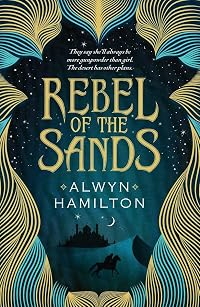
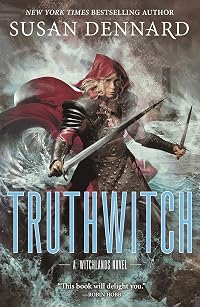
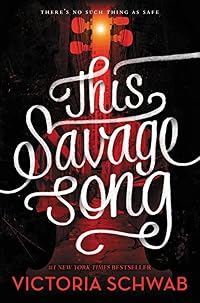
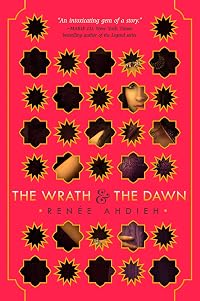
Member Reviews
I really wanted to love this book. It really actually was Stardust crossed with The Fault in Our Stars, and I give the author credit for making that premise into a viable novel. It was also very original, which is something for which I'm always looking these days.
I loved every part of this book set on earth. Aza has a unique first-person voice (she starts out a little too Hazel Grace for me, but it quickly evolves into something unique). Her relationship with Jason is real, complicated and beautiful. Every human character, even the ones we only see briefly, is a complicated person with unique quirks. I loved both Aza and Jason's families so much. I loved how much everyone loved each other. These weren't caricatures of parents who don't show more understand their unique and bizarre children. They were real people who don't totally get it, but have their own quirks, and love their children because they're odd. I appreciated that love was a real force in this world. A couple of earth scenes at the beginning and end made me really feel something.
Then, we get to Magonia. I thought things would be even better in the secondary world. But frankly, it never captured my attention. Despite Headley's skill at making everyone unique on earth, the Magonian characters were caricatures of fantasy people-- the young revolutionary, the sweet caregiver who encourages her to be her own person, the hot guy who is mean at first but melts for our heroine. It's like she forgot that fantasy characters are people too. I saw the "twist" coming from a mile away. Also, when Aza was taken out of where she was comfortable, her unique voice faded a bit, and she just freaked out.
I also had some issues with the pacing. It felt like the book didn't give Aza enough time to become Magonian, so she had to keep having these experiences where she SUDDENLY feels like a Magonian because of some little thing that happens and now she MUST SAVE HER PEOPLE. I was unimpressed. Her decisions at the end made total sense in context.
That said, the ending made me tear up despite its predictability, and the final couple of scenes are lovely. show less
I loved every part of this book set on earth. Aza has a unique first-person voice (she starts out a little too Hazel Grace for me, but it quickly evolves into something unique). Her relationship with Jason is real, complicated and beautiful. Every human character, even the ones we only see briefly, is a complicated person with unique quirks. I loved both Aza and Jason's families so much. I loved how much everyone loved each other. These weren't caricatures of parents who don't show more understand their unique and bizarre children. They were real people who don't totally get it, but have their own quirks, and love their children because they're odd. I appreciated that love was a real force in this world. A couple of earth scenes at the beginning and end made me really feel something.
Then, we get to Magonia. I thought things would be even better in the secondary world. But frankly, it never captured my attention. Despite Headley's skill at making everyone unique on earth, the Magonian characters were caricatures of fantasy people-- the young revolutionary, the sweet caregiver who encourages her to be her own person, the hot guy who is mean at first but melts for our heroine. It's like she forgot that fantasy characters are people too. I saw the "twist" coming from a mile away. Also, when Aza was taken out of where she was comfortable, her unique voice faded a bit, and she just freaked out.
I also had some issues with the pacing. It felt like the book didn't give Aza enough time to become Magonian, so she had to keep having these experiences where she SUDDENLY feels like a Magonian because of some little thing that happens and now she MUST SAVE HER PEOPLE. I was unimpressed. Her decisions at the end made total sense in context.
That said, the ending made me tear up despite its predictability, and the final couple of scenes are lovely. show less
I'm torn between being in love with the world that the author built in this book and being bitter over the writing style and the lack of exploration of said new world. The parts that were there were just absolutely stunning, pure magic to sit back and imagine. However it was sparsely explained and only lightly touched. The way everyone around Aza kept everything shrouded in secret extended so far as too keep the reader shrouded in questions and secrets too. Which is fine, a great way to keep someone going to find out what happens next, but....you're left more or less hanging off a Magonian ship, dangling. You don't get those explanations and deeper looks to really sink your teeth into.
And I wouldn't consider myself a picky reader by any show more means but the writing style in this was something I struggled with.
"All I've got is { }."
"&,&,&."
"!!!!"
"AZAAZAAZAAZAAZAAZAAZAAZAAZAAZAAZAAZA"
This weird disjointed writing is straight from the book. It is very much like the author tried to play to the quick text version of writing so many of us utilize today, especially teens and young adults, but honestly outside of text messages I don't want to see it. If it had been used in messaging format between characters in the books I could have overlooked it but it was such a common occurrence throughout the entire book it really ground my nerves and made it difficult to stay focused on the story itself.
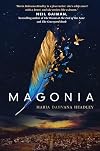
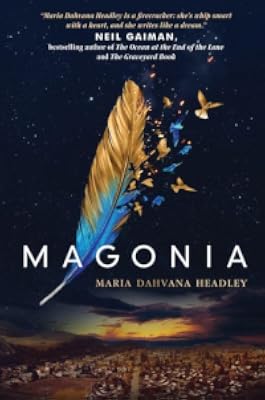
I wanted to give this novel at least three stars because honestly the cover is gorgeous, the story premise has the promise of being so fantastic, but the execution left me wanting. I recommend picking it up at least once, because it has its beauty, but it isn't a book I will likely return to again. So for me this was a two star. show less
And I wouldn't consider myself a picky reader by any show more means but the writing style in this was something I struggled with.
"All I've got is { }."
"&,&,&."
"!!!!"
"AZAAZAAZAAZAAZAAZAAZAAZAAZAAZAAZAAZA"
This weird disjointed writing is straight from the book. It is very much like the author tried to play to the quick text version of writing so many of us utilize today, especially teens and young adults, but honestly outside of text messages I don't want to see it. If it had been used in messaging format between characters in the books I could have overlooked it but it was such a common occurrence throughout the entire book it really ground my nerves and made it difficult to stay focused on the story itself.
I wanted to give this novel at least three stars because honestly the cover is gorgeous, the story premise has the promise of being so fantastic, but the execution left me wanting. I recommend picking it up at least once, because it has its beauty, but it isn't a book I will likely return to again. So for me this was a two star. show less
Rating 3-3 1/2 stars
I wanted to like this book more than I did, but that doesn't mean I DIDN'T enjoy it. I LOVED the first 100 pages and really liked the voice of the main character, Aza, but once the magic was added, the book started to feel rather... lacking.
Additionally, am I the only unsatisfied with that ending?
I wanted to like this book more than I did, but that doesn't mean I DIDN'T enjoy it. I LOVED the first 100 pages and really liked the voice of the main character, Aza, but once the magic was added, the book started to feel rather... lacking.
Additionally, am I the only unsatisfied with that ending?
Probably 4.5 stars, to be honest. This is exactly the kind of novel I love to stumble across by accident; a fantasy that shrugs off most of the many tropes that find their way into the genre these days and is very clearly and proudly something all its own. It’s been a while since I could call a book ‘fantastical’ and really mean it, but the concept, the world, and the reality of Magonia definitely deserves the word.
I don’t want to spoil any of the really, really cool plot, but in essence this is the story of Aza Ray, a girl with the weirdest lung disorder ever seen by medical science, a ferociously defensive, sarcastic, and knowledge-hungry voice, and a best friend who is as reckless, bright, and eccentric as she is. Aza Ray, show more who has been sliding toward death all her life and known it, been defined by it. But when death finally does come for her, it comes in the form of a ship from the sky, flocks of singing birds who may not be birds at all, and a country and destiny Aza never could have dreamed existed.
The worldbuilding in this book was phenomenal; not only does it feel like the author dipped into some of humanity’s collective wildest dreams and imaginings regarding flying, birds, and the sky, but the book doesn’t bloat with it. It’s actually not particularly long at all when compared to average lengths of novels these days. Things just happen, and Aza reacts to them as she discovers them for the first time (with a refreshingly real, believable voice that I’ll get to more in a moment), rather than info dumps being given. The book is written in such a way that the author seems to understand that a reader doesn’t need to know every last detail about Magonia, and in fact it’s more satisfying and easy to believe in when there are so many gaps and mysteries to be pondered and filled in. The real life historical myth and legend woven into the idea of Magonia was also brilliant (and something I’d never even heard about!), bringing it just that necessary bit closer to reality; one of my favorite things in fantasy books.
First person voices can be very, very tough to nail in fiction (especially in YA where there are so very many heroines), so I was extremely happy that Aza's was so great. She was very believable, taking on her illness and her fear of death one moment with blasé, caustic nonchalance and the next letting her terror slip out, clear as day to the reader. Even once things in her universe get turned completely upside down, she faces the fantastical with a very relatable mixture of terror, curiosity, repulsion, and undiluted awe. That last one is, for me at least, possibly the most winning factor of all; one of my absolute favorite moments from this book (you’ll have to forgive me for it being a bit spoilery), is when Aza hears that she may soon be set upon by stormsharks, and reacts thusly:
“Did he just say stormsharks? My inner nerd is elated. Can anything I will ever hear from now until the end of time sound cooler than stormsharks?”
Because I feel like if someone who loved magical things as much as Aza and those who love fantasy do found themselves thrust into the plot or world of a fantasy novel, no matter the danger or confusion there would always be some small level on which we were having fangirl/boy freakout moments.
Aza also thinks very poetically, a trait she shares with her best friend Jason, who narrates a handful of key chapters and is every bit as odd and interesting as she is—understanding the world and Aza from his perspective also goes a long way toward making the budding thread of touching romance in this book sympathetic and powerful. The unique stream-of-thought narration style was very well done; things are offset in parentheses or struckthrough to denote layers of thought and afterthought, with empty brackets and parentheses to hint at things that can’t even be put into words. And there’s even some really effective playing around with typesetting, line breaks, and compound words made of thoughts or actions running together. It adds up to a very visceral visual and emotional reading experience.
My one persistent hangup with the book was Jason's narrative problem-solving powers. (Some slight spoilers ahead, fair warning) Don't misunderstand, I loved him as a character; he's unique, determined, loyal in his very blood and bones to Aza, with a heavily implied and (in my outsider's opinion) well-handled obsessive-compulsive disorder and two moms. But he's also a bit of a narrative savant--part of the reason this book doesn't drag on and on is because Jason is always ready with factoids, solutions, skills, and especially powerful connections that couldn't really believably belong to a fifteen-year-old. I suppose the not-dragging-on part is something I can't really be mad about, and the fact that Aza and Jason both (and by implication the author) specifically admit and affectionately mock it throughout the novel also helps. But it is a bit heavy-handed nonetheless, and in a book full of wild and wonderful things that the author has no trouble convincing you to believe in immediately, it's this of all things that's a bit jarring. It was still a forgivable flaw though, for me at least.
Because it feels relevant, I have to say this book gave me very Neil Gaiman-esque vibes as well, in style, ideas, and execution. So don’t think his cover blurb is designed to trick you; if you’re a fan of his work it’s very likely you’ll love Magonia.
I'm thrilled this has a planned sequel, because the ending demands it (although it's not a true cliffhanger, thank goodness). Until then, you can bet I'll be happily daydreaming quite a bit about the world of this book and everything in it. show less
I don’t want to spoil any of the really, really cool plot, but in essence this is the story of Aza Ray, a girl with the weirdest lung disorder ever seen by medical science, a ferociously defensive, sarcastic, and knowledge-hungry voice, and a best friend who is as reckless, bright, and eccentric as she is. Aza Ray, show more who has been sliding toward death all her life and known it, been defined by it. But when death finally does come for her, it comes in the form of a ship from the sky, flocks of singing birds who may not be birds at all, and a country and destiny Aza never could have dreamed existed.
The worldbuilding in this book was phenomenal; not only does it feel like the author dipped into some of humanity’s collective wildest dreams and imaginings regarding flying, birds, and the sky, but the book doesn’t bloat with it. It’s actually not particularly long at all when compared to average lengths of novels these days. Things just happen, and Aza reacts to them as she discovers them for the first time (with a refreshingly real, believable voice that I’ll get to more in a moment), rather than info dumps being given. The book is written in such a way that the author seems to understand that a reader doesn’t need to know every last detail about Magonia, and in fact it’s more satisfying and easy to believe in when there are so many gaps and mysteries to be pondered and filled in. The real life historical myth and legend woven into the idea of Magonia was also brilliant (and something I’d never even heard about!), bringing it just that necessary bit closer to reality; one of my favorite things in fantasy books.
First person voices can be very, very tough to nail in fiction (especially in YA where there are so very many heroines), so I was extremely happy that Aza's was so great. She was very believable, taking on her illness and her fear of death one moment with blasé, caustic nonchalance and the next letting her terror slip out, clear as day to the reader. Even once things in her universe get turned completely upside down, she faces the fantastical with a very relatable mixture of terror, curiosity, repulsion, and undiluted awe. That last one is, for me at least, possibly the most winning factor of all; one of my absolute favorite moments from this book (you’ll have to forgive me for it being a bit spoilery), is when Aza hears that she may soon be set upon by stormsharks, and reacts thusly:
“Did he just say stormsharks? My inner nerd is elated. Can anything I will ever hear from now until the end of time sound cooler than stormsharks?”
Because I feel like if someone who loved magical things as much as Aza and those who love fantasy do found themselves thrust into the plot or world of a fantasy novel, no matter the danger or confusion there would always be some small level on which we were having fangirl/boy freakout moments.
Aza also thinks very poetically, a trait she shares with her best friend Jason, who narrates a handful of key chapters and is every bit as odd and interesting as she is—understanding the world and Aza from his perspective also goes a long way toward making the budding thread of touching romance in this book sympathetic and powerful. The unique stream-of-thought narration style was very well done; things are offset in parentheses or struckthrough to denote layers of thought and afterthought, with empty brackets and parentheses to hint at things that can’t even be put into words. And there’s even some really effective playing around with typesetting, line breaks, and compound words made of thoughts or actions running together. It adds up to a very visceral visual and emotional reading experience.
My one persistent hangup with the book was Jason's narrative problem-solving powers. (Some slight spoilers ahead, fair warning) Don't misunderstand, I loved him as a character; he's unique, determined, loyal in his very blood and bones to Aza, with a heavily implied and (in my outsider's opinion) well-handled obsessive-compulsive disorder and two moms. But he's also a bit of a narrative savant--part of the reason this book doesn't drag on and on is because Jason is always ready with factoids, solutions, skills, and especially powerful connections that couldn't really believably belong to a fifteen-year-old. I suppose the not-dragging-on part is something I can't really be mad about, and the fact that Aza and Jason both (and by implication the author) specifically admit and affectionately mock it throughout the novel also helps. But it is a bit heavy-handed nonetheless, and in a book full of wild and wonderful things that the author has no trouble convincing you to believe in immediately, it's this of all things that's a bit jarring. It was still a forgivable flaw though, for me at least.
Because it feels relevant, I have to say this book gave me very Neil Gaiman-esque vibes as well, in style, ideas, and execution. So don’t think his cover blurb is designed to trick you; if you’re a fan of his work it’s very likely you’ll love Magonia.
I'm thrilled this has a planned sequel, because the ending demands it (although it's not a true cliffhanger, thank goodness). Until then, you can bet I'll be happily daydreaming quite a bit about the world of this book and everything in it. show less
Unexpectedly surreal and haunting, but with just enough geekery and typical teen moments to somehow seem realistic. Aza Ray can't breathe, and somehow manages to make it to a sickly, snarky adolescence on oh so little oxygen. For a minute you fear this is going to be another sick kid with a bad attitude story-turned-movie.
And then.
In the sky, as half-bird and fueled by songs from a bird that flew into in her chest, she is a superpower. Also, a boyfriend who speaks in pi, a giant squid, and lots of lightning. And a crazy power-hungry bird-person-mom. And I'm still not quite sure what really happens here.
"trembling adored tousled bird mad girl" - Robert Smith
And then.
In the sky, as half-bird and fueled by songs from a bird that flew into in her chest, she is a superpower. Also, a boyfriend who speaks in pi, a giant squid, and lots of lightning. And a crazy power-hungry bird-person-mom. And I'm still not quite sure what really happens here.
"trembling adored tousled bird mad girl" - Robert Smith
So this book. I hate when something starts out so unbelievably amazing and then dissolves into complete mediocrity. The 1/3 of MAGONIA was awesome. I had all these wonderful John Green vibes and I actually cried at one scene. The voice was so intoxicating.
But then...not so much.
As soon as Aza goes up, the amazing voice gets strangled in a complicated world full of rules and history and just strangeness that failed to captivate me. One of the big problems with this book (and others like it) is that Aza is thrust into this sky world with a million questions (rightfully so), but guess how many get answered? Not many. And instead of demanding answers, Aza just lets people dismiss her and literally put to work swabbing the deck. It was show more extremely frustrating. Worst of all though, is that the plot and worldbuilding is so complicated and unique in the sky that Aza's character fades into generic girl in a fantasy novel. Maybe if she hadn't be so dynamic and alive in the first 1/3 of the book, I wouldn't have noticed as much, but she was so I did.
Also the introduction of a love triangle was so anemic as to be pointless. And yet it looks like it might develop more in the sequel. Bleh.
Overall, this would have been one of my favorite books if the last 2/3 of the book (the fantasy) had lived up to the 1/3 (the contemporary). I love fantasy YA, but this just didn't work on that level. I will anxiously await this authors next contemporary offering, but I won't be returning to Magonia. show less
But then...not so much.
As soon as Aza goes up, the amazing voice gets strangled in a complicated world full of rules and history and just strangeness that failed to captivate me. One of the big problems with this book (and others like it) is that Aza is thrust into this sky world with a million questions (rightfully so), but guess how many get answered? Not many. And instead of demanding answers, Aza just lets people dismiss her and literally put to work swabbing the deck. It was show more extremely frustrating. Worst of all though, is that the plot and worldbuilding is so complicated and unique in the sky that Aza's character fades into generic girl in a fantasy novel. Maybe if she hadn't be so dynamic and alive in the first 1/3 of the book, I wouldn't have noticed as much, but she was so I did.
Also the introduction of a love triangle was so anemic as to be pointless. And yet it looks like it might develop more in the sequel. Bleh.
Overall, this would have been one of my favorite books if the last 2/3 of the book (the fantasy) had lived up to the 1/3 (the contemporary). I love fantasy YA, but this just didn't work on that level. I will anxiously await this authors next contemporary offering, but I won't be returning to Magonia. show less
"For the first time in my entire life, I have power. More than power. I feel like I belong. Like this is my ship. Like this is my country. Like this is my destiny."
I have so much respect for writers like Maria Dahvana Headley who are so immensely creative that they can create an entire world. There’s nothing cookie cutter about this novel and I love that!
Aza is a young girl with a lung disease that doctors are unable to diagnose. It’s hard for her to breathe, so every day is a struggle, but her family and best friend Jason support her, making her life a little easier for her to bear. One day Aza sees a ship in the sky, but her family thinks she’s hallucinating from her medication. The only person who believes her is her friend show more Jason Kerwin. Jason mentions Magonia, but Aza thinks it’s a myth. Something goes tragically wrong and she wakes up in an unfamiliar place. She discovers that she’s in Magonia, which is another world, but in Magonia she’s healthy and powerful. She can breathe. Earth and Magonia are dependent on each other and Magonians think a war between them is imminent. Aza feels torn because she still loves and misses her Earth family, but she’s starting to feel like she belongs in Magonia.
Maria Dahvana Headley is super smart and her intelligence shows in her references throughout the novel. Jason is constantly reciting pi and he’s read the Annuls of Ulster. She references Shakespeare, Casablanca, Moby Dick, E. E. Cummings, Animal Form, Icarus and Jacob Grimm. I love stories that incorporate those types of details.
I love the prose; it’s smooth and conversational. It has a natural flow that meshes well with her wonderful storytelling and fully developed characters.
I’ll never view storms the same way again. Whenever I see a storm, I’m going to start thinking, “That’s Magonia foraging the Earth again.” I wouldn’t be surprised if I started staring at the clouds looking for ships. This novel was so refreshingly different, so if you love fantasy, you’ll love this one. show less
Members
- Recently Added By
Lists

2016 Hugo Eligible Novels
90 works; 32 members

Books Read in 2016
4,666 works; 199 members
Author Information

30+ Works 4,187 Members
Maria Dahvana Headley is a New York Times bestselling author. She is the author of The Year of Yes which has been translated into Korean, German, Dutch, Italian, Hebrew, and Chinese. Headley's title The End of the Sentence, co-written with Kat Howard, published by Subterranean Press in September 2014 was named one of NPR's Best Books of 2014. Her show more title Give Her Honey When You Hear Her Scream was published by Lightspeed Magazine in 2012, and was a Nebula Award finalist in the short story category. Her New York Times best-selling title, Magonia, also garnered a starred review in Publisher's Weekly in February, 2015. (Bowker Author Biography) show less
Awards and Honors
Series

Classifications
- Genres
- Teen, Fiction and Literature, Fantasy, Young Adult
- DDC/MDS
- 813.6 — Literature & rhetoric American literature in English American fiction in English 2000-
- LCC
- PZ7 .H3428 .M — Language and Literature Fiction and juvenile belles lettres Fiction and juvenile belles lettres Juvenile belles lettres
- BISAC
Statistics
- Members
- 971
- Popularity
- 27,120
- Reviews
- 45
- Rating
- (3.45)
- Languages
- English, German, Polish, Turkish
- Media
- Paper, Audiobook, Ebook
- ISBNs
- 14
- ASINs
- 4