Self-Interviews
by James Dickey
On This Page
Description
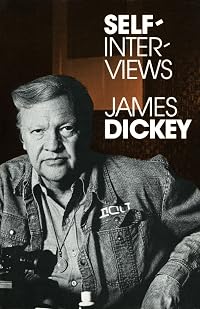
In Self-Interviews, James Dickey speaks thoughtfully and with candor of his life as a poet. He recalls how poetry came to be his career, tracing its growing importance in his life from his youth in Georgia through his years overseas with the Air Force, as a student at Vanderbilt, as a teacher, and as a successful advertising executive. He also tells of how he reworked the life around him into poetry, of the fleeting impressions and lingering thoughts that were the seeds of some of his finest show more poems, including ?Cherrylog Road,? ?The Lifeguard,? ?The Fiend,? and ?Falling.? Following only a rough outline, Dickey recorded these spontaneous monologues in June, 1968, not long after the publication of his Poems, 1957?1967, which collected the work from his first five books. These musings, then, date from what was in many ways a natural vantage point on his artistic development, a moment ripe for recollection and analysis. Dickey uses the occasion not only to look back on his career but also to consider his preferences and goals as a poet. ?I would like to be able to write a poetry,? he reveals, ?that would have something for every level of mind, something that would be accessible to a child and would also give college professors and professional critics something, maybe something they haven?t had much of recently, or indeed ever.? This book is not so much the autobiography of a poet as it is the biography of a poet?s work. Unique and revealing, Self-Interviews is an intimate profile of a decade in the art of one of America?s finest poets. show lessTags
Recommendations























Member Reviews
I picked up this book while perusing the stacks at the University of Virginia bookstore when I was a student back in 1986. I was acquainted with Dickey's work from my 1st year American Lit course, but his writing didn't do much for me. But, still, I was interested in poets and what made them tick, their writing process, etc., so I read a couple of pages of this book and immediately bought it, went home and devoured it. I've since read parts of it many times, and always find something deeper to ponder. I also found more appreciation for Dickey's brand of poetry. This little book has everything for anyone who is interested in writing, or any other art.
"...in our technology-dominated world the value of literature is getting harder and show more harder to maintain, but it must be maintained if we're going to have any humanity left at all." p.51
This was written over 50 years ago. Look at where technology is today. Holy smokes! Fortunately, we haven't done too bad holding on to the arts. It's a battle. Keep fighting. show less
"...in our technology-dominated world the value of literature is getting harder and show more harder to maintain, but it must be maintained if we're going to have any humanity left at all." p.51
This was written over 50 years ago. Look at where technology is today. Holy smokes! Fortunately, we haven't done too bad holding on to the arts. It's a battle. Keep fighting. show less
Members
- Recently Added By
Author Information

69+ Works 4,842 Members
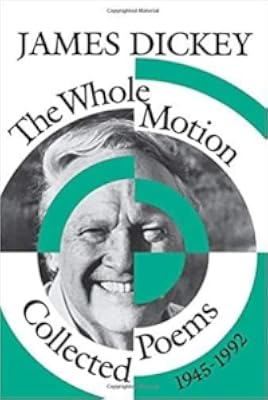
James Lafayette Dickey, an American poet and novelist, was born in Atlanta, Georgia, in 1923. He is perhaps best known for Deliverance, his novel about four suburban men struggling to survive a canoe trip gone awry, which was made into a popular movie of the same title, starring Burt Reynolds. Dickey also published several volumes of poetry that show more are marked by his portrayal of a world in conflict. His collected poems (1942-1992) were published under the title The Whole Motion in 1992. After serving as a pilot during World War II, Dickey earned bachelor's and master's degrees from Vanderbilt University. He taught at several universities and worked as poetry consultant to the Library of Congress from 1966 to 1968. He died in 1996. (Bowker Author Biography) show less
Classifications
Statistics
- Members
- 28
- Popularity
- 983,335
- Reviews
- 1
- Rating
- (5.00)
- Languages
- English
- Media
- Paper
- ISBNs
- 2
- ASINs
- 3