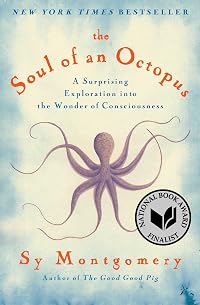
The Soul of an Octopus: A Surprising Exploration into the Wonder of Consciousness
by Sy Montgomery
On This Page
Description
"In this astonishing book from the author of the bestselling memoir The Good Good Pig, Sy Montgomery explores the emotional and physical world of the octopus--a surprisingly complex, intelligent, and spirited creature--and the remarkable connections it makes with humans. Sy Montgomery's popular 2011 Orion magazine piece, "Deep Intellect," about her friendship with a sensitive, sweet-natured octopus named Athena and the grief she felt at her death, went viral, indicating the widespread show more fascination with these mysterious, almost alien-like creatures. Since then Sy has practiced true immersion journalism, from New England aquarium tanks to the reefs of French Polynesia and the Gulf of Mexico, pursuing these wild, solitary shape-shifters. Octopuses have varied personalities and intelligence they show in myriad ways: endless trickery to escape enclosures and get food; jetting water playfully to bounce objects like balls; and evading caretakers by using a scoop net as a trampoline and running around the floor on eight arms. But with a beak like a parrot, venom like a snake, and a tongue covered with teeth, how can such a being know anything? And what sort of thoughts could it think? The intelligence of dogs, birds, and chimpanzees was only recently accepted by scientists, who now are establishing the intelligence of the octopus, watching them solve problems and deciphering the meaning of their color-changing camouflage techniques. Montgomery chronicles this growing appreciation of the octopus, but also tells a love story. By turns funny, entertaining, touching, and profound, The Soul of an Octopus reveals what octopuses can teach us about consciousness and the meeting of two very different minds"-- "An investigation of the emotional and physical world of the octopus"-- show lessTags
Recommendations
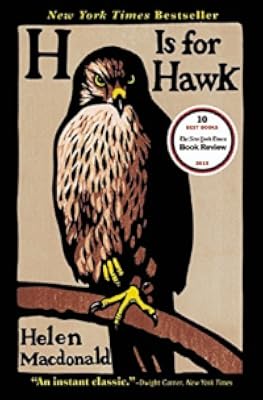
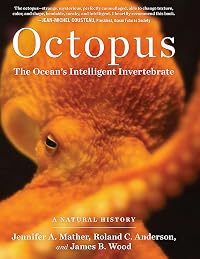
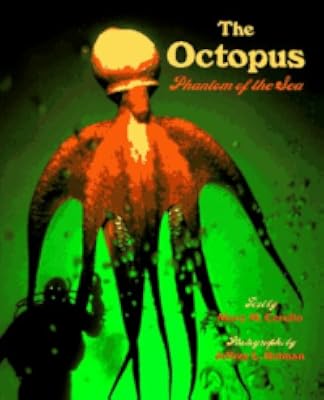






Member Recommendations
by anonymous user
Member Reviews
This was a lovely book—both fascinating and deeply kind, with a lot to interest a broad swath of readers. The science is accessible without being dumb, and at the same time Montgomery brings the octopuses (NOT octopi!) and their personalities (yes, they have 'em) really vividly to life. Plus I love reading about any interest that attracts the oddballs among us, and octopuses definitely seem to fall into that category—I guess I can count myself among those oddballs now. Thus ends any pulpo consumption for me ever again, and no big loss.
Full disclosure, I don’t read a lot of nonfiction. There aren’t very many subjects that can hold my attention for 300 pages or so, and I find most nonfiction writers can’t help but lapse into pages of excruciating detail about the minutiae of their beloved topic. The Soul of an Octopus by noted naturalist and author Sy Montgomery has moments of this, but she keeps the book moving with her personal narrative of the more than two years she spent working with octopuses. (Yes--the correct plural is octopuses as she explains in the first paragraph of the book.)
Montgomery, a naturalist who has spent her life studying many different species, immerses herself in the world of the octopus with the help of the New England Aquarium. Not only show more do the many creatures that she encounters become beloved characters, but also her “Wonderful Wednesday” crew that she meets up with most weeks at the aquarium. In The Soul of an Octopus Montgomery explores not only the unique and fascinating lives of octopuses, but philosophy, consciousness, and what gives an animal their personality--and possibly their soul. PK show less
Montgomery, a naturalist who has spent her life studying many different species, immerses herself in the world of the octopus with the help of the New England Aquarium. Not only show more do the many creatures that she encounters become beloved characters, but also her “Wonderful Wednesday” crew that she meets up with most weeks at the aquarium. In The Soul of an Octopus Montgomery explores not only the unique and fascinating lives of octopuses, but philosophy, consciousness, and what gives an animal their personality--and possibly their soul. PK show less
I surprised myself by how much pleasure I found in this book. The author feeds the reader so much incredible information about these geniuses of the ocean that she'll want to just meet one face-to-face, armed with all her new knowledge and appreciation. In addition to cephalopod facts, she also introduces us to the octopus tenders and lovers at the NE Aquarium in Boston, to the fish and turtles, to the life brimming within and behind the Giant Ocean Tank. Ms. Montgomery learns to scuba dive, despite painful ear problems, and some of the finest parts of the book are her encounters with octopuses in the wild. This is an unexpected joy of a read.
My poor husband. Every time we go to the Monterey Bay Aquarium, I have to park myself in front of the octopus tanks. It happens with any other place that keeps octopuses, too. I’ll stay there for an hour or so total. If not more. An octopus-only pass would be fine. Well not really. My fascination with them is long-established, but I can’t pinpoint a precise time it started. Maybe when I was a kid during episodes of The Undersea World of Jacques Cousteau. Or any of the other nature books or programs featuring life in the ocean that I devoured as a kid. If money, time and hassle were no big deal I’d have one as a pet. And a raven. For the same reasons; they’re intelligent and I am convinced; self-aware.
I’ve long known octopuses show more are smart, but I didn’t know that they were so individual in their personalities. That was something Ms. Montgomery really brought to life with her book (and so much more). I was practically in tears by the end when she had to say goodbye to yet another amazing octopus she’d come to know and love. Tears. Over a mollusk. An invertebrate about as different from human or mammalian life as it’s possible to be and still share a planet. I just can’t tell you how much of a fan-girl I was while reading this book; oohing and ahhing and emitting the occasional squee. My husband...did I mention he suffers slightly from my manias?, well he was peppered with ‘did you know?’ and ‘OMG, listen to this…’, the whole time I read this book.
Like, did you know that octopuses have a dominant eye, just like people? That they have estrogen or testosterone and cortisol hormones almost like people? That they recognize individual faces? That they react to those different people in really different ways? That they taste with their skin and suckers? That they only live a few years? That some species carry empty coconut shells to use as emergency shelter?
Getting back to the hormones and the tasting with skin bits; I wonder if the chemical similarity between our species is one of the reasons they take to us so readily. We’re as alien to them as they are to us, but yet time and time again bonds form with captive octopuses and their caretakers. Without language we’re able to communicate and, dare I say it, care for each other. Even in the wild, octopuses have been known to lead divers around on a kind of tour of their territories. That is something I’ve never known a terrestrial animal to do.
At times, Montgomery speculates, with colluding researchers, on the reasons for the octopus’s intelligence, given that it doesn’t live long, doesn’t interact with others during its lifetime and has a distributed neural net rather than a centralized brain. In the corvid family (crows, ravens and jays) it’s thought their smarts come from being so good at finding food they have a lot of leisure time and get bored. Their antics are a product of that downtime. With octopuses it’s thought that the no-shell situation forced them to have to outwit their predators rather than just hide.
So wonderful that I really, really wanted one while reading. Or at least to have access to one at an aquarium the way Montgomery did. She said it was an honor to know and interact with these animals, and she’s so right. It’s a privilege that I was intensely jealous of, but could experience, however remotely, through her writing.
If you think octopuses are slimy, creepy, scary, unfathomable creatures, I think you need to read this book. If you already appreciate, but don’t really understand octopuses, you need to read this book. If you love nature and the mystery of consciousness, you need to read this book. If you’re curious about the different paths that evolution has taken to produce successful creatures, you need to read this book. If you’re breathing, you need to read this book.
Did I mention I loved it? show less
I’ve long known octopuses show more are smart, but I didn’t know that they were so individual in their personalities. That was something Ms. Montgomery really brought to life with her book (and so much more). I was practically in tears by the end when she had to say goodbye to yet another amazing octopus she’d come to know and love. Tears. Over a mollusk. An invertebrate about as different from human or mammalian life as it’s possible to be and still share a planet. I just can’t tell you how much of a fan-girl I was while reading this book; oohing and ahhing and emitting the occasional squee. My husband...did I mention he suffers slightly from my manias?, well he was peppered with ‘did you know?’ and ‘OMG, listen to this…’, the whole time I read this book.
Like, did you know that octopuses have a dominant eye, just like people? That they have estrogen or testosterone and cortisol hormones almost like people? That they recognize individual faces? That they react to those different people in really different ways? That they taste with their skin and suckers? That they only live a few years? That some species carry empty coconut shells to use as emergency shelter?
Getting back to the hormones and the tasting with skin bits; I wonder if the chemical similarity between our species is one of the reasons they take to us so readily. We’re as alien to them as they are to us, but yet time and time again bonds form with captive octopuses and their caretakers. Without language we’re able to communicate and, dare I say it, care for each other. Even in the wild, octopuses have been known to lead divers around on a kind of tour of their territories. That is something I’ve never known a terrestrial animal to do.
At times, Montgomery speculates, with colluding researchers, on the reasons for the octopus’s intelligence, given that it doesn’t live long, doesn’t interact with others during its lifetime and has a distributed neural net rather than a centralized brain. In the corvid family (crows, ravens and jays) it’s thought their smarts come from being so good at finding food they have a lot of leisure time and get bored. Their antics are a product of that downtime. With octopuses it’s thought that the no-shell situation forced them to have to outwit their predators rather than just hide.
So wonderful that I really, really wanted one while reading. Or at least to have access to one at an aquarium the way Montgomery did. She said it was an honor to know and interact with these animals, and she’s so right. It’s a privilege that I was intensely jealous of, but could experience, however remotely, through her writing.
If you think octopuses are slimy, creepy, scary, unfathomable creatures, I think you need to read this book. If you already appreciate, but don’t really understand octopuses, you need to read this book. If you love nature and the mystery of consciousness, you need to read this book. If you’re curious about the different paths that evolution has taken to produce successful creatures, you need to read this book. If you’re breathing, you need to read this book.
Did I mention I loved it? show less
Summary: The author got to know a few octopuses in a New England aquarium in order to study and write about the intelligence of octopuses. But her story ended up so much more than just a description of intelligence. It was one of friendship and grief as well.
My thoughts: Loved this book. The author was so heartfelt in all she said – it was obvious that she really loved her friends, the octopuses. There was a good mixture of facts about octopuses and her personal experiences with them, making the book both intellectually engaging and personal.
My thoughts: Loved this book. The author was so heartfelt in all she said – it was obvious that she really loved her friends, the octopuses. There was a good mixture of facts about octopuses and her personal experiences with them, making the book both intellectually engaging and personal.
This book is one part love story, one part scientific investigation of the native uniqueness of consciousness. The author sets out to learn more about octopuses and immediately finds herself having an almost religious experience when she gets the opportunity to touch one at a local aquarium. She becomes fascinated and obsessed with this alien intelligence and fantastical physical form of these aquatic icons.
This fascination will propel her to tackle SCUBA diving so she can observe octopuses in the wild. She develops research methods to test for personality, and allows herself the freedom to wonder what it might be like to taste emotion, see with your skin, and eight independent brains.
This book is full of octopus facts and theories to show more ponder. Perhaps more interesting is the author's own musings about her relationships with a series of octopuses in captivity. This is a personal and intimate history about intelligent life's ability to recognize itself in the other. show less
This fascination will propel her to tackle SCUBA diving so she can observe octopuses in the wild. She develops research methods to test for personality, and allows herself the freedom to wonder what it might be like to taste emotion, see with your skin, and eight independent brains.
This book is full of octopus facts and theories to show more ponder. Perhaps more interesting is the author's own musings about her relationships with a series of octopuses in captivity. This is a personal and intimate history about intelligent life's ability to recognize itself in the other. show less
This informative narrative of a naturalist's "dive" into the world of octopuses - their physiology, behaviour, and intelligence - was a diverting read. As a life science teacher, I was coming to this with a fair amount of background knowledge, so didn't necessarily acquire any new insights or understandings. But the book works as a well-rounded summary of what we knew about the genus at the time it was written (2016 - I mention this because so much new info has emerged since then), and Montgomery knows how to tell a good story, weaving references to extant research with personal anecdotes (her interactions with various octopuses, her quixotic attempts to master the art of scuba diving) and the larger goings-on at the New England show more Aquarium, a complex establishment supported by a passionate supporting cast of scientists, naturalists, and volunteers.
I appreciated the balance the author (mostly) maintains between drawing attention to the apparent human-like behaviours and intelligence of octopuses while simultaneously acknowledging the limits of judging their intelligence using the same measures that we apply to mammals. As she rightly notes, mammals and cephalopods represent entirely different branches of the tree of life, having diverged so long ago that almost everything that we would appear to have in common - eyes, brains, endocrine systems - emerged via separate, potentially dissimilar processes. Measuring octopus intelligence using the same scales we employ for mammals (tool use, empathy) would be like trying to understand seashells using the same criteria (hardness, luster, fracture patterns) we've developed to characterize rocks.
As this book emphasizes, we are only just beginning to realize how ill-equipped we are to understand non-human intelligence. Montgomery's most useful contribution here, I believe, is making the case that we need to set aside preconceived biases and start considering the reality that evolution has not been a single, unidirectional march from primitive --> human, but a series of parallel processes, leading off in any number of as yet unsuspected and unimagined directions. show less
I appreciated the balance the author (mostly) maintains between drawing attention to the apparent human-like behaviours and intelligence of octopuses while simultaneously acknowledging the limits of judging their intelligence using the same measures that we apply to mammals. As she rightly notes, mammals and cephalopods represent entirely different branches of the tree of life, having diverged so long ago that almost everything that we would appear to have in common - eyes, brains, endocrine systems - emerged via separate, potentially dissimilar processes. Measuring octopus intelligence using the same scales we employ for mammals (tool use, empathy) would be like trying to understand seashells using the same criteria (hardness, luster, fracture patterns) we've developed to characterize rocks.
As this book emphasizes, we are only just beginning to realize how ill-equipped we are to understand non-human intelligence. Montgomery's most useful contribution here, I believe, is making the case that we need to set aside preconceived biases and start considering the reality that evolution has not been a single, unidirectional march from primitive --> human, but a series of parallel processes, leading off in any number of as yet unsuspected and unimagined directions. show less
Members
- Recently Added By
Published Reviews
ThingScore 100
"This book's big reveal may be up front in the title, but that doesn't detract from the delight of discovering just what, exactly, an octopus's soul might look like. ...Anyone captivated by the natural world, from interested middle school readers and up, will be engrossed by this account of a strange - and unexpectedly beautiful - animal."
added by KoobieKitten
Lists

Recommended Nature Writing
346 works; 180 members

2016 Notable Books for Adults
26 works; 7 members

Top Five Books of 2018
802 works; 265 members

Recommend the 20 best books you've read in the last five years
2,168 works; 607 members
Top Five Books of 2017
757 works; 231 members

Top Five Books of 2022
736 works; 272 members

Top Five Books of 2016
795 works; 229 members

Non-Fiction Worth Reading
1,016 works; 257 members

Favorite Animal Non-Fiction
293 works; 144 members

Reading Glasses Podcast
410 works; 3 members

Best Audiobooks
240 works; 114 members

2024 Reading List
49 works; 1 member

Books Read in 2022
5,226 works; 115 members

Club Read's Recommended Nonfiction Written by Women
618 works; 30 members

Books Read in 2016
4,666 works; 197 members

Books about Octopuses
23 works; 1 member

Books about Animals
86 works; 4 members

Books Read in 2017
4,249 works; 130 members
Animals in the Title
498 works; 11 members

GraceCollection TBR/To Buy List
106 works; 1 member
Author Information

52+ Works 11,066 Members
Sy Montgomery was born on February 7, 1958 in Frankfurt, Germany. She is a 1979 graduate of Syracuse University, a triple major with dual degrees in Magazine Journalism from the S.I. Newhouse School of Public Communications and in French Language and Literature and in Psychology from the College of Arts and Sciences. She was awarded an Honorary show more Doctorate of Humane Letters from Keene State College in 2004, and an Honorary Doctorate of Humane Letters from Franklin Pierce University and also from Southern New Hampshire University in 2011. Montgomery is a naturalist. She is an author, and scriptwriter. Her most popular book, The Good Good Pig, is a memoir of her life with her pig, Christopher Hogwood. The book became listed on the New York Times bestseller list in 2015. How to be a Good Creature: A Memoir in Thirteen Animals was published in September 2018. Her other notable titles include Journey of the Pink Dolphins, Spell of the Tiger, and Search for the Golden Moon Bear. (Bowker Author Biography) show less
Some Editions
Awards and Honors
Awards
Distinctions
Series
Belongs to Publisher Series
detebe (24453)
Common Knowledge
- Canonical title*
- Rendezvous mit einem Oktopus
- Original title
- The soul of an octopus
- Original publication date
- 2015
- People/Characters
- Athena (octopus); Kali (octopus); Karma (octopus); Octavia (octopus); Anna (octopus); Myrtle (green sea turtle) (show all 25); Sy Montgomery; Jackie Anderson; Roland Anderson; Marion Britt; Christa Carceo; Danny Carceo; Scott Dowd; Keith Ellenbogen; Kathryn Kegel; Tatiana Leite; Anna McGill-Dohan; Francisco Marrufo; Jennifer Mather; Wilson Menashi; Doris Morrissette, "Big D"; Andrew Murphy; Bill Murphy; Liz Thomas; Brendan Walsh
- Important places
- New England Aquarium, Boston, Massachusetts, USA; Cozumel, Mexico
- Dedication
- For Anna
"Yesterday Remains Perfect" - First words
- On a rare, warm day in mid-March, when the snow was melting into mud in New Hampshire, I traveled to Boston, where everyone was strolling along the harbor or sitting on benches licking ice cream cones.
- Quotations
- “They mate on Valentine’s Day?” says a woman to her date. “How do they know it’s Valentine’s Day?”
- Last words
- (Click to show. Warning: May contain spoilers.)Postscript: In some cases, the other creatures will be separated from the octopus by plexiglass panels, so the octopuses won't eat them.
(Click to show. Warning: May contain spoilers.)I loved them, and will love them always, for they have given me a great gift: a deeper understanding of what it means to think, to feel, and to know. - Publisher's editor
- Blechman, Andrew
- Blurbers
- Grandin, Temple; Croke, Vicki Constantine; Heinrich, Bernd; Virga, Vint; Bekoff, Marc
- Original language*
- Amerikanisch
*Some information comes from Common Knowledge in other languages. Click "Edit" for more information.
Classifications
Statistics
- Members
- 3,135
- Popularity
- 5,604
- Reviews
- 133
- Rating
- (3.83)
- Languages
- 6 — English, French, German, Italian, Russian, Spanish
- Media
- Paper, Audiobook, Ebook
- ISBNs
- 21
- UPCs
- 1
- ASINs
- 11