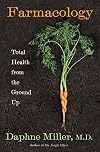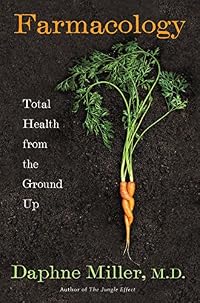
Farmacology: Total Health from the Ground Up
by Daphne Miller
On This Page
Description
Health & Fitness. Technology. Nonfiction. - Is there a connection between microbes in the soil and in our bodies? - Why does a dirty farm offer protection from allergies while a dirty urban apartment does not? - What can pastured hens teach us about "good" stress and "bad" stress? - How can a vineyard pest management system inspire more effective cancer treatment? - What can cows teach us about raising healthy eaters? - Can urban farms reduce neighborhood crime? These may not sound like show more typical questions for a family physician to consider, but in Farmacology, Daphne Miller, MD, ventures out of her medical office and travels to seven innovative family farms around the country on a quest to discover the hidden connections between how we care for our bodies and how we grow our food. Miller also seeks out the perspectives of noted biomedical scientists and artfully weaves in their insights and research, along with stories from her own medical practice. Farmacology offers a profound new approach to healing, combined with practical advice for how to treat disease and maintain wellness. show lessTags
Recommendations




Member Reviews
One thing I’ve become passionate about is the local food movement. Yeah it’s an old one, but I’m a latecomer. There are a lot of books that link human health directly to food and those are necessary, but this book looks at the connection between the soil that grows that food (whether it be animal or vegetable) and our health. As a general practitioner, Dr. Miller became frustrated at her inability to “fix” some of her patients through modern methods and turned her attention outside of that. There are a lot of topics that get touched on in each chapter; gut flora and its differences across cultures and how that reflects in people’s health, egg production and how pastured v. factory affects egg nutrition, how a winery show more approaches integrated pest management and how that connects to cancer research, how urban farming can change individuals and neighborhoods for the better, natural skincare that actually works and much much more.
She spends time with a variety of farmers, most of whom are dedicated to biodiversity and soil health. The idea that if you feed the soil first, anything you produce from it will be more healthy both for consumption and for the mechanism of the farm itself. I expected a chapter on Polyface farm with Joel Salatin, but even without him and the case is made well. Mono-agriculture and a lot of the techniques that follow on are just plain destructive and do not improve the health of people or anything else that eats what it grows. No, the book isn’t perfect and she makes some leaps of logic without tracing back to how she reached those conclusions, but it is a heartfelt book that seeks answers to difficult health questions. If you’re interested in how polyagriculture farming can improve your health, this is a good place to start. show less
She spends time with a variety of farmers, most of whom are dedicated to biodiversity and soil health. The idea that if you feed the soil first, anything you produce from it will be more healthy both for consumption and for the mechanism of the farm itself. I expected a chapter on Polyface farm with Joel Salatin, but even without him and the case is made well. Mono-agriculture and a lot of the techniques that follow on are just plain destructive and do not improve the health of people or anything else that eats what it grows. No, the book isn’t perfect and she makes some leaps of logic without tracing back to how she reached those conclusions, but it is a heartfelt book that seeks answers to difficult health questions. If you’re interested in how polyagriculture farming can improve your health, this is a good place to start. show less
Some interesting lines drawn here between sustainable agriculture practices and treating the human body in a like respectful manner, acknowledging the complexities and inter-relationships with our environment. The first chapter is kind of a review of what biodynamic farming is, chapter 2 emphasizes the best ways to encourage resilience in children, with special emphasis on asthma. Chapter three compares eggs produced two ways, and the levels of stress the chickens endure. Chapter 4 talks about IPM (integrated pest management) in a wine orchard and reflects on a very new approach to cancer management. Chapter 5 was perhaps the best, discussing ALL of the benefits that community gardening promotes, from lower crime rates to community show more engagement and beauty. Chapter 6 begins a discussion of aromatics distillation that I'd like to learn more about. By the end of the book, it was apparent that Dr. Miller loves to gad about the globe on any pretext. She does a thoughtful job of considering what she learns. show less
I just read this book for work and really enjoyed it. I thought she did a great job of appealing to trendy farm types, the medical community, and casual readers looking for a way to feel better. I also like that while she does promote farmers markets and healing plants, she's not extremist about it -- she still believes in modern medicine when it's truly needed.
Ratings
Members
- Recently Added By
Lists

Books Read in 2014
2,343 works; 89 members

Summer Reads 2014
207 works; 69 members
Author Information

2 Works 214 Members
Daphne Miller, MD, is a board-certified family physician in private practice in San Francisco. She is an associate professor at the University of California, San Francisco, where she teaches nutrition and integrative medicine. She lives in San Francisco with her family.
Common Knowledge
- Original publication date
- 2013
- Important places
- Jubilee Biodynamic Farm, Carnation, Washington, USA; Rockin' H Ranch, Norwood, Missouri, USA; Heartland Egg, Summers, Arkansas, USA; Scribe Winery, Sonoma, California, USA; La Familia Verde Urban Farms, The Bronx, New York, New York, USA; Morning Myst, Fruitland, Washington, USA
- Quotations
- "What we've found in our studies is that neighborhood beauty is strongly related to health-promoting processes such as collective efficacy, which in turn, relates to one's self-reports of health. If you don't think your surr... (show all)oundings are beautiful and worth engaging with on a daily basis, then you won't go outside, move, connect with others, or be active. The bottom line is that it's all about aesthetics." - Jill Litt
In the midst of this involved science lesson, Annie the chemist retreated and the green witch took over. Suddenly she was channeling Saint Hildegard von Bingen, the twelfth-century visionary who is known for her writings on ... (show all)mysticism and herbal medicine. Annie explained that the German saint wrote about viriditas - literally, "green-ness" in Latin - using it to describe a state o physical or spiritual health.
Not only does the USDA fail to offer any standards for taste, but one might argue that the agency's exclusion of imperfect produce is a direct attack on fruit and vegetable palatability and nutritional value. This is because... (show all) those tasty volatiles or secondary metabolites (which are also referred to as "antioxidants") are usually produced in response to damaging or stressful influences such as insects, molds, soil, sunshine, or encroaching plants. The more imperfect a fruit or vegetable, the more likely it is to carry flavor and nutritional punch.
I realized that the one thing these idealized older women have in common is that they spend a lot of time outdoors and communicate with weather, animals, plants, and soil on a regular basis.
Classifications
- Genres
- Nonfiction, General Nonfiction, Health & Wellness, Science & Nature
- DDC/MDS
- 613.2 — Applied science & technology Medicine & health Personal health and Fitness Dietetics
- LCC
- RA776.5 .M499 — Medicine Public aspects of medicine Public aspects of medicine Public health. Hygiene. Preventive medicine Personal health and hygiene
- BISAC
Statistics
- Members
- 118
- Popularity
- 275,110
- Reviews
- 3
- Rating
- (3.79)
- Languages
- English
- Media
- Paper, Audiobook, Ebook
- ISBNs
- 4
- ASINs
- 2