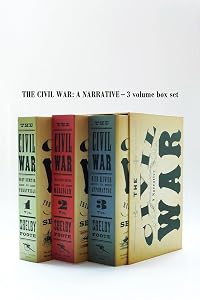
The Civil War: A Narrative
by Shelby Foote
The Civil War: A Narrative (Collections and Selections — Original publication, Vols. 1-3)
On This Page
Description
History. Military. Nonfiction. The Civil War: A Narrative, Vol. 2 continues one of the most remarkable works of history ever fashioned. Focusing on the pivotal year of 1863, the second volume in Shelby Foote's masterful narrative history brings to life some of the most dramatic and important moments in the Civil War, including the Battle of Gettysburg and Grant's Vicksburg Campaign.The word narrative is the key to this book's extraordinary incandescence and truth: the story is told entirely show more from the point of view of the people involved. One learns not only what was happening on all fronts but also how the author discovered it during his years of exhaustive research.This is a must-listen for anyone interested in one of the bloodiest wars in America's history. show lessTags
Recommendations

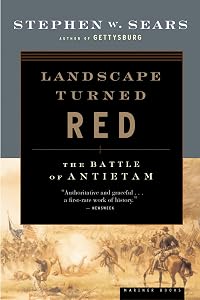
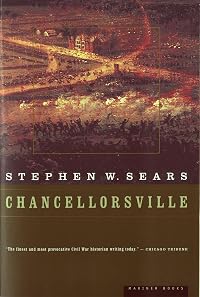
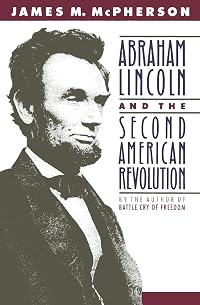
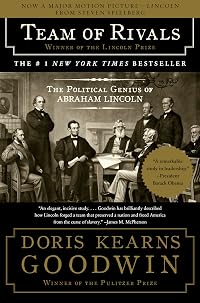
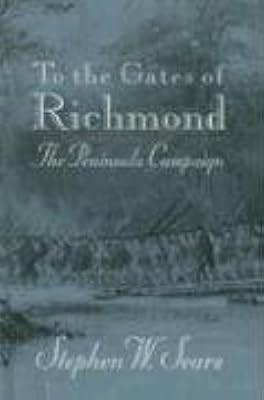
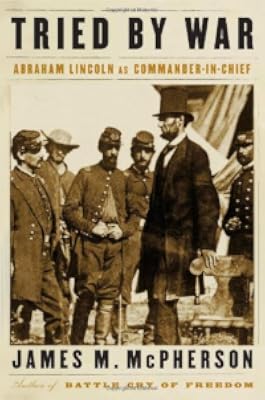
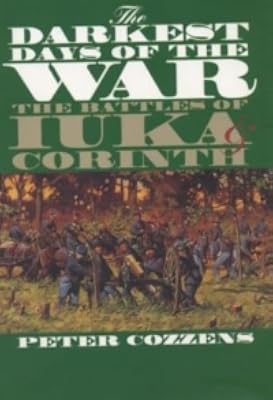

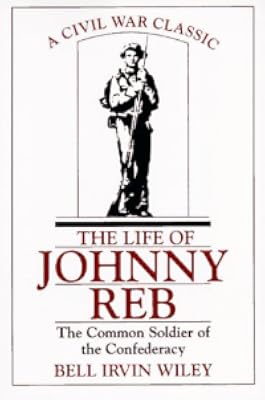



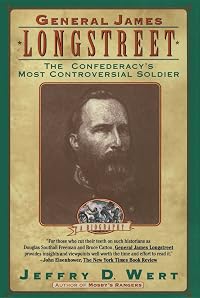
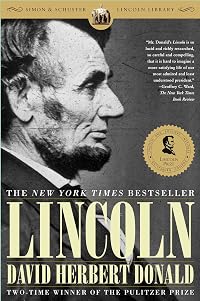

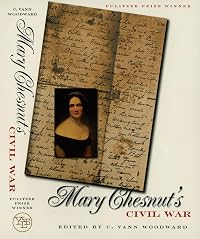
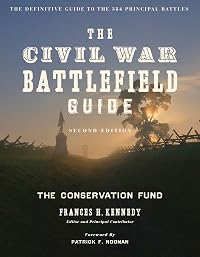
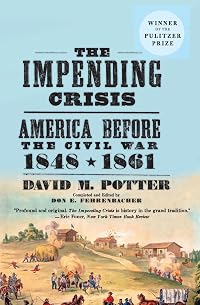
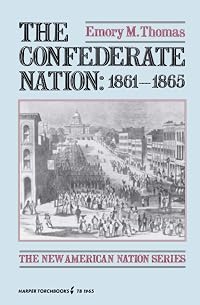
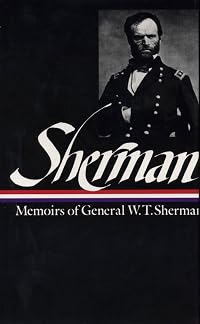
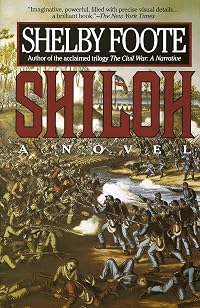




Member Recommendations

oregonobsessionz Read Catton's Centennial History of the Civil War trilogy (The Coming Fury, Terrible Swift Sword, Never Call Retreat) for a Union- leaning perspective, and read Shelby Foote's The Civil War: A Narrative trilogy for a southern-leaning perspective.
justjim A shorter treatment than the Foote work but with some wonderful illustrations. (Photographs, drawings and maps.
Member Reviews
Well, I made it through. It took 14 months, but I read the whole thing. The reading is fairly demanding: so much information is packed into Foote's concise text that I often found I could only read around 4-5 pages before stopping to absorb what I had just read. Since the trilogy is over 2,500 pages long, the overall effect is rather monumental.
Before reading this, I knew little more about the Civil War than the average man (or woman) on the street. I knew the names of a few of the really big players; I had visited the Gettysburg battlefield as a kid (and memorized Lincoln's famous address delivered there); I had heard of Sherman's march to the sea; I knew about the Emancipation Proclamation and Lincoln's assassination. That was pretty show more much it. The rest was mostly just a blur.
Reading this trilogy changed that, of course, but more than just improving my knowledge and understanding of this period of American history, I believe this has somewhat changed my understanding of America itself. In the first half of the 1960s, my parents, who were both from New Jersey, lived in Richmond, VA, the capital of the Confederacy. This coincided with the centennial remembrances of the War, as well as much of the Civil RIghts Movement. (Foote would have been in the process of writing this work for the whole of that period as well.) My parents later reported to me that Richmond had definitely not forgotten what had happened 100 years earlier. They were still bitter, and took it out on Northerners by mostly shunning them. There were only a very few people who accepted my parents socially, and that only towards the end of their 6 years there. Although the more than half a century that has passed since then has seen a significant reduction in the resentment levels of most people in the South, I can now understand this phenomenon better. And in spite of the fact that the Civil War as a lived event about which people still have strong feelings is now fading into the distant past, I think understanding that time can shed some light on our current situation as well.
Some have complained that Foote was a Confederate sympathizer. This is not untrue, and stems from his roots. Among other things, Foote's family was friends with the descendants of Nathan Bedford Forrest. As a child Foote had been allowed to hold that general's sword. Confederate lore was in his blood, and it shows through slightly in these books. Overall, however, the balance he achieved is remarkable. In later years, Foote told a story of how, after he had written the trilogy, he had told somebody in the Forrest family that he considered the War to have had only two real geniuses: Forrest and Abraham Lincoln. The response he got was, "We have never been very fond of Mr. Lincoln."
Since almost everybody now can agree that the "correct" side won the Civil War, it is, I believe, useful to at least understand something of what the other side thought and felt, as well as the perspectives of the "good guys". After reading this trilogy, I almost feel as though I have lived through that tragic war myself, on both sides. So many people, so many places, so many stories. It is immersive, in the way the best narrative history can be. And this is surely among the best histories that have ever been written in English, a classic which likely will endure for centuries. show less
Before reading this, I knew little more about the Civil War than the average man (or woman) on the street. I knew the names of a few of the really big players; I had visited the Gettysburg battlefield as a kid (and memorized Lincoln's famous address delivered there); I had heard of Sherman's march to the sea; I knew about the Emancipation Proclamation and Lincoln's assassination. That was pretty show more much it. The rest was mostly just a blur.
Reading this trilogy changed that, of course, but more than just improving my knowledge and understanding of this period of American history, I believe this has somewhat changed my understanding of America itself. In the first half of the 1960s, my parents, who were both from New Jersey, lived in Richmond, VA, the capital of the Confederacy. This coincided with the centennial remembrances of the War, as well as much of the Civil RIghts Movement. (Foote would have been in the process of writing this work for the whole of that period as well.) My parents later reported to me that Richmond had definitely not forgotten what had happened 100 years earlier. They were still bitter, and took it out on Northerners by mostly shunning them. There were only a very few people who accepted my parents socially, and that only towards the end of their 6 years there. Although the more than half a century that has passed since then has seen a significant reduction in the resentment levels of most people in the South, I can now understand this phenomenon better. And in spite of the fact that the Civil War as a lived event about which people still have strong feelings is now fading into the distant past, I think understanding that time can shed some light on our current situation as well.
Some have complained that Foote was a Confederate sympathizer. This is not untrue, and stems from his roots. Among other things, Foote's family was friends with the descendants of Nathan Bedford Forrest. As a child Foote had been allowed to hold that general's sword. Confederate lore was in his blood, and it shows through slightly in these books. Overall, however, the balance he achieved is remarkable. In later years, Foote told a story of how, after he had written the trilogy, he had told somebody in the Forrest family that he considered the War to have had only two real geniuses: Forrest and Abraham Lincoln. The response he got was, "We have never been very fond of Mr. Lincoln."
Since almost everybody now can agree that the "correct" side won the Civil War, it is, I believe, useful to at least understand something of what the other side thought and felt, as well as the perspectives of the "good guys". After reading this trilogy, I almost feel as though I have lived through that tragic war myself, on both sides. So many people, so many places, so many stories. It is immersive, in the way the best narrative history can be. And this is surely among the best histories that have ever been written in English, a classic which likely will endure for centuries. show less
I couldn't find a listing for just Volume 3: Red River to Appomattox which I finished this year. Last year I read the first two volumes. This is the last volume which covered Grant arriving in Washington to take up duties as commander—and looking like a scruffy nonentity who was offered a room in the attic of Willard’s Hotel until the clerk saw his name—to the death of Jefferson Davis (Foote is a southerner after all). Really great work—it’s taken me a couple of years to read it.There I think Foote focused on the South more, but not to the extent of being unfair. I was amazed that the death of Lincoln was treated relatively perfunctorily--but it may be that I was disappointed because I had been so wrapped up in the show more assassination details and the plot details (to kill Seward and Stanton too) in Goodwin's Team of Rivals, which I had just read, that this one seemed decidedly minimilist. And the book ended with Jefferson Davis going back to Mississippi--actually it ended with the death of Davis many years later as if only then was the war really over! I gathered there was considerable admiration for Davis on Foote's part. Me, I'd never considered Davis as a person at all. I had considered Alexander Stephens (partly because that was my husband's name). Something else I read awhile ago (possibly McPherson) detailed his friendship with Lincoln when they were both together in Congress many years before.I'm not one for military details, but I found Foote's focus on "mistakes" of southern generals like Hood and Johnson (always forget whether it was Johnson or Johnston--I mean Joseph Johnson) interesting. They seemed to do little right while Sherman did everything right and I sense there was even some affection for him on Foote's part. And I was surprised that he didn't make as much as other histories I've read of the possibility of generals not surrendering and continuing a guerilla war for years. I thought he downplayed Nathan Bedford Forrest too, in that regard but also just as a Southern hero.Still I'm no Civil War expert and no matter how hard I try, it's the people and the human events that engage me more than the battles and the strategy. Foote is very good at that. If Red River to Appomattox ended with the death of Jefferson Davis, it began with Grant's coming to Washington and being taken for a run-of-the-mill nonentity general when he asked for a room at Willard's hotel--until he signed his name. I'd not have persisted through all the battles if his dealing with people and his ability to conjure up memorable vignettes were not so good. show less
I have read these volumes (I have two sets of them for some reason) and also have the Audible.com versions, and I enjoy listening to them. Foote has created an historical tour de force, but even more impressive for me is the sheer artistry of his narrative. His command of the language is so good it sometimes obscures the narrative. You can be distracted from the message by the beauty and creativity of the medium. It's all good. You can go back and get the facts with a reread or somewhere else. But you only get this kind of literary thrill in great literature. Like many others I was first introduced to Foote in the Ken Burns documentary series on the Civil War. Next to the music, (Bernice Johnson Reagon for example), discovering Foote show more was the best part of that very good treatment. I've only read one of Foote's novels, but his whole body of work is on my bucket list. A magnificent story teller. show less
The Author's of "1066 and All That" said very justly that Civil Wars usually are between two sides the "Wrong but Romantic, and the Right but Repulsive!" I feel Mr. Foote has fallen prey to the wrong but romantic in his book, but that it is a necessary part of any ACW buff's library. It's readable, and slightly pro-Southern, but is a masterly synthesis of a vast catastrophe. I find myself dipping into it often.
Volume 1 Fort Sumpter to Perryville. This first of three volumes of Shelby Foote’s renowned history of the Civil War is 811 page and it reads like every bit of that length. At times it was difficult to get through because of the incredible detail of all the battles of all the wars included. It’s often difficult to keep up with personnel. The generals alone take a database to separate those fighting for the North from those fighting for the South. The best parts of this first volume are the personal stories. I wish Foote had spent more time telling his readers about these young soldiers and their families. The deaths are so monumental that at some point in the volume, the reader becomes numb to them, and that’s too bad. One thing show more this first volume does do is convey the absolute tragedy of the U.S. Civil War. There can’t be a more tragic part of our history except maybe slavery itself. show less
I'm going to keep this simple. Reading this three volume set is one of the most important things I have done in my life. You cannot understand America until you understand the Civil War. And this is THE source to read/listen to in order to gain that understanding.
The best work on the American Civil War. If Foote didn't cover it in these three volumes, it probably wasn't important. Not only do we get the facts, but a very fine narrative. A masterpiece of historical writing.
Members
- Recently Added By
Lists

Best Military History Books
123 works; 21 members

Fake Top 100 Nonfiction
79 works; 3 members

KIB Non-Fiction Book Cloud
41 works; 1 member

Shaykh Hamza's Book Recommendations
439 works; 3 members

r/History Recommended Reading List
603 works; 12 members

r/AskHistorians' Recommended Books
1,068 works; 19 members

Mustich's 1000 Books to Read Before You Die: A Life Changing List
1,001 works; 20 members
Author Information

55+ Works 13,041 Members
Author and historian Shelby Foote was born in Greenville, Mississippi on November 17, 1916. He was educated at the University of North Carolina and served with the U.S. Army artillery during World War II. He was dismissed in 1944 for using a government vehicle against regulations. He later enlisted in the U.S. Marine Corps, but did not see active show more duty. After being discharged from the military, he briefly became a journalist. He has written short stories, plays, and longer works, but is best known for his three-volume narrative history of the Civil War. He was awarded Guggenheim fellowships in 1958, 1959, and 1960, a Ford Foundation grant in 1963, and the Dos Passos Prize for Literature in 1988. In 2003, Foote received the Peggy V. Helmerich Distinguished Author Award. The Helmerich Award is presented annually by the Tulsa Library Trust. He appeared in Ken Burns' PBS documentary The Civil War. He died at home in Memphis, Tennessee, on June 27, 2005 due to a heart attack. He was interred in Elmwood Cemetery in Memphis. (Bowker Author Biography) show less
Awards and Honors
Notable Lists
Series

Work Relationships
Contains
The Civil War: A Narrative, Volume I: Fort Sumter to Kernstown - First Blood: The Thing Gets Underway by Shelby Foote (indirect)
The Civil War: A Narrative, Volume II: Pea Ridge to the Seven Days - War Means Fighting, Fighting Means Killing by Shelby Foote (indirect)
The Civil War: A Narrative, Volume III: Second Manassas to Perryville - The Sun Shines South by Shelby Foote (indirect)
The Beleaguered City: The Vicksburg Campaign, December 1862-July 1863 (Modern Library) by Shelby Foote (indirect)
The Civil War: A Narrative, Volume IV: Fredericksburg to Chancellorsville - The Longest Journey by Shelby Foote (indirect)
The Civil War: A Narrative, Volume V: Gettysburg to Vicksburg - Unvexed to the Sea by Shelby Foote (indirect)
The Civil War: A Narrative, Volume VI: Tullahoma to Meridian - Riot and Resurgence by Shelby Foote (indirect)
The Civil War: A Narrative, Volume VII: Red River to Chattahoochee - Another Grand Design by Shelby Foote (indirect)
The Civil War: A Narrative, Volume VIII: Petersburg to Savannah - War Is Cruelty, You Cannot Refine It by Shelby Foote (indirect)
Common Knowledge
- Canonical title
- The Civil War: A Narrative
- Original publication date
- 1958
- People/Characters
- Jefferson Davis; Varina Howell Davis; Julia Dent Grant; Ulysses S. Grant; Robert E. Lee; Mary Custis Lee (show all 11); Abraham Lincoln; Mary Todd Lincoln; James Longstreet; William Tecumseh Sherman; Philip Henry Sheridan
- Important places
- USA; Atlanta, Georgia, USA
- Important events
- American Civil War (1861 | 1865)
- First words
- Eastward, with Lee at last out-foxed, the blue tide ran swift and steady, apparently inexorable as it surged toward the gates of the capital close in his rear.
- Last words
- (Click to show. Warning: May contain spoilers.)Now that their adversary was "on the downhill, and somewhat confused," he wanted the Secretary to impress on Sherman the importance of keeping him going."
- Blurbers
- Bradley, Van Allen; Davis, Burke; Cox, James M.; Mills, Walter; Percy, Walker
- Disambiguation notice
- This is the entry for a complete omnibus/3 volume set of THE CIVIL WAR: A NARRATIVE. Please do not combine with any individual volume or set.
Classifications
Statistics
- Members
- 1,665
- Popularity
- 13,465
- Reviews
- 14
- Rating
- (4.58)
- Languages
- English
- Media
- Paper, Audiobook
- ISBNs
- 11
- ASINs
- 29