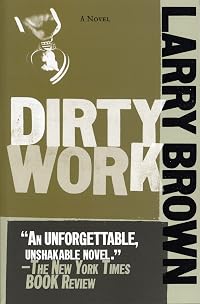
Dirty Work
by Larry Brown
On This Page
Description
Dirty Work is the story of two men, strangers—one white, the other black. Both were born and raised in Mississippi. Both fought in Vietnam. Both were gravely wounded. Now, twenty-two years later, the two men lie in adjacent beds in a VA hospital.Over the course of a day and a night, Walter James and Braiden Chaney talk of memories, of passions, of fate. With great vision, humor, and courage, Brown writes mostly about love in a story about the waste of war..
Tags
Recommendations
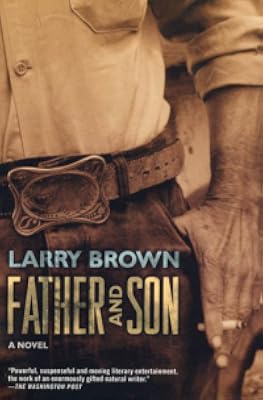


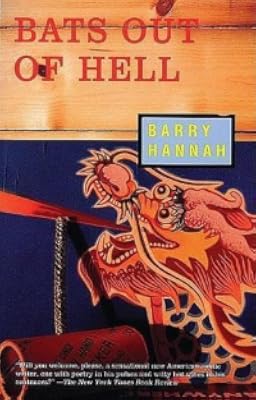
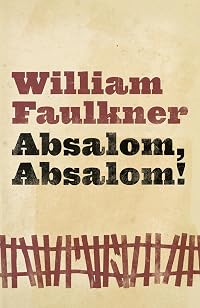
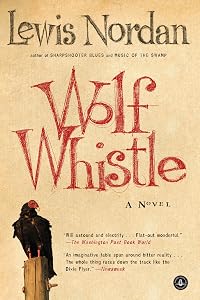


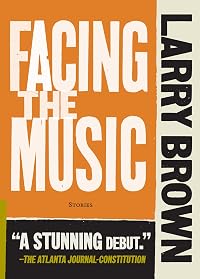
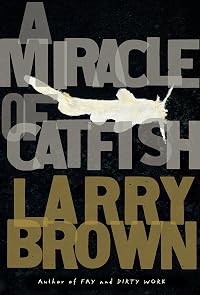
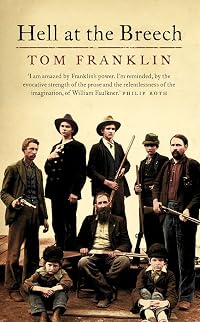

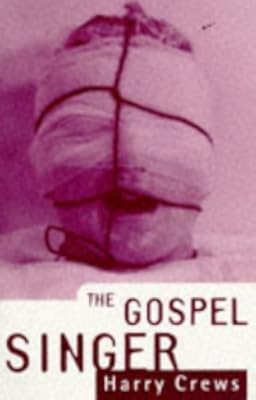
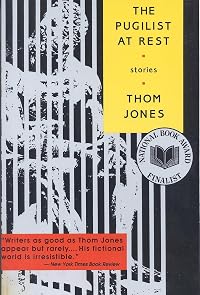



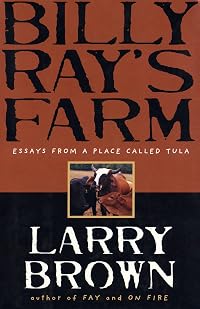
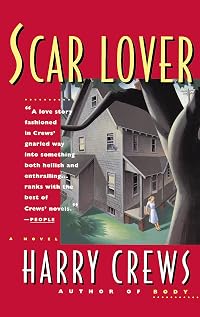
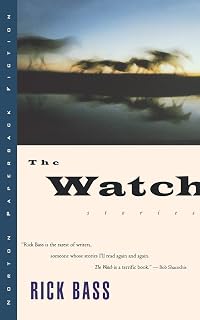



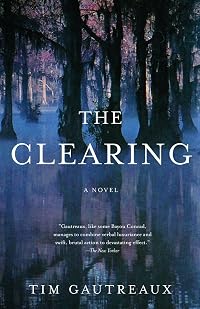





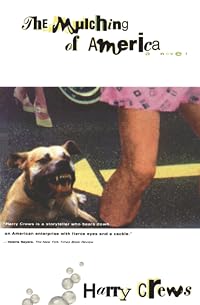
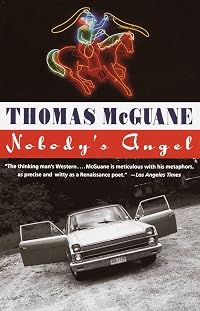


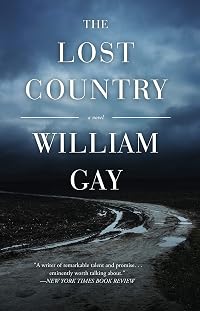


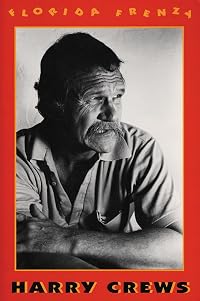
Member Recommendations
Member Reviews
Pretty remarkable and impossible to do justice to in a short review. On the one hand, this book is the most extreme type of melodrama, and the two lead characters are a lot more intelligent and articulate than you would expect, but that lets Brown tell his harrowing story of memories, duty, fate, love, and death in a voice that never falters. And may never leave you. Perhaps not quite as well written as Tim O'Brien's The Things They Carried--but in its depiction of the toll of war on two men, even more effective.
This is the kind of novel that is, on its surface, fairly simple. There are two Vietnam vets, seriously injured during the war, who find themselves in adjacent beds in a VA hospital. One is black, the other white, and through the length of one night, they share their stories with one another. However, what is exposed in the telling of the stories are the hearts of two men, and the heart is never a simple thing, is it?
Larry Brown, with the precision of a surgeon, cuts to all the things that matter the most in life: our concept of who we are, our families and our loves, our longings and disappointments, our ability to handle the things in life that are unfair and unjust, and our desire to hang on or let go of the world we know. He wraps show more them up in the fabric of war, the senselessness, the fear, the consequences, and then he asks what makes us alike or different.
This book is so powerful, it makes you shake. There is so much to pity, so much courage on display, and so much wisdom, bought at too high a price. But what makes it work completely and irrefutably is its honesty. You could walk into any VA hospital in the country and listen to the men there, and you might find Walter and Braiden, you might overhear any part of this conversation, because the earning of a purple heart is indeed dirty work that scars its recipient for life. show less
Larry Brown, with the precision of a surgeon, cuts to all the things that matter the most in life: our concept of who we are, our families and our loves, our longings and disappointments, our ability to handle the things in life that are unfair and unjust, and our desire to hang on or let go of the world we know. He wraps show more them up in the fabric of war, the senselessness, the fear, the consequences, and then he asks what makes us alike or different.
This book is so powerful, it makes you shake. There is so much to pity, so much courage on display, and so much wisdom, bought at too high a price. But what makes it work completely and irrefutably is its honesty. You could walk into any VA hospital in the country and listen to the men there, and you might find Walter and Braiden, you might overhear any part of this conversation, because the earning of a purple heart is indeed dirty work that scars its recipient for life. show less
I recently read two other books on the brutal impact of war on the individual soldier, Redeployment by Phil Klay and a reread of All Quiet on the Western Front by Erich Maria Remarque. Dirty Work came much closer than Redeployment to leaving me with the frustration and sense of inevitability that All Quiet on the Western Front produced on both reads. Dirty Work is the story of two Vietnam vets, one black and one white, who come together in a Vet medical facility 22 years after the war. Braiden Chaney, left with no arms or legs, and Larry, seriously disabled by shrapnel in his brain and damage to his face, struggle with limited life choices. Over two days, Braiden and Larry share their lives with one another. While I can not place Dirty show more Work at the same level as Brown’s Father and Son, it left me moved, wanting to look away but knowing that I must pay attention. I think Larry Brown deserves to be more widely read, and I encourage everyone to try him out. show less
Difficult to find words to express how much this short novel moved me...
Larry Brown has a way with his writing that takes you right under the skin of his characters. They are so vivid and believable. Dirty Work's two main protagonists are both physically and mentally scarred Vietnam veterans who share adjoining beds in a VA hospital 22 years after their war. Both Mississippians, limbless Braiden is black and faceless Walter is white. Both are from poor and troubled backgrounds. They find rare solace in their ability to confide in each other, something that their lives have usually been barred from.
The book is entirely written in the first person with short, punchy, and more or less alternate chapters in the voice of each man - something show more that I very quickly adjusted to after a tricky opening dozen or so pages... This book is very powerful and deeply affecting, and I'm pretty sure I will return to it again. The subject it addresses is as relevant today as it ever was -
"I know where you been, man. I've decided it's all the same. it's just the places and the reasons that change. Or maybe just the enemy. Hell. Let's open us another beer." show less
Larry Brown has a way with his writing that takes you right under the skin of his characters. They are so vivid and believable. Dirty Work's two main protagonists are both physically and mentally scarred Vietnam veterans who share adjoining beds in a VA hospital 22 years after their war. Both Mississippians, limbless Braiden is black and faceless Walter is white. Both are from poor and troubled backgrounds. They find rare solace in their ability to confide in each other, something that their lives have usually been barred from.
The book is entirely written in the first person with short, punchy, and more or less alternate chapters in the voice of each man - something show more that I very quickly adjusted to after a tricky opening dozen or so pages... This book is very powerful and deeply affecting, and I'm pretty sure I will return to it again. The subject it addresses is as relevant today as it ever was -
"I know where you been, man. I've decided it's all the same. it's just the places and the reasons that change. Or maybe just the enemy. Hell. Let's open us another beer." show less
Two Vietnam vets get to know one another in a Veteran's hospital over the course of a painful evening. One, a multiple amputee, hopes to convince the other, a severe head wound survivor, to engage in an act of brutal mercy. The narrative cuts between the two as they retell their stories to each other, and to themselves. It's sad and moving, and psychedelic sometimes - the amputee has a frank conversation with a chain smoking Jesus.
3 bones!!!
3 bones!!!
Dirty Work is the story of two forgotten Vietnam veterans who meet in a VA hospital and embark on a brief friendship that changes both of their lives forever. Braiden lost both arms and both legs in the war and has been a hospital resident for twenty years. He (understandably) harbors a death wish and spends his days alternately watching television and fantasizing about an imagined life in Africa where he is an important tribal leader. Walter, suffering from severe facial deformity and debilitating seizures, just arrived and is trying to piece together the series of events that landed him in the hospital. The chapters alternate between the two main characters’ perspectives as they discuss the horrors of war, formative events in their show more childhoods, and their present-day lives.
Aside from race (Braiden is black and Walter is white), both characters share similar backgrounds. Both started life as poor boys from Mississippi and joined the armed forces, partly due to a sense of duty, but also knowing the inevitability of being drafted. Both were catastrophically wounded in battle at very young ages and have spent the years since as isolated and forgotten outcasts in their communities. They were full of potential before the war and are now shells of their former selves because of it. By hitting us over the head with their similarities, the author appears to be promoting the idea that class plays a much bigger role than race in determining one's range of opportunity and place in society, a position that always seems a little naïve and oversimplified to me. I could not help thinking that Braiden’s childhood in 1950s Mississippi was far more challenging than Walter’s as a result of racism, but this was not explored. My only other complaint is that the characterization of Braiden felt a little thin compared to that of Walter, and I felt like the focus on his fantasy life was a cop-out, rather than as a way to really develop Braiden as a character. Others may disagree. Aside from that, this is a powerful and moving anti-war novel that effectively explores the futility of war and the strong bond of common experience. Very good and recommended. show less
Aside from race (Braiden is black and Walter is white), both characters share similar backgrounds. Both started life as poor boys from Mississippi and joined the armed forces, partly due to a sense of duty, but also knowing the inevitability of being drafted. Both were catastrophically wounded in battle at very young ages and have spent the years since as isolated and forgotten outcasts in their communities. They were full of potential before the war and are now shells of their former selves because of it. By hitting us over the head with their similarities, the author appears to be promoting the idea that class plays a much bigger role than race in determining one's range of opportunity and place in society, a position that always seems a little naïve and oversimplified to me. I could not help thinking that Braiden’s childhood in 1950s Mississippi was far more challenging than Walter’s as a result of racism, but this was not explored. My only other complaint is that the characterization of Braiden felt a little thin compared to that of Walter, and I felt like the focus on his fantasy life was a cop-out, rather than as a way to really develop Braiden as a character. Others may disagree. Aside from that, this is a powerful and moving anti-war novel that effectively explores the futility of war and the strong bond of common experience. Very good and recommended. show less
This is one of those books that I use to size up other people. If you've read Dirty Work and you didn't love it, I don't want to know you. This was the first Larry Brown book that I ever read and, after re-reading it, it is still as powerful and haunting the second time around.
The novel focuses on two Vietnam veterans in the VA hospital two decades after the war has ended. Braiden, a black quadraplegic, has spent this entire time in the hospital and his imagination is his only means of escape. When Walter arrives under mysterious circumstances, Braiden thinks he's found his salvation. Walter's face was horribly mutilated and shell fragments lodged in his brain cause him to have uncontrollable "blackouts" from which he awakens with no show more memory. As these two men talk about their lives as they were and as they are and as they revisit the painful landscape of Vietnam, Brown reveals how the war took much more from them than their bodies. The damage is emotional, spiritual, and mental (as Braiden says at one point, "It do something to you to kill another person. It ain't no dog lying there. Somebody. A person, talk like you, eat like you, got a mind like you. Got a soul like you . . . You look in somebody's eyes, then kill him, you remember them eyes. You remember that you was the last thing he seen.") The novel also reflects how it was the poor and, in particular, the black soldiers who were asked to give the most and expect nothing in return--not even valid reasons for fighting.
Brown's writing is simple, direct, and often bitingly funny when you least expect it. He knew how to capture the cadences and culture of working class Americans always one paycheck away from the brink of poverty and he always did so with the utmost respect, never denigrating or lessening their value to American society. When Brown died, we lost one of the finest writers of the American South and this novel is a testament to his gifts. show less
The novel focuses on two Vietnam veterans in the VA hospital two decades after the war has ended. Braiden, a black quadraplegic, has spent this entire time in the hospital and his imagination is his only means of escape. When Walter arrives under mysterious circumstances, Braiden thinks he's found his salvation. Walter's face was horribly mutilated and shell fragments lodged in his brain cause him to have uncontrollable "blackouts" from which he awakens with no show more memory. As these two men talk about their lives as they were and as they are and as they revisit the painful landscape of Vietnam, Brown reveals how the war took much more from them than their bodies. The damage is emotional, spiritual, and mental (as Braiden says at one point, "It do something to you to kill another person. It ain't no dog lying there. Somebody. A person, talk like you, eat like you, got a mind like you. Got a soul like you . . . You look in somebody's eyes, then kill him, you remember them eyes. You remember that you was the last thing he seen.") The novel also reflects how it was the poor and, in particular, the black soldiers who were asked to give the most and expect nothing in return--not even valid reasons for fighting.
Brown's writing is simple, direct, and often bitingly funny when you least expect it. He knew how to capture the cadences and culture of working class Americans always one paycheck away from the brink of poverty and he always did so with the utmost respect, never denigrating or lessening their value to American society. When Brown died, we lost one of the finest writers of the American South and this novel is a testament to his gifts. show less
Members
- Recently Added By
Author Information

Larry Brown is the author of eight books, including Fay, Father and Son, and the memoir On Fire. He received the Mississippi Institute of Arts and Letters Award for Literature and the Southern Book Critics Circle Award for Fiction in 1992 and 1997. He received the University of North Carolina's second Thomas Wolfe Prize and Lectureship. He lives show more near Oxford, Mississippi show less
Awards and Honors
Notable Lists
Series
Belongs to Publisher Series
Common Knowledge
- Canonical title
- Dirty Work
- Original publication date
- 1989
- People/Characters
- Walter James; Braiden Chaney; Beth; Diva
- Important places
- VA Hospital
- Dedication
- For Daddy, who knew what war does to men.
- First words
- This the trip I took that day, day they brought Walter in.
- Quotations
- I know where you been, man. I've decided it's all the same. it's just the places and the reasons that change. Or maybe just the enemy. Hell. Let's open us another beer.
- Last words
- (Click to show. Warning: May contain spoilers.)I knew that somewhere Jesus wept.
- Original language
- English
Classifications
Statistics
- Members
- 410
- Popularity
- 75,852
- Reviews
- 12
- Rating
- (4.09)
- Languages
- English, French, Spanish, Swedish
- Media
- Paper, Audiobook, Ebook
- ISBNs
- 19
- UPCs
- 1
- ASINs
- 5