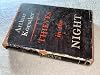
Thieves in the Night
by Arthur Koestler
On This Page
Description
Story of an English Jew who becomes deeply involved in the resettling of Palestine. Based on the author's own experiences in a kibbutz, it sets up a stage in describing the historical roots of the conflict between Arabs and Jewish settlers in the British ruled Palestine.Tags
Recommendations

















Member Reviews
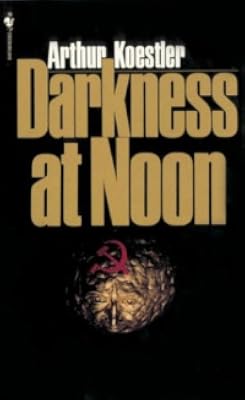
Koestler, a Hungarian-British writer and journalist, more famously wrote Darkness at Noon, a critique of Communism and totalitarianism.
Thieves in the Night, written later, is a gently powerful story. Koestler recounts the travails and limited joys of only a few of the milliohnim. His characters are Jews, creating new settlements on purchased Arab land in the Holy Land, prior to World War II.
Creating settlements is a tough life. A reader like me learns almost too much about the vagaries and drudgery of deliberately, fully conscious communal life on Ezra's Tower, an isolated hilltop in Galilee. First, establish the security perimeter, then erect the watchtower, build the children's dorm, construct the cowshed, set up the showers…in show more that order. The dining hall, the sleeping huts for the men and women, and the lavatories, are to built later.
The Mukhtar and his clan in the nearby Arab village do not welcome the Hebrew newcomers. Soon, the leader of the village delegation gives morbid advice to the settlers: "You young fools and children of death, you don't know what may happen to you." Bauman responds, curtly: "We are prepared." The Jewish settlement at Ezra's Tower is not a resort.
The story of the settlers' life at Ezra's Tower is drab. Koestler's exploration of their mindset, their politics and their philosophy and their religion all swirled together, is stunning. Their aspirations and their misgivings and their palpable legacy of homelessness and their transforming experiences, are irresistible.
Thieves in the Night is an adventure for the open and inquiring mind. Occasional sympathetic despair is a perfectly understandable reaction.
After you read this novel, look around you and ask yourself if you see things a bit differently. Ask yourself if you like your new conception of "a thief in the night."
Read more on my blog: http://barleyliterate.blogspot.com/ show less
Thieves in the Night, written later, is a gently powerful story. Koestler recounts the travails and limited joys of only a few of the milliohnim. His characters are Jews, creating new settlements on purchased Arab land in the Holy Land, prior to World War II.
Creating settlements is a tough life. A reader like me learns almost too much about the vagaries and drudgery of deliberately, fully conscious communal life on Ezra's Tower, an isolated hilltop in Galilee. First, establish the security perimeter, then erect the watchtower, build the children's dorm, construct the cowshed, set up the showers…in show more that order. The dining hall, the sleeping huts for the men and women, and the lavatories, are to built later.
The Mukhtar and his clan in the nearby Arab village do not welcome the Hebrew newcomers. Soon, the leader of the village delegation gives morbid advice to the settlers: "You young fools and children of death, you don't know what may happen to you." Bauman responds, curtly: "We are prepared." The Jewish settlement at Ezra's Tower is not a resort.
The story of the settlers' life at Ezra's Tower is drab. Koestler's exploration of their mindset, their politics and their philosophy and their religion all swirled together, is stunning. Their aspirations and their misgivings and their palpable legacy of homelessness and their transforming experiences, are irresistible.
Thieves in the Night is an adventure for the open and inquiring mind. Occasional sympathetic despair is a perfectly understandable reaction.
After you read this novel, look around you and ask yourself if you see things a bit differently. Ask yourself if you like your new conception of "a thief in the night."
Read more on my blog: http://barleyliterate.blogspot.com/ show less
Mr. Koestler, with his experience of governmental injustice, and central European frame of mind, has created a very readable novel about the foundation of the state of Israel. I find it much more palatable than the Leon Uris "Exodus". The book is somehow much more real. it has been reprinted several times since the original publication.
Ratings
Members
- Recently Added By
Author Information

119+ Works 13,155 Members
Arthur Koestler was born on September 5, 1905 in Budapest, Hungary and studied at the University of Vienna. Koestler was a Middle East correspondent for several German newspapers, wrote for the Manchester Guardian, the London Times and the New York Herald Tribune. Koestler wrote Darkness at Noon, which centers on the destructiveness of politics, show more The Act of Creation, a book about creativity, and The Ghost in the Machine, which bravely attacks behaviorism. Arthur Koestler died in London on March 3, 1983. (Bowker Author Biography) show less
Some Editions
Awards and Honors
Distinctions
Common Knowledge
- Canonical title*
- Dieven in de nacht
- Original title
- Thieves in the night
- Alternate titles*
- Dieven in de nacht : de kroniek van een experiment
- Original publication date
- 1946
- Epigraph
- But the day of the Lord will come as a thief in the night. (II Peter iii, 10)
- First words*
- 'Se devo andare all'altro mondo oggi, sarà cadendo dalla cima di un camion' pensò Joseph, affondando le dita nella coperta di tela incatramata del grosso veicolo ballonzolante.
- Last words*
- (Click to show. Warning: May contain spoilers.)I conducenti, calmatisi, avevano abbassato i fari e la colonna continuò la marcia furtivamente, come ladri nella notte.
- Original language*
- Engels
*Some information comes from Common Knowledge in other languages. Click "Edit" for more information.
Classifications
- Genres
- General Fiction, Fiction and Literature, Historical Fiction
- DDC/MDS
- 823.91 — Literature & rhetoric English & Old English literatures English fiction 1900- 1901-1999
- LCC
- PZ3 .K8194 — Language and Literature Fiction and juvenile belles lettres Fiction and juvenile belles lettres Fiction in English
- BISAC
Statistics
- Members
- 205
- Popularity
- 159,916
- Reviews
- 2
- Rating
- (4.13)
- Languages
- 10 — Danish, Dutch, English, French, German, Hungarian, Norwegian (Bokmål), Portuguese, Russian, Spanish
- Media
- Paper, Ebook
- ISBNs
- 13
- ASINs
- 20