On This Page
Description
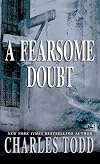
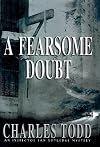
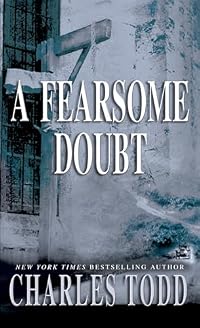
“[Charles] Todd’s mysteries are among the most intelligent and affecting being written these days.”—The Washington Post Book WorldIn 1912 Ian Rutledge helped gather the evidence that sent Ben Shaw to the gallows. Now, seven years later, Ben Shaw’s widow brings Rutledge evidence she’s convinced proves her husband’s innocence. Ben Shaw’s past is a tangle of unsettling secrets that may or may not be true. And it grows only more twisted when a seemingly unrelated murder brings show more Rutledge back to Kent. There an unexpected encounter revives his painful memories of war—and the voice of Hamish MacLeod, the soldier Rutledge was forced to execute. Two elusive killers are on the loose at the same time . . . and to catch them before they catch him, Rutledge will be forced to question everything he believes about right, wrong—and murder.
Praise for A Fearsome Doubt
“Brilliant . . . Who’d have thought that Charles Todd’s brilliant concept for a mystery . . . would not only continue but grow stronger from book to book.”—Chicago Tribune
“Todd raises the stakes in this series to new and nearly unbearable levels.”—The New York Times Book Review
“A brilliant and gripping whodunit . . . an outstanding historical mystery and literate period fiction.”—Publishers Weekly (starred review). show less
Tags
Recommendations



Member Reviews
In this, the sixth Inspector Rutledge mystery, the shell-shocked detective is filled with self-doubt and depression once again, hence the almost constant presence of Hamish, his conscience and tormentor. On the first anniversary of the Armistice, Rutledge escapes the city to stay with a widowed friend in Kent, haunted by the memory of the men who did not survive the war and the accusations of a woman whose husband was sent to the gallows six years earlier, on Rutledge's evidence. With the cold case praying on his mind, Rutledge is drawn into a new investigation, forcing him to confront all his doubts and fears at once - mamed soldiers are being poisoned on the road into a pretty Kent village, seemingly without obvious motive, and one of show more the suspects brings back traumatic memories for Rutledge. Questioning his judgement over the man he sent to hang, and still blaming himself for the deaths of the young men under his command in the trenches, Rutledge is in danger of losing his objectivity and his sanity.
There is a darker tone to this mystery, perhaps because of the date - it's one year on from the end of the war, and Rutledge must face the consequences of his actions, before, during and after going to France. The England he, and the other soldiers returned from the front, once knew is long gone, and he mourns its passing: 'This was the England he had fought for. And it was already dying.' His friendship with Elizabeth, the widow of his best friend, has also been altered by the loss they both share, and he faces losing her to - ironically enough - a German love interest. The psychological element of the story, examining the slow recovery from the hardships and loss of war, is once again far more fascinating than the actual mystery - Hamish's voice is stronger and louder than ever for Rutledge, but the whole country is still finding it hard to adjust to peacetime, from families surviving without husbands and fathers, to men returning home to half a life. Charles Todd captures this mood perfectly, tainting nostalgic lanscapes with dark deeds and repressed emotions.
The only detail that lets this book down is the solution to the mystery - never one for playing detective, I had two or three 'suspects' in mind as I read, and not one of them was close to being the actual killer. There just weren't any clues pointing to the final revelation, and the motive would have fit any number of the 'red herrings' more accurately. A neat twist, but not very satisfying. show less
There is a darker tone to this mystery, perhaps because of the date - it's one year on from the end of the war, and Rutledge must face the consequences of his actions, before, during and after going to France. The England he, and the other soldiers returned from the front, once knew is long gone, and he mourns its passing: 'This was the England he had fought for. And it was already dying.' His friendship with Elizabeth, the widow of his best friend, has also been altered by the loss they both share, and he faces losing her to - ironically enough - a German love interest. The psychological element of the story, examining the slow recovery from the hardships and loss of war, is once again far more fascinating than the actual mystery - Hamish's voice is stronger and louder than ever for Rutledge, but the whole country is still finding it hard to adjust to peacetime, from families surviving without husbands and fathers, to men returning home to half a life. Charles Todd captures this mood perfectly, tainting nostalgic lanscapes with dark deeds and repressed emotions.
The only detail that lets this book down is the solution to the mystery - never one for playing detective, I had two or three 'suspects' in mind as I read, and not one of them was close to being the actual killer. There just weren't any clues pointing to the final revelation, and the motive would have fit any number of the 'red herrings' more accurately. A neat twist, but not very satisfying. show less
The sixth in this detective series starring Inspector Ian Rutledge, a shell-shocked WWI vet and Scotland Yard detective. These books continue to get better with each one.
I like this series because it is a soundly written detective series, the prose is solid and lovely in places without being overly flowery or showy, and the WWI backdrop is omnipresent, as Rutledge is haunted by his experiences in the war and how England has and has not changed as a result of the war. Over the course of six books, the crimes have gradually begun to involve people from Rutledge's past, both in the war and before the war, and nearly every character in each book has been touched in some way by the war and its aftermath.
It's clear that the authors - Charles show more Todd is actually a pseudonym for a mother-son writing team - have done a ton of research about the war and about the process of social, economic, and political change in the post-WWI period, but they slip these details in so naturally in a way that creates a sense of place without overwhelming the narrative. In contrast to, say, Connie Willis' Blackout and All Clear, which I felt floundered because of the author's apparent need to put in EVERY detail about train routes during the Blitz that she had ever encountered.
In many senses, it's probably not super original - everyone now does the "tortured dysfunctional detective" - but since I've never read much other detective fiction, it suits me just fine. Charles Todd also writes another detective series focusing on Bess Crawford an English nursing sister serving in WWI. The plots are much more contrived than the Ian Rutledge books, since there's much less reason for Bess to be investigating murders, but I rather enjoy that series as well. show less
I like this series because it is a soundly written detective series, the prose is solid and lovely in places without being overly flowery or showy, and the WWI backdrop is omnipresent, as Rutledge is haunted by his experiences in the war and how England has and has not changed as a result of the war. Over the course of six books, the crimes have gradually begun to involve people from Rutledge's past, both in the war and before the war, and nearly every character in each book has been touched in some way by the war and its aftermath.
It's clear that the authors - Charles show more Todd is actually a pseudonym for a mother-son writing team - have done a ton of research about the war and about the process of social, economic, and political change in the post-WWI period, but they slip these details in so naturally in a way that creates a sense of place without overwhelming the narrative. In contrast to, say, Connie Willis' Blackout and All Clear, which I felt floundered because of the author's apparent need to put in EVERY detail about train routes during the Blitz that she had ever encountered.
In many senses, it's probably not super original - everyone now does the "tortured dysfunctional detective" - but since I've never read much other detective fiction, it suits me just fine. Charles Todd also writes another detective series focusing on Bess Crawford an English nursing sister serving in WWI. The plots are much more contrived than the Ian Rutledge books, since there's much less reason for Bess to be investigating murders, but I rather enjoy that series as well. show less
I couldn't put it down. In fact, I was scribbling in the margins when I thought Todd was letting a clue slip out. I was surprised by the culprit but the clues all fit.
This is the sixth book of Inspector Ian Rutledge's cases. While the mystery murders are always fun to speculate upon, the most gripping aspect is Rutledge himself. I admire him as I watch this veteran of The War To End All Wars come to grips with his life after-war and after shell-shock..
The post WWI English countryside is clearly a culture shifting from agriculture to industrialization and then losing all the workers in the war. Old well-to-do families have lost their heirs in the war and the income they used to get from the land is no longer there, Crass newly wealthy show more manufacturers are taking over the manor houses with none of the Nobless Oblige of the past era.
England of 1919 is a country in turmoil. The war is over but the peace will be hard in its own way, for everyone.
Great read. I'm opening the next Ian Rutledge with anticipation. show less
This is the sixth book of Inspector Ian Rutledge's cases. While the mystery murders are always fun to speculate upon, the most gripping aspect is Rutledge himself. I admire him as I watch this veteran of The War To End All Wars come to grips with his life after-war and after shell-shock..
The post WWI English countryside is clearly a culture shifting from agriculture to industrialization and then losing all the workers in the war. Old well-to-do families have lost their heirs in the war and the income they used to get from the land is no longer there, Crass newly wealthy show more manufacturers are taking over the manor houses with none of the Nobless Oblige of the past era.
England of 1919 is a country in turmoil. The war is over but the peace will be hard in its own way, for everyone.
Great read. I'm opening the next Ian Rutledge with anticipation. show less
Another good Inspector Rutledge tale. I like the depth offered in these mysteries. Good characters, sense of place and a wonderful flawed detective to lead the hunt.
This was an interesting read, especially in light of the fact that I was reading it during the week that commemorates the nuclear annihilation of both Hiroshima and Nagasaki. Although the book was written about ten years ago, it deals with a British police inspector, Ian Rutledge, who had served in WWI and who came back rather shell-shocked. So there are lots of comments about the experience of war and the essentially senseless slaughter that comprised most of WWI.
The library tells me that this was the sixth book in a series. Since the guy was only recently returned from the war, I'm wondering what happened in the first five books. If they follow chronological order, there's a lot to pack into one year. I suppose I'll have to check one show more or two of them out. Some authors write their series on more-or-less chronological order, and others not. Whatever, this book was quite good and tells me the author(s)(just one name, but apparently the books are written by a mother/son duo) are worth a second look.
Oh, the story takes place mostly in Kent, but has threads back to London. The inspector harbors serious doubts about the guilt of someone he'd had convicted of murder before the war, some serious doubts about some of his actions during the war, and serious doubts about the people in Kent, some of whom appeared to be long-loved friends, but who might be hiding secrets of their own. show less
The library tells me that this was the sixth book in a series. Since the guy was only recently returned from the war, I'm wondering what happened in the first five books. If they follow chronological order, there's a lot to pack into one year. I suppose I'll have to check one show more or two of them out. Some authors write their series on more-or-less chronological order, and others not. Whatever, this book was quite good and tells me the author(s)(just one name, but apparently the books are written by a mother/son duo) are worth a second look.
Oh, the story takes place mostly in Kent, but has threads back to London. The inspector harbors serious doubts about the guilt of someone he'd had convicted of murder before the war, some serious doubts about some of his actions during the war, and serious doubts about the people in Kent, some of whom appeared to be long-loved friends, but who might be hiding secrets of their own. show less
I'm enjoying these Rutledge murder/mysteries but poor Insp. Rutledge seems always to have more than one case on the go. This time we gain more insight into his relationship with his boss and it appears that someone is "spying" on him and reporting back to Chief Supt. Bowles...
An old case comes back to literally haunt him while he's trying to help figure out who's killing veterans in Marling. And his relationship with his best friend's widow, Elizabeth, it changing. If he discovers that the closed case from before the war killed the wrong man, his job may at stake. And someone is reporting back to London as well...
An old case comes back to literally haunt him while he's trying to help figure out who's killing veterans in Marling. And his relationship with his best friend's widow, Elizabeth, it changing. If he discovers that the closed case from before the war killed the wrong man, his job may at stake. And someone is reporting back to London as well...
A pretty good mystery that keeps you guessing until the end and the portrayal of the era is well expressed.
Members
- Recently Added By
Author Information

68+ Works 22,816 Members
Charles Todd is a pen name for Charles and Caroline Todd, a mother and son writing team. Caroline received a BA in English literature and history and a Masters in international relations. Charles received a BA in communication studies with an emphasis on business management, and a culinary arts degree. They have written numerous novels including show more Bess Crawford Mystery series and the Inspector Ian Rutledge Mystery series. (Bowker Author Biography) Charles Todd is the author of three previous mysteries: "A Test of Wills," "Wings of Fire," & "Search the Dark"; with the publication of "Legacy of the Dead," Todd will be published hard/soft by Bantam Books. (Publisher Provided) show less
Some Editions
Series

Common Knowledge
- Canonical title
- A Fearsome Doubt
- Original title
- A Fearsome Doubt
- Original publication date
- 2002-10-01
- People/Characters
- Ian Rutledge (Inspector); Hamish MacLeod; Elizabeth Mayhew; Ben Shaw; Nell Shaw; Melinda Crawford (show all 10); Gunter Hauser; Tom Brereton; Bella Masters; Raleigh Masters
- Important places
- London, England, UK; Kent, England, UK; Somme, Hauts-de-France, France
- Important events
- World War I
- Dedication
- For L., and for B. and C., with much love.
- First words
- The prisoner was standing in the dock, face strained, eyes on the foreman of the jury.
- Last words
- (Click to show. Warning: May contain spoilers.)But the lights from the hall seemed to pursue them down the drive until the trees finally blotted them out. And still they blazed brightly behind each man's eyes.
- Original language
- English
Classifications
Statistics
- Members
- 664
- Popularity
- 43,180
- Reviews
- 14
- Rating
- (3.92)
- Languages
- English, French, German, Italian
- Media
- Paper, Audiobook, Ebook
- ISBNs
- 11
- ASINs
- 5