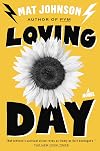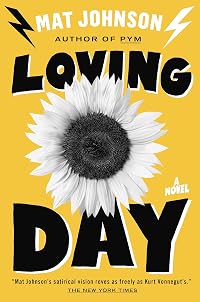
Loving Day
by Mat Johnson
On This Page
Description
"Warren Duffy has returned to America for all the worst reasons: his marriage to a beautiful Welsh woman has come apart; his comic shop in Cardiff has failed; and his Irish-American father has died, bequeathing to Warren his last possession, a roofless, half-renovated mansion in the heart of black Philadelphia. On his first night in his new home, Warren spies two figures in the grass outside; when he screws up the nerve to confront them, they disappear. The next day he encounters ghosts of a show more different kind: in the face of the teenage girl he meets at a comics convention he sees the mingled features of his white father and his black mother, both now dead. The girl is his daughter and she thinks she's white. Warren sets off to remake his life with a reluctant daughter he never knew and a haunted house and history he knows too well. In their search for a new life they struggle with an unwanted house and its ghosts, fall in with a utopian mixed-race cult, and inspire a riot on Loving Day, the unsung holiday that celebrates interracial love"--Publisher. show lessTags
Recommendations





Member Reviews
Mat Johnson is a gifted writer who is nothing if not funny, even if his humor leaves the reader unsure of whether he's laughing at you, with you or at himself. In 'Loving Day' the humor is still there but there is a bitter edge to it just out of reach.
Loving Day (so named after the famous Virginia couple who overturned miscegenation laws in the US) begins with homecoming of the reluctantly bi-racial Warren Duffy, fresh off of the failure of his personal, business and artistic aspirations. Coming home after the death of his father, to a derelict mansion haunted by entities unknown, he's confronted with with the existence of a teenage daughter who's been raised as white and has runaway from her grandfather to live with the father she's show more never known. Caught between a white past in his Irish-American father and a white future in his hitherto Jewish-American daughter Duffy fights hard to retain a black identity for himself while his daughter comes to terms with her bi-racial identity.
Johnson gives the conflict physical form in the the two major settings he uses in the novel; Duffy's dead father's house in what was once a neighborhood for wealthy whites but had become a black neighborhood down on its luck by the time his father bought it , and a school for biracial children that his daughter initially chose because she didn't want to go to a black school. Johnson captures an older generation's sense of bi-racial unease and need to identify as one or the other and a younger generation's refusal to choose. Even opinions on the presence in his house is divided, his daughter see apparitions as the ghosts of the first inter-racial couple while Warren thinks they may be crackheads, given the neighborhood.
The novel reads as one of his most personal, though admittedly as the mother of two biracial boys I may be projecting. In ways both Zane Pinchback from 'Incognegro' and Warren Duffy are alter egos of the author himself. Both extremely pale black men who could pass for white, but where 'Incognegro' manages to be almost self amused 'Loving Day' has a frustrated anger. I can't wait to see what Johnson writes next. show less
Loving Day (so named after the famous Virginia couple who overturned miscegenation laws in the US) begins with homecoming of the reluctantly bi-racial Warren Duffy, fresh off of the failure of his personal, business and artistic aspirations. Coming home after the death of his father, to a derelict mansion haunted by entities unknown, he's confronted with with the existence of a teenage daughter who's been raised as white and has runaway from her grandfather to live with the father she's show more never known. Caught between a white past in his Irish-American father and a white future in his hitherto Jewish-American daughter Duffy fights hard to retain a black identity for himself while his daughter comes to terms with her bi-racial identity.
Johnson gives the conflict physical form in the the two major settings he uses in the novel; Duffy's dead father's house in what was once a neighborhood for wealthy whites but had become a black neighborhood down on its luck by the time his father bought it , and a school for biracial children that his daughter initially chose because she didn't want to go to a black school. Johnson captures an older generation's sense of bi-racial unease and need to identify as one or the other and a younger generation's refusal to choose. Even opinions on the presence in his house is divided, his daughter see apparitions as the ghosts of the first inter-racial couple while Warren thinks they may be crackheads, given the neighborhood.
The novel reads as one of his most personal, though admittedly as the mother of two biracial boys I may be projecting. In ways both Zane Pinchback from 'Incognegro' and Warren Duffy are alter egos of the author himself. Both extremely pale black men who could pass for white, but where 'Incognegro' manages to be almost self amused 'Loving Day' has a frustrated anger. I can't wait to see what Johnson writes next. show less
This is not an intentional play on the title, but I loved Loving Day. Despite being up against some stiff competition, including Cynthia Bond's Ruby, Howard Jacobson's J, and Ausma Zehanat Khan's The Unquiet Dead, Loving Day is my favorite read of 2015 thus far.
Mat Johnson's writing is spectacular, with a slew of "quotable quotes" (many of which I have posted in the Quotes section of Goodreads). Just consider these opening lines:
"In the ghetto there is a mansion, and it is my father's house. It sits on seven acres, surrounded by growling row homes, frozen in an architectural class war. Its expansive lawn is utterly useless, wild like it smokes its own grass and dreams of being a jungle."
In a mere 47 words, Johnson introduces many of his show more themes: father-son relationships and their accompanying expectations; the role of material possessions; racial conflict (although the quote speaks of "class war," the word "ghetto" alerts the reader that the particular war at issue here is one of race); and, most importantly, what it means to belong to a community (including, with its allusion to John 14:2, one based on faith).
Poingu, a fellow member of the Goodreads Tournament of Books Group, has suggested that Loving Day may be a sign that "it's time to call high social satire written by African American men a 'movement' - in the last few months Loving Day, Welcome to Braggsville, and Delicious Foods have been among my most enjoyable reads." To that list I would add Dwayne Alexander Smith's Forty Acres. Regardless of whether it constitutes a movement, this publication of fine literary fiction exploring the meaning of race from the perspective of people of color is long overdue. One of the main purposes of literature, in my view, is to give readers some understanding of the lives of people who are not like themselves; as Richard Jewell has argued, "Their literature, oral or written, is them, and they are their literature." Johnson says in Loving Day, "I see Caucasians in the room, looking over our way, puzzled and annoyed by the segregation. They stand in a pack of their own race, but their own race is invisible to them." Johnson is absolutely correct; I don't identify myself in terms of my race, so it (and whatever privileges it may convey) is invisible to me.
And this is what I found terrifying about Loving Day. As those who follow my reviews know, I have been very interested recently in whether America will ever be able to move past the issue of race. Johnson has now made me aware that racial distinctions are drawn even within the black and mixed race communities, but his point extends beyond race: "People aren't social, they're tribal. Race doesn't exist, but tribes are fucking real." Are human beings genetically predisposed to divide themselves into "us" and "them," whether the dividing line is race, gender, class, religion, hair color, or nose length? If so, what does that mean for our future, both with regard to race relations in America and with respect to worldwide terrorism? I'm not sure I'm going to like the answer, but I do appreciate Johnson making me think about it.
I received a free copy of Loving Day through NetGalley in exchange for an honest review. show less
Mat Johnson's writing is spectacular, with a slew of "quotable quotes" (many of which I have posted in the Quotes section of Goodreads). Just consider these opening lines:
"In the ghetto there is a mansion, and it is my father's house. It sits on seven acres, surrounded by growling row homes, frozen in an architectural class war. Its expansive lawn is utterly useless, wild like it smokes its own grass and dreams of being a jungle."
In a mere 47 words, Johnson introduces many of his show more themes: father-son relationships and their accompanying expectations; the role of material possessions; racial conflict (although the quote speaks of "class war," the word "ghetto" alerts the reader that the particular war at issue here is one of race); and, most importantly, what it means to belong to a community (including, with its allusion to John 14:2, one based on faith).
Poingu, a fellow member of the Goodreads Tournament of Books Group, has suggested that Loving Day may be a sign that "it's time to call high social satire written by African American men a 'movement' - in the last few months Loving Day, Welcome to Braggsville, and Delicious Foods have been among my most enjoyable reads." To that list I would add Dwayne Alexander Smith's Forty Acres. Regardless of whether it constitutes a movement, this publication of fine literary fiction exploring the meaning of race from the perspective of people of color is long overdue. One of the main purposes of literature, in my view, is to give readers some understanding of the lives of people who are not like themselves; as Richard Jewell has argued, "Their literature, oral or written, is them, and they are their literature." Johnson says in Loving Day, "I see Caucasians in the room, looking over our way, puzzled and annoyed by the segregation. They stand in a pack of their own race, but their own race is invisible to them." Johnson is absolutely correct; I don't identify myself in terms of my race, so it (and whatever privileges it may convey) is invisible to me.
And this is what I found terrifying about Loving Day. As those who follow my reviews know, I have been very interested recently in whether America will ever be able to move past the issue of race. Johnson has now made me aware that racial distinctions are drawn even within the black and mixed race communities, but his point extends beyond race: "People aren't social, they're tribal. Race doesn't exist, but tribes are fucking real." Are human beings genetically predisposed to divide themselves into "us" and "them," whether the dividing line is race, gender, class, religion, hair color, or nose length? If so, what does that mean for our future, both with regard to race relations in America and with respect to worldwide terrorism? I'm not sure I'm going to like the answer, but I do appreciate Johnson making me think about it.
I received a free copy of Loving Day through NetGalley in exchange for an honest review. show less
Fiction
Mat Johnson
Loving Day
Spiegel & Grau
Hardcover, 978-0-8129-9345-5 (also available as audiobook, as ebook, and on audio CD), 304 pgs., $26.00
May 26, 2015
“I’m not white, but I can feel the eyes of the few people outside on me, people who must think that I am, because I look white….This disconnect in my racial projection is one of the things I hate.… My mother was black — that counts, no matter how pale and Irish my father was.”
Warren Duffy’s father has died, and Warren returns to Philadelphia from Wales, leaving a failed comics shop, career, and marriage behind, to settle his father’s estate. Broke, Warren appears at a local comic convention with his illustrations, maybe to sell a book or two. Instead Warren show more discovers that a youthful fling with a Jewish white girl has bequeathed him a seventeen-year-old daughter, Tal. She moves in with Warren and while searching for a new school the pair discover the Mélange Center for Multiracial Life, which turns out to be a sort of biracial commune for “inclusion of all perspectives of the…mixed-race experience.” Is this the answer to Warren’s search for home?
Loving Day is about belonging, responsibility, identity, and racism: intended and default, personal and institutional, rabid and casual. The fast-paced plot alternates between elements of tragedy and farce; Johnson has an eagle eye for the absurdities of race in this country. Warren’s first-person narrative effuses equal parts sharp wit, bewilderment, and longing — he should belong everywhere but instead doesn’t belong anywhere.
Johnson’s precise word choices will have you turning over phrases, working out the nuances. “I am a racial optical illusion,” says Warren. “I am as visually duplicitous as the illustration of the young beauty that’s also the illustration of the old hag. Whoever sees the beauty will always see the beauty, even if the image of the hag can be pointed out to exist in the same etching. Whoever sees the hag will be equally resolute.”
Johnson is wicked-funny, as in this observation of a romantic rival: “This horrid, coveting, appropriating, ball of self-love shaped like a man.” And he is charming-funny: “I take –7 vulnerability points on all attractive female geek attacks.”
Johnson is equally adept at grabbing your heart and squeezing. When Warren meets Tal:
I keep looking at her face. She lets me, connects her eyes with mine this time and lets me hold the gaze. And then I see my mom. I really see her, for the first time in twenty-four years. And then I start to cry. Just a little teary in the eye, it happens before I can put words to why and I grip the girl’s hand firmer. I see my mother, and her mother, Gramma Jones, and Aunt Katie. Facies I thought were gone from existence, they are right in front of me.
Warren is of two minds regarding the Mélange Center (“Mulattopia”). “The very idea, of creating a tribe where I would fully belong, of changing my definition to fit me instead of the other way around, terrifies me. It scares me because it’s not crazy. It’s attractive, logical even. It’s just priced at abandoning my existing identity and entire worldview.”
Loving Day is the best kind of literature. It made me laugh; it made me cry; and it made me think.
Originally published in Lone Star Literary Life. show less
Mat Johnson
Loving Day
Spiegel & Grau
Hardcover, 978-0-8129-9345-5 (also available as audiobook, as ebook, and on audio CD), 304 pgs., $26.00
May 26, 2015
“I’m not white, but I can feel the eyes of the few people outside on me, people who must think that I am, because I look white….This disconnect in my racial projection is one of the things I hate.… My mother was black — that counts, no matter how pale and Irish my father was.”
Warren Duffy’s father has died, and Warren returns to Philadelphia from Wales, leaving a failed comics shop, career, and marriage behind, to settle his father’s estate. Broke, Warren appears at a local comic convention with his illustrations, maybe to sell a book or two. Instead Warren show more discovers that a youthful fling with a Jewish white girl has bequeathed him a seventeen-year-old daughter, Tal. She moves in with Warren and while searching for a new school the pair discover the Mélange Center for Multiracial Life, which turns out to be a sort of biracial commune for “inclusion of all perspectives of the…mixed-race experience.” Is this the answer to Warren’s search for home?
Loving Day is about belonging, responsibility, identity, and racism: intended and default, personal and institutional, rabid and casual. The fast-paced plot alternates between elements of tragedy and farce; Johnson has an eagle eye for the absurdities of race in this country. Warren’s first-person narrative effuses equal parts sharp wit, bewilderment, and longing — he should belong everywhere but instead doesn’t belong anywhere.
Johnson’s precise word choices will have you turning over phrases, working out the nuances. “I am a racial optical illusion,” says Warren. “I am as visually duplicitous as the illustration of the young beauty that’s also the illustration of the old hag. Whoever sees the beauty will always see the beauty, even if the image of the hag can be pointed out to exist in the same etching. Whoever sees the hag will be equally resolute.”
Johnson is wicked-funny, as in this observation of a romantic rival: “This horrid, coveting, appropriating, ball of self-love shaped like a man.” And he is charming-funny: “I take –7 vulnerability points on all attractive female geek attacks.”
Johnson is equally adept at grabbing your heart and squeezing. When Warren meets Tal:
I keep looking at her face. She lets me, connects her eyes with mine this time and lets me hold the gaze. And then I see my mom. I really see her, for the first time in twenty-four years. And then I start to cry. Just a little teary in the eye, it happens before I can put words to why and I grip the girl’s hand firmer. I see my mother, and her mother, Gramma Jones, and Aunt Katie. Facies I thought were gone from existence, they are right in front of me.
Warren is of two minds regarding the Mélange Center (“Mulattopia”). “The very idea, of creating a tribe where I would fully belong, of changing my definition to fit me instead of the other way around, terrifies me. It scares me because it’s not crazy. It’s attractive, logical even. It’s just priced at abandoning my existing identity and entire worldview.”
Loving Day is the best kind of literature. It made me laugh; it made me cry; and it made me think.
Originally published in Lone Star Literary Life. show less
Loving Day is funny, serious, light-hearted, deep, uplifting and slightly offensive all at the same time... Basically, I loved it!
It's a story about Warren Duffy, a biracial man who recently divorced overseas, and has come back home to Philadelphia following his father's death in order to sell his father's house -- a possibly haunted, possibly condemnable, mansion in the ghetto. He's not home long before finding out he has a "casually racist" teenage daughter named Tal. Despite his outward appearance of a white man, Warren views himself as black and really acknowledges only that side of himself. When Tal (who may have more problems than Warren himself does) comes to stay with him, he somehow manages to get involved in a cult/school show more filled with teachers and students struggling with the same identity issues.
As the novel goes on you meet some hilarious, truly lovable characters that help him on his journey to come to terms with and define his own identity, instead of allowing others to define it for him.
It's hard to find a book that deals with such tough, emotional issues as Loving Day does and manages to have you laughing throughout, but somehow Mat Johnson pulls it off. show less
It's a story about Warren Duffy, a biracial man who recently divorced overseas, and has come back home to Philadelphia following his father's death in order to sell his father's house -- a possibly haunted, possibly condemnable, mansion in the ghetto. He's not home long before finding out he has a "casually racist" teenage daughter named Tal. Despite his outward appearance of a white man, Warren views himself as black and really acknowledges only that side of himself. When Tal (who may have more problems than Warren himself does) comes to stay with him, he somehow manages to get involved in a cult/school show more filled with teachers and students struggling with the same identity issues.
As the novel goes on you meet some hilarious, truly lovable characters that help him on his journey to come to terms with and define his own identity, instead of allowing others to define it for him.
It's hard to find a book that deals with such tough, emotional issues as Loving Day does and manages to have you laughing throughout, but somehow Mat Johnson pulls it off. show less
If there is ever a writer today writing with a critically satirical eye to racial politics and identity it is Mat Johnson. In Loving Day, Johnson gives us a comic novel about uncomfortable-in-his-own-skin Warren Duffy. The novel opens with Duffy having to close down his comic book store in Wales and return to Philadelphia, his hometown, to deal with a run-down, roofless old mansion his late father left him. It’s a money-pit inheritance he’d rather not deal with, but there he is, broke, freshly divorced, and forced to attend comic book conventions and draw pictures to make ends meet. In other words, we meet Duffy at his lowest. At the convention, he gets another shock: he finds out he’s the father of a teenage daughter he never show more knew he had. The father and daughter bristle at each other at first but their newfound relationship becomes an exploration of sorts of racial identity.
Race is always at the forefront of Duffy’s mind. Boy is he sensitive about it. The book is told from his viewpoint and seeing him struggle valiantly and comically to reconcile his background—son of a white father and black mother—is the heart of the book. The commentary on racial identity is acerbic and heartbreaking, angry and funny—always funny. Nothing is sacred. Duffy self-identifies as black but also understands that he is a “racial optical illusion” because he looks white.
And Duffy balks at the idea of a mixed race identity. The one drop rule applies. In America, “if you have any black in you, you’re black—very simple, very American.”
Challenging his absolute notions about race is his daughter, Tal. Her attitude toward race may feel post-racial (making un-PC comments about race without being racist? e.g., when she finds out Duffy is her dad, she makes the offhand remark: “God, I guess I’m going to have to start using hot sauce on all my food now”). It challenges Duffy’s embittered perspectives on race and how it informs identity. Then there is the problem of schooling for his kid. Duffy takes responsibility and they find themselves considering a private school targeted to biracial kids where the multiracial identity is celebrated—a value system that upends Duffy’s one-or-the-other beliefs. The novel eventually devolves into various other tangents: there are plenty of ancillary subplots that involve Duffy’s friends who have marital problems; potential squatters at the mansion; a woman Duffy falls for. At times, it felt like Johnson was throwing too many things out there to keep the story running and I wished he focused more on the father-daughter angle.
Still, the satirical/socio-political ideas never gets crowded out or soggy. Johnson is funny and his humor is imaginative but also biting and shrewd. It isn’t an exaggeration to say that he channels Mark Twain in the kind of keen observations about human foibles that he makes. Very few contemporary writers can make the kind of personal disasters or tragedies that his characters go through with such humanity and feeling. And no one, I daresay, writes about race with such simultaneous depth and lightness.
Where I thought Loving Day faltered was when the plot spills over into absurdist territory. The school where Tal enrolls isn’t really believable. It’s almost too quirky (Johnson's other book, Pym, was also pretty quirky, but he seemed to make it work better there). The ‘Mélange Center for Multiracial Life’ is more a hippie summer camp than anything else. Duffy is rightfully dubious and little horrified at how the school is run but Tal is head over heels; she has found her tribe. I just found it hard to believe all the crazy activities that happens at the school (the tasering incident was completely sitcom-y). I also didn’t find the Duffy-Sunita love story that interesting or compelling.
But for all the wacky plot intrigues, Loving Day is still a standout for its boldness in giving us a story that bravely tackles racial politics and identity—especially as more and more people in this country can claim multiple heritages—without feeling like an editorial mouthpiece or that Johnson is grandstanding. As Duffy says: “The people whose appearance matches the identity they project, they have a place in society that they fit into with minimal cramping. But here, standing next to us, is everyone else. The human equivalent of mismatched socks.” We don’t live in colorblind world, after all, and a story like this feels relevant and fresh. More like 3.5 stars.
[Disclaimer: I received this book from the publisher via NetGalley for an honest and candid review.] show less
Race is always at the forefront of Duffy’s mind. Boy is he sensitive about it. The book is told from his viewpoint and seeing him struggle valiantly and comically to reconcile his background—son of a white father and black mother—is the heart of the book. The commentary on racial identity is acerbic and heartbreaking, angry and funny—always funny. Nothing is sacred. Duffy self-identifies as black but also understands that he is a “racial optical illusion” because he looks white.
“I am as visually duplicitous as the illustration of the young beauty that’s also the illustration of the old hag. Whoever sees the beauty will always see the beauty, even if the image of the hag can be pointed out to exist in the same etching. Whoever sees the hag will be equally resolute. The people who see me as white always will, and will think it’s madness that anyone else could come to any other conclusion, holding to this falsehood regardless of learning my true identity. The people who see me as black cannot imagine how a sane, intelligent person could be so blind not to understand this, despite my pale-skinned presence. The only influence I have over this perception, if any, is in the initial encounter. Here is my chance to be categorized as black, with an asterisk. The asterisk is my whole body.”
And Duffy balks at the idea of a mixed race identity. The one drop rule applies. In America, “if you have any black in you, you’re black—very simple, very American.”
Challenging his absolute notions about race is his daughter, Tal. Her attitude toward race may feel post-racial (making un-PC comments about race without being racist? e.g., when she finds out Duffy is her dad, she makes the offhand remark: “God, I guess I’m going to have to start using hot sauce on all my food now”). It challenges Duffy’s embittered perspectives on race and how it informs identity. Then there is the problem of schooling for his kid. Duffy takes responsibility and they find themselves considering a private school targeted to biracial kids where the multiracial identity is celebrated—a value system that upends Duffy’s one-or-the-other beliefs. The novel eventually devolves into various other tangents: there are plenty of ancillary subplots that involve Duffy’s friends who have marital problems; potential squatters at the mansion; a woman Duffy falls for. At times, it felt like Johnson was throwing too many things out there to keep the story running and I wished he focused more on the father-daughter angle.
Still, the satirical/socio-political ideas never gets crowded out or soggy. Johnson is funny and his humor is imaginative but also biting and shrewd. It isn’t an exaggeration to say that he channels Mark Twain in the kind of keen observations about human foibles that he makes. Very few contemporary writers can make the kind of personal disasters or tragedies that his characters go through with such humanity and feeling. And no one, I daresay, writes about race with such simultaneous depth and lightness.
Where I thought Loving Day faltered was when the plot spills over into absurdist territory. The school where Tal enrolls isn’t really believable. It’s almost too quirky (Johnson's other book, Pym, was also pretty quirky, but he seemed to make it work better there). The ‘Mélange Center for Multiracial Life’ is more a hippie summer camp than anything else. Duffy is rightfully dubious and little horrified at how the school is run but Tal is head over heels; she has found her tribe. I just found it hard to believe all the crazy activities that happens at the school (the tasering incident was completely sitcom-y). I also didn’t find the Duffy-Sunita love story that interesting or compelling.
But for all the wacky plot intrigues, Loving Day is still a standout for its boldness in giving us a story that bravely tackles racial politics and identity—especially as more and more people in this country can claim multiple heritages—without feeling like an editorial mouthpiece or that Johnson is grandstanding. As Duffy says: “The people whose appearance matches the identity they project, they have a place in society that they fit into with minimal cramping. But here, standing next to us, is everyone else. The human equivalent of mismatched socks.” We don’t live in colorblind world, after all, and a story like this feels relevant and fresh. More like 3.5 stars.
[Disclaimer: I received this book from the publisher via NetGalley for an honest and candid review.] show less
Loving Day – an annual celebration held on June 12, the anniversary of the 1967 United States Supreme Court decision Loving Vs Virginia which struck down all anti-miscegenation laws remaining in sixteen US states citing “There can be no doubt that restricting the freedom to marry solely because of racial classifications violates the central meaning of the equal protection clause”.
-Wikipedia
Warren Duffy’s life has not been going well. He has just come out of a rancorous divorce and he’s behind on his alimony; he makes his living doing illustrations for comics with African American storylines which means he doesn’t make much money; and his father recently died and left him a dilapidated old mansion in the middle of one of the show more most crime-ridden areas in Philadelphia. He has never felt comfortable fitting in as a black man in America. His mother was African American and his father was Irish and he is very light-skinned, something that has always made him feel insecure because, although he has always identified as black:
“I am a racial optical illusion. I am as visually duplicitous as the illustration of the young beauty that’s also the illustration of the old hag…The people who see me as white always will, and will think it’s madness that anyone else could come to any other conclusion…The people who see me as black cannot imagine how a sane, intelligent person could be so blind not to understand this, despite my pale-skinned presence.”
And if things aren’t sucking enough, he is heckled by a woman at a comic book convention for denying the white side of his biracial heritage. She tells him he’s the worst sunflower she has ever seen. Warren doesn’t know what a sunflower is but he’s damn sure he’s being insulted – which kind of makes the fact that he finds her extremely attractive a bit, well, difficult. So when she stalks off after her harangue, he decides to go after her. As he searches for her in the crowd, he is approached by an old Jewish man and his sixteen-year-old granddaughter who claim that Warren is her father – maybe things are starting to look up in his otherwise sad life.
Author Matt Johnson is an expert at satire and at uncovering the contradictions and confusions inherent in our sense of self. He is also a master at creating characters who are flawed, complex and who grow as the story and their lives change - Duffy makes a very sympathetic narrator as he tries and seemingly fails to fit in comfortably anywhere despite all his efforts to be not only what others expect of him but what he wants for himself. Other characters are less complex but, given that Duffy is telling the tale, that makes sense – we see them as he sees them. But it is with his relationship with his teenage daughter that this novel truly shines at least for me. Despite all his trials and tribulations, Duffy never gives up in his attempts to win her over because once he meets her, she becomes the most important person in his life.
Loving Day is at once poignant and humorous as it takes a satirical look at what it means to be biracial in America today, what constitutes ‘family’, and the desire we all have to find our own identity and a place we belong. It will likely amuse you and frustrate you in almost equal parts. One thing for sure, though, it will make you think long after you have finished reading it. show less
-Wikipedia
Warren Duffy’s life has not been going well. He has just come out of a rancorous divorce and he’s behind on his alimony; he makes his living doing illustrations for comics with African American storylines which means he doesn’t make much money; and his father recently died and left him a dilapidated old mansion in the middle of one of the show more most crime-ridden areas in Philadelphia. He has never felt comfortable fitting in as a black man in America. His mother was African American and his father was Irish and he is very light-skinned, something that has always made him feel insecure because, although he has always identified as black:
“I am a racial optical illusion. I am as visually duplicitous as the illustration of the young beauty that’s also the illustration of the old hag…The people who see me as white always will, and will think it’s madness that anyone else could come to any other conclusion…The people who see me as black cannot imagine how a sane, intelligent person could be so blind not to understand this, despite my pale-skinned presence.”
And if things aren’t sucking enough, he is heckled by a woman at a comic book convention for denying the white side of his biracial heritage. She tells him he’s the worst sunflower she has ever seen. Warren doesn’t know what a sunflower is but he’s damn sure he’s being insulted – which kind of makes the fact that he finds her extremely attractive a bit, well, difficult. So when she stalks off after her harangue, he decides to go after her. As he searches for her in the crowd, he is approached by an old Jewish man and his sixteen-year-old granddaughter who claim that Warren is her father – maybe things are starting to look up in his otherwise sad life.
Author Matt Johnson is an expert at satire and at uncovering the contradictions and confusions inherent in our sense of self. He is also a master at creating characters who are flawed, complex and who grow as the story and their lives change - Duffy makes a very sympathetic narrator as he tries and seemingly fails to fit in comfortably anywhere despite all his efforts to be not only what others expect of him but what he wants for himself. Other characters are less complex but, given that Duffy is telling the tale, that makes sense – we see them as he sees them. But it is with his relationship with his teenage daughter that this novel truly shines at least for me. Despite all his trials and tribulations, Duffy never gives up in his attempts to win her over because once he meets her, she becomes the most important person in his life.
Loving Day is at once poignant and humorous as it takes a satirical look at what it means to be biracial in America today, what constitutes ‘family’, and the desire we all have to find our own identity and a place we belong. It will likely amuse you and frustrate you in almost equal parts. One thing for sure, though, it will make you think long after you have finished reading it. show less
Amazing first half. After that the book still hums along with humor--the scenes and events aren't necessarily all plausible and plot-related, but they are still very, very funny.
The more I think about this book, the more I love it, actually. I love that Mat Johnson wrote a book full of love and joy about racial identity politics, a topic that not very many people feel confident to laugh about. I revisited the novel just this afternoon, and realized that it was one of my most joyful reads of 2015.
The more I think about this book, the more I love it, actually. I love that Mat Johnson wrote a book full of love and joy about racial identity politics, a topic that not very many people feel confident to laugh about. I revisited the novel just this afternoon, and realized that it was one of my most joyful reads of 2015.
Members
- Recently Added By
Lists

Literature by People of Color
81 works; 9 members

NYT: Notable Books of 2015 (Fiction & Poetry)
20 works; 1 member
Author Information

25+ Works 2,073 Members
Awards and Honors
Common Knowledge
- Canonical title
- Loving Day
- Original publication date
- 2015
- First words
- In the ghetto there is a mansion, and it is my father's house.
Classifications
Statistics
- Members
- 325
- Popularity
- 97,745
- Reviews
- 21
- Rating
- (3.58)
- Languages
- English
- Media
- Paper, Audiobook, Ebook
- ISBNs
- 6
- ASINs
- 2