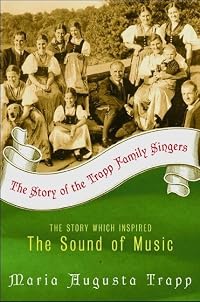
The Story of the Trapp Family Singers
by Maria Augusta Trapp
On This Page
Description
With nearly 1,500 Broadway performances, six Tony Awards, more than three million albums sold, and five Academy Awards, The Sound of Music, based on the lives of Maria, the baron, and their singing children, is as familiar to most of us as our own family history. But much about the real-life woman and her family was left untold. Here, Baroness Maria Augusta Trapp tells in her own beautiful, simple words the extraordinary story of her romance with the baron, their escape from Nazi-occupied show more Austria, and their life in America. Now with photographs from the original edition. show lessTags
Recommendations









Member Reviews
I remember Mom reading this book aloud to our family years ago, before I made it into the double digits. It struck me then as a great story, and recently, I was reminded of it again when we watched The Sound of Music together as a family. Then and there, I determined to read this as our next family read-aloud the next chance I got.
We ended up reading this over the course of a couple of months, mostly stretched out that way due to a busy summer. Everyone got into the story, and at one stage, when we were having a sausage roast over a campfire, one of my brothers begged me to read the next chapter. We didn’t have the book with us, but I was pleased to find it in an online library, so we got to read after all—that is a fun show more memory!
Maria’s writing style is both fun and engaging. I love her lighthearted approach to life, even when things are difficult, and in my opinion, this book is far better than the movie. Not only is it more realistic, but the many, many different humorous stories (including some self-deprecating humor!) keep the book moving along quickly. One aspect that surprised me about the book on this re-read was how much the family’s faith made its way into the story—that was refreshing and encouraging, even though I’m not Catholic! Then there’s the family’s perspective on the war, their reluctance to get into singing, and all the normal large-family drama…it came together to be a delightful, inspiring read.
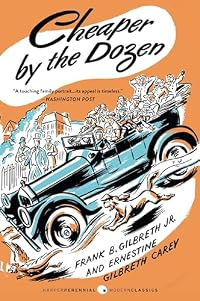
If you enjoy books along the lines of Cheaper by the Dozen, Ten P’s in a Pod, or other similar stories of large families living, loving, and working together, I’d highly recommend you check out this book. It’s a treasure to have on any shelf—especially if you enjoy The Sound of Music! show less
We ended up reading this over the course of a couple of months, mostly stretched out that way due to a busy summer. Everyone got into the story, and at one stage, when we were having a sausage roast over a campfire, one of my brothers begged me to read the next chapter. We didn’t have the book with us, but I was pleased to find it in an online library, so we got to read after all—that is a fun show more memory!
Maria’s writing style is both fun and engaging. I love her lighthearted approach to life, even when things are difficult, and in my opinion, this book is far better than the movie. Not only is it more realistic, but the many, many different humorous stories (including some self-deprecating humor!) keep the book moving along quickly. One aspect that surprised me about the book on this re-read was how much the family’s faith made its way into the story—that was refreshing and encouraging, even though I’m not Catholic! Then there’s the family’s perspective on the war, their reluctance to get into singing, and all the normal large-family drama…it came together to be a delightful, inspiring read.
If you enjoy books along the lines of Cheaper by the Dozen, Ten P’s in a Pod, or other similar stories of large families living, loving, and working together, I’d highly recommend you check out this book. It’s a treasure to have on any shelf—especially if you enjoy The Sound of Music! show less
Like almost everybody, I grew up with The Sound of Music. I don't remember when I learned that it was based on a true story, but I have had this book on my book bucket list since I was young.
Maria's voice was refreshing. She's a straight talker, and I felt less like I was reading a memoir and more like I was sharing a cup of tea with her over the kitchen table.
I was completely charmed by the book, and by Maria, and the entire Trapp family.
Maria's voice was refreshing. She's a straight talker, and I felt less like I was reading a memoir and more like I was sharing a cup of tea with her over the kitchen table.
I was completely charmed by the book, and by Maria, and the entire Trapp family.
Though many know the story told in the popular musical & movie The Sound of Music, most probably don't know the true story behind it. This is the book that inspired Rodgers and Hammerstein to write the musical, and there are some similarities, but also some large differences. The book also goes on to cover the Trapp Family's lives in America after they fled Europe, an event which takes place within the first 40% of the book.
Overall, I found it fascinating to read about the true story behind a movie I watched so very many times all through my childhood, and plenty since then, too, even leading my own daughter to fall in love with it. It is very easy to read and follow what is going on. I enjoyed the times the author tells about her show more halting English in a way that seems very real, even while the entire book is in English. I love the way the family works together in all things, not just their singing career, each one using their talents where they can be most useful. I also appreciate the author's instinct to attribute everything to the will of God, doing quite a few things she didn't really want to do, because she had good reason to believe God wanted her to. I should add that I don't agree with, and at times even understand the need for, some of the theology the author believes in, but the foundational beliefs of trusting in God for every aspect of one's life is important.
We can find a word of caution for our own lives in these pages, as the family watched Hitler come to power and take over their country years before WWII started. The children were told at school that their parents were "nice, old-fashioned people who don't understand the new Party," and that they shouldn't tell their parents what they learned at school. This is beginning to happen to some degree today as well, with some areas wanting to cut parents completely out of the decision-making for what goes on at schools. Once they start trying to keep what the kids are learning at school secret from the parents, it should be a huge red flag!
The book did feel like it dragged a bit in the 2nd half, though I can't quite put my finger on why. It may have simply been that the story of how the family's concert career grew and they bought their farm wasn't as interesting to me as the rest. Overall, though, I'm glad I read this book and would recommend it to anyone who enjoys the movie and wants to know the true story or anyone interested in memoirs about life during and after WWII (especially from those who are from countries directly affected by the war). show less
Overall, I found it fascinating to read about the true story behind a movie I watched so very many times all through my childhood, and plenty since then, too, even leading my own daughter to fall in love with it. It is very easy to read and follow what is going on. I enjoyed the times the author tells about her show more halting English in a way that seems very real, even while the entire book is in English. I love the way the family works together in all things, not just their singing career, each one using their talents where they can be most useful. I also appreciate the author's instinct to attribute everything to the will of God, doing quite a few things she didn't really want to do, because she had good reason to believe God wanted her to. I should add that I don't agree with, and at times even understand the need for, some of the theology the author believes in, but the foundational beliefs of trusting in God for every aspect of one's life is important.
We can find a word of caution for our own lives in these pages, as the family watched Hitler come to power and take over their country years before WWII started. The children were told at school that their parents were "nice, old-fashioned people who don't understand the new Party," and that they shouldn't tell their parents what they learned at school. This is beginning to happen to some degree today as well, with some areas wanting to cut parents completely out of the decision-making for what goes on at schools. Once they start trying to keep what the kids are learning at school secret from the parents, it should be a huge red flag!
The book did feel like it dragged a bit in the 2nd half, though I can't quite put my finger on why. It may have simply been that the story of how the family's concert career grew and they bought their farm wasn't as interesting to me as the rest. Overall, though, I'm glad I read this book and would recommend it to anyone who enjoys the movie and wants to know the true story or anyone interested in memoirs about life during and after WWII (especially from those who are from countries directly affected by the war). show less
In a Nutshell: A memoir penned by Maria Von Trapp, whose life later inspired ‘The Sound of Music’. Written in 1949, much before the Broadway musical and the movie. Offers a decent glimpse of Maria and the Trapp family, and also indirectly shows us the liberties taken by Broadway/Hollywood in their portrayal. A good option for those who want to know more about how a rich Austrian naval captain’s family ended up becoming tour singers in the US.
~~~~~~~~~~~~~~~~~~~~~~~~~~~~
Most English-movie watchers might have at least heard of ‘The Sound of Music’, even if they haven’t watched it. I had first seen this movie in my childhood and immediately fell in love with the music. (It broke my heart to discover that the couple from my show more favourite song ‘Sixteen Going On Seventeen’ didn’t proceed to a happy ending.) It was only many years later that I discovered that the movie was based on the actual family from Austria.
I have had this book in my TBR since ages, mainly as I'm a big fan of the music from the movie. There is an upcoming Random House publication, ‘[b:Maria: A Novel of Maria von Trapp|201102253|Maria A Novel of Maria von Trapp|Michelle Moran|https://i.gr-assets.com/images/S/compressed.photo.goodreads.com/books/1701915967l/201102253._SY75_.jpg|92314039]’ penned by [a:Michelle Moran|269069|Michelle Moran|https://images.gr-assets.com/authors/1370383933p2/269069.jpg], which supposedly focusses on Maria’s reaction to the adaptation of her life story into a Broadway musical and later, a movie. But as it is a fictional work, I decided to first read Maria's life story in her own words so that I know the truth without (many) fictional embellishments.
Maria Von Trapp has written three memoirs. The second and the third memoirs came out in the 1970s, and focussed more on her own life, and possibly included details about the musical and the 1965 movie as well, I’m not sure. However, ‘The Story of the Trapp Family Singers’ was published in 1949, much before any adaptation. So the focus in this book is strictly, as the title suggests, on the family’s singing career.
By sheer coincidence (or possibly not), Maria begins her story at the same point as the movie does – her life as a novitiate and how she is suddenly handed over the assignment of helping out one of the Trapp children, who was unwell, with her studies. (Unlike what the movie showed, Maria wasn’t appointed as a governess to all seven kids but just as a teacher to one.) The book continues into how her bond with the children grew, her reaction to Captain Georg’s proposal (not at all like that in the movie – sigh!), their married life in Austria, and later, their move to the USA, their singing career and general life in their new country.
It is important to keep the title in mind, because the book doesn’t offer a detailed picture of the Trapps. We do get some backstory about Captain Georg’s accomplished naval career during WWI, a barely-there mention of his first wife Agathe, and the names and some behavioural details of his seven children with Agathe. However, a deeper insight into the people is missing most of the way. As the title suggests, this memoir is not about the movie or the Trapp family but about the family’s social identity as ‘Trapp Family Singers’. The romance and other family scenes depicted in the movie gets done within the first sixty pages of this book (without any of the frivolities, of course.) The rest is all about their move to and subsequent life in the USA.
For a woman who didn’t know English until she landed in the USA, Maria seems to have mastered the language almost instantaneously. (I wonder if she had a ghost-writer for this book!) She knows the history, geography, culture and traditions of her country very well, and her pride in being an Austrian comes out strongly. Her language is mostly simple, and her writing approach is both self-deprecating and self-congratulatory, a strange combination. Her tone does get very preachy at times.
At the same time, because she is so focussed on giving us the story of the “Trapp Family Singers”, she forgets to provide necessary information about the “Trapp Family”. We don’t know the ages of most of the children, we don’t even know Maria’s origins and how she ended up in the convent. The trickiest part is the understanding of the passage of time. The story spans the years 1926 to 1947, and while Maria’s narration is linear, there are very few year references across the book. So it is not easy to figure out the exact spread of the 21 years. Moreover, though Maria was only seven years older than the eldest Trapp child – a boy named Rupert, she keeps referring to the children as ‘boys’ and ‘girls’ till the end of the book, making it tough to remember that Rupert is in his mid-thirties by the time the book comes to a close.
Some parts of this memoir haven't aged well. Maria is a product of her era, so there are references to spanking children (and not even questioning the validity of this action), multiple uses of the N word to refer to Blacks, and a strange fascination about getting to meet the "real Indians" (a reference that made me cringe.) Of her three children, she speaks fondly only of her youngest, who was her only son. We barely get any details of her older daughters. Maria also seems overly naive talking about how they were never put in camps by the Americans during WWII even though they were registered as enemy aliens, and about how the US government was fair even to outsiders such as the Polish and the Austrian immigrants. I wonder if it ever crossed her mind that *other* ethnicities such as the Japanese (even if they were Japanese-Americans) had to go forcibly into internment camps.
The second half of the book feels very repetitive. Though not like typical immigrants, the Trapp family had to go through multiple swings in their singing career before they could finally relax about their finances. The ups and downs seemed to blend into each other after a point, though I loved learning about how they made do when times were bad, and smiled at Maria’s misinterpretations of US lingo. But even when Maria speaks about good times and difficulties, the writing somehow doesn’t transform into a visual experience in my head. The description feels very bare-bones, focussing only on needed facts before jumping onto the next big event.
Maria also stresses overly on the positive experiences, and doesn’t detail a single negative anecdote about any person. I find it tough to believe that every single human being they met was helpful and supportive. No one can be that lucky! (Then again, she didn’t even have to anything negative to say about Hitler; I might have assumed that the ‘nun’ values ran strong, but most nuns I know would be the first to pass judgement on people!)
The most poignant chapter of the book is the final one, where Maria details her husband’s illness and his death in 1947. In an otherwise strictly controlled narrative, it felt like the only chapter where she allowed her heart to speak more than her head. If she had written the entire book with this much emotion, it would have been an easy 4.5 stars.
Even without intending to, this memoir reveals just how many liberties Broadway and Hollywood took with the facts. The children don’t correspond in age and gender. Liesl from the movie is entirely fictional, as is Rolf. The Captain and Maria had a 25-year age gap; he was 47 and she just 22 when they got married – conveniently not mentioned in the movie. The details of their escape from Austria are not just incorrect but also incomplete. (Maria had two children of her own when they escaped; it wasn’t immediately after her marriage as the movie seemed to suggest.)
The movie also turned the Georg-Maria relationship into a typical enemies-to-lovers romance, though it was actually a marriage of convenience that slowly grew towards mutual respect and love. The biggest injustice has been done to Captain Georg, whom the movie portrays as a strict disciplinarian who doesn’t even allow his children to sing. His real-life counterpart seems to have been a loving father, though not very vociferous in his display of emotions, as was the norm among privileged men then. Basically, if you considered the movie true to life, you will be very disappointed. (Then again, it is a Hollywood movie; you ought to have known better!)
One dominant aspect in this book that is totally missing in the movie is the strong element of faith. (This might be annoying to those who don’t like religious content in their books.) Though Maria had to give up on her dream of becoming a nun, she was much rooted in her Catholic beliefs till the end. Even the Trapps were practising Christians. So the memoir has many references to their belief system, the power of prayer, the idea of trusting God with our lives, and so on. I did like some of these details, such as the Austrian traditions at Christmastime.
All in all, despite certain issues, this is still an informative read, though it could have been far better written. If you are a fan of the movie and want to know the truth about the family behind the characters, this memoir might serve you well, though that part is restricted to the first 20%. Most of the rest is fairly easy-going and somewhat monotonous, except for the final chapter.
2.5 stars. No regrets reading it, but no repeat value. Rounding up for sentimental nostalgia.
Now I am even more curious to get to Michelle Moran’s book and learn more about the distortions made by Hollywood in bringing this life story to screen. I know that it will be better written, considering that its author is actually a professional writer, not someone like Maria who wrote this account after her friends convinced her to. I just hope the research is accurate as well. Fingers crossed!
Editing to Add on 2nd Aug 2024: Michelle Moran's book went far better. Here's my review:
https://www.goodreads.com/review/show/6365604624.
~~~~~~~~~~~~~~~~~~~~~~~~~~~~
Connect with me through:
My Blog || The StoryGraph || Instagram || X/Twitter || Facebook || show less
~~~~~~~~~~~~~~~~~~~~~~~~~~~~
Most English-movie watchers might have at least heard of ‘The Sound of Music’, even if they haven’t watched it. I had first seen this movie in my childhood and immediately fell in love with the music. (It broke my heart to discover that the couple from my show more favourite song ‘Sixteen Going On Seventeen’ didn’t proceed to a happy ending.) It was only many years later that I discovered that the movie was based on the actual family from Austria.
I have had this book in my TBR since ages, mainly as I'm a big fan of the music from the movie. There is an upcoming Random House publication, ‘[b:Maria: A Novel of Maria von Trapp|201102253|Maria A Novel of Maria von Trapp|Michelle Moran|https://i.gr-assets.com/images/S/compressed.photo.goodreads.com/books/1701915967l/201102253._SY75_.jpg|92314039]’ penned by [a:Michelle Moran|269069|Michelle Moran|https://images.gr-assets.com/authors/1370383933p2/269069.jpg], which supposedly focusses on Maria’s reaction to the adaptation of her life story into a Broadway musical and later, a movie. But as it is a fictional work, I decided to first read Maria's life story in her own words so that I know the truth without (many) fictional embellishments.
Maria Von Trapp has written three memoirs. The second and the third memoirs came out in the 1970s, and focussed more on her own life, and possibly included details about the musical and the 1965 movie as well, I’m not sure. However, ‘The Story of the Trapp Family Singers’ was published in 1949, much before any adaptation. So the focus in this book is strictly, as the title suggests, on the family’s singing career.
By sheer coincidence (or possibly not), Maria begins her story at the same point as the movie does – her life as a novitiate and how she is suddenly handed over the assignment of helping out one of the Trapp children, who was unwell, with her studies. (Unlike what the movie showed, Maria wasn’t appointed as a governess to all seven kids but just as a teacher to one.) The book continues into how her bond with the children grew, her reaction to Captain Georg’s proposal (not at all like that in the movie – sigh!), their married life in Austria, and later, their move to the USA, their singing career and general life in their new country.
It is important to keep the title in mind, because the book doesn’t offer a detailed picture of the Trapps. We do get some backstory about Captain Georg’s accomplished naval career during WWI, a barely-there mention of his first wife Agathe, and the names and some behavioural details of his seven children with Agathe. However, a deeper insight into the people is missing most of the way. As the title suggests, this memoir is not about the movie or the Trapp family but about the family’s social identity as ‘Trapp Family Singers’. The romance and other family scenes depicted in the movie gets done within the first sixty pages of this book (without any of the frivolities, of course.) The rest is all about their move to and subsequent life in the USA.
For a woman who didn’t know English until she landed in the USA, Maria seems to have mastered the language almost instantaneously. (I wonder if she had a ghost-writer for this book!) She knows the history, geography, culture and traditions of her country very well, and her pride in being an Austrian comes out strongly. Her language is mostly simple, and her writing approach is both self-deprecating and self-congratulatory, a strange combination. Her tone does get very preachy at times.
At the same time, because she is so focussed on giving us the story of the “Trapp Family Singers”, she forgets to provide necessary information about the “Trapp Family”. We don’t know the ages of most of the children, we don’t even know Maria’s origins and how she ended up in the convent. The trickiest part is the understanding of the passage of time. The story spans the years 1926 to 1947, and while Maria’s narration is linear, there are very few year references across the book. So it is not easy to figure out the exact spread of the 21 years. Moreover, though Maria was only seven years older than the eldest Trapp child – a boy named Rupert, she keeps referring to the children as ‘boys’ and ‘girls’ till the end of the book, making it tough to remember that Rupert is in his mid-thirties by the time the book comes to a close.
Some parts of this memoir haven't aged well. Maria is a product of her era, so there are references to spanking children (and not even questioning the validity of this action), multiple uses of the N word to refer to Blacks, and a strange fascination about getting to meet the "real Indians" (a reference that made me cringe.) Of her three children, she speaks fondly only of her youngest, who was her only son. We barely get any details of her older daughters. Maria also seems overly naive talking about how they were never put in camps by the Americans during WWII even though they were registered as enemy aliens, and about how the US government was fair even to outsiders such as the Polish and the Austrian immigrants. I wonder if it ever crossed her mind that *other* ethnicities such as the Japanese (even if they were Japanese-Americans) had to go forcibly into internment camps.
The second half of the book feels very repetitive. Though not like typical immigrants, the Trapp family had to go through multiple swings in their singing career before they could finally relax about their finances. The ups and downs seemed to blend into each other after a point, though I loved learning about how they made do when times were bad, and smiled at Maria’s misinterpretations of US lingo. But even when Maria speaks about good times and difficulties, the writing somehow doesn’t transform into a visual experience in my head. The description feels very bare-bones, focussing only on needed facts before jumping onto the next big event.
Maria also stresses overly on the positive experiences, and doesn’t detail a single negative anecdote about any person. I find it tough to believe that every single human being they met was helpful and supportive. No one can be that lucky! (Then again, she didn’t even have to anything negative to say about Hitler; I might have assumed that the ‘nun’ values ran strong, but most nuns I know would be the first to pass judgement on people!)
The most poignant chapter of the book is the final one, where Maria details her husband’s illness and his death in 1947. In an otherwise strictly controlled narrative, it felt like the only chapter where she allowed her heart to speak more than her head. If she had written the entire book with this much emotion, it would have been an easy 4.5 stars.
Even without intending to, this memoir reveals just how many liberties Broadway and Hollywood took with the facts. The children don’t correspond in age and gender. Liesl from the movie is entirely fictional, as is Rolf. The Captain and Maria had a 25-year age gap; he was 47 and she just 22 when they got married – conveniently not mentioned in the movie. The details of their escape from Austria are not just incorrect but also incomplete. (Maria had two children of her own when they escaped; it wasn’t immediately after her marriage as the movie seemed to suggest.)
The movie also turned the Georg-Maria relationship into a typical enemies-to-lovers romance, though it was actually a marriage of convenience that slowly grew towards mutual respect and love. The biggest injustice has been done to Captain Georg, whom the movie portrays as a strict disciplinarian who doesn’t even allow his children to sing. His real-life counterpart seems to have been a loving father, though not very vociferous in his display of emotions, as was the norm among privileged men then. Basically, if you considered the movie true to life, you will be very disappointed. (Then again, it is a Hollywood movie; you ought to have known better!)
One dominant aspect in this book that is totally missing in the movie is the strong element of faith. (This might be annoying to those who don’t like religious content in their books.) Though Maria had to give up on her dream of becoming a nun, she was much rooted in her Catholic beliefs till the end. Even the Trapps were practising Christians. So the memoir has many references to their belief system, the power of prayer, the idea of trusting God with our lives, and so on. I did like some of these details, such as the Austrian traditions at Christmastime.
All in all, despite certain issues, this is still an informative read, though it could have been far better written. If you are a fan of the movie and want to know the truth about the family behind the characters, this memoir might serve you well, though that part is restricted to the first 20%. Most of the rest is fairly easy-going and somewhat monotonous, except for the final chapter.
2.5 stars. No regrets reading it, but no repeat value. Rounding up for sentimental nostalgia.
Now I am even more curious to get to Michelle Moran’s book and learn more about the distortions made by Hollywood in bringing this life story to screen. I know that it will be better written, considering that its author is actually a professional writer, not someone like Maria who wrote this account after her friends convinced her to. I just hope the research is accurate as well. Fingers crossed!
Editing to Add on 2nd Aug 2024: Michelle Moran's book went far better. Here's my review:
https://www.goodreads.com/review/show/6365604624.
~~~~~~~~~~~~~~~~~~~~~~~~~~~~
Connect with me through:
My Blog || The StoryGraph || Instagram || X/Twitter || Facebook || show less
`The Story Of The Trapp Family Singers' spans roughly the quarter century from the mid 1920s up to the end of the 1940s and is divided into 2 parts. Part 1 [the first 110 pages or so] roughly covers the period between Maria leaving Nonnberg monastery to join the Trapp family and closing with the momentous decision to leave Austria at the outbreak of war, incorporating her marriage, the family's loss of fortune and the start of their singing career. Part 2 picks up the story as they approach New York and goes on to describe 10 years of their lives as a professional singing group, settling down in Vermont, the death of the captain and the establishment of what would become the Trapp Family Lodge ski resort.
It is probably reasonable to show more assume that almost anyone showing an interest in this book does so because of a desire to learn of the background to `The Sound Of Music`. In many ways the musical is faithful to the book, at least in essence, though don't be surprised to learn that a great deal of invention was employed, especially with the children who bear little relation to their real life counterparts. The main complaint is in the film's depiction of Georg as cold and aloof, something the family has been at pains to contradict ever since!
Much like the musical, the book has a high `feel good' factor: it is infused with a rosy glow of goodness and warmth in which there is little room for negativity, and even less for any complaint or criticism, despite sudden reverses of fortune. Don`t expect any dirty linen to be aired here! Maria's easy-going prose style is wonderfully fluid and accomplished: it gladdens, it saddens, and sometimes it amuses, but always it enchants.
Progressively, the reader becomes aware that the young free-spirited guitar-toting novitiate has become a strong and formidable woman capable of leading a large family, and perhaps dominating the captain who quickly recedes to a background role. It is clearly her drive and determination, and sheer force of character, that enabled the family to achieve almost the impossible, and was probably responsible for holding it together for so long.
The book is liberally festooned with descriptions of the family's religious rituals and Maria's own faith as a devout Catholic, which can appear `preachy` at times. Some readers may find these aspects a touch excessive, yet it is part-and-parcel of the lady's character, and as such this old sceptic found it acceptable.
The smaller Part 1 is the most relevant to `Sound Of Music' fans who will undoubtedly be entertained by scrutinising it in detail for similarities, discrepancies and surprising subtleties. Overall, it is an interesting and entertaining book that will handsomely reward both die-hard fan and casual reader alike.
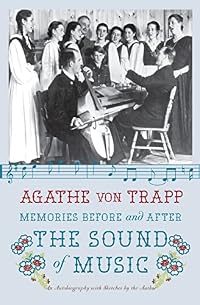
Of course, there is more outside the scope of this book: for further information on Maria's life, see her autobiography Maria which describes her upbringing as well as later years in USA; the wonderful memoirs of eldest daughter Agathe von Trapp Memories Before and After The Sound of Music are extremely interesting and highly recommended, particularly for a description of the family's earlier years before Maria arrived. show less
It is probably reasonable to show more assume that almost anyone showing an interest in this book does so because of a desire to learn of the background to `The Sound Of Music`. In many ways the musical is faithful to the book, at least in essence, though don't be surprised to learn that a great deal of invention was employed, especially with the children who bear little relation to their real life counterparts. The main complaint is in the film's depiction of Georg as cold and aloof, something the family has been at pains to contradict ever since!
Much like the musical, the book has a high `feel good' factor: it is infused with a rosy glow of goodness and warmth in which there is little room for negativity, and even less for any complaint or criticism, despite sudden reverses of fortune. Don`t expect any dirty linen to be aired here! Maria's easy-going prose style is wonderfully fluid and accomplished: it gladdens, it saddens, and sometimes it amuses, but always it enchants.
Progressively, the reader becomes aware that the young free-spirited guitar-toting novitiate has become a strong and formidable woman capable of leading a large family, and perhaps dominating the captain who quickly recedes to a background role. It is clearly her drive and determination, and sheer force of character, that enabled the family to achieve almost the impossible, and was probably responsible for holding it together for so long.
The book is liberally festooned with descriptions of the family's religious rituals and Maria's own faith as a devout Catholic, which can appear `preachy` at times. Some readers may find these aspects a touch excessive, yet it is part-and-parcel of the lady's character, and as such this old sceptic found it acceptable.
The smaller Part 1 is the most relevant to `Sound Of Music' fans who will undoubtedly be entertained by scrutinising it in detail for similarities, discrepancies and surprising subtleties. Overall, it is an interesting and entertaining book that will handsomely reward both die-hard fan and casual reader alike.
Of course, there is more outside the scope of this book: for further information on Maria's life, see her autobiography Maria which describes her upbringing as well as later years in USA; the wonderful memoirs of eldest daughter Agathe von Trapp Memories Before and After The Sound of Music are extremely interesting and highly recommended, particularly for a description of the family's earlier years before Maria arrived. show less
I must've read this more than ten times as a child... it was an old, library-bound hardcover, and this was back in the day when your library card number got stamped onto the card in the back pocket. I think my number was the only one on there, over and over again.
So much more engaging, serious and interesting than 'The Sound of Music'! I remember loving all the historical detail of the times and Maria's authentic 'voice.'
I'm not sure if it'd still be 5 stars if I re-read today... but I do have Maria von Trapp's other book on my TBR... we'll see!
So much more engaging, serious and interesting than 'The Sound of Music'! I remember loving all the historical detail of the times and Maria's authentic 'voice.'
I'm not sure if it'd still be 5 stars if I re-read today... but I do have Maria von Trapp's other book on my TBR... we'll see!
https://nwhyte.livejournal.com/3312512.html
Actually only the first part of the book deals with their time in Austria; the rest is about their experiences in America. Neither book nor film explains much about Maria's own background - apparently both her parents died by the time she was ten, and various other arrangements did not work out; she did get a professional teaching qualification before entering the convent.
The major change to the story is the telescoping of time. Maria and Georg married in 1927, when he was 47 and she was 22 (when the film was made, Julie Andrews was 29 and Christopher Plummer 35); over the next ten years the family became noted performers, especially when most of their money was wiped out in a bank crash and show more they needed the income; Maria had three more children to add to the seven from the first marriage; the turning point when they decided to flee was after they were invited to sing for Hitler on his birthday after the Anschluss, and knew that they could not bring themselves to do it but also could not stay in the Reich if they said no. And they fled to Italy, where Georg von Trapp had citizenship due to havig been born in Zara when it was Austrian (it was then Italian and is now the Croatian city of Zadar).
Most of the story about her romance with Georg von Trapp is consistent between the book and the musical/film, and a lot of the little details about life in the Trapp household are taken from the book. Maria's rival for Trapp's affections is described as "Princess Yvonne", a distant cousin of the first Mrs Trapp, and by implication of Austro-Hungarian nobility. I have done a bit of detective work on this. The first Mrs Trapp was born Agatha Whitehead, into a family of British naval engineers who moved to the Austro-Hungarian coast (now in Croatia) - her grandfather invented the torpedo, and his sons carried on the work. Her mother was an Austro-Hungarian aristocrat, who would have had many eligible nieces and cousins I suppose; also her father's sister married Georg von Hoyos, her cousin was the diplomat Alexander von Hoyos, and there are plenty of candidates on that side as well (I see an Ilona who would be the right age and is almost "Yvonne"). Incidentally Georg von Trapp was a submarine captain, and personally sank eleven Allied ships in the first world war, six of them British; we don't hear much about that.
The book is frank about the problems of impoverished gentility and very direct about the plight of refugees trying to get permanent status in the USA - it is of course inhumanly difficult now, but it wasn't all that easy back then even for nice white people. Maria is also very up front about her personal piety and devotion to the Catholic faith - it’s entirely consistent with the story of her vocation, and it’s an element that is only alluded to as background colour in the film.
It's a celebrity memoir, written for fans, but also I feel putting down on paper the stories that Maria had told her friends and family over many years. She finishes with reflections on the fundraising that the family had done for humanitarian relief in Austria after the war ended, an emotional but also super-organisational task, and on Georg’s death from lung cancer in 1947 on the Vermont farm that the family set up as first a refuge and then a business, and which is still run by the grandchildren. show less
Actually only the first part of the book deals with their time in Austria; the rest is about their experiences in America. Neither book nor film explains much about Maria's own background - apparently both her parents died by the time she was ten, and various other arrangements did not work out; she did get a professional teaching qualification before entering the convent.
The major change to the story is the telescoping of time. Maria and Georg married in 1927, when he was 47 and she was 22 (when the film was made, Julie Andrews was 29 and Christopher Plummer 35); over the next ten years the family became noted performers, especially when most of their money was wiped out in a bank crash and show more they needed the income; Maria had three more children to add to the seven from the first marriage; the turning point when they decided to flee was after they were invited to sing for Hitler on his birthday after the Anschluss, and knew that they could not bring themselves to do it but also could not stay in the Reich if they said no. And they fled to Italy, where Georg von Trapp had citizenship due to havig been born in Zara when it was Austrian (it was then Italian and is now the Croatian city of Zadar).
Most of the story about her romance with Georg von Trapp is consistent between the book and the musical/film, and a lot of the little details about life in the Trapp household are taken from the book. Maria's rival for Trapp's affections is described as "Princess Yvonne", a distant cousin of the first Mrs Trapp, and by implication of Austro-Hungarian nobility. I have done a bit of detective work on this. The first Mrs Trapp was born Agatha Whitehead, into a family of British naval engineers who moved to the Austro-Hungarian coast (now in Croatia) - her grandfather invented the torpedo, and his sons carried on the work. Her mother was an Austro-Hungarian aristocrat, who would have had many eligible nieces and cousins I suppose; also her father's sister married Georg von Hoyos, her cousin was the diplomat Alexander von Hoyos, and there are plenty of candidates on that side as well (I see an Ilona who would be the right age and is almost "Yvonne"). Incidentally Georg von Trapp was a submarine captain, and personally sank eleven Allied ships in the first world war, six of them British; we don't hear much about that.
The book is frank about the problems of impoverished gentility and very direct about the plight of refugees trying to get permanent status in the USA - it is of course inhumanly difficult now, but it wasn't all that easy back then even for nice white people. Maria is also very up front about her personal piety and devotion to the Catholic faith - it’s entirely consistent with the story of her vocation, and it’s an element that is only alluded to as background colour in the film.
It's a celebrity memoir, written for fans, but also I feel putting down on paper the stories that Maria had told her friends and family over many years. She finishes with reflections on the fundraising that the family had done for humanitarian relief in Austria after the war ended, an emotional but also super-organisational task, and on Georg’s death from lung cancer in 1947 on the Vermont farm that the family set up as first a refuge and then a business, and which is still run by the grandchildren. show less
Members
- Recently Added By
Lists

Best Biographies, Autobiographies and Memoirs
464 works; 156 members

Read the book and saw the movie
1,170 works; 192 members

Childhood Favorites
427 works; 24 members

Watched the Movie, Probably Won't Read the Book
185 works; 34 members

Best Family Stories
241 works; 22 members

KayStJ's to-read list
1,616 works; 11 members

Elevenses
316 works; 88 members

Ambleside Books
459 works; 18 members

Books Read in 2015
3,299 works; 126 members
Author Information

30+ Works 3,257 Members
Series
Belongs to Publisher Series
Image Books (D46)
Scholastic T (753)
Work Relationships
Is contained in
Common Knowledge
- Original title
- The Story Of the Trapp Family Singers
- Original publication date
- 1949
- People/Characters
- Maria Von Trapp; Georg von Trapp; Agathe von Trapp; Hedwig von Trapp; Johanna von Trapp; Martina von Trapp (show all 15); Rupert von Trapp; Werner von Trapp; Rosemarie von Trapp; Eleonore von Trapp; Johannes von Trapp; Maria F. von Trapp; Peter; Von Trapp Family; Father Wasner
- Important places
- Salzburg, Austria; New York, New York, USA; Stowe, Vermont, USA
- Important events
- World War II (1939-1945)
- Related movies
- The Sound of Music (1965 | IMDb)
- First words
- Somebody tapped me on the shoulder.
- Last words
- (Click to show. Warning: May contain spoilers.)Herein lies the hope of all those who belong to Cor Unum.
Classifications
- Genres
- Biography & Memoir, Nonfiction
- DDC/MDS
- 782.50922 — Arts & recreation Music Vocal Music, Singing Mixed voices; choral music modified standard subdivisions History, geographic treatment, biography Biography Collected biography
- LCC
- ML421 .T7 .T7 — Music Literature on music Literature on music History and criticism Biography
- BISAC
Statistics
- Members
- 2,169
- Popularity
- 9,332
- Reviews
- 37
- Rating
- (3.81)
- Languages
- 12 — Dutch, English, Estonian, Finnish, French, German, Greek, Italian, Korean, Norwegian (Bokmål), Spanish, Swedish
- Media
- Paper, Ebook
- ISBNs
- 28
- ASINs
- 61