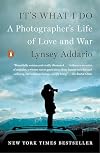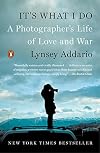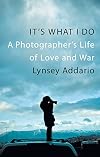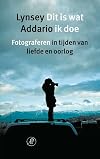
It's What I Do: A Photographer's Life of Love and War
by Lynsey Addario
On This Page
Description
Lynsey Addario was just finding her way as a young photographer when the events of September 11, 2001, changed the world. One of the few photojournalists with experience in Afghanistan, she gets the call to return and cover the American invasion. She makes a decision she would often find herself making-not to stay home, not to lead a quiet or predictable life, but to set out across the world, face the chaos of crisis, and make a name for herself.Addario finds in photography a way to travel show more with a purpose, and It's What I Do is the story of that singular calling-how it shapes and drives her life and how it changes the lives of others. She captures virtually every major theater of war of the twenty-first century and from it creates a historical document of truth on the international conflicts that have made, and remade, our world. She photographs the Afghan people before and after Taliban reign, the civilian casualties and misunderstood insurgents of the Iraq War, as well as the burned villages and the countless dead in Darfur. She exposes a culture of violence against women in the Congo and tells the riveting inside story of her headline-making kidnapping by pro-Qaddafi forces in the Libyan civil war.As a woman photojournalist determined to be taken as seriously as her male peers, Addario fights her way into a boys' club of a profession. Rather than choose between her personal life and profession, Addario learns to strike a necessary balance. In the man who will become her husband, she finds at last a real love to complement her work, not take away from it, and as a new mother, she gains an even more intensely personal understanding of the fragility of life.Watching uprisings unfold and people fight to the death for their freedom, Addario understands she is documenting not only news but also the fate of society.It's What I Do is more than just a snapshot of life on the front lines-it is witness to the human cost of war. show lessTags
Recommendations






















Member Reviews
It’s What I Do: A Photographer’s Life of Love and War -
Lynsey Addario
5 stars
I’m not usually a fan of memoirs. I find that they deteriorate into a tedious listing of events or a name dropping catalog. Neither is true of this memoir. It was interesting, compelling and terrifying from beginning to end.
In the very first chapter, Addario tells of her March 2011 kidnapping in Libya. At the point where she and her colleagues are bound, gagged and helpless, Addario breaks off this riveting first person account with a paragraph that asks the obvious question. Why was she there? Why did she chose the life of a conflict photojournalist?
“When I return home and rationally consider the risks, the choices are difficult. But when I am show more doing my work, I am alive and I am me. It’s what I do. I am sure there are other versions of happiness, but this one is mine.”
The rest of the book is devoted to answering that question. She begins with her early years, her loving family, her first camera. She describes how she grew as a photographer and developed her passion for photojournalism. Addario is direct about her competitive professional goals and her artistic aspirations. She is frank about her personal life; the difficulties of balancing her demanding and dangerous career with any kind of healthy relationship. She is passionate about the subjects she photographs. She is committed to the visual power of photographic truth telling.
“I became fascinated by the notion of dispelling stereotypes or misconceptions through photography, of presenting the counterintuitive.”
“Trying to convey beauty in war was a technique to try to prevent the reader from looking away or turning the page in response to something horrible. I wanted them to linger, to ask questions.”
“With my subjects—the thousands of people I have photographed—I have shared the joy of survival, the courage to resist oppression, the anguish of loss, the resilience of the oppressed, the brutality of the worst of men and the tenderness of the best.” show less
Lynsey Addario
5 stars
I’m not usually a fan of memoirs. I find that they deteriorate into a tedious listing of events or a name dropping catalog. Neither is true of this memoir. It was interesting, compelling and terrifying from beginning to end.
In the very first chapter, Addario tells of her March 2011 kidnapping in Libya. At the point where she and her colleagues are bound, gagged and helpless, Addario breaks off this riveting first person account with a paragraph that asks the obvious question. Why was she there? Why did she chose the life of a conflict photojournalist?
“When I return home and rationally consider the risks, the choices are difficult. But when I am show more doing my work, I am alive and I am me. It’s what I do. I am sure there are other versions of happiness, but this one is mine.”
The rest of the book is devoted to answering that question. She begins with her early years, her loving family, her first camera. She describes how she grew as a photographer and developed her passion for photojournalism. Addario is direct about her competitive professional goals and her artistic aspirations. She is frank about her personal life; the difficulties of balancing her demanding and dangerous career with any kind of healthy relationship. She is passionate about the subjects she photographs. She is committed to the visual power of photographic truth telling.
“I became fascinated by the notion of dispelling stereotypes or misconceptions through photography, of presenting the counterintuitive.”
“Trying to convey beauty in war was a technique to try to prevent the reader from looking away or turning the page in response to something horrible. I wanted them to linger, to ask questions.”
“With my subjects—the thousands of people I have photographed—I have shared the joy of survival, the courage to resist oppression, the anguish of loss, the resilience of the oppressed, the brutality of the worst of men and the tenderness of the best.” show less
This remarkable memoir explores the unique life of a modern photojournalist from the perspective of a successful insider—her development; the culture of the profession, the travel, risks and sacrifices required and especially the drive required persisting. Lynsey Addario’s career has taken her to virtually all of the hotspots in the world today. She shares her experiences conveying what the work requires. “The truth is that few of us are born into this work. It is something we discover accidentally, something that happens gradually.” In her case, it was an early fascination with photography and world travel.
She describes a male dominated culture where the work is done in the world’s most difficult and often dangerous locales. show more Notwithstanding fierce competition, close relationships do develop not only with other journalists, but also with the local fixers. “A driver like Mohammed, who was tapped into a network of other drivers and rebels, helped us decide where we could go and how long we could stay. His directions often determined our fate. His contribution was invaluable.”
Gender issues are never far away in this story. Addario repeatedly experiences sexism but she is relentless in pursuing her goals. One of the strengths of her memoir is its focus on women. While recognizing that she is not immune to sexism in her work, Addario also sought to document the unique difficulties all women face living in war zones.
These places are dangerous and Addario readily admits to feelings of fear but also notes that she could adapt to them: “I became comfortable in places most people found frightening, and as I saw more of the world, my courage and curiosity grew.” A common image of the photojournalist today is the annoying paparazzi, relentlessly seeking titillating photos of celebrities, but few consider the risk and courage required of war photographers. These images are so prevalent today that we often do not consider what it takes to obtain them. The risks involved in reporting from war zones can carry considerable career cache as evidenced by the exaggerations of high profile reporters like Brian Williams and Bill O’Reilly but the risks assumed by lesser known reporters often go unnoticed and underappreciated: "When I risked my life to ultimately be censored by someone sitting in a cushy office in New York who was deciding on behalf of regular Americans what was too harsh for their eyes..., I was furious." Robert Capa once told Addario that “if your pictures aren’t good enough, you’re not close enough.” She reflects on this piece of advice while “(i)n Libya, if you weren’t close enough, there was nothing to photograph. And once you got close enough, you were in the line of fire.”
Addario also takes the reader up close to her personal life in this memoir. Notwithstanding being kidnapped twice, she manages to fall in love and start a family, all while holding fast to the notion that her work matters most. “Long ago I learned that it is cruel to make loved ones worry about you. I tell them only what they need to know: where I am, where I am going, and when I am coming home.” Clearly her choice of an understanding journalist as a spouse plays an important role in her successful marriage. In the lovely film “1,000 Times Good Night” Juliette Binoche plays a similarly driven photojournalist, but her personal life does suffer because of her long absences and concerns for safety.
Addario enhances her memoir with multiple insights about her work. One of her early mentors, Miguel Salgado advised her develop her skill as a photographer before seeking more prominent assignments: “Stay in Argentina, learn photography, and make all of your professional mistakes in Argentina, because if you make one mistake in New York, no one will give you a second chance.” She reflects on her role: "I became fascinated by the notion of dispelling stereotypes or misconceptions through photographs, of presenting the counter intuitive ... I learned quickly to tuck away my own political beliefs while I worked and to act as a messenger and conduit of ideas for the people I photographed." She learned how to capture unique images: "People think photography is about photographing. To me, it’s about relationships. And it’s about doing your homework and making people comfortable enough where they open their lives to you." Also never fails to recognize her subjects by asking permission to photograph them: "I was still trying to figure out how to take pictures of them without compromising their dignity ... my role was always the same: Tread lightly, be respectful, get into the story as deeply as I could without making the subject feel uncomfortable or objectified." Also, she acknowledges failure: “Even the most experienced photographers have days like this: You can’t frame a shot, catch the moment. My fear was debilitating, like a physical handicap.”
In reacting to this memoir, one marvels at how a woman so young could acquire so much knowledge and insight. With the birth of her son, Addario seems to be recognizing a greater need to strike a better balance between her career and profession. One wonders if the book would have been more effective if she had made more of an effort to be introspective. The images that accompany the book are indeed one of its strengths. These, often distressing images of terror, violence, death and violation of human rights clearly demonstrate her expertise with getting close to her subjects and her drive to make a difference by communicating through pictures. show less
She describes a male dominated culture where the work is done in the world’s most difficult and often dangerous locales. show more Notwithstanding fierce competition, close relationships do develop not only with other journalists, but also with the local fixers. “A driver like Mohammed, who was tapped into a network of other drivers and rebels, helped us decide where we could go and how long we could stay. His directions often determined our fate. His contribution was invaluable.”
Gender issues are never far away in this story. Addario repeatedly experiences sexism but she is relentless in pursuing her goals. One of the strengths of her memoir is its focus on women. While recognizing that she is not immune to sexism in her work, Addario also sought to document the unique difficulties all women face living in war zones.
These places are dangerous and Addario readily admits to feelings of fear but also notes that she could adapt to them: “I became comfortable in places most people found frightening, and as I saw more of the world, my courage and curiosity grew.” A common image of the photojournalist today is the annoying paparazzi, relentlessly seeking titillating photos of celebrities, but few consider the risk and courage required of war photographers. These images are so prevalent today that we often do not consider what it takes to obtain them. The risks involved in reporting from war zones can carry considerable career cache as evidenced by the exaggerations of high profile reporters like Brian Williams and Bill O’Reilly but the risks assumed by lesser known reporters often go unnoticed and underappreciated: "When I risked my life to ultimately be censored by someone sitting in a cushy office in New York who was deciding on behalf of regular Americans what was too harsh for their eyes..., I was furious." Robert Capa once told Addario that “if your pictures aren’t good enough, you’re not close enough.” She reflects on this piece of advice while “(i)n Libya, if you weren’t close enough, there was nothing to photograph. And once you got close enough, you were in the line of fire.”
Addario also takes the reader up close to her personal life in this memoir. Notwithstanding being kidnapped twice, she manages to fall in love and start a family, all while holding fast to the notion that her work matters most. “Long ago I learned that it is cruel to make loved ones worry about you. I tell them only what they need to know: where I am, where I am going, and when I am coming home.” Clearly her choice of an understanding journalist as a spouse plays an important role in her successful marriage. In the lovely film “1,000 Times Good Night” Juliette Binoche plays a similarly driven photojournalist, but her personal life does suffer because of her long absences and concerns for safety.
Addario enhances her memoir with multiple insights about her work. One of her early mentors, Miguel Salgado advised her develop her skill as a photographer before seeking more prominent assignments: “Stay in Argentina, learn photography, and make all of your professional mistakes in Argentina, because if you make one mistake in New York, no one will give you a second chance.” She reflects on her role: "I became fascinated by the notion of dispelling stereotypes or misconceptions through photographs, of presenting the counter intuitive ... I learned quickly to tuck away my own political beliefs while I worked and to act as a messenger and conduit of ideas for the people I photographed." She learned how to capture unique images: "People think photography is about photographing. To me, it’s about relationships. And it’s about doing your homework and making people comfortable enough where they open their lives to you." Also never fails to recognize her subjects by asking permission to photograph them: "I was still trying to figure out how to take pictures of them without compromising their dignity ... my role was always the same: Tread lightly, be respectful, get into the story as deeply as I could without making the subject feel uncomfortable or objectified." Also, she acknowledges failure: “Even the most experienced photographers have days like this: You can’t frame a shot, catch the moment. My fear was debilitating, like a physical handicap.”
In reacting to this memoir, one marvels at how a woman so young could acquire so much knowledge and insight. With the birth of her son, Addario seems to be recognizing a greater need to strike a better balance between her career and profession. One wonders if the book would have been more effective if she had made more of an effort to be introspective. The images that accompany the book are indeed one of its strengths. These, often distressing images of terror, violence, death and violation of human rights clearly demonstrate her expertise with getting close to her subjects and her drive to make a difference by communicating through pictures. show less
Does a nice job describing the work vs personal life conflicts faced by women in "unconventional" careers. I appreciated her relaying her personal experiences as a Western woman wearing the burqa and numerous other granular details associated with her field assignments in the Middle East and Africa. Not surprisingly, her pictures are terrific too.
Whoa. Literally, just whoa. For someone who has lived a fairly sheltered life in Pennsylvania for my entire existence, it blows my mind how people can just pick up at a moment’s notice and not just go on an adventure, but go to a war-ravaged country that is most certainly on the state department’s travel advisory list. But time and time again, that’s what Lynsey does.
When I picked up It’s What I Do, I was on a biography/autobiography kick, having just finished Notorious RBG, and I was looking for some inspiration as I tried/am still trying to figure out what it is I want out of my life. And while I certainly want adventure, I don’t think I’m quite cut out for Lynsey’s level of adventure, but let me step back a bit.
In 2014, show more my sister moved to Washington D.C. right after her college graduation. When Ben and I went to visit her, we planned a little mini trip, which included a visit to an old favorite, the Library of Congress, and a new spot, the Newseum. While I never considered journalism as a career, I’ve followed Christiane Amanpour since she first was referenced on Gilmore Girls, I am a perpetual student of political science, and I am an obsessive news junkie. So needless to say, the decision to go to the Newseum was a no-brainer. While there, I learned about the numerous and life-threatening risks journalists take to bring the information they have gathered back to us. And when they travel to dangerous places, they are traveling as members of the press, but more importantly, not as soldiers or military personnel, but as civilians.
Lynsey Addario rarely hesitated when making the decision to go overseas to follow a breaking story/event. All I can say is that her story is simply amazing and I have been recommending It’s What I Do left, right and center at the bookstore. I’ve found every excuse and opportunity to display it, to share it, to talk about it – I even forced my mom into a copy and she doesn’t read anything but Baldacci and spy thrillers (though I sold it to her as a real-life spy thriller). If you are in a reading slump, or just need some motivation to get up in the morning, It’s What I Do is the book for you. show less
When I picked up It’s What I Do, I was on a biography/autobiography kick, having just finished Notorious RBG, and I was looking for some inspiration as I tried/am still trying to figure out what it is I want out of my life. And while I certainly want adventure, I don’t think I’m quite cut out for Lynsey’s level of adventure, but let me step back a bit.
In 2014, show more my sister moved to Washington D.C. right after her college graduation. When Ben and I went to visit her, we planned a little mini trip, which included a visit to an old favorite, the Library of Congress, and a new spot, the Newseum. While I never considered journalism as a career, I’ve followed Christiane Amanpour since she first was referenced on Gilmore Girls, I am a perpetual student of political science, and I am an obsessive news junkie. So needless to say, the decision to go to the Newseum was a no-brainer. While there, I learned about the numerous and life-threatening risks journalists take to bring the information they have gathered back to us. And when they travel to dangerous places, they are traveling as members of the press, but more importantly, not as soldiers or military personnel, but as civilians.
Lynsey Addario rarely hesitated when making the decision to go overseas to follow a breaking story/event. All I can say is that her story is simply amazing and I have been recommending It’s What I Do left, right and center at the bookstore. I’ve found every excuse and opportunity to display it, to share it, to talk about it – I even forced my mom into a copy and she doesn’t read anything but Baldacci and spy thrillers (though I sold it to her as a real-life spy thriller). If you are in a reading slump, or just need some motivation to get up in the morning, It’s What I Do is the book for you. show less
The moving story of a mad-woman (brave beyond all imagining, driven to report to us at her daily risk) traveling in war zones all over the middle east and Africa in the early part of this century. I am speechless.
One frustration with the book is that many of the photographs included are unlabeled as to place and time and circumstance. On the other hand, I have no idea how she was able to report as much as she did in the text of her book. This "complaint" pales in the light of the courage she showed to take the photos.
One frustration with the book is that many of the photographs included are unlabeled as to place and time and circumstance. On the other hand, I have no idea how she was able to report as much as she did in the text of her book. This "complaint" pales in the light of the courage she showed to take the photos.
I love a good awesome woman memoir, and this one delivers. Addario tells stories from her career as a photographer in war zones, from her first assignment to receiving the MacArthur grant, with two kidnappings, several failed relationships, and plenty of commentary on international politics and being a woman in a patriarchal world inbetween.
This is a moving memoir about a female war photographer who risked everything for her craft. In very extreme situations, Lynsey learns about herself and the world around her - and she doesn't always like what she finds. The book is relatable - especially to women who have worked and been challenged in a male-dominated career or community. The very inspiring story of coming to terms with your own life and the life you share with others. Yes I would recommend this book to others. Favorite Quote: I was insatiable in my quest to document the truth with my photographs and threw myself into the midst of any situation without regard for the consequences believing that if my intentions were pure and I focused on my work, I would be OK. Though I show more still work with the same dedication, I have grown more cautious with every brush with death, with every friend lost. Somewhere along the way my mortality began to matter. -- Reviewed by bconlin show less
Members
- Recently Added By
Published Reviews
ThingScore 75
Although there is no academic credential that boosts one’s odds of becoming a successful combat journalist (ironically, one of the more common traits in the profession is a dearth of journalism degrees), there surely is a personality type: plucky, adventurous, intensely curious, ferociously driven. From early on, Addario showed signs of possessing all these traits, and in abundance.
added by ozzer
Lists

Top Five Books of 2017
757 works; 231 members
Author Information

8+ Works 523 Members
Lynsey Addario was born on November 13, 1973 in Norwalk, Connecticut. She graduated from the University of Wisconsin-Madison in 1995. She began photographing professionally in 1996 at at the Buenos Aires Herald in Argentina, and then began freelancing for the Associated Press, with Cuba as a focus. In 2000, she photographed in Afghanistan under show more Taliban control. She has since covered conflicts in Afghanistan, Iraq, Darfur, the Congo, and Haiti. She has photographed for The New York Times, The New York Times Magazine, Time, Newsweek, and National Geographic. In 2015 her title It's What I Do: A Photographer's Life of Love and War made The New York Times Best Seller List. (Bowker Author Biography) show less
Awards and Honors
Awards
Distinctions
Notable Lists
Common Knowledge
- Canonical title
- It's What I Do: A Photographer's Life of Love and War
- Original title
- It's What I Do: A Photographer's Life of Love and War
- Dedication
- For Paul and Lukas, my two loves
Classifications
Statistics
- Members
- 468
- Popularity
- 64,789
- Reviews
- 21
- Rating
- (4.25)
- Languages
- Dutch, English, French
- Media
- Paper, Audiobook, Ebook
- ISBNs
- 19
- ASINs
- 6