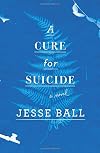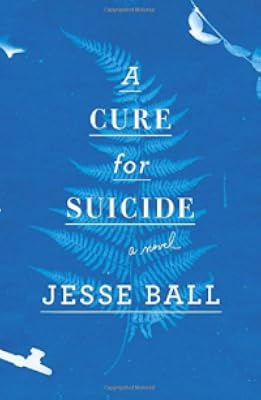
A Cure for Suicide
by Jesse Ball
On This Page
Description
***LONG-LISTED FOR THE NATIONAL BOOK AWARD*** From the author of Silence Once Begun, a beguiling new novel about a man starting over at the most basic level, and the strange woman who insinuates herself into his life and memory. A man and a woman have moved into a small house in a small village. The woman is an "examiner," the man, her "claimant." The examiner is both doctor and guide, charged with teaching the claimant a series of simple functions: this is a chair, this is a fork, this is show more how you meet people. She makes notes in her journal about his progress: he is showing improvement yet his dreams are troubling. One day the examiner brings the claimant to a party, where he meets Hilda, a charismatic but volatile woman whose surprising assertions throw everything the claimant has learned into question. What is this village? Why is he here? And who is Hilda? A fascinating novel of love, illness, despair, and betrayal, A Cure for Suicide is the most captivating novel yet from one of our most audacious and original young writers. show lessTags
Recommendations

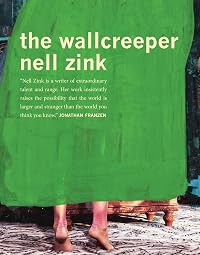

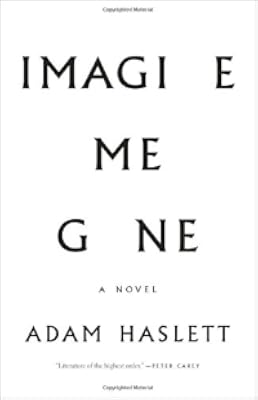

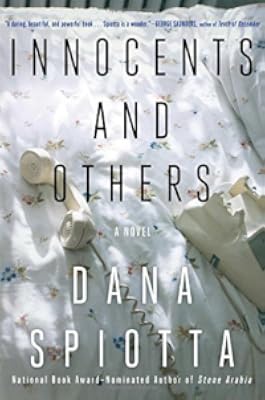
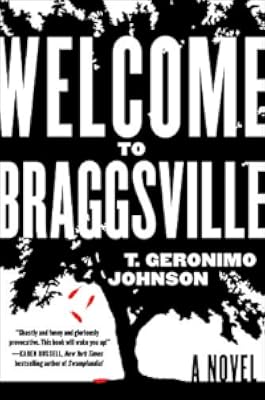













Member Reviews
I've read two of Ball's previous novels & picked this one up because it was published earlier this year. Like his other works, there are elements of uncertainty, uniqueness, & dream-like qualities woven throughout his post-modern writing. This one had me a bit uncomfortable as it felt a little like a dystopian world I was entering, but wasn't 100% sure that it was, nor was I sure where the story was going. The overall tone & style keep you at a distance. Based on his previous books, I felt safe enough going along, figuring that Ball would give some hope at the end. I'm not sure whether he did or not (maybe because the book raises many questions but answers few). I liked this book less than the others I've read by him. There were tiny show more snippets that gave me flashes of The Village and Eternal Sunshine of the Spotless Mind (both movies), though the book is quite different from them too. Well-written & thought-provoking modern lit, but not especially something to my taste. A solid 3 stars. Ball is talented & definitely worth reading but, personally, I'd recommend Silence Once Begun or The Way Through Doors if you want to try him. show less
A man waits alone in a room. He has no memory. The most basic human actions—to sit, to speak—are lost to him. A woman arrives whose function will be to reintroduce all such concepts to him. She tells him he’s been ill, nearly died, but now can recover. She will teach him to be human again. So begins A Cure for Suicide. In his abject vulnerability, the man proves no match for the woman or the regime she represents, with its “Process of Villages” socialization and “fogging” techniques. But there’s a complication: his memory is reasserting itself via his nightmares. Author Jesse Ball is a poet and writes with a poet’s sense of economy and precision to conjure an experimental, kafkaesque, dystopian tale that is at once show more desperately hopeful, harrowing and heartbreakingly sad. show less
I really enjoyed the first half of the book, which meticulously describes the rehabilitation process for someone who received drastic treatment to save their life. The writing style mirrors the therapy, and there's plenty of eerie undertones to keep us wondering what's really going on, and what led to this situation.
Which we find out in the second part, which is an overwrought and overlong rendition of the Same Old Story: boy finds girl, boy loses girl, girl finds boy, boy forgets girl, boy remembers girl, girls dies in a tragic blimp accident over the Orange Bowl on New Year's Day.
Then some randomness happens, and the whole thing wraps up with an enigmatic "did she or didn't she" conclusion. He should have just stuck with the first show more part and seen it through to the end, it would have been easy to incorporate all of the necessary plot elements without breaking the form of the book. show less
Which we find out in the second part, which is an overwrought and overlong rendition of the Same Old Story: boy finds girl, boy loses girl, girl finds boy, boy forgets girl, boy remembers girl, girls dies in a tragic blimp accident over the Orange Bowl on New Year's Day.
Then some randomness happens, and the whole thing wraps up with an enigmatic "did she or didn't she" conclusion. He should have just stuck with the first show more part and seen it through to the end, it would have been easy to incorporate all of the necessary plot elements without breaking the form of the book. show less
This book appeared on the National Book Award for Fiction longlist and it sounded interesting, so I decided to read it. However, I didn’t find it exceptional.
The novel begins with a man known only as a claimant living in the Gentlest Village. His only contact is with the examiner who is teaching him the names of everyday objects and the routines of daily life. Gradually the lessons become more complex and eventually he is allowed to interact with others. A woman named Hilda has an intense impact on him, and things become more complicated when she tells him the village is not what it seems.
The claimant is told that he was very ill and is now in recovery. The recovery process is known as the Process of Villages. As he progresses, the show more Claimant is moved from one village to another. If he fails to meet expectations, he is forced to begin the process again; one examiner estimates, “that the claimant has been reprocessed a minimum of eight times.” The examiner indicates that the Claimant is not “recovering” when she writes, “The claimant’s memories intrude at an alarming rate.” She is happier with his progress when she records, “He speaks to me of his memories as I have invoked them – that is, as my memories which I have seeded into his dreams.”
The reader learns about the claimant’s situation gradually – like the claimant learns to function in the world. Is Hilda correct when she suggests that the Process of Villages is actually a fogging: “’It is an injection. . . . The injection changes you, sends you deeper into yourself, in order that you can learn to protect yourself from life’s difficulties. It does other things, too. It ruins your memory, and you lose most things you knew.’” Could that be the cure for suicidal tendencies? In the last third of the book, in a conversation between a petitioner and an interlocutor “in the office of the cure,” we learn the full explanation of how the Claimant came to be going through the Process of Villages, but by then most readers will have surmised the truth.
The book is really an examination of what it means to be human and asks the reader to consider to what extent he/she would go in order to escape emotional pain. Is it better to become “a shell,” someone “who is somewhat absent”? At one point, an examiner tells the Claimant, “Sometimes I will tell you stories. They may be full of things that you do not understand. That is not important. It isn’t important that you understand what I say. What’s important is that you behave as a human being should when someone is telling a story. So, listen properly, make noises at appropriate times, and enjoy the fact that I am speaking to you. . . . Much of the speech we do is largely meaningless and is just meant to communicate and validate small emotional contracts.” Is it possible to have a meaningful relationship without the possibility of emotional pain? Or does being fully human mean that one must experience painful emotions like grief?
The first part of the novel makes for interesting reading, but the second section, with its dense writing and convoluted sentence structure (“That is how I was as a child. I want you to know that, Rana told me, so I said to the interlocutor”) is tedious. Also, because we are constantly reminded that the petitioner is telling his story after the fact, we are distanced from what happened and the emotional impact is lost. Of course, that is what the petitioner wants – some distance. Is there an implied warning to be careful of one’s wishes?
The book does stimulate thought about what makes a person human. It did not, however, engage me sufficiently to make me think that it is worthy of a major literary award.
Please check out my reader's blog: http://schatjesshelves.blogspot.ca/ show less
The novel begins with a man known only as a claimant living in the Gentlest Village. His only contact is with the examiner who is teaching him the names of everyday objects and the routines of daily life. Gradually the lessons become more complex and eventually he is allowed to interact with others. A woman named Hilda has an intense impact on him, and things become more complicated when she tells him the village is not what it seems.
The claimant is told that he was very ill and is now in recovery. The recovery process is known as the Process of Villages. As he progresses, the show more Claimant is moved from one village to another. If he fails to meet expectations, he is forced to begin the process again; one examiner estimates, “that the claimant has been reprocessed a minimum of eight times.” The examiner indicates that the Claimant is not “recovering” when she writes, “The claimant’s memories intrude at an alarming rate.” She is happier with his progress when she records, “He speaks to me of his memories as I have invoked them – that is, as my memories which I have seeded into his dreams.”
The reader learns about the claimant’s situation gradually – like the claimant learns to function in the world. Is Hilda correct when she suggests that the Process of Villages is actually a fogging: “’It is an injection. . . . The injection changes you, sends you deeper into yourself, in order that you can learn to protect yourself from life’s difficulties. It does other things, too. It ruins your memory, and you lose most things you knew.’” Could that be the cure for suicidal tendencies? In the last third of the book, in a conversation between a petitioner and an interlocutor “in the office of the cure,” we learn the full explanation of how the Claimant came to be going through the Process of Villages, but by then most readers will have surmised the truth.
The book is really an examination of what it means to be human and asks the reader to consider to what extent he/she would go in order to escape emotional pain. Is it better to become “a shell,” someone “who is somewhat absent”? At one point, an examiner tells the Claimant, “Sometimes I will tell you stories. They may be full of things that you do not understand. That is not important. It isn’t important that you understand what I say. What’s important is that you behave as a human being should when someone is telling a story. So, listen properly, make noises at appropriate times, and enjoy the fact that I am speaking to you. . . . Much of the speech we do is largely meaningless and is just meant to communicate and validate small emotional contracts.” Is it possible to have a meaningful relationship without the possibility of emotional pain? Or does being fully human mean that one must experience painful emotions like grief?
The first part of the novel makes for interesting reading, but the second section, with its dense writing and convoluted sentence structure (“That is how I was as a child. I want you to know that, Rana told me, so I said to the interlocutor”) is tedious. Also, because we are constantly reminded that the petitioner is telling his story after the fact, we are distanced from what happened and the emotional impact is lost. Of course, that is what the petitioner wants – some distance. Is there an implied warning to be careful of one’s wishes?
The book does stimulate thought about what makes a person human. It did not, however, engage me sufficiently to make me think that it is worthy of a major literary award.
Please check out my reader's blog: http://schatjesshelves.blogspot.ca/ show less
Longlisted for the National Book Award, I thought this would be better than it was. It was intriguing enough that I had to keep reading. I kept waiting for that AHA moment when everything would click and I would understand what the hell was going on. Very sci=fi, very very weird. One of the reviews I saw (after I finished the book) said it "would repay a second reading" and I suspect that is true.
The main character "The Claimant" has apparently suffered some type of brain washing (i.e., his memory has been dumped, scrubbed, or otherwise erased). We never really figure out whether he attempted suicide (perhaps the title might have lead us to that question?????), was in a terrible accident, had an illness, or WHAT.
He is in the "care" of show more THE Examiner, who guides him through levels of concsciousness in the "Process of Villages." I really can't say anything else because I'm not sure I understood enough of what was happening to be able to report on it.
I suspect that there is a segment of the reading public that will LOVE this book. I didn't dislike it. I just didn't get it. show less
The main character "The Claimant" has apparently suffered some type of brain washing (i.e., his memory has been dumped, scrubbed, or otherwise erased). We never really figure out whether he attempted suicide (perhaps the title might have lead us to that question?????), was in a terrible accident, had an illness, or WHAT.
He is in the "care" of show more THE Examiner, who guides him through levels of concsciousness in the "Process of Villages." I really can't say anything else because I'm not sure I understood enough of what was happening to be able to report on it.
I suspect that there is a segment of the reading public that will LOVE this book. I didn't dislike it. I just didn't get it. show less
If you've struggled with severe depression...
Then you should read this book. Not because it offers a cure; rather, you should read it to understand one way such a "cure" might look. Maybe it's the only one. I don't want to say more because I don't want to spoil it for you.
Then you should read this book. Not because it offers a cure; rather, you should read it to understand one way such a "cure" might look. Maybe it's the only one. I don't want to say more because I don't want to spoil it for you.
This book... It is extremely weird. Not in a bad sort of way, but actully good. It left me... I don't even know. I feel like i learned something from this book. I dont feel like i must say something about this book. It was a very personal experience I had
Members
- Recently Added By
Published Reviews
ThingScore 75
Beyond the narrative games it achieves a beauty of a kind; pathos even. It repays a second reading.
added by rodneyvc
Lists

2015 National Book Award for Fiction
10 works; 3 members
Author Information

23+ Works 2,404 Members
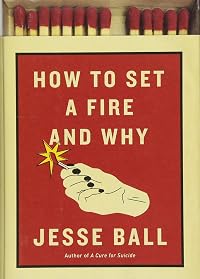
Jesse Ball was born in Port Jefferson, New York on June 7, 1978. He received a bachelor's degree from Vassar College and an MFA from Columbia University. His novels include Samedi the Deafness, Silence Once Begun, A Cure for Suicide, and How to Set a Fire and Why. His poem, Speech in a Chamber, was chosen for the anthology The Best American Poetry show more 2006. He won the 2008 Paris Review Plimpton Prize for The Early Deaths of Lubeck, Brennan, Harp, and Carr. (Bowker Author Biography) show less
Awards and Honors
Awards
Common Knowledge
Classifications
Statistics
- Members
- 240
- Popularity
- 135,534
- Reviews
- 9
- Rating
- (3.58)
- Languages
- English, Korean
- Media
- Paper, Audiobook, Ebook
- ISBNs
- 10
- ASINs
- 3