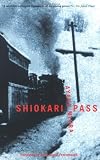
Shiokari Pass
by Ayako Miura
On This Page
Description
Based on a true story, Shiokari Pass is a moving tale of love eclipsed by sacrifice and tragedy. The hero of this Japanese novel is the young and idealistic Nobuo Nagano, who finds himself forced to make a heart-rending decision, when he must choose between his childhood sweetheart, Fujiko, and his newly found Christian faith. Set in Hokkaido at the turn of the nineteenth century, when for the first time Western culture and ideas were beginning to challenge Japan's long-held traditions, show more Shiokari Pass takes an intriguing look at Japanese life and thought of a hundred years ago. Filled with drama and featuring a spectacular climax amidst the snows of Hokkaido, the book was a bestseller in Japanese and a successful motion picture as well. Based on the life of a high-ranking railway employee who was revered for his humanitarian deeds, Shiokari Pass offers a revealing glimpse of the long, hard road traveled by Japanese Christians. show lessTags
Recommendations






























Member Reviews
Shiokari Pass is a moving tale of love eclipsed by sacrifice an tragedy. It is based on a true story. I selected the book for the Japanese Reading Challenge 19 and am so glad that I read it. The main character is Nobuo Nagano. After becoming a Christian he finds himself in a bind. He wants to marry his childhood sweetheart, Fujiko, but the marriage conflicts with his newfound faith. Nobuo knows that he should not be unequally yoked with a nonbeliever. Set in Hokkaido at the turn of the nineteenth century, when for the first time Western culture and ideas were beginning to challenge Japan's long-held traditions, Shiokari Pass takes an intriguing look at Japanese life and thought of a hundred years ago. The book was a bestseller in Japan show more and a successful motion picture as well. Based on the life of a high-ranking railway employee who was revered for his humanitarian deeds, Shiokari Pass offers a revealing glimpse of the long, hard road traveled by Japanese Christians. It was published in 1968 in Japan.
The story opened when Nobuo Nagano was ten years old and his grandmother Tose was complaining about his mother. Nobuo had been told that she died but that was not true. Tose had thrown her out of the family home for becoming Yaso, a Christian. The Nagano family were ardent Buddhists. Nobuo’s best friend was Yoshikawa and we watched them grow up together and remain friends throughout life. This was unusual because the Nagano family were of the samurai class and Yoshikawa was from a lower social class. When Tose passed away Nobuo’s mother Kiku and her daughter Michiko moved to the Nagano house. Both Kiku and Michiko were Yaso. While his father was not a believer he attended church with them every Sunday. Nobuo, however, refused to go. Nobuo had planned to attend college but because his father died, Nobuo decided to forego higher education and obtained a job with the railroad in order to support Kiku and Michiko. At one rail station Nobuo wandered in to a Sunday School class and the rest, as they say, is history.
I enjoyed reading about Nobuo and Yoshikawa's conversations both as youngsters and as adults. They were philosophical even at a young age and thought through what it meant to be human. It was quite interesting to see two young lads discuss such deep topics and heartwarming to see them remain close friends throughout life. I also enjoyed reading about Nobuo’s conversations with his family concerning Yaso. Nobuo’s objections to Yaso were explained in detail. He compared Yaso against the power of Buddha and how Buddha helped him live life. This was his stumbling block.
Life in Japan one hundred years ago was fascinating to read about. The country was beginning to change due to the influence of Western culture. The manner in which Nobuo and Yoshikawa sailed through life, bending some Japanese rules, was shown. It was an intriguing time to be alive. Yoshikawa remained a Buddhist. However, almost every person Nobuo encountered worshipped Yaso and it caused him to think deeply about whether Buddha matched Yaso's power to transform people. There is also some romance in the story as Nobuo becomes attracted to a few girls but sets his sights on marrying Yoshikawa's disabled sister Fujiko.
The title of the book comes from the place where Nobuo died. I would like to refrain from any additional spoilers in case one of my blog readers wants to read the book. The ending was certainly dramatic. I think the best word to describe this novel is heartwarming. I loved it and believe you will too. show less
The story opened when Nobuo Nagano was ten years old and his grandmother Tose was complaining about his mother. Nobuo had been told that she died but that was not true. Tose had thrown her out of the family home for becoming Yaso, a Christian. The Nagano family were ardent Buddhists. Nobuo’s best friend was Yoshikawa and we watched them grow up together and remain friends throughout life. This was unusual because the Nagano family were of the samurai class and Yoshikawa was from a lower social class. When Tose passed away Nobuo’s mother Kiku and her daughter Michiko moved to the Nagano house. Both Kiku and Michiko were Yaso. While his father was not a believer he attended church with them every Sunday. Nobuo, however, refused to go. Nobuo had planned to attend college but because his father died, Nobuo decided to forego higher education and obtained a job with the railroad in order to support Kiku and Michiko. At one rail station Nobuo wandered in to a Sunday School class and the rest, as they say, is history.
I enjoyed reading about Nobuo and Yoshikawa's conversations both as youngsters and as adults. They were philosophical even at a young age and thought through what it meant to be human. It was quite interesting to see two young lads discuss such deep topics and heartwarming to see them remain close friends throughout life. I also enjoyed reading about Nobuo’s conversations with his family concerning Yaso. Nobuo’s objections to Yaso were explained in detail. He compared Yaso against the power of Buddha and how Buddha helped him live life. This was his stumbling block.
Life in Japan one hundred years ago was fascinating to read about. The country was beginning to change due to the influence of Western culture. The manner in which Nobuo and Yoshikawa sailed through life, bending some Japanese rules, was shown. It was an intriguing time to be alive. Yoshikawa remained a Buddhist. However, almost every person Nobuo encountered worshipped Yaso and it caused him to think deeply about whether Buddha matched Yaso's power to transform people. There is also some romance in the story as Nobuo becomes attracted to a few girls but sets his sights on marrying Yoshikawa's disabled sister Fujiko.
The title of the book comes from the place where Nobuo died. I would like to refrain from any additional spoilers in case one of my blog readers wants to read the book. The ending was certainly dramatic. I think the best word to describe this novel is heartwarming. I loved it and believe you will too. show less
A moving love story set in Japan. The true story of one man who found enough strength to overcome his weakness, enough courage to conquer fear, and enough love to give life to others.
Ratings
Members
- Recently Added By
Author Information

82 Works 487 Members
Common Knowledge
- Original title
- 塩狩峠 (shiokari touge) (shiokari touge)
- Original publication date
- 1973-5-29
- People/Characters
- Nagano Nobuo; Yoshikawa Fujiko; Yoshikawa Osamu
- Important places
- Tokyo, Japan; Sapporo, Japan; Asahikawa, Japan
- Related movies
- Shiokari Pass (1973 | IMDb)
- First words
- Nagano Nobuo est ne a Tokyo le 2 fevrier 1879, dans le quartier residentiel de Hongo, reserve a la haute societe.
- Last words
- (Click to show. Warning: May contain spoilers.)Au col du mont Shiokari, sous un ciel sans nuage, il est midi.
- Original language
- Japanese
Classifications
- Genre
- Fiction and Literature
- DDC/MDS
- 895.6 — Literature & rhetoric Literatures of other languages Literatures of East and Southeast Asia Japanese
- LCC
- PL856 .I8 .S513 — Language and Literature Languages and literatures of Eastern Asia, Africa, Oceania Languages of Eastern Asia, Africa, Oceania Japanese language and literature Japanese literature Individual authors and works
- BISAC
Statistics
- Members
- 131
- Popularity
- 248,196
- Reviews
- 2
- Rating
- (4.50)
- Languages
- 6 — Danish, English, Finnish, French, Japanese, Swedish
- Media
- Paper, Ebook
- ISBNs
- 12
- ASINs
- 3