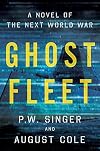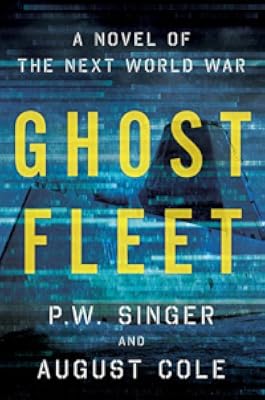
Ghost Fleet: A Novel of the Next World War
by P. W. Singer (Author), August Cole (Author)
On This Page
Description
"What will the next global conflict look like? Find out in this ripping, near-futuristic thriller. The United States, China, and Russia eye each other across a twenty-first century version of the Cold War, which suddenly heats up at sea, on land, in the air, in outer space, and in cyberspace. The fighting involves everything from stealthy robotic-drone strikes to old warships from the navy's "ghost fleet." Fighter pilots unleash a Pearl Harbor-style attack; American veterans become low-tech show more insurgents; teenage hackers battle in digital playgrounds; Silicon Valley billionaires mobilize for cyber-war; and a serial killer carries out her own vendetta. Ultimately, victory will depend on blending the lessons of the past with the weapons of the future. Ghost Fleet is a page-turning speculative thriller in the spirit of The Hunt for Red October. The debut novel by two leading experts on the cutting edge of national security, it is unique in that every trend and technology featured in the novel -- no matter how sci-fi it may seem -- is real, or could be soon. "-- show lessTags
Recommendations














Member Reviews
This gripping thriller about what the next world war might look like has captured the attention of Washington policymakers and defense industry insiders alike. Singer is a senior fellow at the New America Foundation, a nonprofit, nonpartisan Washington, D.C., think tank, and Cole is a former defense industry reporter for the Wall Street Journal.
Unlike so many other speculative fiction outings, this one is based on technologies already plausibly “in the works,” and the authors provide 374 endnotes to backstop the action and interfere with readers’ ability to sleep peacefully at night. Ghost Fleet is a novel of the post-Snowden world, in which the techniques the U.S. National Security Agency used on others are turned back against show more the Americans.
The story begins at the International Space Station. Russia and China have declared war against the United States, and a U.S. Air Force Colonel, on a disastrously timed space-walk, becomes the unwitting point of the spear. Oblivious to the political developments taking place on the blue globe spinning below, he finds the ISS reentry hatches sealed against him. “Goodbye, my friend. I am truly sorry. It is orders,” says his Russian cosmonaut colleague.
It’s the initial action in a war fought not solely, but significantly, in cyberspace. Takeover of the ISS enables the analogous Chinese space station, Tiangong-3, to systematically knock out every communications satellite that U.S. armed forces depend on. It soon becomes apparent that not only the satellites are down, all local-area communications networks are compromised, because military suppliers have been using low-cost Chinese-made computer chips in their planes, ships, and communications equipment by the unidentifiable thousands, and these chips are insecure, tiny moles. Only the mothballed planes and ships destined for the scrapyard are now safe: “The 707 passenger-jet derivatives did not have a modern chip anywhere, unlike the new KC-46s, which had turned out to be missile magnets like all the other Chinese-chipped gear.” This new top-to-bottom vulnerability of the military, which has become overly confident in the security of its communications systems, shows in brilliant and devastating relief.
This is a multiple point-of-view novel, with short scenes from many locations involving numerous protagonists, though most of the action takes place in the Pacific, San Francisco, and Hawaii, where “The Directorate”—comprising Chinese military, along with Russian elements under their command—has established an important outpost. At the story’s heart are the trials of the USS Zumwalt, an oddly designed, mothballed ship recalled into action after much of the modern U.S. fleet is destroyed—again at Pearl Harbor. The Zumwalt’s newly appointed captain, Jamie Simmons, is challenged militarily and by relations with his estranged father, retired chief petty officer Mike Simmons. Like the vintage tin cans—seagoing and aerial—rescued for the U.S. counterattack, retired military personnel are called back into service, and by some inevitable cosmic sense of humor or irony, Mike is assigned to the Zumwalt.
Other principal characters include: a Hawaiian woman working as a freelance assassin who is tracked by the omnipresent surveillance drones and a live Russian operative; a small team of surviving Marine insurgents harassing the Chinese forces on Oahu; a Russian who attempts to aid the Americans and ends up in a neuroscience laboratory nightmare; Sun-Tzu-spouting Admiral Wang, captain of the Chinese battleship Admiral Zheng He; and a wealthy Brit-turned-space-privateer. Other non-state players also emerge, providing a level of DIY unpredictability.
The epigrams for the several parts of the book come from Sun-Tzu’s advice to warriors, and the one for Part 3 is “All warfare is based on deception.” The levels of deception between the Chinese and Russian “allies,” between the antagonists, and arising from the inability to rely on secure communications is paranoia-inducing. Meanwhile, the roles of drones and robots escalate, which is great when they’re yours.
If you are a fan of techno-thrillers, like I am, this novel is the ultimate: fast-paced, high stakes, well-grounded, and, one may hope, consequential. International readers may be disappointed that the book is so US-centric—a casualty of “write what you know”? The book doesn’t come to a too-tidy conclusion, either, and that, is also sadly realistic. show less
Unlike so many other speculative fiction outings, this one is based on technologies already plausibly “in the works,” and the authors provide 374 endnotes to backstop the action and interfere with readers’ ability to sleep peacefully at night. Ghost Fleet is a novel of the post-Snowden world, in which the techniques the U.S. National Security Agency used on others are turned back against show more the Americans.
The story begins at the International Space Station. Russia and China have declared war against the United States, and a U.S. Air Force Colonel, on a disastrously timed space-walk, becomes the unwitting point of the spear. Oblivious to the political developments taking place on the blue globe spinning below, he finds the ISS reentry hatches sealed against him. “Goodbye, my friend. I am truly sorry. It is orders,” says his Russian cosmonaut colleague.
It’s the initial action in a war fought not solely, but significantly, in cyberspace. Takeover of the ISS enables the analogous Chinese space station, Tiangong-3, to systematically knock out every communications satellite that U.S. armed forces depend on. It soon becomes apparent that not only the satellites are down, all local-area communications networks are compromised, because military suppliers have been using low-cost Chinese-made computer chips in their planes, ships, and communications equipment by the unidentifiable thousands, and these chips are insecure, tiny moles. Only the mothballed planes and ships destined for the scrapyard are now safe: “The 707 passenger-jet derivatives did not have a modern chip anywhere, unlike the new KC-46s, which had turned out to be missile magnets like all the other Chinese-chipped gear.” This new top-to-bottom vulnerability of the military, which has become overly confident in the security of its communications systems, shows in brilliant and devastating relief.
This is a multiple point-of-view novel, with short scenes from many locations involving numerous protagonists, though most of the action takes place in the Pacific, San Francisco, and Hawaii, where “The Directorate”—comprising Chinese military, along with Russian elements under their command—has established an important outpost. At the story’s heart are the trials of the USS Zumwalt, an oddly designed, mothballed ship recalled into action after much of the modern U.S. fleet is destroyed—again at Pearl Harbor. The Zumwalt’s newly appointed captain, Jamie Simmons, is challenged militarily and by relations with his estranged father, retired chief petty officer Mike Simmons. Like the vintage tin cans—seagoing and aerial—rescued for the U.S. counterattack, retired military personnel are called back into service, and by some inevitable cosmic sense of humor or irony, Mike is assigned to the Zumwalt.
Other principal characters include: a Hawaiian woman working as a freelance assassin who is tracked by the omnipresent surveillance drones and a live Russian operative; a small team of surviving Marine insurgents harassing the Chinese forces on Oahu; a Russian who attempts to aid the Americans and ends up in a neuroscience laboratory nightmare; Sun-Tzu-spouting Admiral Wang, captain of the Chinese battleship Admiral Zheng He; and a wealthy Brit-turned-space-privateer. Other non-state players also emerge, providing a level of DIY unpredictability.
The epigrams for the several parts of the book come from Sun-Tzu’s advice to warriors, and the one for Part 3 is “All warfare is based on deception.” The levels of deception between the Chinese and Russian “allies,” between the antagonists, and arising from the inability to rely on secure communications is paranoia-inducing. Meanwhile, the roles of drones and robots escalate, which is great when they’re yours.
If you are a fan of techno-thrillers, like I am, this novel is the ultimate: fast-paced, high stakes, well-grounded, and, one may hope, consequential. International readers may be disappointed that the book is so US-centric—a casualty of “write what you know”? The book doesn’t come to a too-tidy conclusion, either, and that, is also sadly realistic. show less
I was a bit late in getting to it, but I was pleasantly surprised by P.W. Singer and August Cole's Ghost Fleet. It took a bit of effort to get into it, but the temporal leap the novel takes into years after a second Pearl Harbor attack allows for some very interesting worldbuilding. The United States has been taken down a peg and enjoys little to none of its previous dominance. What does the post-hegemonic era look like for America? How, in the fabled era of "degraded ISR," can American armed forces operate and conduct operations? While we're living through that transition now, Singer and Cole explore what that future might actually resemble.
Riddled throughout with trenchant criticisms of the current political-military-industrial show more complex (such as a "Big Two" defense contractors, numerous references to the failings of the F-35, and the Air Force's institutional resistance to unmanned air-to-air platforms), the vision fleshed out in Ghost Fleet is not a flattering one to our current state of affairs. At times the references are a bit on the nose, but the degree of underlying wit makes up for it.
If nothing else, the opening sequence helps explain even to the layman the importance of sensor platforms and space-based assets, the US military's dependence on them, and their exquisite vulnerability. Finite quantities of ship-launched missiles and other material become apparent in a way that can be challenging to discern in real-life operations. Our reliance on Chinese-produced microchips and other advanced technology becomes a easily-exploitable Achilles' Heel, in a manner all too reminiscent of the Battlestar Galactica pilot miniseries.
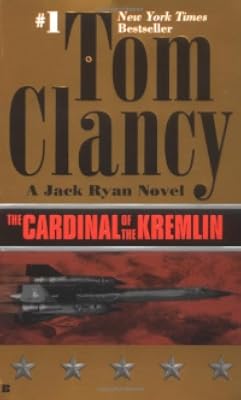
A new techno-thriller is, of course, cause for comparison to Tom Clancy, and where this far outshines him is in its willingness to critique technology and current trends in military procurement rather than lauding it unreservedly, while crafting somewhat multi-dimensional characters (some of whom are even not white!). And as I've written before, even if wrong in the details, fiction like this helps broaden the aperture a bit and convey the potentialities of future conflict. If not China, then Russia; if not the F-35, then perhaps the long-range strike bomber: things will go wrong, technologies will fail, and the United States may well be caught unawares. Hopefully, with novels such as Ghost Fleet illustrating the cost of unpreparedness, it will be possible to forestall the future it envisions. show less
Riddled throughout with trenchant criticisms of the current political-military-industrial show more complex (such as a "Big Two" defense contractors, numerous references to the failings of the F-35, and the Air Force's institutional resistance to unmanned air-to-air platforms), the vision fleshed out in Ghost Fleet is not a flattering one to our current state of affairs. At times the references are a bit on the nose, but the degree of underlying wit makes up for it.
If nothing else, the opening sequence helps explain even to the layman the importance of sensor platforms and space-based assets, the US military's dependence on them, and their exquisite vulnerability. Finite quantities of ship-launched missiles and other material become apparent in a way that can be challenging to discern in real-life operations. Our reliance on Chinese-produced microchips and other advanced technology becomes a easily-exploitable Achilles' Heel, in a manner all too reminiscent of the Battlestar Galactica pilot miniseries.
A new techno-thriller is, of course, cause for comparison to Tom Clancy, and where this far outshines him is in its willingness to critique technology and current trends in military procurement rather than lauding it unreservedly, while crafting somewhat multi-dimensional characters (some of whom are even not white!). And as I've written before, even if wrong in the details, fiction like this helps broaden the aperture a bit and convey the potentialities of future conflict. If not China, then Russia; if not the F-35, then perhaps the long-range strike bomber: things will go wrong, technologies will fail, and the United States may well be caught unawares. Hopefully, with novels such as Ghost Fleet illustrating the cost of unpreparedness, it will be possible to forestall the future it envisions. show less
Another 'future war' novel, this time by a pair of Washington defence analysts rather than a retired general with an axe to grind, but the object is the same: to push their ideas of how Western governments are asleep at the wheel and could so easily be taken by surprise by a sudden attack by wily foreigners.
The authors claim, at the outset, that "this book is not prediction", but no-one ever bought a future war exposé not expecting prediction of some sort; and publishers help this along by fairly predictable packaging. In this case, the cover bears the reassuring strapline: "A Novel of the Next World War". Which apparently will be restricted to the Pacific. The ghost of US Admiral Ernest King will be cheering on from the show more afterlife.
(Reading this in March 2026 made me agree, though, that this certainly was not prediction. For one thing, it's not the Americans who start things.)
In this case, the villains are the Chinese, with the assistance of the Russians (though their role and position seems a bit ambivalent).The Chinese Communists have been replaced by a technocrat/military 'Directorate', which we are supposed to think launched a revolution to free the people from their Communist oppressors, but seem to be making a reasonable job of badge engineering another repressive and belligerent government. They mount a surprise attack on Pearl Harbor using smart weapons and cyberspace. The novel follows a handful of characters through the initial attack and then some time later, in the American retaliation.
There were various points where I was tempted to give this book up, usually after the narrative stopped for the authors to insert the specification of some piece of military hardware, or to deliver a lecture on some point of history, strategy or tactics. One Chinese Admiral quotes incessantly from Sun Tzu. Perhaps fans of this sort of book demand that the authors show all their working, but it brings the story to a shuddering halt every time. Characters are straight out of Central Casting: there's a naval captain and his senior NCO father, who have Issues; a female Marine Major who rejoices in the name of 'Conan' Doyle (which turns out to be a direct tribute to one of the authors' favourite writers; the writers both claim a love of fantastic literature, but no-one ever thinks to refer to this character as 'Conan the Barbarian'); various walk-on characters who usually only last for a page or two; and a comedy Australian tech bro who just proves that the writers ought to get outside the Beltway a little more. About the only characters who aren't cardboard cut-outs are two Russian intelligence officers; one survives to the end of the book, whilst another is tortured by a Mad Chinese Scientist, who monologues for major chunks of two chapters.
There is no attempt to look any deeper into political motivations on any side; the Chinese just start the war because the plot requires a jumping-off point. The whole thing is utterly predictable and possesses no redeeming features. There are very occasional glimpses of something more sophisticated than formulaic military action, and a fair insight into the mindset of the US military-industrial complex, but these flashes are hardly worth the effort of trudging through 380 pages, plus twenty pages of references, just to prove that the authors did their homework. Well, perhaps they did, but they obviously skipped class in Eng. Lit. show less
The authors claim, at the outset, that "this book is not prediction", but no-one ever bought a future war exposé not expecting prediction of some sort; and publishers help this along by fairly predictable packaging. In this case, the cover bears the reassuring strapline: "A Novel of the Next World War". Which apparently will be restricted to the Pacific. The ghost of US Admiral Ernest King will be cheering on from the show more afterlife.
(Reading this in March 2026 made me agree, though, that this certainly was not prediction. For one thing, it's not the Americans who start things.)
In this case, the villains are the Chinese, with the assistance of the Russians (though their role and position seems a bit ambivalent).The Chinese Communists have been replaced by a technocrat/military 'Directorate', which we are supposed to think launched a revolution to free the people from their Communist oppressors, but seem to be making a reasonable job of badge engineering another repressive and belligerent government. They mount a surprise attack on Pearl Harbor using smart weapons and cyberspace. The novel follows a handful of characters through the initial attack and then some time later, in the American retaliation.
There were various points where I was tempted to give this book up, usually after the narrative stopped for the authors to insert the specification of some piece of military hardware, or to deliver a lecture on some point of history, strategy or tactics. One Chinese Admiral quotes incessantly from Sun Tzu. Perhaps fans of this sort of book demand that the authors show all their working, but it brings the story to a shuddering halt every time. Characters are straight out of Central Casting: there's a naval captain and his senior NCO father, who have Issues; a female Marine Major who rejoices in the name of 'Conan' Doyle (which turns out to be a direct tribute to one of the authors' favourite writers; the writers both claim a love of fantastic literature, but no-one ever thinks to refer to this character as 'Conan the Barbarian'); various walk-on characters who usually only last for a page or two; and a comedy Australian tech bro who just proves that the writers ought to get outside the Beltway a little more. About the only characters who aren't cardboard cut-outs are two Russian intelligence officers; one survives to the end of the book, whilst another is tortured by a Mad Chinese Scientist, who monologues for major chunks of two chapters.
There is no attempt to look any deeper into political motivations on any side; the Chinese just start the war because the plot requires a jumping-off point. The whole thing is utterly predictable and possesses no redeeming features. There are very occasional glimpses of something more sophisticated than formulaic military action, and a fair insight into the mindset of the US military-industrial complex, but these flashes are hardly worth the effort of trudging through 380 pages, plus twenty pages of references, just to prove that the authors did their homework. Well, perhaps they did, but they obviously skipped class in Eng. Lit. show less
Ghost Fleet is a kind of modern update to Red Storm Rising, where a couple of strategic types write up their vision of a future war. In this case, it's China and the US in the Pacific, with cyberwar, spacewar, and drones against good old fashioned American military professionalism. Unfortunately, it fails to live up to its vision, and the workman-like writing isn't enough to compensate.
Let's talk about the tech first, since that's what we're here for. This book is basically one giant sloppy blowjob for the Zumwalt-class destroyer and the naval railgun. I'd estimate a solid third of the book is just talking about the difficulties in getting the railgun operational, and then marveling when it blows up every military target in Hawaii with show more hypersonic rounds. Space and cyber get a lot of detail as well, as the first real crippling blow is a Chinese space station using a laser cannon to take out American surveillance and communications satellites. Cyber attacks further jam networks in those first critical hours, and hardware vulnerabilities built into chips turn the F-35 into a beacon for radar guided missiles. The Littoral Combat Ship sucks in combat, and the Chinese develop a hard counter for American strategic power with a ballistic missile that homes in on Cherenkov radiation from submarine and aircraft carrier nuclear reactors. Soldiers are hopped to the gills on stim pills and some have cybernetic implants.
But there's also a lot to dislike in the depictions of the tech in this book. The hacking is just warmed over Gibsonian cyberspace. True, real hacking is dull, but more could've been done with deception in cyberspace, and the difference in effectiveness between having a network and up and not having one. Same with the drones, which have some nice terrorizing moments with Chinese quadcopter swarms, but don't do anything particularly interesting. In fact, for a book which is supposed to showcase a generational shift in war, it really ducks away from issues in autonomy, swarming, supply chains, and technological-economic warfare, aside from the hacked Chinese supplied microchips. The Hawaiian insurgency, and the whole "Red Dawn++ scenario" of how heavily armed and networked Americans might coordinate against invaders is just wasted. The authors want to give the sense that the book is accurate by throwing up model numbers for missiles and planes, but there's little sense of how it fits together. An ironic failure for a book who's strongest selling point is "a vision of future war."
On literary merits, this book just barely hits serviceable. A constant problem in the short choppy chapters are characters reacting with surprise to things we already know as readers. The first chunk of the book is supposed to be "business as normal" to amplify the shock of the Chinese sneak attack, but the very first scene has Russian astronauts murdering the sole American on the ISS for no reason (Was he going to call down fleet movements by eye from the observation window?), robbing the book of essential tension. The human heart of the story, the development of Jamie Simmons as Captain of the USS Zumwalt while dealing with his daddy issues with his father Senior Chief Mike Simmons, was just filler. The only really unique character is the serial killer taking out Chinese officers in Hawaii, and the Russian detective stalking her, who seem like they're lifted from a cheesier universe, but are at least a different point-of-view from the all the military types. The pacing is both staccato and too slow, major sins for a technothriller.
There are a few moments that made me smile as the book embraced the ridiculousness of the premise: The Hawaiian resistance calling itself the North Shore Mujaheddin as an ironic homage to the foe of Afghanistan, Yemen, and Kenya; an eccentric Australian-British billionaire demanding a letter of marque for space piracy; The F-35B actually using it's VTOL capabilities in combat. But this book isn't nearly as good as the press suggests. show less
Let's talk about the tech first, since that's what we're here for. This book is basically one giant sloppy blowjob for the Zumwalt-class destroyer and the naval railgun. I'd estimate a solid third of the book is just talking about the difficulties in getting the railgun operational, and then marveling when it blows up every military target in Hawaii with show more hypersonic rounds. Space and cyber get a lot of detail as well, as the first real crippling blow is a Chinese space station using a laser cannon to take out American surveillance and communications satellites. Cyber attacks further jam networks in those first critical hours, and hardware vulnerabilities built into chips turn the F-35 into a beacon for radar guided missiles. The Littoral Combat Ship sucks in combat, and the Chinese develop a hard counter for American strategic power with a ballistic missile that homes in on Cherenkov radiation from submarine and aircraft carrier nuclear reactors. Soldiers are hopped to the gills on stim pills and some have cybernetic implants.
But there's also a lot to dislike in the depictions of the tech in this book. The hacking is just warmed over Gibsonian cyberspace. True, real hacking is dull, but more could've been done with deception in cyberspace, and the difference in effectiveness between having a network and up and not having one. Same with the drones, which have some nice terrorizing moments with Chinese quadcopter swarms, but don't do anything particularly interesting. In fact, for a book which is supposed to showcase a generational shift in war, it really ducks away from issues in autonomy, swarming, supply chains, and technological-economic warfare, aside from the hacked Chinese supplied microchips. The Hawaiian insurgency, and the whole "Red Dawn++ scenario" of how heavily armed and networked Americans might coordinate against invaders is just wasted. The authors want to give the sense that the book is accurate by throwing up model numbers for missiles and planes, but there's little sense of how it fits together. An ironic failure for a book who's strongest selling point is "a vision of future war."
On literary merits, this book just barely hits serviceable. A constant problem in the short choppy chapters are characters reacting with surprise to things we already know as readers. The first chunk of the book is supposed to be "business as normal" to amplify the shock of the Chinese sneak attack, but the very first scene has Russian astronauts murdering the sole American on the ISS for no reason (Was he going to call down fleet movements by eye from the observation window?), robbing the book of essential tension. The human heart of the story, the development of Jamie Simmons as Captain of the USS Zumwalt while dealing with his daddy issues with his father Senior Chief Mike Simmons, was just filler. The only really unique character is the serial killer taking out Chinese officers in Hawaii, and the Russian detective stalking her, who seem like they're lifted from a cheesier universe, but are at least a different point-of-view from the all the military types. The pacing is both staccato and too slow, major sins for a technothriller.
There are a few moments that made me smile as the book embraced the ridiculousness of the premise: The Hawaiian resistance calling itself the North Shore Mujaheddin as an ironic homage to the foe of Afghanistan, Yemen, and Kenya; an eccentric Australian-British billionaire demanding a letter of marque for space piracy; The F-35B actually using it's VTOL capabilities in combat. But this book isn't nearly as good as the press suggests. show less
A very interesting hypothesis on how WWIII might play out in the very near future. A non-nuclear option that highlights both the speed and complexity of moderrn warfare with a peer on peer conflict between China/Russia v USA. The story also highlights the risks the west faces with the current global integrated supply chain and not only supply risks but cyberwarfare weaknesses that may exist in western military. A page turner without too much unrealistic heroics and a cast of interesting characters that are good vehicles that explore this multi faceted topic quite well.
More in the vein of didactic enterprise than literature, the authors give you a lot of plausible background on what a near-future confrontation involving the great powers might look like as the globalist structures created following the end of the Cold War crumble. This is while the authors try to be careful so as to not draw a straight line between today's political actors and a decade or so out. That's the good. On the other hand, some of the dramatic situations given are more plausible than others and even on that basis there are more loose ends then I'd care for in a novel. This is unless the authors have a follow-up book in mind.
3.2 stars. Workmanlike prose and characters are solid and mainly a foil for some interesting thought experiments and what ifs. Some of the threats discussed in the book are thought provoking and one hopes they are being taken seriously. A kind of Red Dawn meets techno thriller in the end, but I enjoyed it.
Members
- Recently Added By
Lists

Mind Expanding Books by hackerkid
581 works; 8 members

Thriller Authors to read
59 works; 1 member
Author Information

Peter Warren Singer graduated with a BA from Princeton University's Woodrow Wilson School of Public and International Affairs and earned his Ph.D. in Government at Harvard University. Previous career experiences include working for the Belfer Center for Science and International Affairs at Harvard University, the Balkans Task Force in the U.S. show more Department of Defense, and the International Peace Academy. He also served as the Defense Policy Task Force coordinator for Barack Obama's 2008 presidential campaign. Singer is the Director of the 21st Century Defense Initiative at the Brookings Institution and was the youngest scholar named a Senior Fellow by the Institution. He has written the following books about contemporary warfare: Corporate Warriors, Children at War, and Wired for War. Corporate Warriors, about private companies providing services to the military, was named best book of the year by the American Political Science Association. Children at War, which examines the role of child soldiers, was recognized as the 2006 Robert F. Kennedy Memorial Book of the Year Award. Wired for War became a New York Times bestseller in the first week of its release and focuses on current technologies being used in warfare, including robotics. Singer is a frequent consultant and commentator and has written numerous articles for major publications including the Washington Post, Foreign Affairs, and World Policy Journal, as well as spoken on the radio and appeared on television. (Bowker Author Biography) show less

Some Editions
Awards and Honors
Common Knowledge
- Canonical title*
- La flotte fantôme. Le troisième conflit mondial est déjà là !
- Original title
- Ghost fleet.A Novel of the Next World War
- Original publication date
- 2016-05-24 (1e édition originale américaine, Houghton Mifflin Harcourt) (1e é | dition originale amé | ricaine, Houghton Mifflin Harcourt); 2021-06-03 (1e traduction et édition française, Buchet Chastel) (1e traduction et é | dition franç | aise, Buchet Chastel)
- Epigraph*
- L’histoire qui suit s’inspire de tendances et de technologies réelles.
Mais en définitive il s’agit d’une œuvre de fiction, pas de prédiction.
(Partie I)
« Vous pouvez mener une longue guerre, ou renforcer votre nation.
Vous ne pouvez pas faire les deux. »
SUN TZU, L’Art de la guerre. - First words*
- 391 kilomètres au-dessus de la surface terrestre
« Je suis vraiment désolé. »
Qu’avait donc voulu dire Vitaly ? Seul astronaute américain à bord de la Station spatiale internationale, Rick Farmer, co... (show all)lonel de l’US Air Force, avait l’habitude d’être la cible des blagues de l’équipage russe. [...]
Parit I
10 590 mètres sous le niveau de la mer, fosse des Mariannes, océan Pacifique
Parfois, l’histoire s’écrit dans l’ombre.
Tout en scrutant les ténèbres, Zhu Jin songea à ce que ... (show all)devait faire son épouse, à cet instant. [...]
*Some information comes from Common Knowledge in other languages. Click "Edit" for more information.
Classifications
Statistics
- Members
- 595
- Popularity
- 49,357
- Reviews
- 26
- Rating
- (3.20)
- Languages
- Dutch, English, French, Italian
- Media
- Paper, Audiobook, Ebook
- ISBNs
- 19
- UPCs
- 1
- ASINs
- 6