On This Page
Description
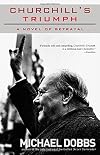
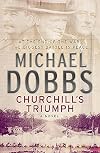
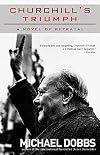
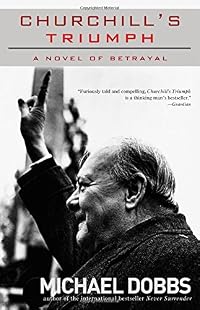
From Michael Dobbs, author of the book that inspired the smash hit Netflix series House of Cards, Churchill's Triumph transports us to the end of WWII as the three most powerful men on earth-Winston Churchill, Franklin D. Roosevelt, and Joseph Stalin-gather in what will later become known as the Yalta Conference to discuss the possibility of worldwide peace. Despite their shared goals, these supposed allies will lie, cheat, and deceive each other in order to secure their respective places in show more history. Dobbs takes you behind the scenes and brings you into the minds and hearts of the big three leaders: the dominating and seemingly all-powerful Joseph Stalin, with the largest army, and the mission of expanding the Soviet Empire; an ailing and fragile Roosevelt, willing to make whatever compromises he felt he had to in order to bring Stalin and Russia into the final campaign against Japan; and Churchill, the least powerful of the three, but the most far-sighted, who could not count on Roosevelt as his ally, and could not tame the avaricious Russian bear, determined to gobble up the nations around and beyond it. Like a fly on the wall of history, the reader becomes a hidden witness to these monumental negotiations, witnessing negotiations that would betray the heroic struggle of millions who died and fought in the Great War. Acclaimed author Michael Dobbs allows the reader to eavesdrop on the world's most powerful men at a crucial point in modern history. Praise for Churchill's Triumph by Michael Dobbs, bestselling author of House of Cards, the book that inspired the Netflix series starring Kevin Spacey: "His portrait of Churchill is as masterly as ever: a wonderful compound of bluster, sentimentality, grumpiness and indefatigable physical energy. There are the usual elegant metaphors... In the tragedy of Poland burning while statesmen fiddled, Dobbs has found a theme worthy of his powers."-Sunday Telegraph "How do you delight the profit-maximising big retailers while at the same time writing something dark and moving? Michael Dobbs knows how...Dobbs knows his sources, but the dialogue is his own: good, clean, moving briskly and underpinned by the record, it conveys historical truth. As for Poland, it suffered all the horrors. Dobbs writes about the country with tight passion, transferring to his fictional village, Piorun, the rape, murder and savage enforcement by Germans and Russians which, so far away and so little regarded, actually happened. The old women weeping, the houses burned down, the bodies left promiscuously on the street are history set out for the attention of novel-readers, memorable instruction in human grief... Furiously told and compelling, Churchill's Triumph is a thinking man's bestseller."-The Guardian "Dobbs astutely and dramatically portrays the real story of Yalta, the mighty tussle between the three men upon whose political skills and strength of character the rest of the world would depend... The novel is a triumph because of the author's fine appreciation of history and his meticulous eye for detail."-The Times "Michael Dobbs brings the Second World War to a resounding close... Dobbs portrays Churchill as being all too human - oversensitive and easily hurt by friendship betrayed, and conjures up Roosevelt's stricken response beautifully... Dobbs is a fine writer and neatly sums up the appeal of historical novels. Not only can they fill in the gaps left by an inaccurate, incomplete or contradictory factual record, but they can capture the spirit of the thing. Dobbs has certainly done that here."-Daily Telegraph "It's all too easy to forget that you're not reading an insider's account of ht real events that shaped the modern world. Dobbs clearly has an instinctive feel for what makes powerful men tick."-The Mail on Sunday show lessTags
Recommendations














Member Reviews
The fourth and final part of the Churchill series is also the best in my opinion. There are two story lines (as usual with Dobbs). One sees Churchill on a pleasure yacht in 1963 in the Aegean sea sometime at the end of his life, interacting with a disappointed Polish refugee, who acted as a plumber during the February 1945 Yalta conference. The latter forms the main storyline, where three old men, each faltering and failing in his own way, set out to draft a new post-war world order.
Stalin is most forceful as a negotiator, and not just because his Red Army is winning the war for the Allies. It is his rough character, forcefully demanding a piece of the pie, expanding his Empire. Roosevelt is ailing and wanting only one thing: a United show more Nations that will rule out war in future. But first he wants the Red Army to join the war against the Japanese. Calculating Stalin knows this and exacts a heavy price. Churchill is eager to contain the red menace and secure a fair deal for Poland, whose very fate triggered the war in the first place. He also wants a strong post-war Germany as a bulwark against Soviet expansion to the West.
So what comprises the triumph referred to in the title? Well, a bit artificial really – Churchill insists on free and fair elections for Poland, a thing he knows Stalin will never allow for. But because Stalin will botch this promise, Churchill hopes to open the eyes of the world and set the stage for the next main conflict that will inevitably emerge. So it is a moral victory he seeks, not an actual one. Poland will be sacrificed again, to create a popular will to correct this mistake. And that is where Dobbs uses his Polish victim – to probe Churchill again and again on the futileness of words and agreements. show less
Stalin is most forceful as a negotiator, and not just because his Red Army is winning the war for the Allies. It is his rough character, forcefully demanding a piece of the pie, expanding his Empire. Roosevelt is ailing and wanting only one thing: a United show more Nations that will rule out war in future. But first he wants the Red Army to join the war against the Japanese. Calculating Stalin knows this and exacts a heavy price. Churchill is eager to contain the red menace and secure a fair deal for Poland, whose very fate triggered the war in the first place. He also wants a strong post-war Germany as a bulwark against Soviet expansion to the West.
So what comprises the triumph referred to in the title? Well, a bit artificial really – Churchill insists on free and fair elections for Poland, a thing he knows Stalin will never allow for. But because Stalin will botch this promise, Churchill hopes to open the eyes of the world and set the stage for the next main conflict that will inevitably emerge. So it is a moral victory he seeks, not an actual one. Poland will be sacrificed again, to create a popular will to correct this mistake. And that is where Dobbs uses his Polish victim – to probe Churchill again and again on the futileness of words and agreements. show less
Churchill's Triumph is the fourth and final book in Michael Dobbs' tetralogy covering Winston Churchill and World War II. In this installment the action of the novel takes place predominantly at the infamous Yalta Conference and in a Polish village called Piorun.
As is the case with the other novels in this series, Dobbs makes use of a fictional character who goes by the name of Marian Nowak, actually a member of the Polish nobility who stole the identity of Nowak and who dodged execution by the NKVD in the forest of Katyn. The real Nowak's family is prominent in Piorun including the mayor, parish priest and prominent businessman who is living in the woods while serving with the remnants of the Home Army, the focal point of Polish show more resistance.
But the main event is the Yalta Conference, and the main characters are of course, Churchill, Roosevelt and Stalin. Nowak has managed to pass himself off as a plumber and he is on call to fix plumbing problems at the residence given over to Churchill. He is befriended by Churchil's manservant, Frank Sawyers, and secures a promise from Churchill to sneak him out of Yalta with the British delegation after the conclusion of the conference.
At this stage of his life and at this point in the war Churchill's influence is on the wane. No one credits him for keeping Britain in the fight against Hitler when the British stood alone. There is little to no patience for his indulgence in soaring flights of rhetoric. Roosevelt, who is a scant two months away from his death has neither the stamina nor the patience to listen to Churchill declaim on the honor bound commitment to Poland's territorial integrity and independence. Roosevelt's main objective is to secure Stalin's commitment to the formation of the United Nations. In order to get Stalin's support he is willing to give Stalin three votes (one each for Belorussia and Ukaraine).
Stalin, meanwhile, is committed to nothing beyond the imposition of a Soviet style regime wherever a country is "liberated" by the Red Army. Churchill fights hard on Poland's behalf but is forced to settle for promises of free elections in the near future without benefit of international observers who might validate that the elections are free and fair. When Churchill objects to the imposition of the "Lublin Poles" on the people of Poland, Stalin dismisses him by comparing the Lublin Poles legitimacy with the recognition of De Gaulle as the leader of a French government newly installed by the Americans and the British. When Churchill raises the principle of self-determination both Stalin and Roosevelt take turns reproving Churchill for his hypocrisy in defending the British Empire.
So, the feeble and dying President leaves Yalta convinced that all issues have been satisfactorily resolved especially the establishment of the UN. Stalin leaves secure in the knowledge that he holds all the cards in Eastern Europe as a conqueror/liberator. Churchill returns to England with nothing to show for it except written commitments to human rights in a kind of foreshadowing of the Helsinki Agreements signed in the 1970s.
Churchill gets out of Dodge as fast as he can, leaving the Pole, Nowak behind. Churchill also endures the humiliation of knowing that his daughter Sarah had been sexually assaulted by NKVD chief Laverenti Beria and that Churchill did nothing about it to keep the conference from getting blown up. (This episode is not part of the history of the conference but a fictional contrivance by Dobbs.)
The novel concludes with a confrontation between Churchill and Nowak some eighteen years later in 1963 when Churchill at the age of 90 was vacationing on a yacht owned by Aristotle Onassis. I will not spoil the outcome for any future readers. In addition to Onassis, Beria and Sarah Churchill, the supporting cast includes future Prime Minister Anthony Eden, future head of the BBC, Alexander Cadogan, Soviet Foreign Minister Molotov, Averill Harriman, who had cuckolded Churchill's son Randolph and eventually married Randolph's wife Pamela, and of course the hapless Randolph Churchill.
Dobbs wraps up his series with a sobering and sometimes depressing account of the decline and eventual eclipse of one the great men of the 20th century (and I don't refer here to FDR). It is another work of history with a fictional presentation that entertains and informs. I recommend the entire series to anyone who might read this review. show less
As is the case with the other novels in this series, Dobbs makes use of a fictional character who goes by the name of Marian Nowak, actually a member of the Polish nobility who stole the identity of Nowak and who dodged execution by the NKVD in the forest of Katyn. The real Nowak's family is prominent in Piorun including the mayor, parish priest and prominent businessman who is living in the woods while serving with the remnants of the Home Army, the focal point of Polish show more resistance.
But the main event is the Yalta Conference, and the main characters are of course, Churchill, Roosevelt and Stalin. Nowak has managed to pass himself off as a plumber and he is on call to fix plumbing problems at the residence given over to Churchill. He is befriended by Churchil's manservant, Frank Sawyers, and secures a promise from Churchill to sneak him out of Yalta with the British delegation after the conclusion of the conference.
At this stage of his life and at this point in the war Churchill's influence is on the wane. No one credits him for keeping Britain in the fight against Hitler when the British stood alone. There is little to no patience for his indulgence in soaring flights of rhetoric. Roosevelt, who is a scant two months away from his death has neither the stamina nor the patience to listen to Churchill declaim on the honor bound commitment to Poland's territorial integrity and independence. Roosevelt's main objective is to secure Stalin's commitment to the formation of the United Nations. In order to get Stalin's support he is willing to give Stalin three votes (one each for Belorussia and Ukaraine).
Stalin, meanwhile, is committed to nothing beyond the imposition of a Soviet style regime wherever a country is "liberated" by the Red Army. Churchill fights hard on Poland's behalf but is forced to settle for promises of free elections in the near future without benefit of international observers who might validate that the elections are free and fair. When Churchill objects to the imposition of the "Lublin Poles" on the people of Poland, Stalin dismisses him by comparing the Lublin Poles legitimacy with the recognition of De Gaulle as the leader of a French government newly installed by the Americans and the British. When Churchill raises the principle of self-determination both Stalin and Roosevelt take turns reproving Churchill for his hypocrisy in defending the British Empire.
So, the feeble and dying President leaves Yalta convinced that all issues have been satisfactorily resolved especially the establishment of the UN. Stalin leaves secure in the knowledge that he holds all the cards in Eastern Europe as a conqueror/liberator. Churchill returns to England with nothing to show for it except written commitments to human rights in a kind of foreshadowing of the Helsinki Agreements signed in the 1970s.
Churchill gets out of Dodge as fast as he can, leaving the Pole, Nowak behind. Churchill also endures the humiliation of knowing that his daughter Sarah had been sexually assaulted by NKVD chief Laverenti Beria and that Churchill did nothing about it to keep the conference from getting blown up. (This episode is not part of the history of the conference but a fictional contrivance by Dobbs.)
The novel concludes with a confrontation between Churchill and Nowak some eighteen years later in 1963 when Churchill at the age of 90 was vacationing on a yacht owned by Aristotle Onassis. I will not spoil the outcome for any future readers. In addition to Onassis, Beria and Sarah Churchill, the supporting cast includes future Prime Minister Anthony Eden, future head of the BBC, Alexander Cadogan, Soviet Foreign Minister Molotov, Averill Harriman, who had cuckolded Churchill's son Randolph and eventually married Randolph's wife Pamela, and of course the hapless Randolph Churchill.
Dobbs wraps up his series with a sobering and sometimes depressing account of the decline and eventual eclipse of one the great men of the 20th century (and I don't refer here to FDR). It is another work of history with a fictional presentation that entertains and informs. I recommend the entire series to anyone who might read this review. show less
A very interesting book that brought this excellent series on Churchill to an end. It covers the week long Yalta Conference which outlined the creation of the United Nations, what post war Europe was to look like and how Russia was going to be brought into the war against Japan (and the cost of this). This certainly set the tone for the European scene over the next 40 - 50 years and more.
Throughout proceedings Stalin seemed to have the upper hand, including the Conference taking place in Crimea! If this is an accurate record it appeared to me that Roosevelt wasn't well enough to play his full part and this led to some appeasement towards Stalin, and almost betraying Churchill and Poland. As Roosevelt died a couple of months later it is show more clear he wanted to ensure above all else that the United Nations was set up to ensure lasting peace (at least in his eyes) and even gave Stalin three votes in the United Nations to ensure this. Obviously this is historical fiction so may not be a fully true record but does feel rooted in quite a bit of fact. It does make me want to go away and research events at this time more.
It is clear Churchill didn't trust Stalin and was proven right with events that happened over the next few months and years. I feel really that the die was already cast, so really the Conference was a bit of a Lame Duck Conference.
I particularly like the way the author weaved in the events of one Polish man and his 'adopted' family into the events in the book. Very readable and I do recommend the whole series. show less
Throughout proceedings Stalin seemed to have the upper hand, including the Conference taking place in Crimea! If this is an accurate record it appeared to me that Roosevelt wasn't well enough to play his full part and this led to some appeasement towards Stalin, and almost betraying Churchill and Poland. As Roosevelt died a couple of months later it is show more clear he wanted to ensure above all else that the United Nations was set up to ensure lasting peace (at least in his eyes) and even gave Stalin three votes in the United Nations to ensure this. Obviously this is historical fiction so may not be a fully true record but does feel rooted in quite a bit of fact. It does make me want to go away and research events at this time more.
It is clear Churchill didn't trust Stalin and was proven right with events that happened over the next few months and years. I feel really that the die was already cast, so really the Conference was a bit of a Lame Duck Conference.
I particularly like the way the author weaved in the events of one Polish man and his 'adopted' family into the events in the book. Very readable and I do recommend the whole series. show less
A novel of Betrayal
The most powerful men in the world: Roosevelt, Churchill and Stalin met in a Russian Resort town of Yalta, Crimea, these Allies leaders were to make important decisions regarding the future progress of the war and the postwar world. The place where they preceded to divide up Europe....the future of Germany, Eastern Europe and the United Nations...
This fictional account brings to live one of the chilling moments when the fate of Europe was decided. Mr. Dobbs takes us behind the scenes and brings us into the mind and hearts of the big three leaders. This drama traces as well the human side of the leaders and reminds us that war is about people.
Joseph Stalin’s mission is to expand the Soviet Empire while the ailing and show more fragile Roosevelt is willing to make compromises to bring Stalin into the Pacific campaign and Churchill, the least powerful, could not count on Roosevelt as his ally and could not tame the avaricious Russian. Reading what went on during these monumental negations was an eye opening, totally outraged by their attitude. . With their bellies full they had no regards towards the heroic struggle of millions who died and fought in the war... The statesmen fiddled while the tragedy in Poland was going on. Mr. Dobbs writes about the country with passion, transferring to his fictional village Piorun, the rape, murder and savage enforcement by the Germans and Russians. These events actually happened. His words are powerful and furiously told and compelling but he rambles a lot...
On the down side not only that the title is misleading I couldn’t find anything coming close to a triumph. We have a sub-plot: a Polish storyline that is interesting on its own but add little to nothing here. But what I found most annoying is the picture left in my mind of our supreme leaders: what was done at Yalta I am certain it still happening these days...A big party with lots of food, champagne, caviar and luxury accommodation...not to mention the extra service rendered.....
I read Mr. Dobbs before and have enjoyed his spin on history but this one written some years back left me cold and “Churchill’s Triumph” was less than enjoyable. show less
The most powerful men in the world: Roosevelt, Churchill and Stalin met in a Russian Resort town of Yalta, Crimea, these Allies leaders were to make important decisions regarding the future progress of the war and the postwar world. The place where they preceded to divide up Europe....the future of Germany, Eastern Europe and the United Nations...
This fictional account brings to live one of the chilling moments when the fate of Europe was decided. Mr. Dobbs takes us behind the scenes and brings us into the mind and hearts of the big three leaders. This drama traces as well the human side of the leaders and reminds us that war is about people.
Joseph Stalin’s mission is to expand the Soviet Empire while the ailing and show more fragile Roosevelt is willing to make compromises to bring Stalin into the Pacific campaign and Churchill, the least powerful, could not count on Roosevelt as his ally and could not tame the avaricious Russian. Reading what went on during these monumental negations was an eye opening, totally outraged by their attitude. . With their bellies full they had no regards towards the heroic struggle of millions who died and fought in the war... The statesmen fiddled while the tragedy in Poland was going on. Mr. Dobbs writes about the country with passion, transferring to his fictional village Piorun, the rape, murder and savage enforcement by the Germans and Russians. These events actually happened. His words are powerful and furiously told and compelling but he rambles a lot...
On the down side not only that the title is misleading I couldn’t find anything coming close to a triumph. We have a sub-plot: a Polish storyline that is interesting on its own but add little to nothing here. But what I found most annoying is the picture left in my mind of our supreme leaders: what was done at Yalta I am certain it still happening these days...A big party with lots of food, champagne, caviar and luxury accommodation...not to mention the extra service rendered.....
I read Mr. Dobbs before and have enjoyed his spin on history but this one written some years back left me cold and “Churchill’s Triumph” was less than enjoyable. show less
Finally, we get to the end. If you're going to read this 4 part series, start at the beginning. This 4th book is the story of the Yalta conference between Churchill, Roosevelt and Stalin. Of course, we know what happened, and it was hardly a triumph, except perhaps for Stalin. And then temporarily. Churchill's Triumph is an odd title since it's hard to see anything triumphal. Dobbs does try to draw out some satisfaction, but he seems to be trying too hard. Anyway, it is a jolly fine read. Dobbs knows how to plot a narrative and even though this 4th book relies more than the earlier ones on the argumentation of the three protagonists, he knows how to find the balance to keep the story moving. Highly recommend the series.
This is the last of the 4 Dobbs novels following Winston Churchill through the course of World War II. Like the others, I think it is of high quality, but I found this one to be much harder to read than the previous three, as it actually gets into much darker details about the sorts of atrocities that were committed by the Russians and the Nazis (but in this case mostly the Russians) in the final months of the war.
I enjoyed this - a good insight to the frailities of men often revered as gods.
Members
- Recently Added By
Author Information

26+ Works 3,608 Members
Born in 1948 Michael Dobb was Chief of Staff and later Deputy Chairman of the Conservative Party. He has a doctorate in nuclear defense studies. Dobbs has also been Deputy Chairman of Saatchi & Saatchi, he presented the BBC TV current affairs program Despatch Box and was a columnist for The Mail on Sunday. Dobbs recently penned the hugely show more acclaimed theatre play, 'The Turning Point'. He is also the author of the Harry Jones Thrillers, Churchill Novels, and the Parliamentary Novels Series. The immensely popular Netflix series House of Cards is based on book 1 of the Parliamentary Novels by the same name. Michael became Lord Dobbs of Wylye in December 2010 after a long career in and around politics. (Bowker Author Biography) show less
Series

Common Knowledge
- Canonical title
- Churchill's Triumph
- Original title
- Churchill's Triumph
- People/Characters
- Winston Churchill (Churchill, Winston Leonard Spencer)
Classifications
Statistics
- Members
- 214
- Popularity
- 152,088
- Reviews
- 9
- Rating
- (3.57)
- Languages
- English, Portuguese
- Media
- Paper, Audiobook, Ebook
- ISBNs
- 15
- UPCs
- 1
- ASINs
- 1