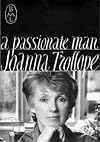
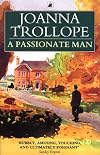
A Passionate Man
by Joanna Trollope
On This Page
Description
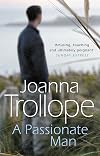
The Logans were an enchanting and admirable couple. Archie had snatched Liza from her own engagement party to someone else, wooed her, swept her off to his father in Scotland, and finally married her. Now bedded firmly into country life - three children, Archie the village doctor, Liza a teacher, everything comfortable, funny, affectionate - they awaited the arrival of Archie's father, the brilliant Sir Andrew Logan, a widower for over thirty years. When his city-clean Rover stopped in the show more drive, Sir Andrew was not alone. Beside him was a golden lady in caramel suede, a warm, witty, desirable widow whom everyone - except Archie - adored at once. Archie saw his father's mistress as the worm in the bud of his perfect life - a life that was to be wrenched apart before he and Liza could re-create their world. show lessTags
Recommendations




















Member Reviews
I've been a closet fan of Joanna Trollope since the early 90s when I happened across her THE MEN AND THE GIRLS and have read probably a half dozen of her novels since then and enjoyed every one. But I hadn't ready any of her stuff for several years. A PASSIONATE MAN is one of her early ones I'd somehow missed, first published in 1990. It measures up to her high standards of what I call "very high level chick lit" with a fine veneer of British-ness. It's a story of a good solid marriage that encounters serious problems a dozen years along. There is real tragedy here, in the story of Liza and Archie Logan, as well as some marital infidelity, child-rearing problems, village politics and other stuff. But Trollope takes her fiction seriously show more and there are some very deep truths revealed along the way. Here's one sample, in a grief-stricken Archie's denunciation of organized religion to a well-meaning but clueless clergyman -
"Christ! Don't you even know what religion means? Are you so hidebound by your colourless bureaucratic orthodoxy that religion only means to you this frightful modern Church with its doggerel hymns and playschool prayers? ... Religion, Colin, is an awakened sense of some great controlling force, an awareness that above or beyond there is not just a freedom but a fulfilment. And this awareness of power and possibility makes us strive ever onwards, morally, emotionally, spiritually. What on earth has such a concept to do with the dreary pen-pushing second-rate God you want to offer me?"
On, another example, when Archie, a doctor, sits at the bedside of a dying patient -
"... in the queer, sweet peace of being alone with the last minutes of Granny Mossop's life. And, when the end came and she died with no commotion, he did not stir for some moments. He did not want to. He wanted simply to go on sitting there, in that same suspended time that had no measure, and breathe in the momentousness of her little, silent ceasing to be ... He did not want to let go. He wanted this curious time that was no time to go on and on until he could be sure what it was that he had learned, until he could articulate it as well as feel. There was no hurry to let go. There was nothing else to do. This time was the only thing that mattered, and it was quite outside human things, worldly things."
And later on, following other major and wrenching upheavals in his personal life, Archie remembers this and reflects upon the fact that "the human heart possesses a muscle as elastic as it is enduring, as unpredictable in its behaviour as it is reliable in its need for reassurance.
Trollope's work, obviously, is head and shoulders above the usual "chick lit" genre. It is, even with her trademark drollery and lighter moments, serious - and excellent - fiction. Try any of her modern novels. They are all great. show less
"Christ! Don't you even know what religion means? Are you so hidebound by your colourless bureaucratic orthodoxy that religion only means to you this frightful modern Church with its doggerel hymns and playschool prayers? ... Religion, Colin, is an awakened sense of some great controlling force, an awareness that above or beyond there is not just a freedom but a fulfilment. And this awareness of power and possibility makes us strive ever onwards, morally, emotionally, spiritually. What on earth has such a concept to do with the dreary pen-pushing second-rate God you want to offer me?"
On, another example, when Archie, a doctor, sits at the bedside of a dying patient -
"... in the queer, sweet peace of being alone with the last minutes of Granny Mossop's life. And, when the end came and she died with no commotion, he did not stir for some moments. He did not want to. He wanted simply to go on sitting there, in that same suspended time that had no measure, and breathe in the momentousness of her little, silent ceasing to be ... He did not want to let go. He wanted this curious time that was no time to go on and on until he could be sure what it was that he had learned, until he could articulate it as well as feel. There was no hurry to let go. There was nothing else to do. This time was the only thing that mattered, and it was quite outside human things, worldly things."
And later on, following other major and wrenching upheavals in his personal life, Archie remembers this and reflects upon the fact that "the human heart possesses a muscle as elastic as it is enduring, as unpredictable in its behaviour as it is reliable in its need for reassurance.
Trollope's work, obviously, is head and shoulders above the usual "chick lit" genre. It is, even with her trademark drollery and lighter moments, serious - and excellent - fiction. Try any of her modern novels. They are all great. show less
A beautifully descriptive book that looks at the life of a village family. The adults seem to each be having their own mid-life crises, maddeningly unaware of what's going on with the other. The children are, well, the oldest son is a believable and likeable character, but the two younger (especially the daughter) are anything but endearing.
There is no way I am ever disappointed with Joanna Trollope's books but I must admit that when I came to page 219 in the paperback copy I was reading, I said "OH!!"---I just did NOT see that coming!!! Trollope writes with such descriptive, yes, passion---her characters speak to each other and you can feel yourself listening to every word --- absorbed by the movements they make as they talk to each other. I am dreading the time when I have read every word of all of her books!!!
An excellent picture of village life, and great observations of the stresses and tensions that can arise in even the happiest of families. Emotional in places, amusing in others, and somewhat thought-provoking. Recommended.
I've read Joanna Trollope's novels for years and generally think I liked the earlier ones more than the later books. When I was adding all my reading & book records to Goodreads & LibraryThing recently I was surprised to find this book popping up as unread as I thought I had read all of the earlier books at least. I expected to suddenly remember the story part of the way through and realise that I had read it before but I'm pretty certain this one was new to me. Or completely forgotten which is just as good!
Despite reading all of them I always start off these books thinking they are going to be rubbish... they are full of characters who appear at first glance to be rather stereotyped examples of the upper middle classes, people with big show more houses, good jobs, stable relationships, long family histories verging on the aristocratic, perfect children effortlessly kept in private schools etc. But what I enjoy is that things are never quite as they seem and that Trollope plays with the stereotypes and rather makes fun of her characters along the way. She nearly always writes about women and despite the title this book is mostly about the women surrounding the men. I never did figure out which man was supposed to be the passionate one, there are two obvious possibilities as far as I can see; and Liza Logan, wife of one of them, and daughter-in-law of the other was a far more interesting character than either.
Published in 1990 this feels rather like a period piece now. show less
Despite reading all of them I always start off these books thinking they are going to be rubbish... they are full of characters who appear at first glance to be rather stereotyped examples of the upper middle classes, people with big show more houses, good jobs, stable relationships, long family histories verging on the aristocratic, perfect children effortlessly kept in private schools etc. But what I enjoy is that things are never quite as they seem and that Trollope plays with the stereotypes and rather makes fun of her characters along the way. She nearly always writes about women and despite the title this book is mostly about the women surrounding the men. I never did figure out which man was supposed to be the passionate one, there are two obvious possibilities as far as I can see; and Liza Logan, wife of one of them, and daughter-in-law of the other was a far more interesting character than either.
Published in 1990 this feels rather like a period piece now. show less
Trollope's specialty seems to be close readings of intricately tangled relationships. Her characters are vivid, their POVs nuanced, and their interactions telling. Unfortunately, I thought Liza got rather cheated in the infidelity department (her husband Archie gets to have an affair, she doesn't), the change of Archie from golden boy to screwup is too sudden to be convincing, and the whole resolution is unsatisfying.
Liza seems to be the main character. I am not sure who the "passionate man" is. MIght be her husband, Archie, who lives rather "larger than life". Archie is a doctor who cares about his patients. He cares enough to attend their funerals when he is unable to keep them from dying. He does seem to be pleased with himself and his place in the world.
Liza has some kind of awakening, when she realizes that Archie has been condescending to her all these years. She's determined to right the balance. Perhaps she overcompensates. I certainly thought so.
Archie has a blind spot. It is with his father Andrew. The two are very close, to the point where his wife and children seem to take a back seat. So when Andrew introduces Archie to Marina, the show more woman he wants to marry, Archie does not take it well. It's clear he is jealous of this new relationship.
I experienced a similar situation, only in the reverse. I too was an adult child, along with my siblings, when our father chose to marry his third wife. After the marriage, she became possessive to the point that when my father paid attention to his children she would fly into rages of jealousy. So I recognize that this kind of feeling can exist, even in otherwise mature adults.
Andrew's and Marina's marriage continues to irk Archie until there is a tragic event. By working through the aftermath of loss, Archie and Liza try to find their way back.
I found the story believable but the ending was perhaps a bit abrupt and too easy. show less
Liza has some kind of awakening, when she realizes that Archie has been condescending to her all these years. She's determined to right the balance. Perhaps she overcompensates. I certainly thought so.
Archie has a blind spot. It is with his father Andrew. The two are very close, to the point where his wife and children seem to take a back seat. So when Andrew introduces Archie to Marina, the show more woman he wants to marry, Archie does not take it well. It's clear he is jealous of this new relationship.
I experienced a similar situation, only in the reverse. I too was an adult child, along with my siblings, when our father chose to marry his third wife. After the marriage, she became possessive to the point that when my father paid attention to his children she would fly into rages of jealousy. So I recognize that this kind of feeling can exist, even in otherwise mature adults.
Andrew's and Marina's marriage continues to irk Archie until there is a tragic event. By working through the aftermath of loss, Archie and Liza try to find their way back.
I found the story believable but the ending was perhaps a bit abrupt and too easy. show less
Members
- Recently Added By
Author Information

49+ Works 11,141 Members
Joanna Trollope was born in Cotswolds, Gloucestershire, England on December 9, 1943. She graduated from Oxford University. She worked on Chinese affairs in the Foreign Office in London for two years, and then became a teacher. In 1980, she became a full-time author. Her first books to be published were a number of historical novels written under show more the pen name Caroline Harvey. These were followed by Britannia's Daughters: Women of the British Empire, a historical study of women in the British Empire. The Choir was her first contemporary novel. Her other works include A Village Affair, A Passionate Man, The Rector's Wife, Girl from the South, The Soldier's Wife, and Balancing Act. She was appointed OBE in the 1996 Queen's Birthday Honours List. (Bowker Author Biography) Joanna Trollope is a descendant of Anthony Trollope & a #1 bestselling author in England. Her ten novels include "Marrying the Mistress", "Other People's Children", & "The Best of Friends", "A Spanish Lover", "The Choir", & "The Rector's Wife" which were both adapted for Masterpiece Theatre; & writing as Caroline Harvey, the historical novels "The Brass Dolphin" & "Legacy of Love". She lives in London & Gloucestershire, England. (Publisher Provided) show less
Work Relationships
Common Knowledge
- Canonical title
- A Passionate Man
- Original title
- A Passionate Man
- Original publication date
- 1990-09
- People/Characters
- Liza Logan; Archie Logan; Thomas Logan; Mikey Logan; Imogen Logan; Andrew Logan (show all 10); Marina de Breton; Diana Jago; Mrs Betts; Sally Carter
Classifications
Statistics
- Members
- 368
- Popularity
- 85,575
- Reviews
- 12
- Rating
- (3.21)
- Languages
- English, Estonian, German, Spanish
- Media
- Paper, Audiobook, Ebook
- ISBNs
- 20
- UPCs
- 1
- ASINs
- 11