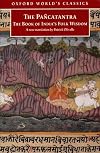
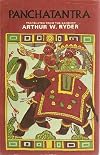
Pancatantra: The Book of India's Folk Wisdom
by Vishnu Sharma
On This Page
Description
The Pancatantra is the most famous collection of fables in India and was one of the earliest Indian books to be translated into Western languages. No other Indian work has had a greater influence on world literature, and no other collection of stories has become as popular in India itself. A significant influence on the Arabian Nights and the Fables of La Fontaine, the Pancatantra teaches the principles of good government and public policythrough the medium of animal stories. Its positive show more attitude towards life and its advocacy of ambition, enterprise, and drive counters any preconception of pa show lessTags
Recommendations




Member Reviews
The Panchatantra or Pañcatantra, ('Five Principles') was originally a canonical collection of Sanskrit as well as Pali animal fables in verse and prose. The original Sanskrit text, now long lost, and which some scholars believe was composed in the 3rd century BCE, is attributed to Vishnu Sarma. However, based as it is on older oral traditions, its antecedents among storytellers probably hark back to the origins of language and the subcontinent's earliest social groupings of hunting and fishing folk gathered around campfires. It is certainly the most frequently translated literary product of India and there are over 200 versions in more than 50 languages.
In the Indian tradition, the Panchatantra is a nītiśāstra, a treatise on show more political science and human conduct, or nīti. One of the early Western scholars on the Panchatantra was Dr. Johannes Hertel, who viewed the book as having a Machiavellian character. Other scholars dismiss this assessment as one-sided, and even view the stories as teaching dharma, or proper moral conduct.
It illustrates, for the benefit of princes who may succeed to a throne, the central Hindu principles of Raja niti (political science) through an inter-woven series of colorful animal tales. These operate like a succession of Russian dolls, one narrative opening within another, sometimes three or four deep. It consists of five books, which are called:
Mitra Bhedha (The Loss of Friends)
Mitra Laabha, also called Mitra Samprāpti (The Winning (or Gaining) of Friends)
Kākolūkīyam (Crows and Owls)
Labdhapraṇāśam (Loss Of Gains)
Aparīkṣitakārakaṃ (Ill-Considered Action / Rash deeds)
Each distinct part of the book contains at least one story and usually more, which are 'emboxed' in the main story, called the 'frame-story'. Sometimes there is a double emboxment; another story is inserted in an 'emboxed' story. Moreover, the whole work begins with a brief introduction, which as in a frame all five parts are regarded as 'emboxed. Vishnu Sarma's idea was that humans can assimilate more about their own habitually unflattering behavior if it is disguised in terms of entertainingly configured stories about supposedly less illustrious beasts than themselves.
The work is an ancient and vigorous multicultural hybrid that to this day continues an erratic process of cross-border mutation and adaptation as modern writers and publishers struggle to fathom, simplify and re-brand its complex origins. show less
In the Indian tradition, the Panchatantra is a nītiśāstra, a treatise on show more political science and human conduct, or nīti. One of the early Western scholars on the Panchatantra was Dr. Johannes Hertel, who viewed the book as having a Machiavellian character. Other scholars dismiss this assessment as one-sided, and even view the stories as teaching dharma, or proper moral conduct.
It illustrates, for the benefit of princes who may succeed to a throne, the central Hindu principles of Raja niti (political science) through an inter-woven series of colorful animal tales. These operate like a succession of Russian dolls, one narrative opening within another, sometimes three or four deep. It consists of five books, which are called:
Mitra Bhedha (The Loss of Friends)
Mitra Laabha, also called Mitra Samprāpti (The Winning (or Gaining) of Friends)
Kākolūkīyam (Crows and Owls)
Labdhapraṇāśam (Loss Of Gains)
Aparīkṣitakārakaṃ (Ill-Considered Action / Rash deeds)
Each distinct part of the book contains at least one story and usually more, which are 'emboxed' in the main story, called the 'frame-story'. Sometimes there is a double emboxment; another story is inserted in an 'emboxed' story. Moreover, the whole work begins with a brief introduction, which as in a frame all five parts are regarded as 'emboxed. Vishnu Sarma's idea was that humans can assimilate more about their own habitually unflattering behavior if it is disguised in terms of entertainingly configured stories about supposedly less illustrious beasts than themselves.
The work is an ancient and vigorous multicultural hybrid that to this day continues an erratic process of cross-border mutation and adaptation as modern writers and publishers struggle to fathom, simplify and re-brand its complex origins. show less
The Panchatantra or Pañcatantra, ('Five Principles') was originally a canonical collection of Sanskrit as well as Pali animal fables in verse and prose. The original Sanskrit text, now long lost, and which some scholars believe was composed in the 3rd century BCE, is attributed to Vishnu Sarma. However, based as it is on older oral traditions, its antecedents among storytellers probably hark back to the origins of language and the subcontinent's earliest social groupings of hunting and fishing folk gathered around campfires. It is certainly the most frequently translated literary product of India and there are over 200 versions in more than 50 languages.
In the Indian tradition, the Panchatantra is a nītiśāstra, a treatise on show more political science and human conduct, or nīti. One of the early Western scholars on the Panchatantra was Dr. Johannes Hertel, who viewed the book as having a Machiavellian character. Other scholars dismiss this assessment as one-sided, and even view the stories as teaching dharma, or proper moral conduct.
It illustrates, for the benefit of princes who may succeed to a throne, the central Hindu principles of Raja niti (political science) through an inter-woven series of colorful animal tales. These operate like a succession of Russian dolls, one narrative opening within another, sometimes three or four deep. It consists of five books, which are called:
Mitra Bhedha (The Loss of Friends)
Mitra Laabha, also called Mitra Samprāpti (The Winning (or Gaining) of Friends)
Kākolūkīyam (Crows and Owls)
Labdhapraṇāśam (Loss Of Gains)
Aparīkṣitakārakaṃ (Ill-Considered Action / Rash deeds)
Each distinct part of the book contains at least one story and usually more, which are 'emboxed' in the main story, called the 'frame-story'. Sometimes there is a double emboxment; another story is inserted in an 'emboxed' story. Moreover, the whole work begins with a brief introduction, which as in a frame all five parts are regarded as 'emboxed. Vishnu Sarma's idea was that humans can assimilate more about their own habitually unflattering behavior if it is disguised in terms of entertainingly configured stories about supposedly less illustrious beasts than themselves.
The work is an ancient and vigorous multicultural hybrid that to this day continues an erratic process of cross-border mutation and adaptation as modern writers and publishers struggle to fathom, simplify and re-brand its complex origins. show less
In the Indian tradition, the Panchatantra is a nītiśāstra, a treatise on show more political science and human conduct, or nīti. One of the early Western scholars on the Panchatantra was Dr. Johannes Hertel, who viewed the book as having a Machiavellian character. Other scholars dismiss this assessment as one-sided, and even view the stories as teaching dharma, or proper moral conduct.
It illustrates, for the benefit of princes who may succeed to a throne, the central Hindu principles of Raja niti (political science) through an inter-woven series of colorful animal tales. These operate like a succession of Russian dolls, one narrative opening within another, sometimes three or four deep. It consists of five books, which are called:
Mitra Bhedha (The Loss of Friends)
Mitra Laabha, also called Mitra Samprāpti (The Winning (or Gaining) of Friends)
Kākolūkīyam (Crows and Owls)
Labdhapraṇāśam (Loss Of Gains)
Aparīkṣitakārakaṃ (Ill-Considered Action / Rash deeds)
Each distinct part of the book contains at least one story and usually more, which are 'emboxed' in the main story, called the 'frame-story'. Sometimes there is a double emboxment; another story is inserted in an 'emboxed' story. Moreover, the whole work begins with a brief introduction, which as in a frame all five parts are regarded as 'emboxed. Vishnu Sarma's idea was that humans can assimilate more about their own habitually unflattering behavior if it is disguised in terms of entertainingly configured stories about supposedly less illustrious beasts than themselves.
The work is an ancient and vigorous multicultural hybrid that to this day continues an erratic process of cross-border mutation and adaptation as modern writers and publishers struggle to fathom, simplify and re-brand its complex origins. show less
Book Description: Chicago, IL: University of Chicago Press / Phoenix Books, 1964. Trade Paperback. Good . 8vo - over 7¾" - 9¾" tall. vii, 470 pp., pictorial wraps;
Pañcatantra : the book of India's folk wisdom
MOBIUS Both forms, OKC E-Book 195 pages
pbs wishlist
MOBIUS Both forms, OKC E-Book 195 pages
pbs wishlist
Autographed by Illustrator, limited edition copy Number 1446
Panchatantra es una recopilación de cuentos, fábulas e historias moralizadoras hindúes escritas originariamente en sánscrito. La versión más completa que ha llegado a la actualidad consta de cinco libros, que atesoran un total de setenta y tres piezas en prosa intercaladas de poemas que, a manera de estribillo, ayudan a memorizar el mensaje esencial de la narración. El Panchatantra constituye un excepcional vehículo de conocimiento del universo indio, que nos transporta de lo real a lo fantástico continuamente, rompiendo los límites del tiempo y el espacio. Calila y Dimna (1251) refunde textos del Panchatantra y es una de las primeras colecciones de cuentos medievales que existen. Fue redactada, probablemente por encargo del show more todavía infante, Alfonso. Y en el prólogo explicaba que Berzabuey tradujo para su rey Sirechuel del indio al persa este libro en el que el filósofo Burduben adoctrina a su rey Diçelem. El Panchatantra influyó en la España de la época a personajes como Ramón Llull, el Arcipreste de Hita y el Conde de Lucanor. Don Fabrique, hermano de Alfonso X, encargó Sendebar o Libro del engaño de las mujeres (1253) también a partir del texto hindú. show less
Aug 9, 2010Spanish
PACHATANTRA
INTRODUCCIÓN
¡Om! ¡Honor a los célebres y bienaventurados Sarasvati y
Ganeza! ¡Honor a Manú, Vrihaspati, Vyasa, Valmiki y demás
célebres personajes! ¡Honor a los grandes poetas!
I. Después de haber visto Vixnuzarman que lo que aquí se
expone es lo mejor que hay en el mundo acerca de la ciencia de lo
útil, compuso este muy hermoso tratado, dividido en cinco libros.
Acerca del cual se cuenta lo siguiente: Hay en el populoso
Dekán una ciudad llamada Mahilaropya. Hubo en ella un
rey llamado Amaranzakti, que poseía a la perfección todas
las artes; brillaban a sus pies los rayos que despedían las
perlas y piedras preciosas de las coronas de los príncipes
más eminentes; era como el árbol kalpa, de quien todo el
mundo implora show more beneficios. Tenía este rey tres hijos muy es
túpidos que se llamaban Vasuzatki, Ugrazakti y Anekazak
ti. Al ver la aversión que tenían a los libros, convocó el rey a
sus ministros y les dijo:Ç
Ya sabéis que estos mis hijos no tienen afición a los li-
bros y carecen de discreción. Al verles yo así, aunque soy
soberano de un gran reino, no tengo felicidad. Pues bien se
ha dicho:
2. Preferible es no tener hijos, o tenerlos y que se mueran,a
que vivan siendo estúpidos; aquéllos te proporcionan una pena de
corta duración; los últimos te atormentan toda la vida... show less
INTRODUCCIÓN
¡Om! ¡Honor a los célebres y bienaventurados Sarasvati y
Ganeza! ¡Honor a Manú, Vrihaspati, Vyasa, Valmiki y demás
célebres personajes! ¡Honor a los grandes poetas!
I. Después de haber visto Vixnuzarman que lo que aquí se
expone es lo mejor que hay en el mundo acerca de la ciencia de lo
útil, compuso este muy hermoso tratado, dividido en cinco libros.
Acerca del cual se cuenta lo siguiente: Hay en el populoso
Dekán una ciudad llamada Mahilaropya. Hubo en ella un
rey llamado Amaranzakti, que poseía a la perfección todas
las artes; brillaban a sus pies los rayos que despedían las
perlas y piedras preciosas de las coronas de los príncipes
más eminentes; era como el árbol kalpa, de quien todo el
mundo implora show more beneficios. Tenía este rey tres hijos muy es
túpidos que se llamaban Vasuzatki, Ugrazakti y Anekazak
ti. Al ver la aversión que tenían a los libros, convocó el rey a
sus ministros y les dijo:Ç
Ya sabéis que estos mis hijos no tienen afición a los li-
bros y carecen de discreción. Al verles yo así, aunque soy
soberano de un gran reino, no tengo felicidad. Pues bien se
ha dicho:
2. Preferible es no tener hijos, o tenerlos y que se mueran,a
que vivan siendo estúpidos; aquéllos te proporcionan una pena de
corta duración; los últimos te atormentan toda la vida... show less
Jun 21, 2018Spanish
Members
- Recently Added By
Lists

Philip Ward's Lifetime Reading Plan
592 works; 22 members
Talk Discussions
Past Discussions
The Panchatantra - LIMITED EDITIONS CLUB 1972 in George Macy devotees (September 2024)
Author Information
Some Editions
Awards and Honors
Notable Lists
Series
Belongs to Publisher Series
Work Relationships
Is contained in
Is retold in
Common Knowledge
- Canonical title
- Pancatantra: The Book of India's Folk Wisdom
- Original title
- Pañcatantra
- Original publication date
- 400-100 BCE
Classifications
- Genre
- Fiction and Literature
- DDC/MDS
- 891.23 — Literature & rhetoric Asian Literature East Indo-European and Celtic literatures Sanskrit Sanskrit fiction
- LCC
- PK3741 .P3 .E5 — Language and Literature Indo-Iranian languages and literatures Indo-Iranian philology and literature Indo-Aryan literature Sanskrit
- BISAC
Statistics
- Members
- 689
- Popularity
- 41,426
- Reviews
- 7
- Rating
- (3.69)
- Languages
- 10 — Dutch, English, Galician, Hindi, Malayalam, Portuguese, Russian, Sanskrit, Spanish, Turkish
- Media
- Paper, Audiobook, Ebook
- ISBNs
- 47
- UPCs
- 1
- ASINs
- 21